
Loading, please wait...
LOT 0643
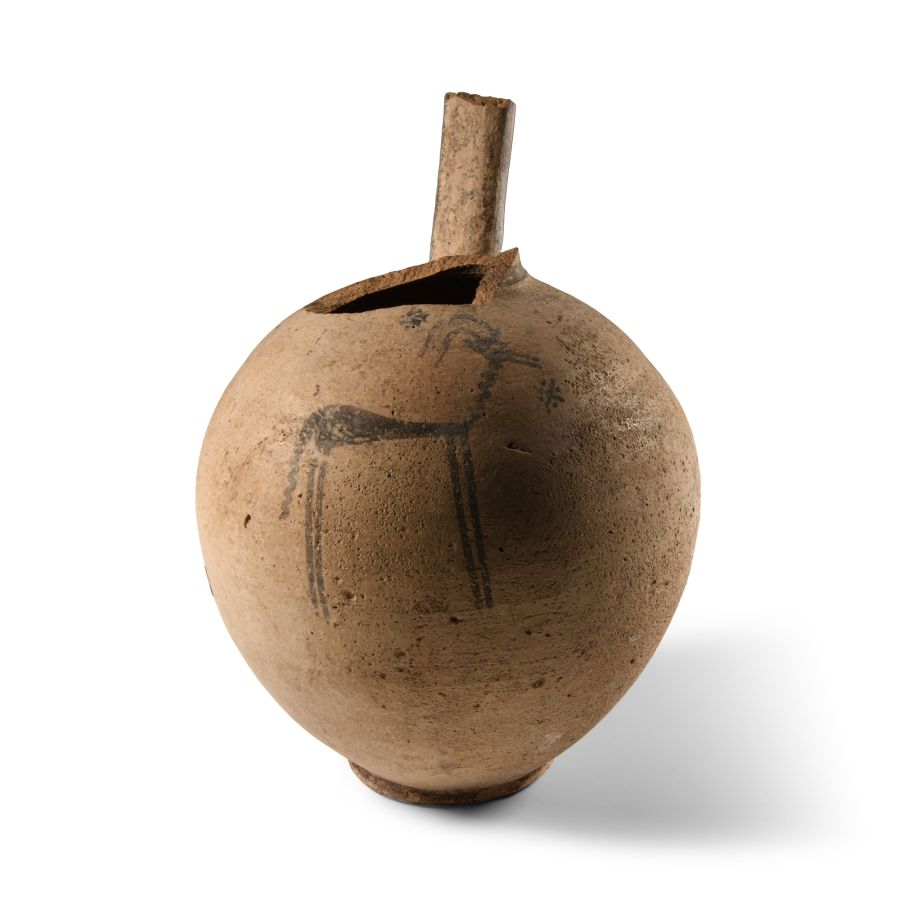
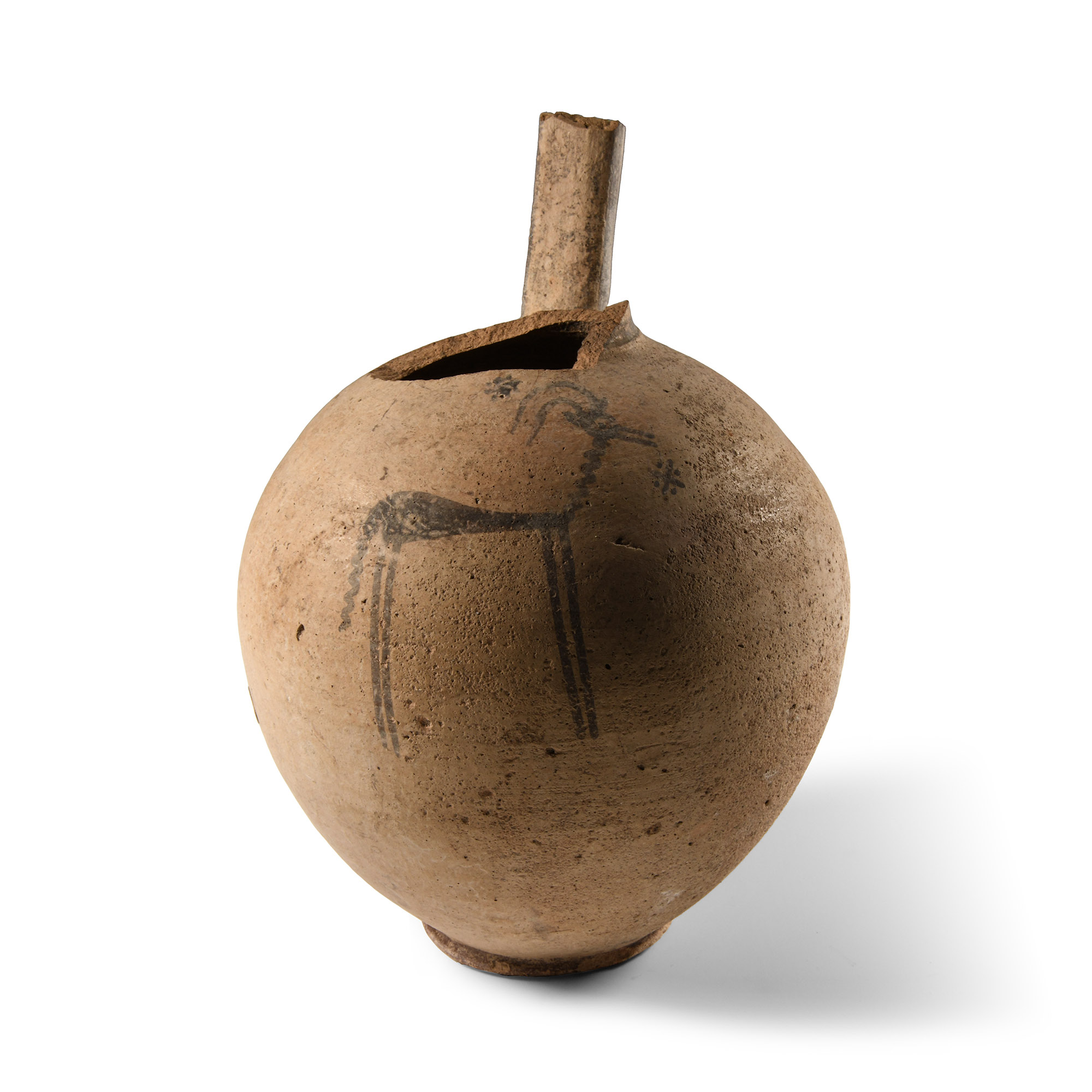
Cypro-Mycenaean Terracotta Vessel with Ibex
IRON AGE, CIRCA 1200-1000 B.C.
6 1/4 in. (370 grams, 16.1 cm).
Stirrup jar with basal ring, globular body, remains of handle and neck; painted figure of an ibex with cross-and-dots motifs. [No Reserve]
ProvenancePeter Cran collection, Scotland, who worked as an engineer for the Cypriot public works department 1931-1946; thence by descent.
Acquired from Bonhams, London, 23 May 2012, no.6 (part).
From an important Cambridgeshire estate; thence by descent.
Accompanied by copies of the relevant Bonhams catalogue pages and original lot tag.
TimeLine Auctions follows a vetting process to ensure the authenticity and legality of all items, reinforcing our commitment to integrity and responsible trading. Each antiquity, antique, and coin lot undergoes thorough examination by a vetting committee of at least ten external specialists, professional trade association members, scientists, and archaeologists: Our Vetting Process
AUCTIONS:
TimeLine is a leading auction house specialising in antiquities, ancient art, collectables, natural history, coins, medals, and books. Our auctions offer museums, collectors, historians, and enthusiasts the opportunity to acquire unique and historically significant pieces.
-
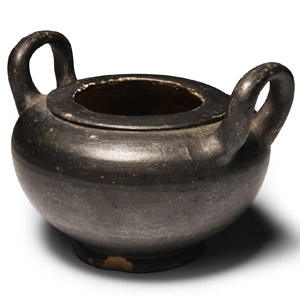
Greek Apulian Blackware Pyxis
Circa 4th-3rd century B.C.Sold for (Inc. bp): £211
Black-glazed rounded body with two upright loop-handles, raised base, keeled edge with a thickened disc rim. 143 grams, 10.8 cm wide
Ex P. A., Hertfordshire, UK, specialist collection of Greek art, 1980-1990s. Accompanied by a copy of an old typed catalogue slip.
This pyxis was once fitted with a lid for cosmetics, powder or jewellery. Greek pottery from southern Italy is most easily identified by its glossy black finish, as seen here. It was the product of the Magna Graecia, especially in Apulia, a region in southern Italy populated by Greek colonists from the 8th century B.C. onwards, which imitated the artistic workshops of Attica and developed its own style. -
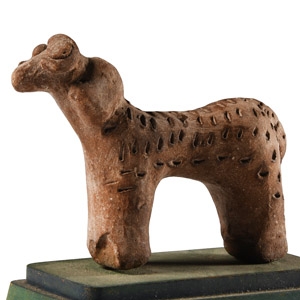
Cypriot Terracotta Ram
Early Bronze Age, circa 2500-2000 B.C.Sold for (Inc. bp): £247
Modelled in the round with fleece texture to the back and rump, applied eyes and horns; mounted on a display base with old collector's labels to the underside: 'Cyprus / Early bronze age, 250-2000 BC. / Ram, red clay, once attached to the rim of a vessel.' and '2517-14/3'. 204 grams total, 11 cm wide including stand
Ex Professor Karl Lunde collection (1931-2009). From a collection acquired on the UK art market from various auction houses and collections mostly before 2000. From an important Cambridgeshire estate; thence by descent. With old label to the base and accompanied by the remains of an old identification tag. -
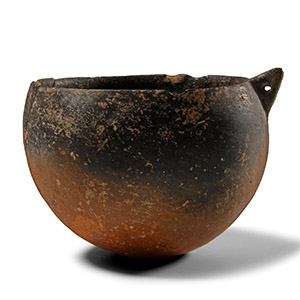
Cypriot Redware Dipper Cup
Middle Bronze Age I-II, circa 2000-1750 B.C.Sold for (Inc. bp): £312
Hemispherical in form with spur to the rim, pierced for attachment; repaired. 277 grams, 12 cm wide
Ex Peter Negus collection (1920-2012), a prolific collector who worked in the insurance industry for most of his life. His wife worked for Coutts Bank for many years and they shared an enormous passion for natural history, geology and archaeology, amassing a collection. He was a member of the Geologists’ Association for over 50 years, acting as Treasurer from 1979 to 1988. Acquired from Bonhams, London, 26 October 2007, no.354 (part). From an important Cambridgeshire estate; thence by descent. Accompanied by copies of the relevant Bonhams catalogue pages and an old identification tag.
