
Loading, please wait...
LOT 0616
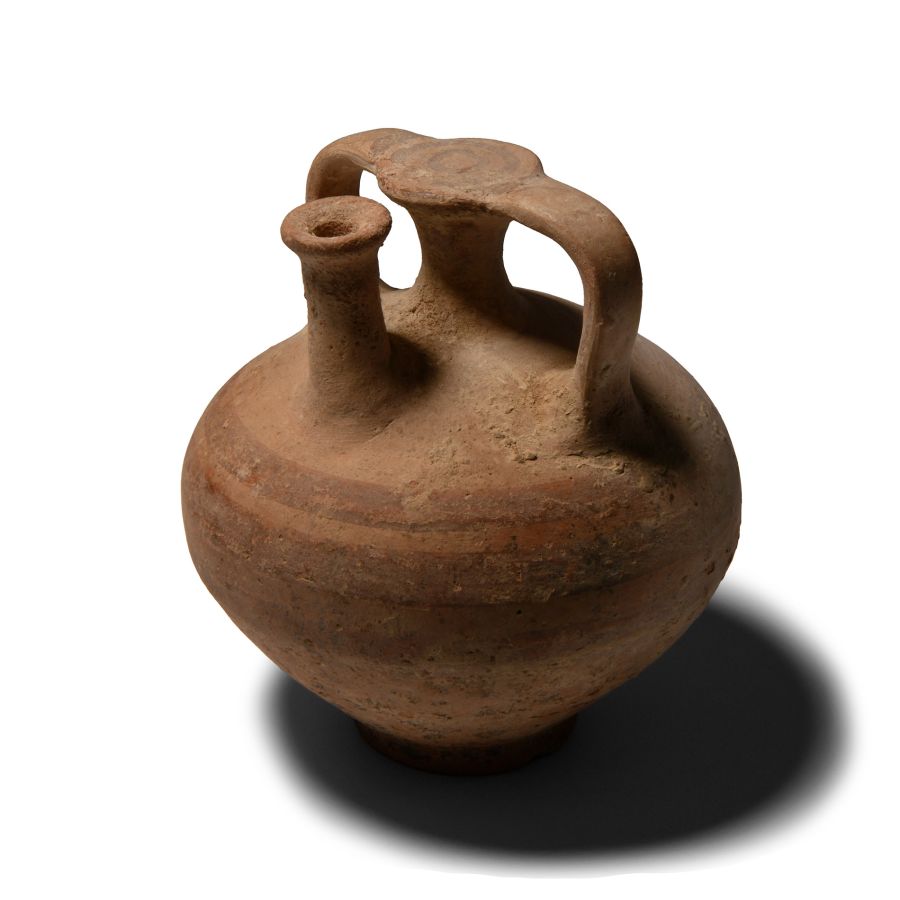
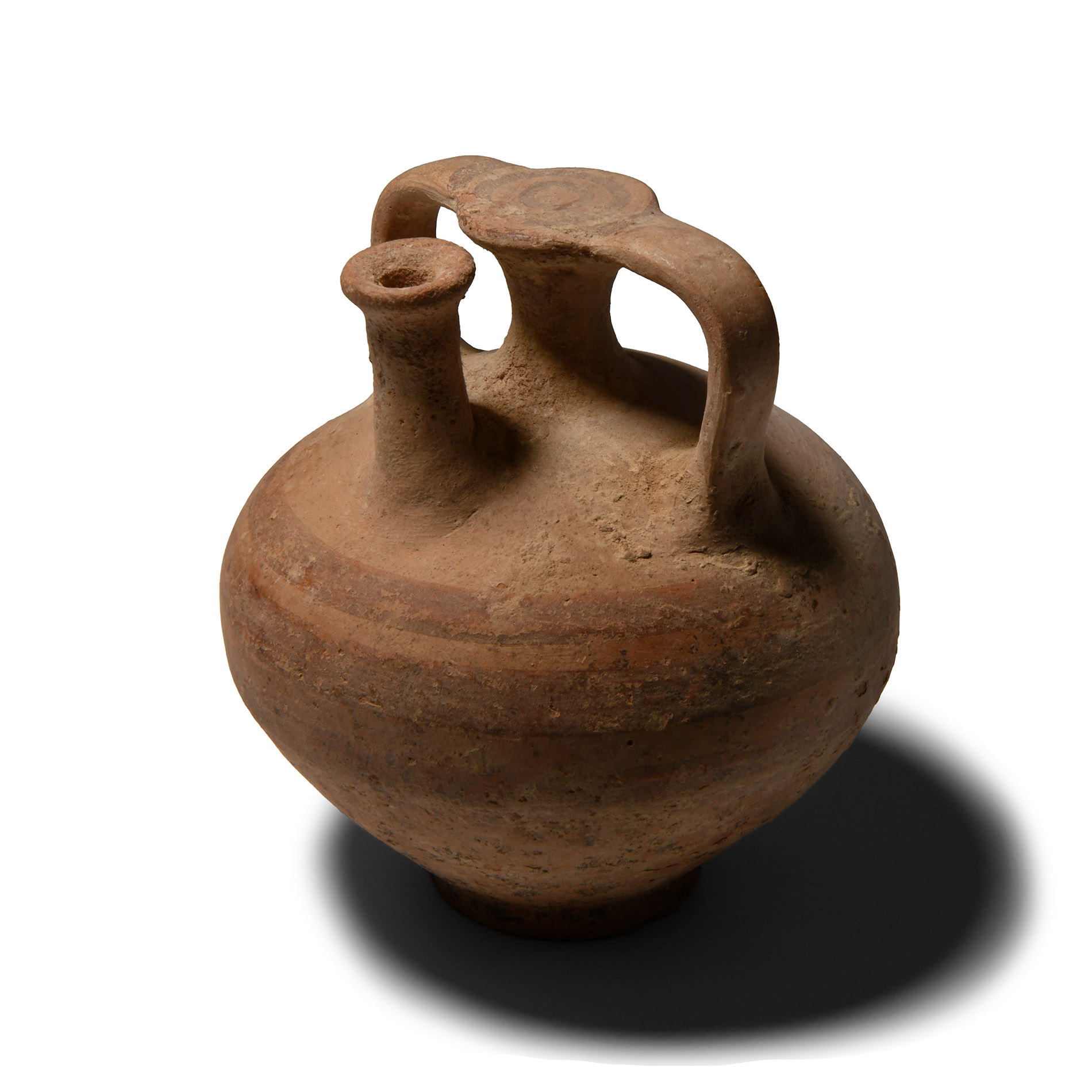
Cypro-Mycenaean Bichrome Stirrup Vessel
LATE BRONZE AGE, CIRCA 1200-1000 B.C.
4 1/2 in. (270 grams, 11.5 cm high).
Squat biconvex body with narrow base, strap handles attached to the disc above the central post on the upper face, with offset tubular spout; painted with bands of red pigment to the shoulder and disc. [No Reserve]
ProvenanceEx Peter Cran ciollection, Scotland, who worked as an engineer for the Cypriot public works department 1931-1946; thence by descent.
Acquired from Bonhams, London, 23 May 2012, no.6 (part).
From an important Cambridgeshire estate; thence by descent.
Accompanied by copies of the relevant Bonhams catalogue pages and the original Bonhams lot tag.
TimeLine Auctions follows a vetting process to ensure the authenticity and legality of all items, reinforcing our commitment to integrity and responsible trading. Each antiquity, antique, and coin lot undergoes thorough examination by a vetting committee of at least ten external specialists, professional trade association members, scientists, and archaeologists: Our Vetting Process
AUCTIONS:
TimeLine is a leading auction house specialising in antiquities, ancient art, collectables, natural history, coins, medals, and books. Our auctions offer museums, collectors, historians, and enthusiasts the opportunity to acquire unique and historically significant pieces.
-
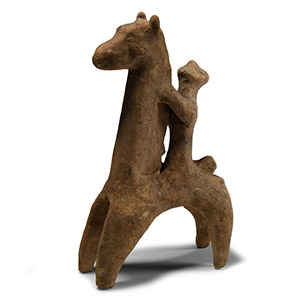
Cypriot Ceramic Horse and Rider Statuette
8th-7th century B.C.Sold for (Inc. bp): £442
Representing a warrior with conical helmet riding his mount, horse with long neck, short legs and traces of polychromy all along body, neck and ears. 251 grams, 17 cm high
From a collection acquired on the UK art market from various auction houses and collections mostly before 2000. From an important Cambridgeshire estate; thence by descent.
The most popular animals in Cypriot coroplasts of the 8th and 7th centuries B.C. were horses, with or without riders, with long necks and decorated along the whole body like contemporary ceramics. It is worth remembering that the horse in this period represented a status symbol for the military aristocracy and that bodies of sacrificed horses have been found in royal tombs. -
.jpg)
Very Large Cypriot Bichrome Ware Pottery Amphora
Iron Age, Cypro-Geometric, 950-850 B.C.Sold for (Inc. bp): £6,240
Of oblate profile with narrow base, two lateral loop handles to the shoulder, broad neck and flared rim to the mouth; painted bands of circumferential geometric ornament, linear with interstitial concentric circles; repaired. 10.45 kg, 59 cm
Ex Barbara Gersch collection, California, USA, acquired in 1993. Acquired from Bonhams, London, 24 October 2012, no.59. From an important Cambridgeshire estate; thence by descent. Accompanied by a copy of the relevant Bonhams catalogue pages and the original lot tag. This lot has been checked against the Interpol Database of stolen works of art and is accompanied by search certificate no.12048-212118. -
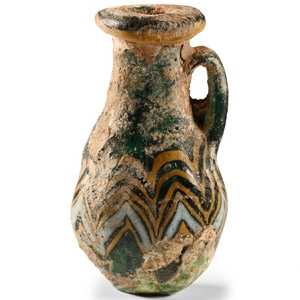
Phoenician Core-Formed Glass Juglet
6th-4th century B.C.Sold for (Inc. bp): £338
With dragged trails to the body and applied annular rim. 12 grams, 44 mm
Collected from 1969-1999. From the collection of the late Mr S.M., London, UK.
