
Loading, please wait...
LOT 0093
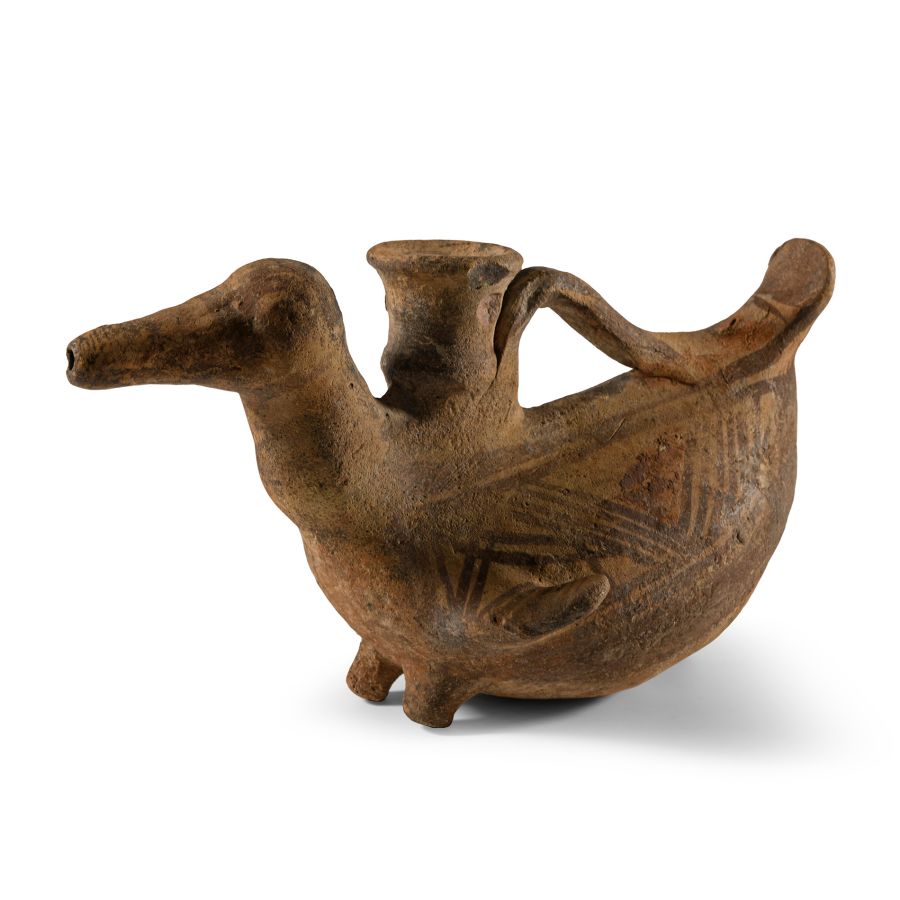
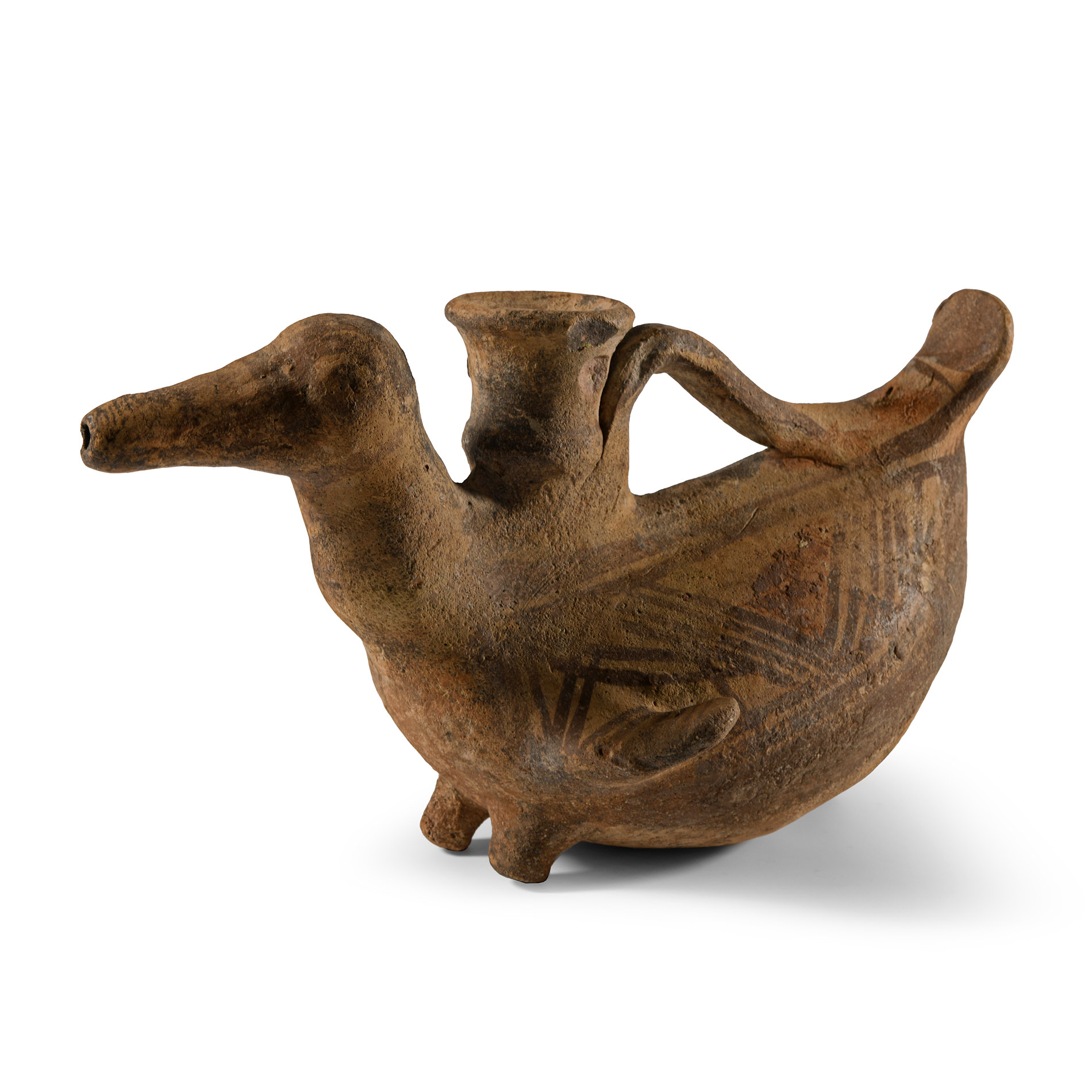
Cypro-Archaic Terracotta Bird Askos
LATE BRONZE AGE, 1100-1000 B.C.
9 1/2 in. (670 grams, 24 cm).
Hollow-formed as a bird, possibly a duck, with its beak acting as a spout, small lateral flanges for wings and painted geometric detailing; strap handle from funicular filler tube with a strainer inside to the fan-shaped tail. [No Reserve]
ProvenanceFrom a collection acquired on the UK art market from various auction houses and collections mostly before 2000.
From an important Cambridgeshire estate; thence by descent.
Cf. an askos in the Metropolitan Museum of Art, New York, under accession no.1970.11.12.
CONDITIONTimeLine Auctions follows a vetting process to ensure the authenticity and legality of all items, reinforcing our commitment to integrity and responsible trading. Each antiquity, antique, and coin lot undergoes thorough examination by a vetting committee of at least ten external specialists, professional trade association members, scientists, and archaeologists: Our Vetting Process
AUCTIONS:
TimeLine is a leading auction house specialising in antiquities, ancient art, collectables, natural history, coins, medals, and books. Our auctions offer museums, collectors, historians, and enthusiasts the opportunity to acquire unique and historically significant pieces.
-
.jpg)
Minoan Bronze Statuette of a Lady
Middle Period, circa 1700-1450 B.C.Sold for (Inc. bp): £1,560
With a small, stylised face with detailed eyes, nose and mouth; right hand raised to hold a child; wearing a flounced skirt with double belt; mounted on a custom-made display stand. 499 grams total, 16.5 cm high including stand
British private collection, acquired by 2000. From a collection acquired on the UK art market from various auction houses and collections mostly before 2000. From an important Cambridgeshire estate; thence by descent.
In the Dictean Cave in Greece, many votive statuettes of this type were found. The flounced skirt is characteristic of Minoan women's dress, and it was lavishly decorated in folds of different colours. It could be worn with or without a narrow corselet, but in both cases exposing the breast. The exposed breast was connected to the cult of the mother goddess, and fertility, an element here reinforced by the presence of the suckling child. -
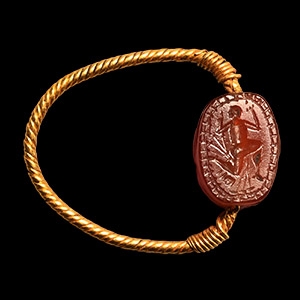
Etruscan Carnelian Scarab Gold Ring
5th-4th century B.C.Sold for (Inc. bp): £1,430
Hoop made from twisted wire with coils to the shoulders, carnelian scarab bezel with carapace detailing and intaglio kneeling figure to the reverse. 4.62 grams, 31.50 mm overall, 21.60 mm internal diameter (approximate size British W, USA 11, Europe 25, Japan 24)
Acquired from the collection of Mr K.A., a Parisian gentleman. European private collection. -
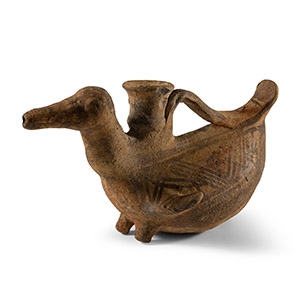
Cypro-Archaic Terracotta Bird Askos
Late Bronze Age, 1100-1000 B.C.Sold for (Inc. bp): £494
Hollow-formed as a bird, possibly a duck, with its beak acting as a spout, small lateral flanges for wings and painted geometric detailing; strap handle from funicular filler tube with a strainer inside to the fan-shaped tail. 670 grams, 24 cm
From a collection acquired on the UK art market from various auction houses and collections mostly before 2000. From an important Cambridgeshire estate; thence by descent.
