
Loading, please wait...
LOT 0087
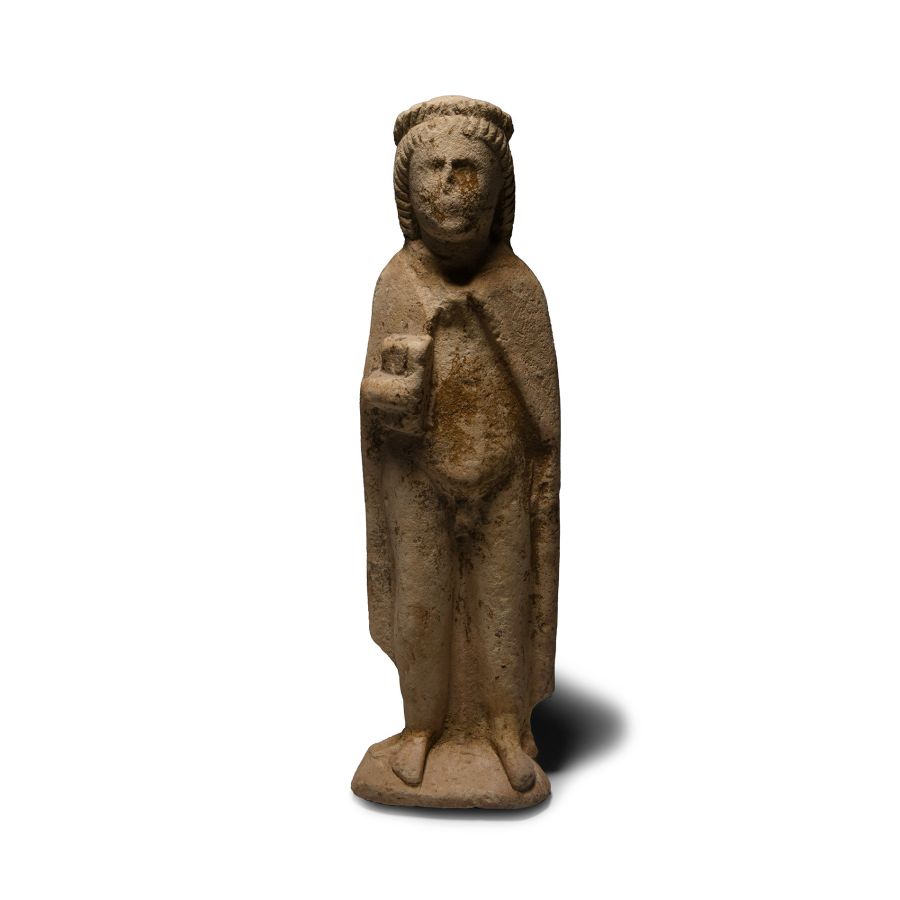
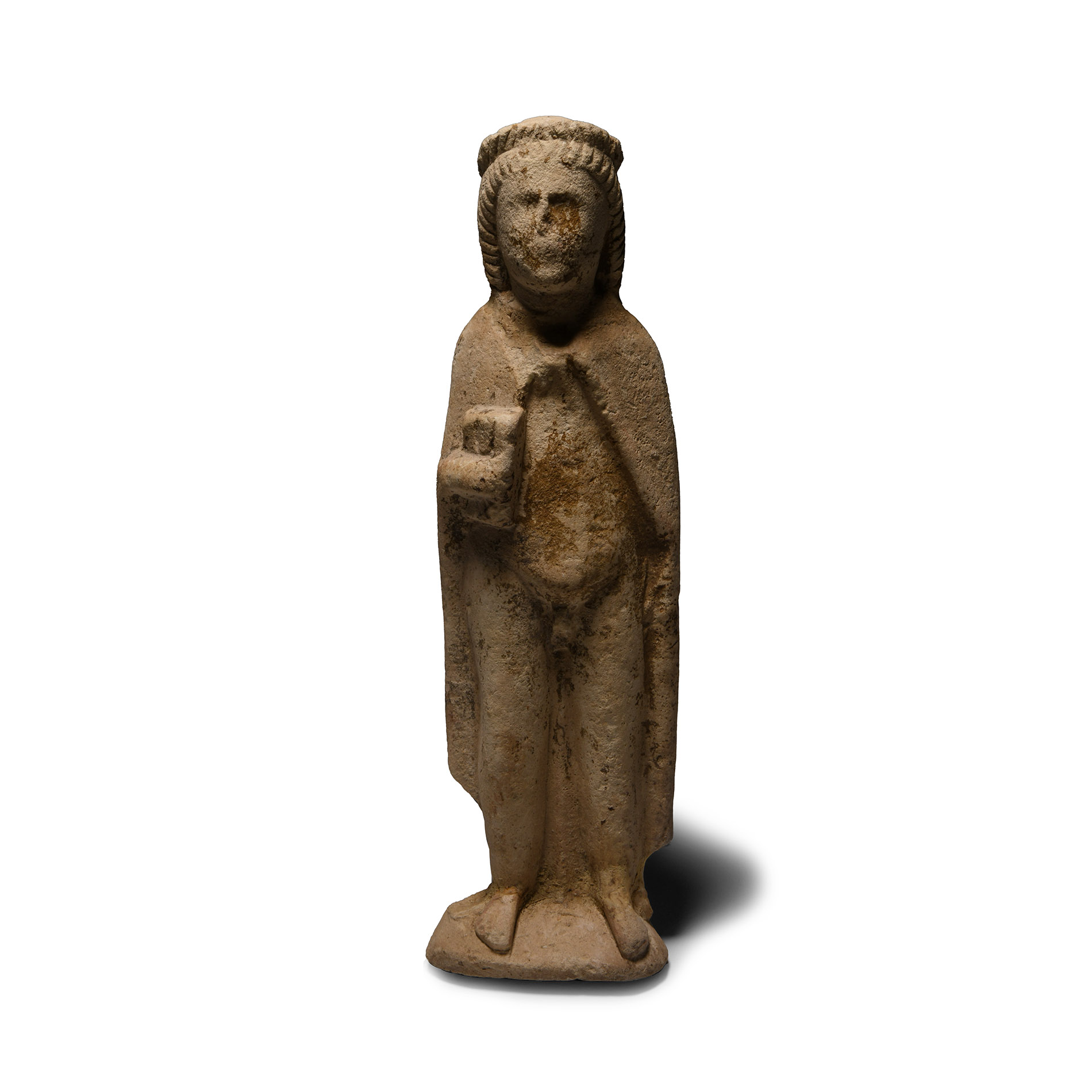
Cypro-Archaic Standing Limestone Male Scribe
CIRCA 4TH-3RD CENTURY B.C.
10 5/8 in. (536 grams, 27 cm).
Modelled in the half-round, standing nude male with mantle to the shoulders, clutching a codex in the right hand; with carefully dressed hair and diadem; D-shaped base. [No Reserve]
ProvenanceAcquired Bonhams, London, UK.
From a collection acquired on the UK art market from various auction houses and collections mostly before 2000.
From an important Cambridgeshire estate; thence by descent.
TimeLine Auctions follows a vetting process to ensure the authenticity and legality of all items, reinforcing our commitment to integrity and responsible trading. Each antiquity, antique, and coin lot undergoes thorough examination by a vetting committee of at least ten external specialists, professional trade association members, scientists, and archaeologists: Our Vetting Process
AUCTIONS:
TimeLine is a leading auction house specialising in antiquities, ancient art, collectables, natural history, coins, medals, and books. Our auctions offer museums, collectors, historians, and enthusiasts the opportunity to acquire unique and historically significant pieces.
-
.jpg)
Cypriot Limestone Head of a Deer
Iron Age, circa late 6th-early 5th century B.C.Sold for (Inc. bp): £1,430
Carved in the round with stub antlers to the brow; mounted on a custom-made display stand. 982 grams total, 19.7 cm including stand
Acquired before 1947. Ex Wood family collection, UK; thence by descent 1970.
The deer head probably came from a larger votive terracotta sculpture, which depicted a standing doe, perhaps being led to be sacrificed. The presence of the deer could connect the original terracotta to a sanctuary of Diana, whose sacred animal was the deer. -
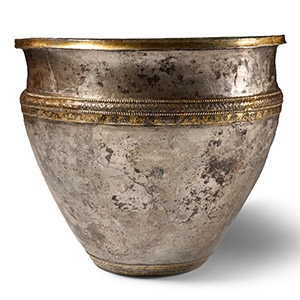
Hellenistic Silver Gilt Piriform Vase
2nd-1st century B.C.Estimate: £7,000 - 9,000 (+bp*)
Opening Bid: £3,889
Broad vase or jar with everted rim, carinated shoulder, gilt bands to the foot, shoulder and rim; some restoration. 472 grams, 13.1 cm
Ex London, UK, gallery, 1971. This lot has been checked against the Interpol Database of stolen works of art and is accompanied by search certificate no.12124-213139. -
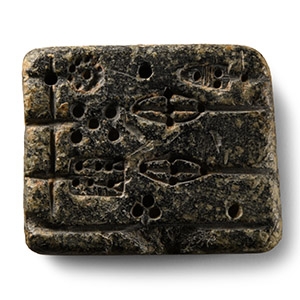
Very Large Greek Stone Jeweller's Mould
Bronze Age, 13th-11th century B.C.Sold for (Inc. bp): £208
Of square shape, used for making various jewellery elements: small circles, ear-drop pendants, rosettes with striated lines and locating holes on the surface. 114 grams, 63 mm
Collected from 1969-1999. From the collection of the late Mr S.M., London, UK.
Plaques of this type were half of a mould for small objects such as ribbed bobbin-shaped or spherical beads or crescent-shaped pendants. They must have been made for casting, judging by the pouring channels and the circular holes for fixing it to another corresponding half. Ribbed globular and ‘grain of wheat’ gold beads were common in Cyprus and Crete. Similar moulds with pouring channels have been found in the Near East, while open moulds intended for glass ornaments with flat backs have been found in the Aegean.
