
Loading, please wait...
LOT 0634
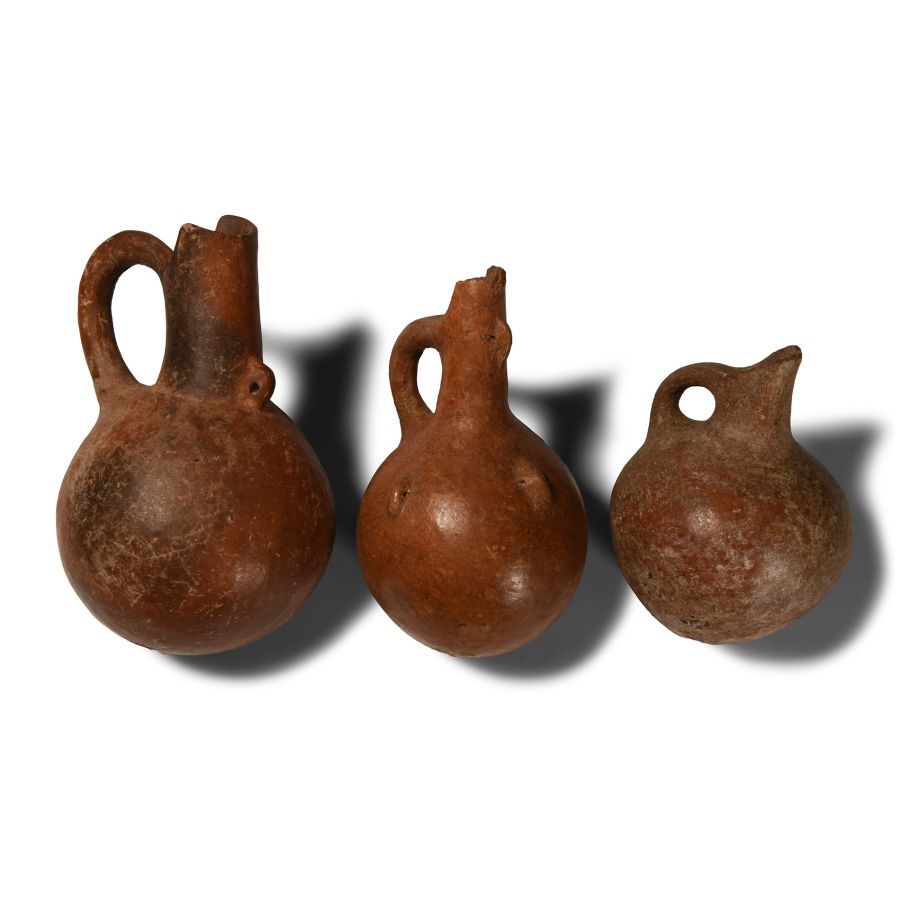
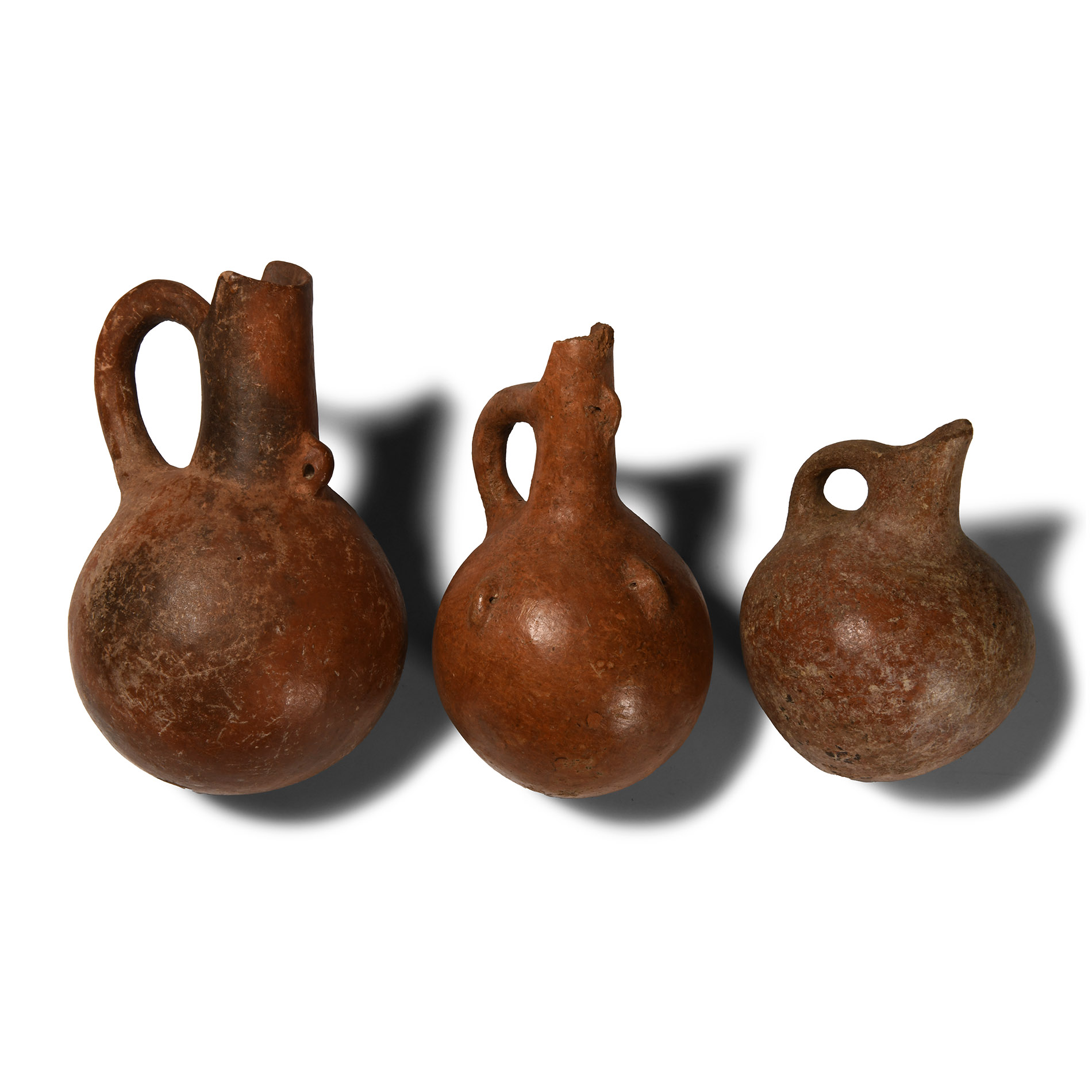
Cypro-Archaic Red Polished Ware Zoomorphic Jug Group
CIRCA 1400-600 B.C.
3 7/8 - 5 7/8 in. (878 grams total, 9.8-15 cm).
Group of three spherical jugs each with a tall neck and lateral loop handle; two with second smaller loop to the other side. [3, No Reserve]
ProvenanceFrom a collection acquired on the UK art market from various auction houses and collections mostly before 2000.
From an important Cambridgeshire estate; thence by descent.
TimeLine Auctions follows a vetting process to ensure the authenticity and legality of all items, reinforcing our commitment to integrity and responsible trading. Each antiquity, antique, and coin lot undergoes thorough examination by a vetting committee of at least ten external specialists, professional trade association members, scientists, and archaeologists: Our Vetting Process
AUCTIONS:
TimeLine is a leading auction house specialising in antiquities, ancient art, collectables, natural history, coins, medals, and books. Our auctions offer museums, collectors, historians, and enthusiasts the opportunity to acquire unique and historically significant pieces.
-
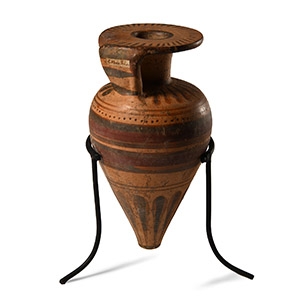
Etrusco-Corinthian Terracotta Piriform Aryballos
Circa 600-550 B.C.Sold for (Inc. bp): £572
With piriform body, narrow neck and broad rim to the mouth, broad strap handle; painted with radiating strokes to the mouth and shoulder, band or pellets and tongue pattern to the foot; old collector's label 'C Vecchia', probably Civita Vecchia, a seaport serving Rome. 96 grams total, 10 cm high (10.5 cm high including stand)
Private collection Hertfordshire, England. with Ancient Resource Auctions, 2 December 2013, no.124A (US$ 2,500-4,000). Property of a South Australian private collector, with collection reference 14.04. Accompanied by detailed collector's catalogue pages including description and image. -
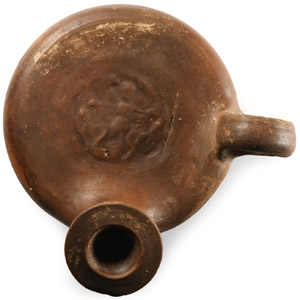
Greek Apulian Terracotta Guttos
Circa 4th century B.C.Sold for (Inc. bp): £91
With pedestal base, loop handle, slender spout with chamfered rim; central discus with figure of the infant Hercules grappling serpents; repaired. 214 grams, 12.5 cm wide
Ex Cummings collection, UK, 1990s. -
.jpg)
Etruscan Gold Filigree Leech Brooch
7th century B.C.Estimate: £2,000 - 3,000 (+bp*)
Opening Bid: £1,000
Hollow-formed bow with applied floral detailing, filigree and granules, double-coiled spring and pin; tongue-shaped foot with dense granule detailing, globe finial with rosette above. 13.86 grams, 69 mm
Acquired in the 1970s. Property of a London lady, part of her family's collection. This lot has been checked against the Interpol Database of stolen works of art and is accompanied by search certificate no.12112-213116.
