
Loading, please wait...
LOT 0637
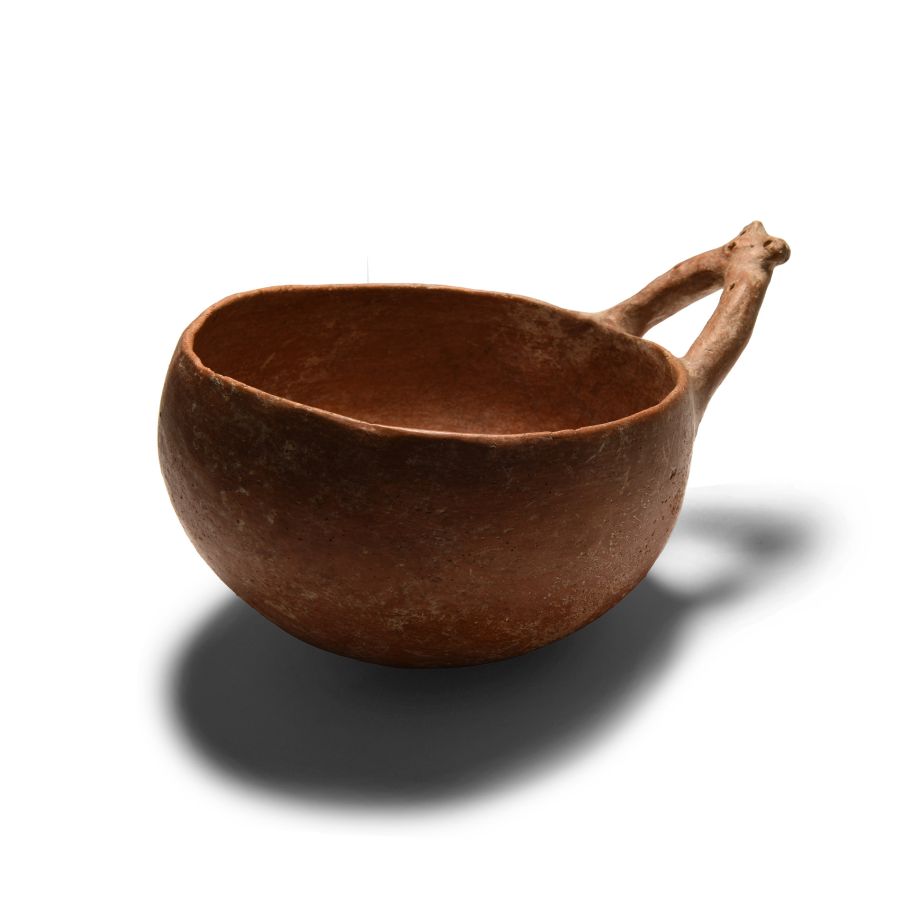
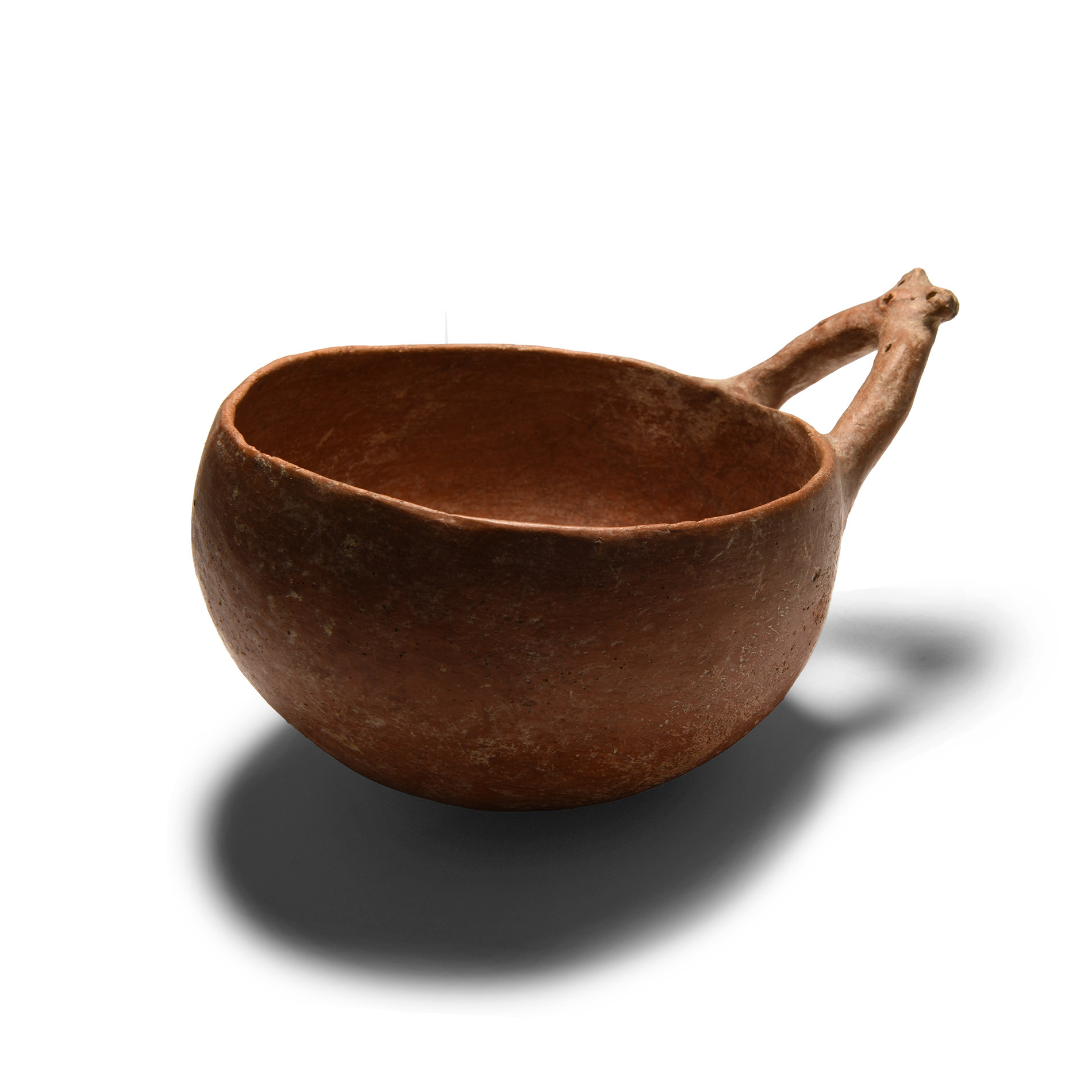
Cypriot Wishbone Redware Dipper Cup
MIDDLE BRONZE AGE I-II, CIRCA 2000-1750 B.C.
5 3/4 in. (200 grams, 14.7 cm).
Hemispherical body with wishbone anthropomorphic handle, burnished surface. [No Reserve]
ProvenanceFrom a collection acquired on the UK art market from various auction houses and collections mostly before 2000.
From an important Cambridgeshire estate; thence by descent.
Accompanied by an old identification tag.
TimeLine Auctions follows a vetting process to ensure the authenticity and legality of all items, reinforcing our commitment to integrity and responsible trading. Each antiquity, antique, and coin lot undergoes thorough examination by a vetting committee of at least ten external specialists, professional trade association members, scientists, and archaeologists: Our Vetting Process
AUCTIONS:
TimeLine is a leading auction house specialising in antiquities, ancient art, collectables, natural history, coins, medals, and books. Our auctions offer museums, collectors, historians, and enthusiasts the opportunity to acquire unique and historically significant pieces.
-
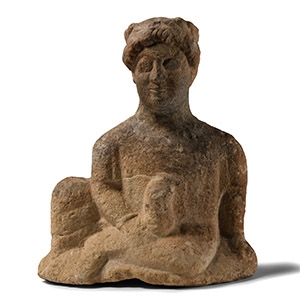
Cypriot Limestone Seated Apollo Figure
Circa 4th-3rd century B.C.Sold for (Inc. bp): £910
Carved figure of Apollo squatting with wreath to the hair, holding a goose in his lap against his chest, right leg folded and left leg bent beneath him; applied discs to the eyes. 978 grams, 19.5 cm
with Bonham's, New Bond Street, 22 April, 1999, lot 80. From an important Cambridgeshire estate; thence by descent.
The swan or goose was the favoured bird of Apollo. -
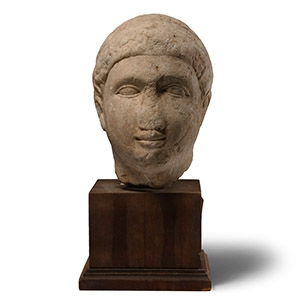
Cypriot Votive Limestone Head of a Young Man
6th-4th century B.C.Sold for (Inc. bp): £2,600
Modelled in the round with soft youthful features, short beard, small mouth and large lentoid eyes, tousled hair with a diadem above the brow; socket to the top of the head and remains of a spur to the reverse; mounted on a custom-made display stand. 3.86 kg total, 26.5 cm high including stand
Joseph Klein collection, formed in New York 1941-1980, thence by descent. Acquired from Bonhams, London, 24 October 2012, no.2. From an important Cambridgeshire estate; thence by descent. Accompanied by a copy of the relevant Bonhams catalogue pages. Accompanied by an academic report by Dr Raffaele D’Amato. This lot has been checked against the Interpol Database of stolen works of art and is accompanied by search certificate number no.12002-212101.
Votive sculptures were the commonest form of Cypriot sculptures of the period. They were erected within the precincts of temples or covered sanctuaries, around the altar at which the god was worshipped. Thus, on Cyprus, the statuary was conceived as an ex-voto, an image expressing the desire of the believer to enter into intimate communion with and reside under the eternal protection of the gods. -
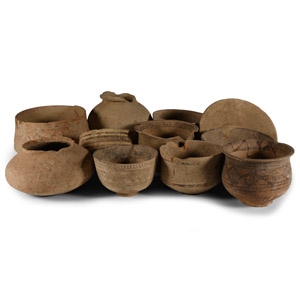
Greek and Other Terracotta Pottery Group
1st millennium B.C. and earlierSold for (Inc. bp): £208
Fragments including carinated bowl with painted frieze to the shoulder, squat jar, cup with everted rim and other types. 2.1 kg total, 9-14 cm
Acquired 1980-2015. Ex Abelita family collection.
