
Loading, please wait...
LOT 1141
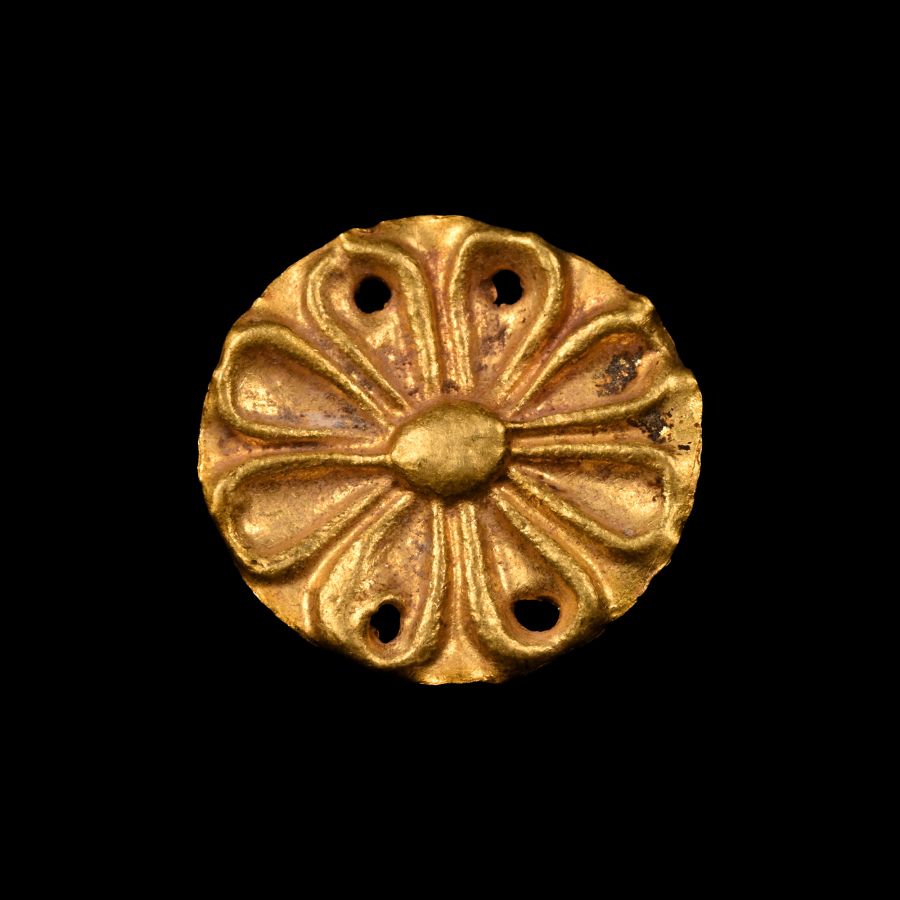
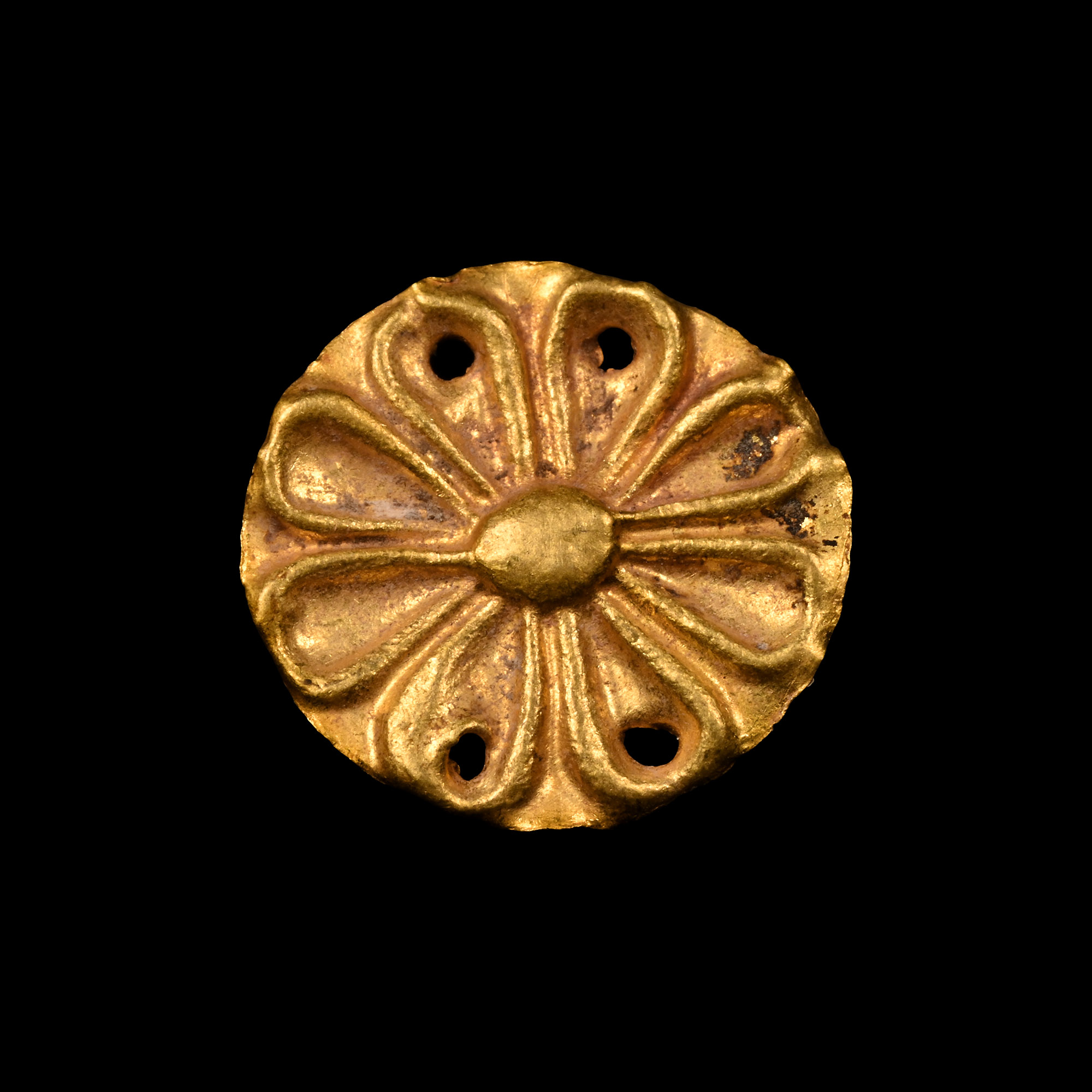
Cypriot Type Gold Repoussé Flower Mount
1ST MILLENNIUM B.C.
3/8 in. (0.12 grams, 9 mm).
Formed as an eight-petalled flower with a raised boss to the centre, pierced through the edges; not found in Cyprus.
ProvenanceEx property of a late Japanese collector, 1970-2000s.
This lot has been cleared against the Art Loss Register database, and is accompanied by an illustrated lot declaration signed by the Head of the Antiquities Department, Dr Raffaele D'Amato.
TimeLine Auctions follows a vetting process to ensure the authenticity and legality of all items, reinforcing our commitment to integrity and responsible trading. Each antiquity, antique, and coin lot undergoes thorough examination by a vetting committee of at least ten external specialists, professional trade association members, scientists, and archaeologists: Our Vetting Process
AUCTIONS:
TimeLine is a leading auction house specialising in antiquities, ancient art, collectables, natural history, coins, medals, and books. Our auctions offer museums, collectors, historians, and enthusiasts the opportunity to acquire unique and historically significant pieces.
-
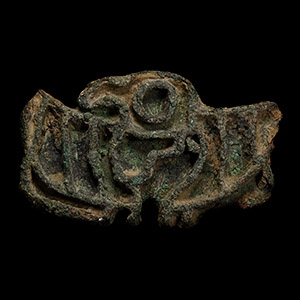
West Central Asian Bronze Stamp Seal Matrix with Vulture
Circa 2300-2000 B.C.Sold for (Inc. bp): £208
Showing a vulture with spread wings, remains of loop to the reverse; accompanied by typed and signed note by the late W.G. Lambert, Professor of Assyriology at the University of Birmingham, 1970-1993, which states: 'Stamp Seal of Bronze, 22 x 34 x 8mm. This has the form of what is depicted, with flat face, flat back, and the remains of a handle of strip metal on the back. The design shows an eagle or vulture with head sideways at the top and wings spread each side, the talons at the bottom being chipped. This comes from west central Asia and dates to c. 2300-2000 B.C. It is a rare type and in fair condition. Incrustation on the surface could be removed.' 10 grams, 37 mm
Ex collection of a late London gentleman, 1990s. Accompanied by an original typed and signed scholarly note by the late W.G. Lambert, Professor of Assyriology at the University of Birmingham, 1970-1993. This lot has been cleared against the Art Loss Register database, and is accompanied by an illustrated lot declaration signed by the Head of the Antiquities Department, Dr Raffaele D'Amato. -
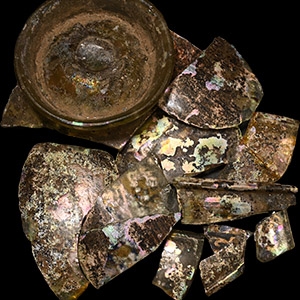
Mamluk Glass Fragments
12th-13th century A.D.Sold for (Inc. bp): £33
Sherds of iridescent glass from a jar or goblet, including flared foot and portions of the rim. 200 grams total, 3.3-10.5 cm
Private collection, London, UK. with Boisgirard-Antonini, Paris, 13 May 2016, no.67 (Est. €2,000-€3000). This lot has been cleared against the Art Loss Register database, and is accompanied by an illustrated lot declaration signed by the Head of the Antiquities Department, Dr Raffaele D'Amato. -
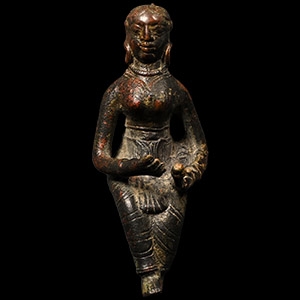
Vijayanagara Bronze Statue of a Seated Fertility Figure
14th-15th century A.D. or earlierEstimate: £1,200 - 1,700 (+bp*)
Opening Bid: £600
Modelled in the round in tight-fitting robe gathered at the waist; the hair piled at the back of the head, with large earrings and collar, holding a ladle in the left hand; socket to underside and top of head. 124 grams, 93 mm
Acquired before 1983. Ex London gallery, 1990s. This lot has been cleared against the Art Loss Register database, and is accompanied by an illustrated lot declaration signed by the Head of the Antiquities Department, Dr Raffaele D'Amato.
