
Loading, please wait...
LOT 1380
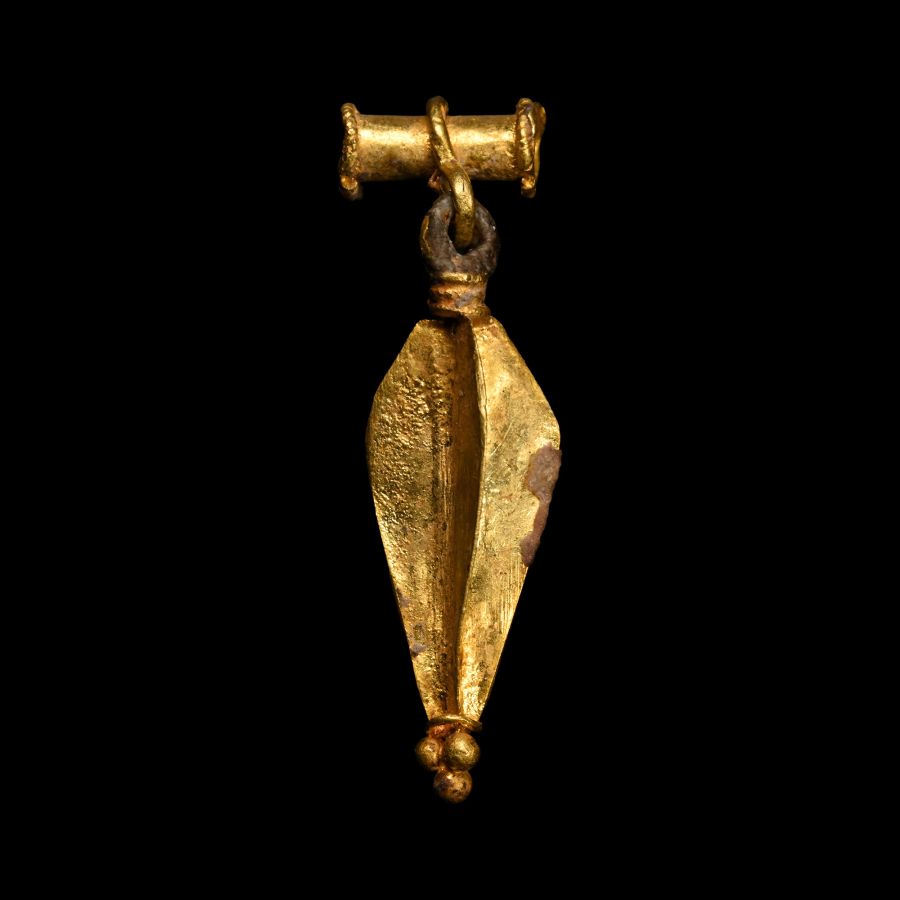
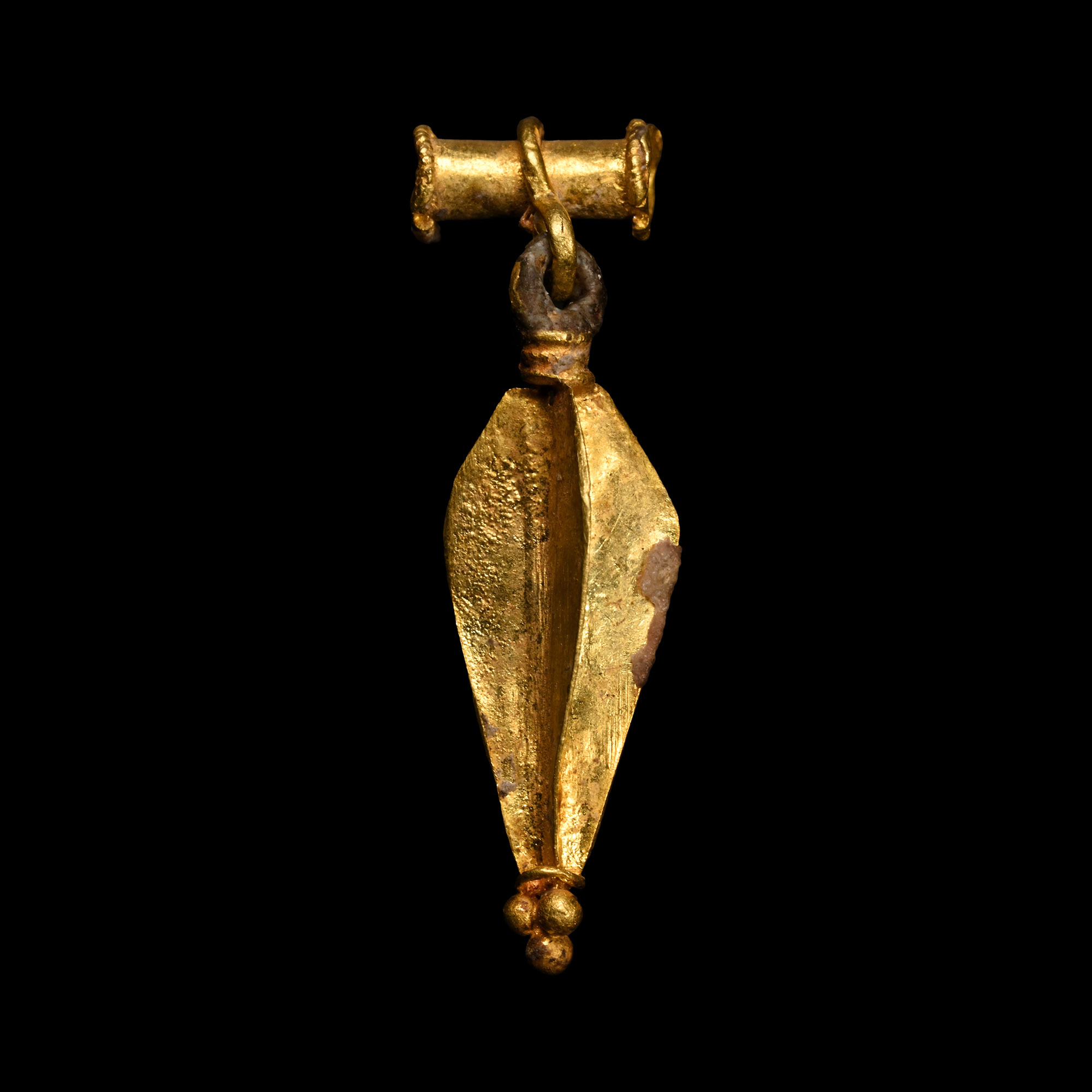
Cypriot Type Gold Flower Pendant
1ST MILLENNIUM B.C.
1 in. (0.7 grams, 24 mm).
Composed of four radiating petals, applied granules below; tubular suspension loop with granulated collar to each end; not found in Cyprus.
ProvenanceEx property of a late Japanese collector, 1970-2000s.
This lot has been cleared against the Art Loss Register database, and is accompanied by an illustrated lot declaration signed by the Head of the Antiquities Department, Dr Raffaele D'Amato.
TimeLine Auctions follows a vetting process to ensure the authenticity and legality of all items, reinforcing our commitment to integrity and responsible trading. Each antiquity, antique, and coin lot undergoes thorough examination by a vetting committee of at least ten external specialists, professional trade association members, scientists, and archaeologists: Our Vetting Process
AUCTIONS:
TimeLine is a leading auction house specialising in antiquities, ancient art, collectables, natural history, coins, medals, and books. Our auctions offer museums, collectors, historians, and enthusiasts the opportunity to acquire unique and historically significant pieces.
-
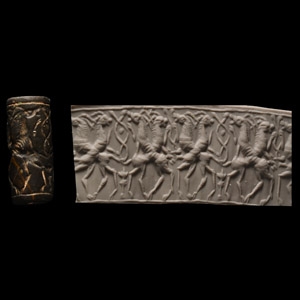
Neo-Assyrian Cylinder Seal with Figures
Circa 800 B.C.Sold for (Inc. bp): £208
Design comprising two pairs of rearing ibexes and other creatures, each crossing its partner forming a saltire; vertical looped-tendril motifs between; supplied with a museum-quality impression. 9.49 grams, 31 mm
Acquired in the mid 1980s-1990s. Private collection, Switzerland, thence by descent. Private collection, since the late 1990s. This lot has been cleared against the Art Loss Register database, and is accompanied by an illustrated lot declaration signed by the Head of the Antiquities Department, Dr Raffaele D'Amato. -
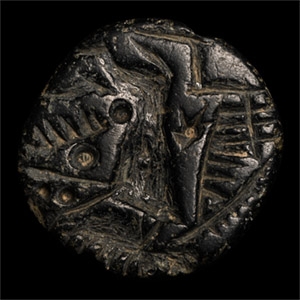
Anatolian Steatite Seal with Bird
3rd millennium B.C.Estimate: £300 - 400 (‡+bp*)
Opening Bid: £135
Plano-convex in profile with a lightly inscribed antique legend to domed face (including Arabic name and numeral '1298'); underside with reserved figure of a bird with wings spread. 28.7 grams, 36.5 mm
With Artemis Gallery, Munich, 1980s. Acquired from Artemis Gallery, November 1992. European private collection. This lot has been cleared against the Art Loss Register database, and is accompanied by an illustrated lot declaration signed by the Head of the Antiquities Department, Dr Raffaele D'Amato. -
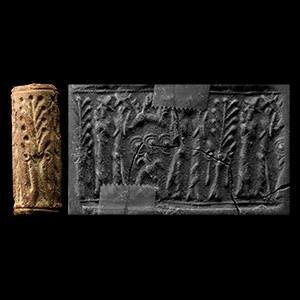
Mitanni Faience Cylinder Seal with Worship Scenes
Circa 1500-1200 B.C.Estimate: £400 - 600 (+bp*)
Opening Bid: £180
Accompanied by a copy of an old scholarly note, typed and signed by W.G. Lambert, late Professor of Assyriology, University of Birmingham, 1970-1993, which states: 'Cylinder Seal of Faience with Green Glaze 43 x 17 mm. The design, which is contained within a line above and another beneath, consists of two scenes of worship. The one shows a stylized sacred tree with a central trunk and five branches each side, all ending in buds, then a pendant hanging from each lowest branch on either side. On left and right and facing the tree are worshippers, both with hands raised. The other scene has two similar worshipers, facing each other with hands raised. Between them the area is divided in the middle by a guilloche. Above it is a stag falling onto its neck, below it is another kind of horned animal, but recumbent and turning its head. This seal is Mitanni, c. 1500-1200 B.C and from anywhere in the area between Syria and Western Kurdistan. It is a product of the Hurrian civilization and the stylized tree is a symbol of the Storm God, Hurrian Teshub, Babylonian Adad, Hebrew Hadad or Baal. The horned animals occur commonly on Mitanni seals, and this seal proves that they are symbolic of some god, but it is not known which one. The guilloche is a standard decorative filler of the period. Faience is a manufactures substance, comparable with the modern porcelain. In the ground it often deteriorates over the centuries and has a powdery surface. This one, however, is in good condition, the only mark of its age being that the glaze has lost something of its original colour, which was turquoise This is an unusually large seal and important since seals of this size and quality are extremely rare.'; supplied with a museum-quality impression. 11.3 grams, 42 mm
From the private collection of a North American lady, formed 1970s-early 1990s, with collection reference no.P31. Accompanied by a copy of a scholarly note, typed and signed by Professor Wilfrid George Lambert dated September 1990. This lot has been cleared against the Art Loss Register database, and is accompanied by an illustrated lot declaration signed by the Head of the Antiquities Department, Dr Raffaele D'Amato.
