
Loading, please wait...
LOT 1405
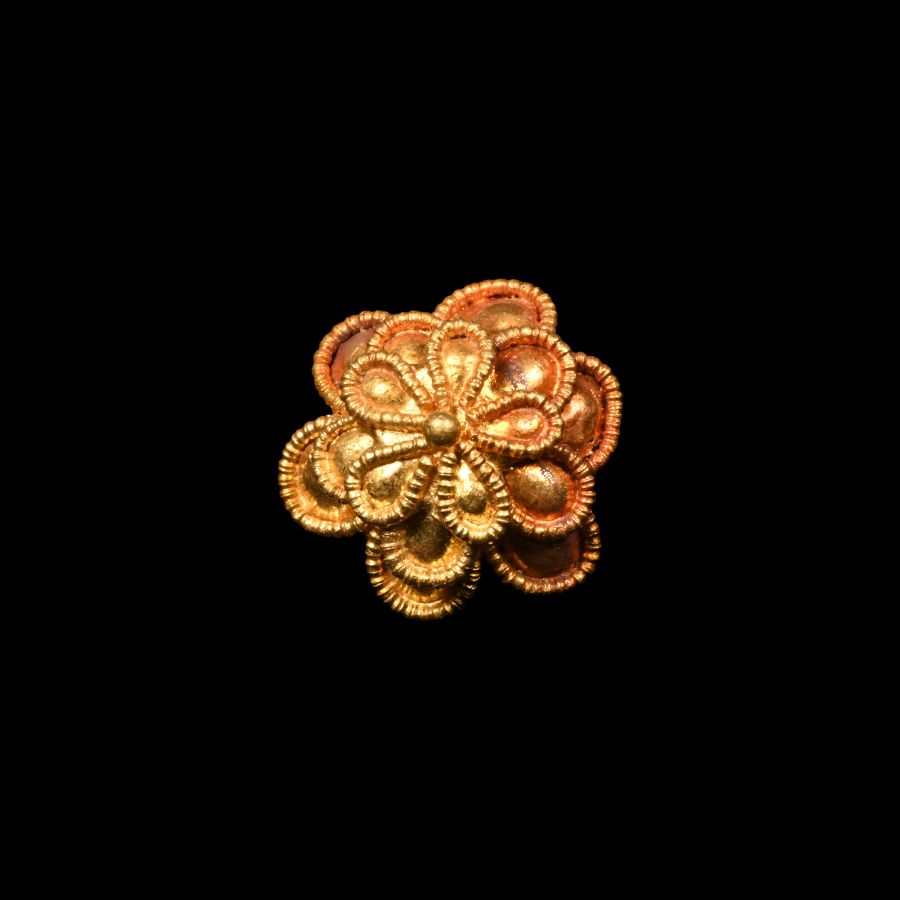
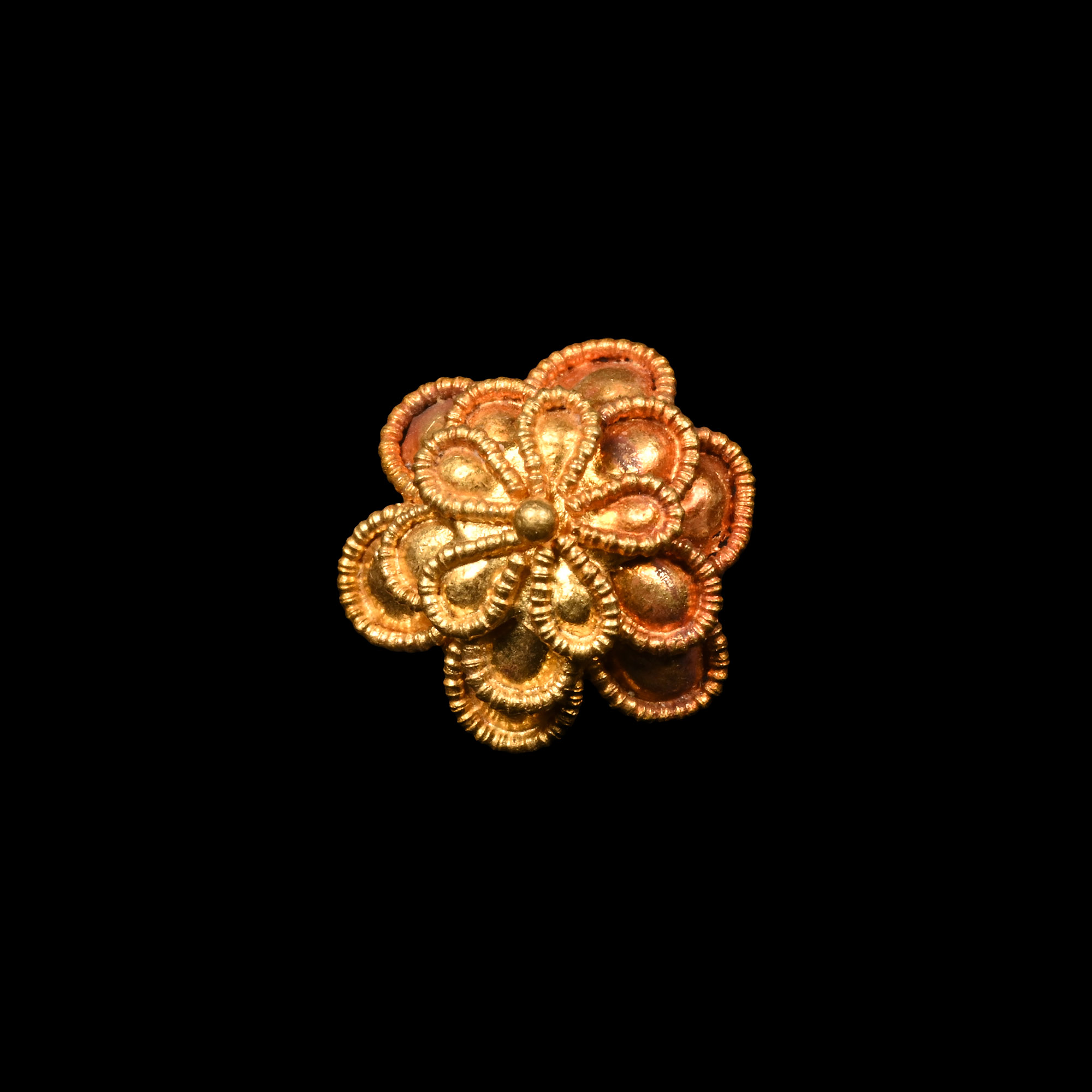
Cypriot Type Gold Flower Bead
4TH-3RD CENTURY B.C.
3/8 in. (0.72 grams, 10 mm).
Formed of three domed layers of petals with applied filigree edges, small pellet to the centre, loop to the reverse; not found in Cyprus.
ProvenanceEx property of a late Japanese collector, 1970-2000s.
This lot has been cleared against the Art Loss Register database, and is accompanied by an illustrated lot declaration signed by the Head of the Antiquities Department, Dr Raffaele D'Amato.
TimeLine Auctions follows a vetting process to ensure the authenticity and legality of all items, reinforcing our commitment to integrity and responsible trading. Each antiquity, antique, and coin lot undergoes thorough examination by a vetting committee of at least ten external specialists, professional trade association members, scientists, and archaeologists: Our Vetting Process
AUCTIONS:
TimeLine is a leading auction house specialising in antiquities, ancient art, collectables, natural history, coins, medals, and books. Our auctions offer museums, collectors, historians, and enthusiasts the opportunity to acquire unique and historically significant pieces.
-
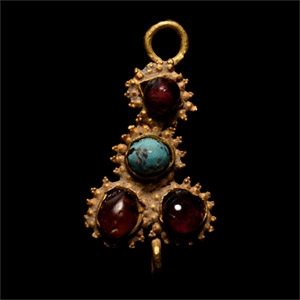
Western Asiatic Gold Pendant with Cabochons
Late 1st millennium B.C.-early 1st millennium A.D.Sold for (Inc. bp): £468
Comprising three circular bezels above a rhomboid bezel, loop above and below with mounting bar to the reverse; each bezel with radiating granule clusters, the central bezel set with a turquoise and the other three with garnets; the upper garnet a re-used bead. 4.88 grams, 34 mm
Ex property of a late Japanese collector, 1970-2000s. Accompanied by a dealer's information card. This lot has been cleared against the Art Loss Register database, and is accompanied by an illustrated lot declaration signed by the Head of the Antiquities Department, Dr Raffaele D'Amato. -
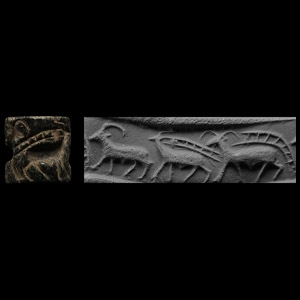
Jemdet Nasr Period Steatite Cylinder Seal
Circa 3000 B.C.Sold for (Inc. bp): £715
Accompanied by a copy of an old scholarly note, typed and signed by W.G. Lambert, late Professor of Assyriology, University of Birmingham, 1970-1993, which states: 'Cylinder Seal of soft Black Stone, 18 x 18 mm. The art shows a row of three horned animals, each distinct from the other two by its horns. Over the backs of two there is a ladder motif. This is a seal of the Jemdet Nasr period, c. 3000 B.C., from Mesopotamia or south-west Iran. The bodies of the animals are carefully modelled and the whole work is deeply engraved so that in the impression the animals stand out in deep relief. Of its kind this is a good example, in fine state of preservation. The ideology behind this scene comes from temple herds, because ordinary people rarely owned the larger domesticated animals, but normally sheep and goats. Thus cattle and other horned quadrupeds which were being domesticated at this time were the prized possession of the community. The ladder pattern is probably a stylized form of an ear of barley, which occurs (disproportionately large) behind the animal in some more detailed seal of this period.'; supplied with a museum-quality impression. 10.77 grams, 17 mm
From the private collection of a North American lady, formed 1970s-early 1990s, with collection reference no.119-2. Accompanied by a copy of a scholarly note, typed and signed by Professor Wilfrid George Lambert dated December 1991. This lot has been cleared against the Art Loss Register database, and is accompanied by an illustrated lot declaration signed by the Head of the Antiquities Department, Dr Raffaele D'Amato. -
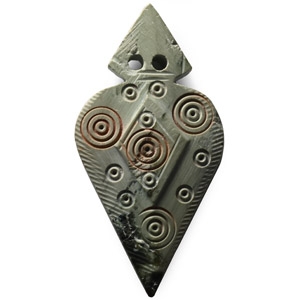
Western Asiatic Eye Pendant
19th-20th century A.D.Sold for (Inc. bp): £7
Plano-convex in section, heart-shaped body with reserved lozenge panel, incised ring-and-dot motifs; lozengiform bale with two suspension holes. 4.27 grams, 42 mm
Private collection, London, UK. This lot has been cleared against the Art Loss Register database, and is accompanied by an illustrated lot declaration signed by the Head of the Antiquities Department, Dr Raffaele D'Amato.
