
Loading, please wait...
LOT 0587
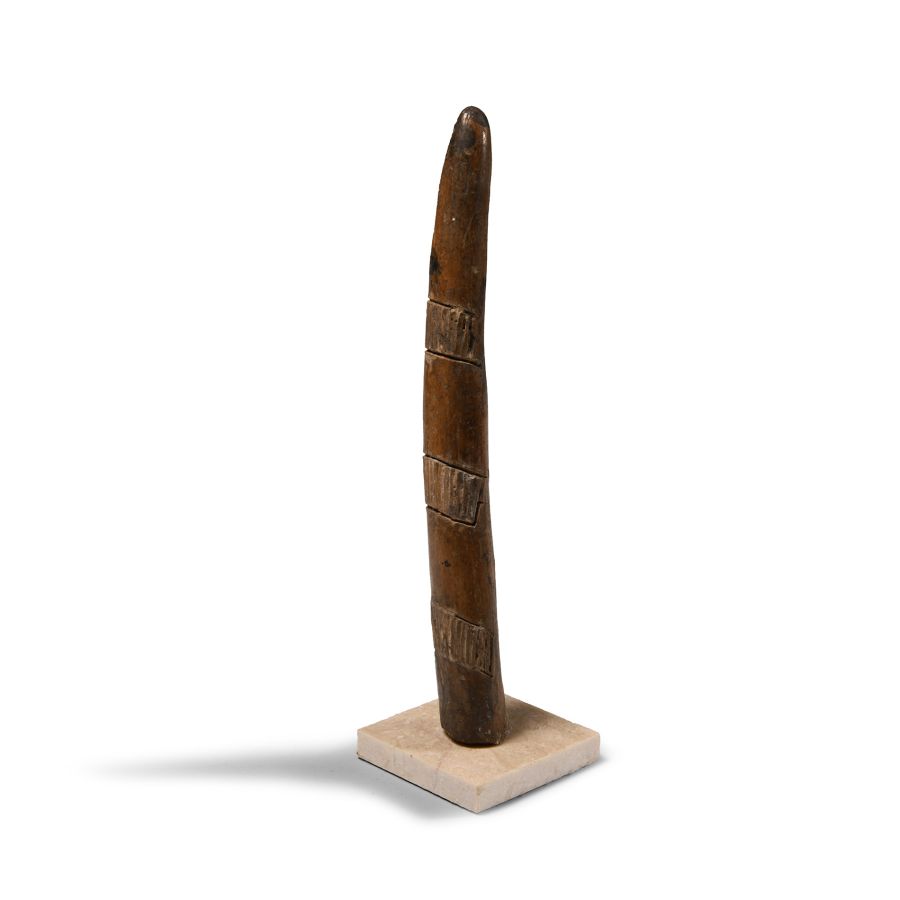
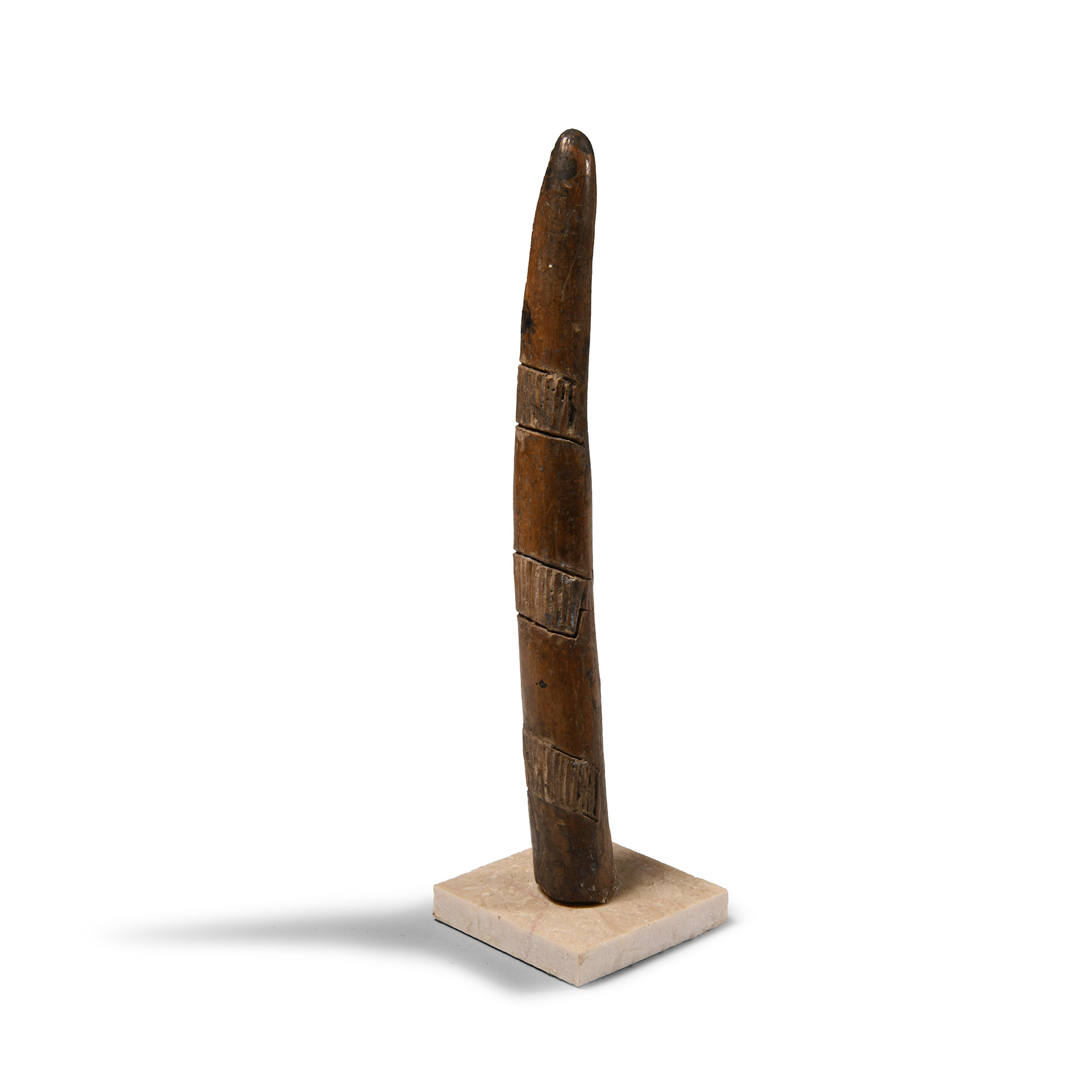
Cypriot Terracotta Votive Horn
2100-1850 B.C.
7 1/8 in. (127 grams total, 18 cm high).
Tapering round-section votive with reserved bands of dense linear hatching; repaired and mounted on a custom made display stand. [No Reserve]
ProvenanceFrom the celebrated personal collection of art formed by the famous anthropologist, artist, and television presenter Desmond Morris.
with Christie’s, South Kensington, 14 May 2002, no.19 (part).
From a collection acquired on the UK art market from various auction houses and collections mostly before 2000.
From an important Cambridgeshire estate; thence by descent.
Accompanied by copies of the relevant Christie's catalogue pages.
TimeLine Auctions follows a vetting process to ensure the authenticity and legality of all items, reinforcing our commitment to integrity and responsible trading. Each antiquity, antique, and coin lot undergoes thorough examination by a vetting committee of at least ten external specialists, professional trade association members, scientists, and archaeologists: Our Vetting Process
AUCTIONS:
TimeLine is a leading auction house specialising in antiquities, ancient art, collectables, natural history, coins, medals, and books. Our auctions offer museums, collectors, historians, and enthusiasts the opportunity to acquire unique and historically significant pieces.
-
.jpg)
Etruscan Bronze Statuette of Hercle
Circa 4th-3rd century B.C.Sold for (Inc. bp): £845
Modelled in the round figure of Hercle (Roman Hercules, Greek Herakles) standing nude with the lionskin mantle draped over his extended left forearm, the right arm bent and fist raised (originally holding a club); the hair cut short and radiating from the crown of the head, lentoid eyes flanking a snub nose; mounted on a custom-made stand. 87 grams total, 77 mm (10.2 cm high including stand)
From the estate of Eldert Bontekoe (1954-2020). Ex Ann Arbor, Michigan, USA, acquired before 2000. with Artemis Gallery, Colorado, USA, 26 December 2020, no.8. Property of a South Australian private collector, with collection reference 20.38. Accompanied by an original Artemis Gallery certificate of authenticity dated 27 January 2021. Accompanied by detailed collector's catalogue pages including description and photograph. -
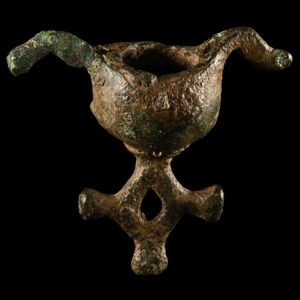
Greek Geometric Miniature Bronze Vessel with Cross
8th-7th century B.C.Sold for (Inc. bp): £26
Hemispherical bowl with lateral cranked arms to the rim, pierced lozenge beneath with stub arms. 16.3 grams, 42 mm
From a collection acquired on the UK art market from various auction houses and collections mostly before 2000. From an important Cambridgeshire estate; thence by descent. -
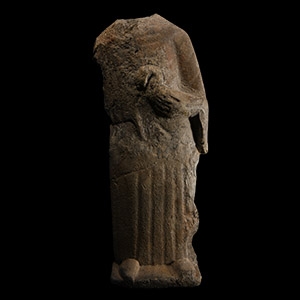
Phoenician Limestone Standing Goddess Holding a Bird
Circa 6th-5th century B.C.Sold for (Inc. bp): £442
D-shaped plaque, depicting a female wearing a floor-length gown, standing on a rectangular base; left arm bent to support a goose against the body. 1.39 kg, 34 cm
From a collection acquired on the UK art market from various auction houses and collections mostly before 2000. From an important Cambridgeshire estate; thence by descent.
