
Loading, please wait...
LOT 0591
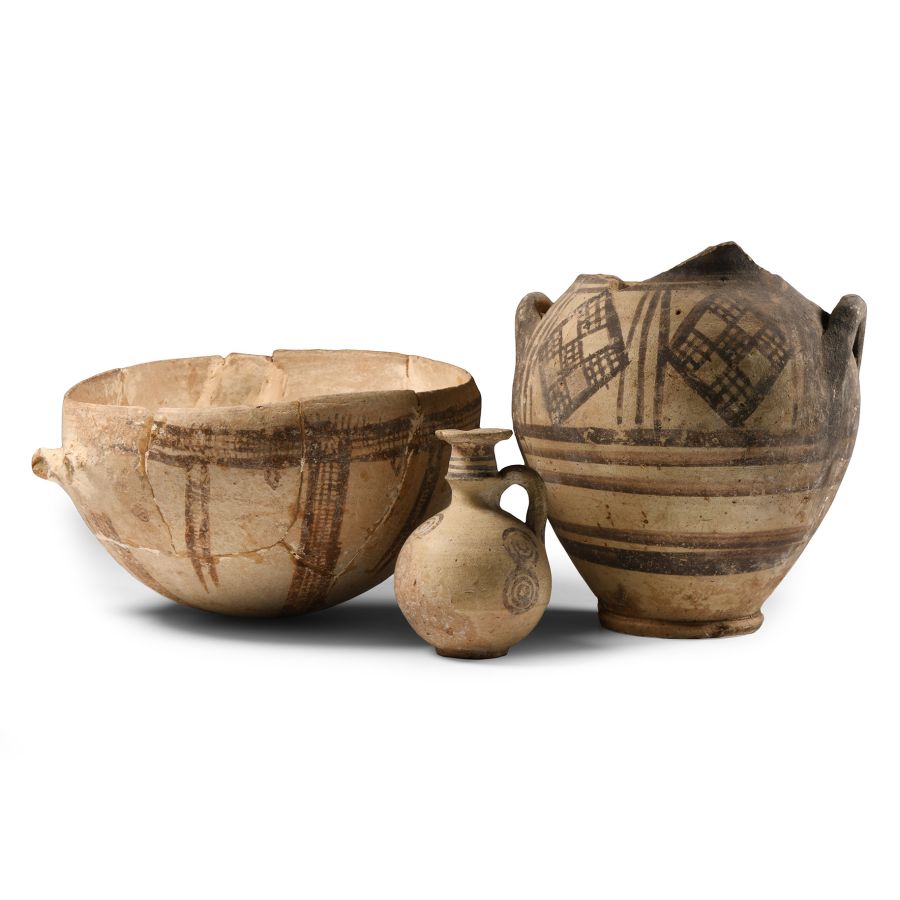
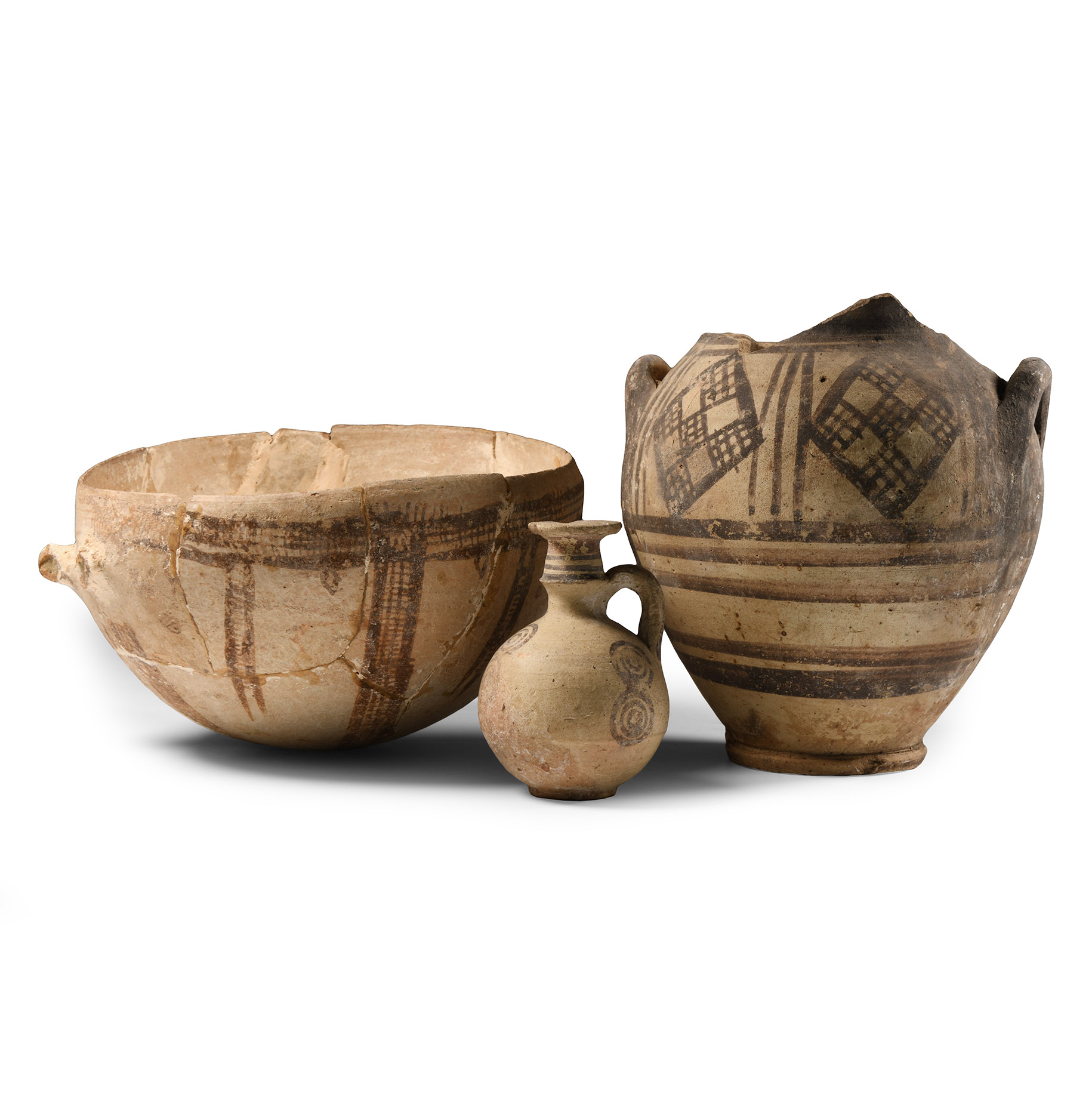
Cypriot Terracotta Vessel Group
IRON AGE, CYPRO-GEOMETRIC, 950-850 B.C.
3 - 6 1/2 in. (812 grams total, 7.7-16.5 cm).
Including a thin-walled bowl with painted motifs, an amphora with 'attached' handles and a small oinochoe decorated with circlets. [3, No Reserve]
ProvenanceFrom a collection acquired on the UK art market from various auction houses and collections mostly before 2000.
From an important Cambridgeshire estate; thence by descent.
Cf. Karageorghis, V., Cipro, Crocevia del Mondo Mediterraneo orientale 1600-500 a.C., Milano, 2002, fig.302 p,340, for a similar amphora.
FootnotesThe objects are proto-white painted pottery, with abstract linear lines and drawings, and circlets. The design of the pots and vessels followed local traditions, but as an island with links stretching across the Eastern Mediterranean, Levantine and Aegean coasts, Cyprus was influenced by foreign ceramic fashions of the time. The beautiful concentric circles were reminiscent of the sun; careful horizontal and vertical lines intersecting each other forming a graphic landscape.
CONDITIONTimeLine Auctions follows a vetting process to ensure the authenticity and legality of all items, reinforcing our commitment to integrity and responsible trading. Each antiquity, antique, and coin lot undergoes thorough examination by a vetting committee of at least ten external specialists, professional trade association members, scientists, and archaeologists: Our Vetting Process
AUCTIONS:
TimeLine is a leading auction house specialising in antiquities, ancient art, collectables, natural history, coins, medals, and books. Our auctions offer museums, collectors, historians, and enthusiasts the opportunity to acquire unique and historically significant pieces.
-
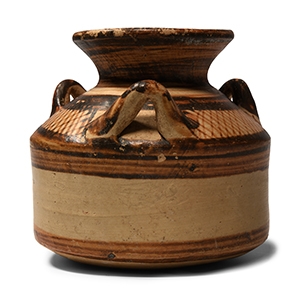
Mycenaean Painted Pottery Alabastron
13th-11th century B.C.Estimate: £1,200 - 1,700 (‡+bp*)
Opening Bid: £667
Drum-shaped with a sloping shoulder, short neck, trumpet-style neck and mouth and a gently rounded base; three loop handles at regular intervals around the shoulder; reddish-brown painted geometric bands and cross-hatching against a cream slip. 190 grams, 93 mm wide
Ex private collection, Holland. Acquired from Royal Athena Gallery, 2003, stock no.LAE07/2500. Accompanied by an original Royal Athena label. This lot has been checked against the Interpol Database of stolen works of art and is accompanied by search certificate number no.11852-206835. -
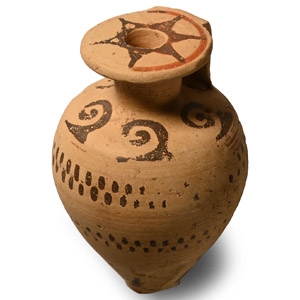
Greek Corinthian Terracotta Piriform Aryballos
Circa 600-550 B.C.Sold for (Inc. bp): £156
Bulbous vessel with narrow neck, broad rim to the mouth and short strap handle to the rear; circumferential rings of pellets and horizontal bands to the body, rosette to the rim, wave pattern to the shoulder; foot absent. 36 grams, 61 mm
Ex H. Norry collection, 1980s-1990s.
From the 8th century B.C. Corinthian pottery vessels were exported to Greek colonies in South Italy and the coast of Asia Minor. They were used to hold perfumed oil, an essential item for the wealthy middle classes of the time. In Italy, especially in Etruria, local workshops produced imitations of Corinthian vessel types for a clientele of Greek settlers and local populations with a taste for Greek fashions. -
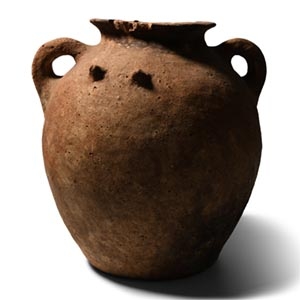
Cypriot Two-Handled Terracotta Jar
Middle Bronze Age, circa 2000-1800 B.C.Sold for (Inc. bp): £143
With barrel-shaped body, broad base, everted rim, two lateral loop handles to the shoulders and pairs of attached lugs between. 2.5 kg, 23 cm
From a collection acquired on the UK art market from various auction houses and collections mostly before 2000. From an important Cambridgeshire estate; thence by descent.
