
Loading, please wait...
LOT 0571
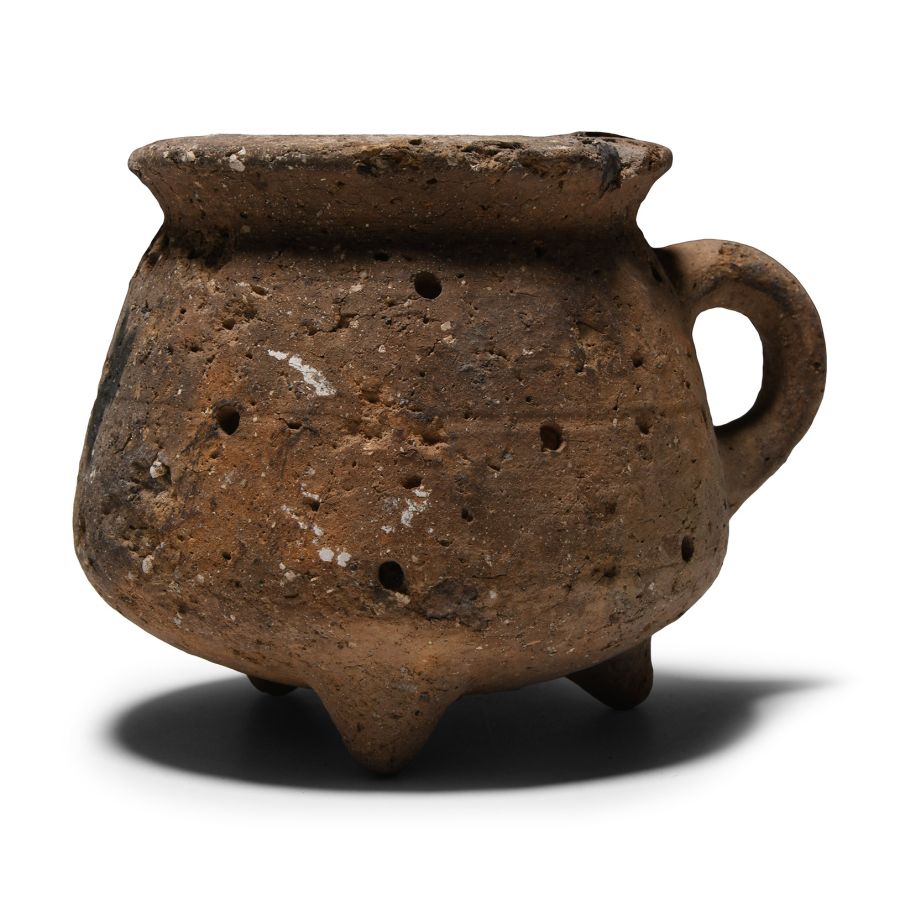
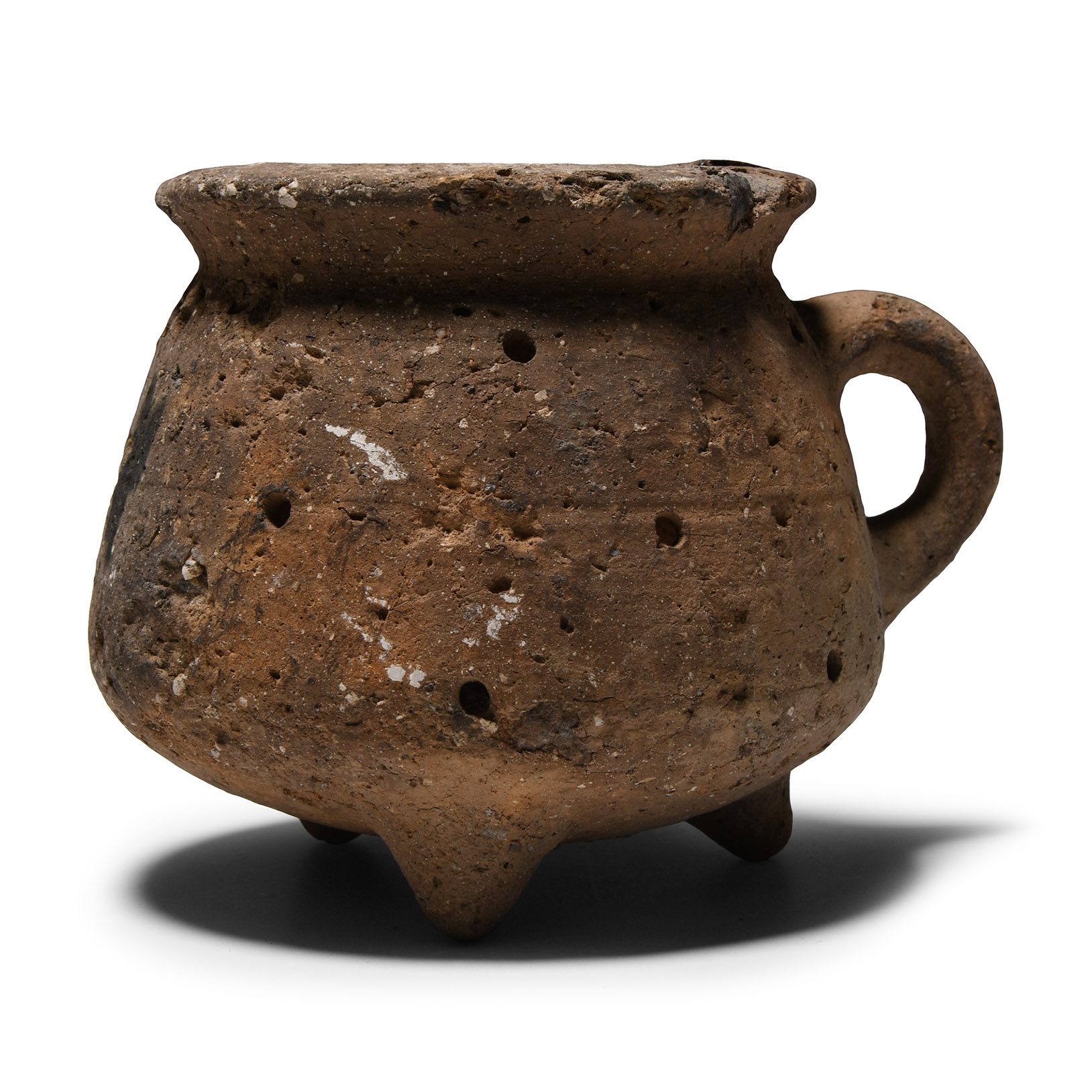
Cypriot Terracotta Tripod Strainer Cup
EARLY BRONZE AGE, 2700-2000 B.C.
4 5/8 in. (209 grams, 11.8 cm).
Squat cup with broad rim and three stub feet, loop handle; pierced in several places. [No Reserve]
ProvenanceFrom a collection acquired on the UK art market from various auction houses and collections mostly before 2000.
From an important Cambridgeshire estate; thence by descent.
TimeLine Auctions follows a vetting process to ensure the authenticity and legality of all items, reinforcing our commitment to integrity and responsible trading. Each antiquity, antique, and coin lot undergoes thorough examination by a vetting committee of at least ten external specialists, professional trade association members, scientists, and archaeologists: Our Vetting Process
AUCTIONS:
TimeLine is a leading auction house specialising in antiquities, ancient art, collectables, natural history, coins, medals, and books. Our auctions offer museums, collectors, historians, and enthusiasts the opportunity to acquire unique and historically significant pieces.
-
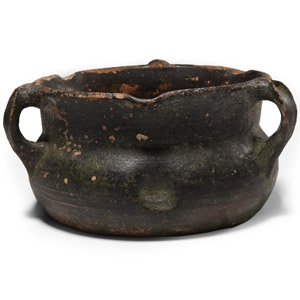
Etruscan Three-Handled Bowl
Circa 6th century B.C.Sold for (Inc. bp): £39
Squat in profile with three equidistant dimples to the shoulder, everted rim with three radiating pinched strap handles, pouring lip. 504 grams, 15 cm wide
From a collection acquired on the UK art market from various auction houses and collections mostly before 2000. From an important Cambridgeshire estate; thence by descent. -
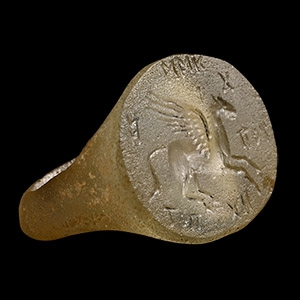
Greek Glass Ring with Pegasus
3rd-2nd century B.C.Sold for (Inc. bp): £4,420
Aqua-coloured glass, flared shoulders and ellipsoid bezel with intaglio winged horse motif, surrounding enigmatic legend 'Η MMK ΠΟΥ TΠ XII'. 4.70 grams, 24.17 mm overall, 16.00 mm internal diameter (approximate size British I 1/2, USA 4 1/2, Europe 8.07, Japan 7)
with Daniels Collection, New York, 1970s-1980s. Acquired by the present owner from the above. This lot has been checked against the Interpol Database of stolen works of art and is accompanied by search certificate number no.12218-222158. -
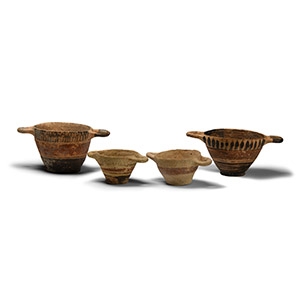
Corinthian Miniature Terracotta Skyphos Collection
6th century B.C.Estimate: £400 - 600 (‡+bp*)
Opening Bid: £222
Group of four graduated ceramic cups, each with two loop handles to the rim and painted detailing to the outer face. 103 grams total, 6.5-10.1 cm
Acquired from Gallery Gryphos, Munich, early 2000s. European private collection.
