
Loading, please wait...
LOT 0611
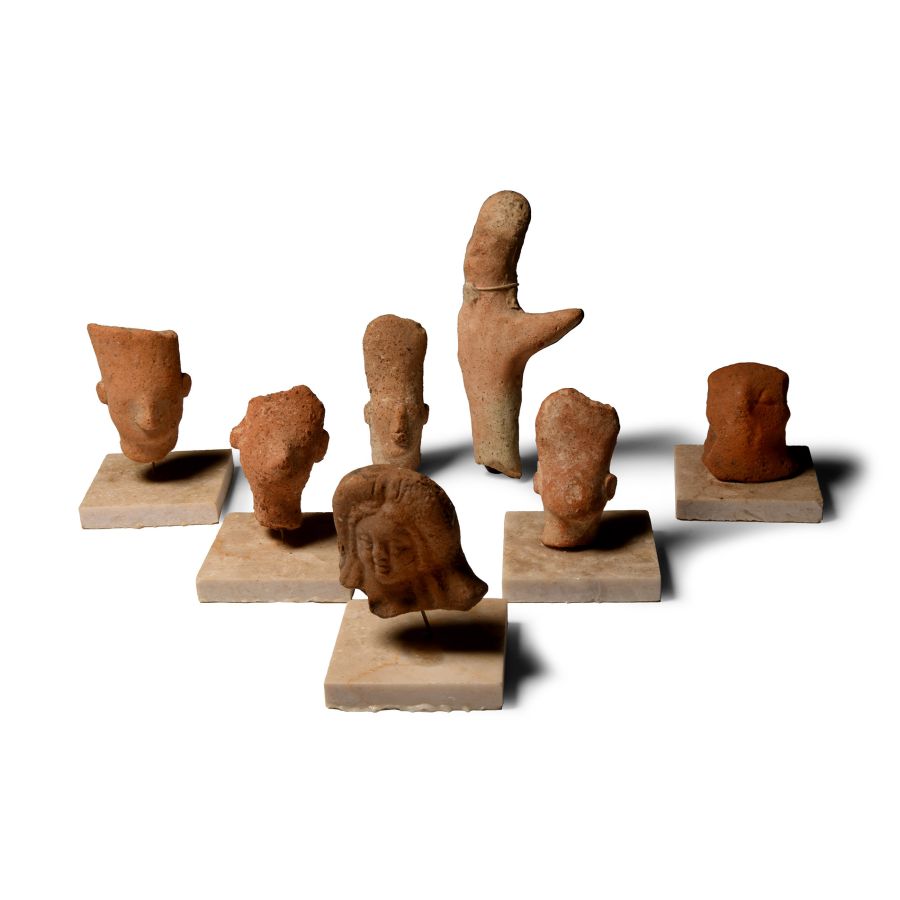
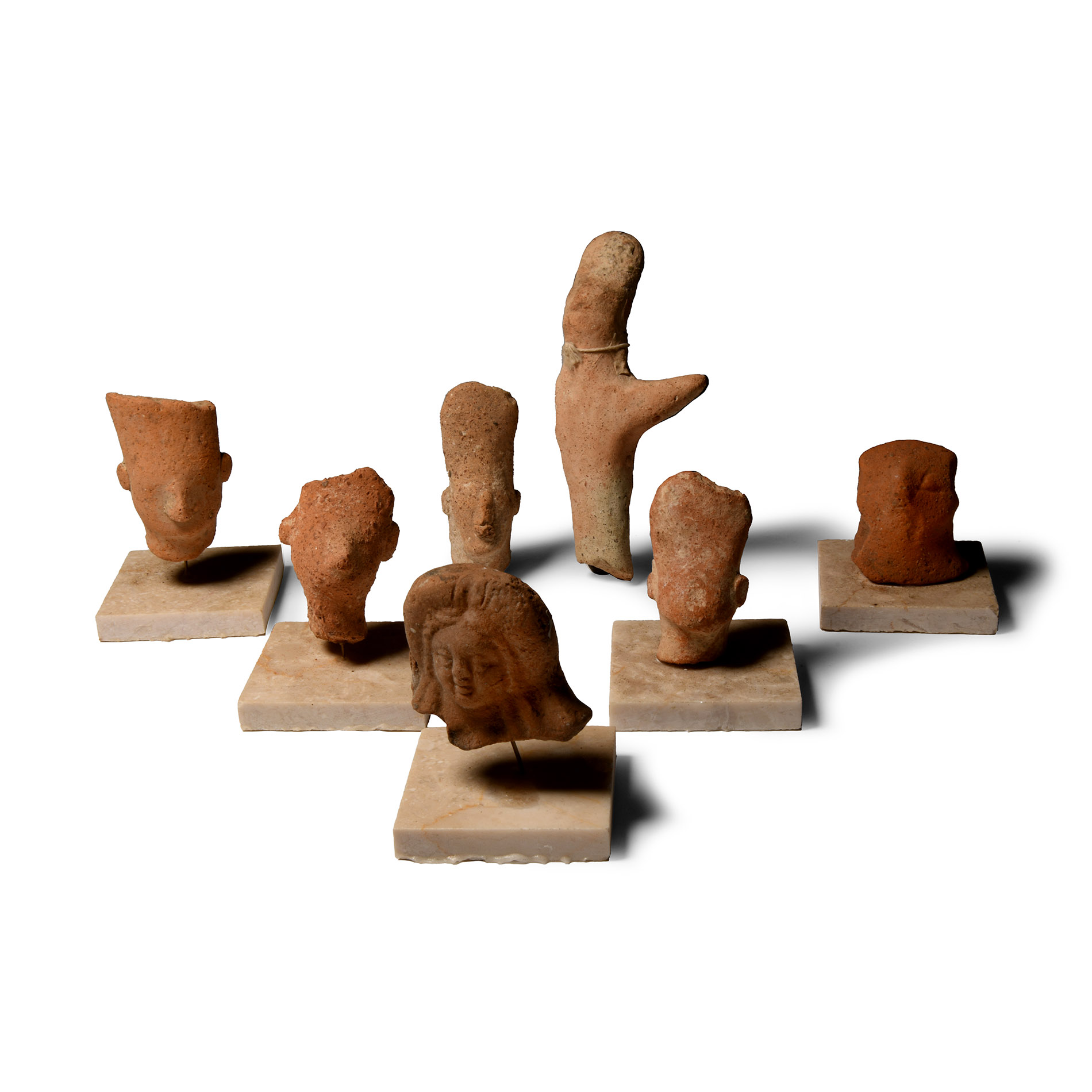
Cypriot Terracotta Figure Head Collection
CIRCA 1000 B.C.
1 3/4 - 4 1/8 in. (476 grams total, 4.5-10.5 cm).
Group of terracotta heads from figurines, one with moulded facial detailing, the others pinched. [7, No Reserve]
ProvenanceOne with antique tag: 'CYPRUS / C.1000 BC / Terracotta Fragment of / Mother-Goddess.'
From a collection acquired on the UK art market from various auction houses and collections mostly before 2000.
From an important Cambridgeshire estate; thence by descent.
TimeLine Auctions follows a vetting process to ensure the authenticity and legality of all items, reinforcing our commitment to integrity and responsible trading. Each antiquity, antique, and coin lot undergoes thorough examination by a vetting committee of at least ten external specialists, professional trade association members, scientists, and archaeologists: Our Vetting Process
AUCTIONS:
TimeLine is a leading auction house specialising in antiquities, ancient art, collectables, natural history, coins, medals, and books. Our auctions offer museums, collectors, historians, and enthusiasts the opportunity to acquire unique and historically significant pieces.
-
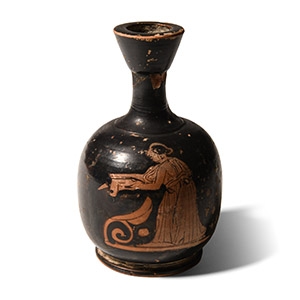
Greek Red-Figure Lekythos
5th century B.C.Estimate: £1,200 - 1,700 (‡+bp*)
Opening Bid: £600
Of ovoid form with trumpet-shaped spout and strap handle, reserved image of a lady wearing a large himation, on a baseline with scrolled foliage. 106 grams, 11 cm
Ex German collection, 1970. with Galerie Chenel, Paris, 22 July 2008.
The word lekythos had a wide meaning in ancient Greece, probably generally meaning all oil jugs, including the athletes' oil bottle (now called aryballos) as well as the types now given this name by archaeologists. Certain lekythoi resemble certain oenochoe superficially, at a first glance. Oenochoes, however, were wine-pitchers and in most cases were larger than the lekythoi, which were small jugs for oil, perfumes, etc. -
.jpg)
Minoan Bronze Statuette of a Lady
Middle Period, circa 1700-1450 B.C.Sold for (Inc. bp): £1,560
With a small, stylised face with detailed eyes, nose and mouth; right hand raised to hold a child; wearing a flounced skirt with double belt; mounted on a custom-made display stand. 499 grams total, 16.5 cm high including stand
British private collection, acquired by 2000. From a collection acquired on the UK art market from various auction houses and collections mostly before 2000. From an important Cambridgeshire estate; thence by descent.
In the Dictean Cave in Greece, many votive statuettes of this type were found. The flounced skirt is characteristic of Minoan women's dress, and it was lavishly decorated in folds of different colours. It could be worn with or without a narrow corselet, but in both cases exposing the breast. The exposed breast was connected to the cult of the mother goddess, and fertility, an element here reinforced by the presence of the suckling child. -
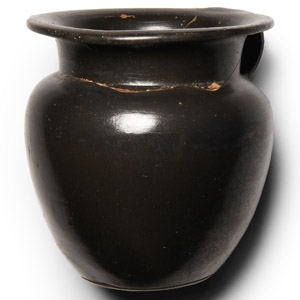
Greek Apulian Black-Glazed Mug
Circa 4th-3rd century B.C.Estimate: £250 - 350 (+bp*)
Opening Bid: £125
With a high-gloss black slip, ovoid body and a short wide neck with a flaring rim, a wide strap handle and a flat base. 144 grams, 95 mm wide
Ex P. A., Hertfordshire, UK, specialist collection of Greek art, 1980-1990s.
The black glaze technique uses the same glaze used by the Greeks on the red-figure and black-figure ceramics, but covering the entire piece, without figurative decoration. It was a transparent raw glaze, which took on its characteristic intense, glossy black tone after firing.
