
Loading, please wait...
LOT 0602
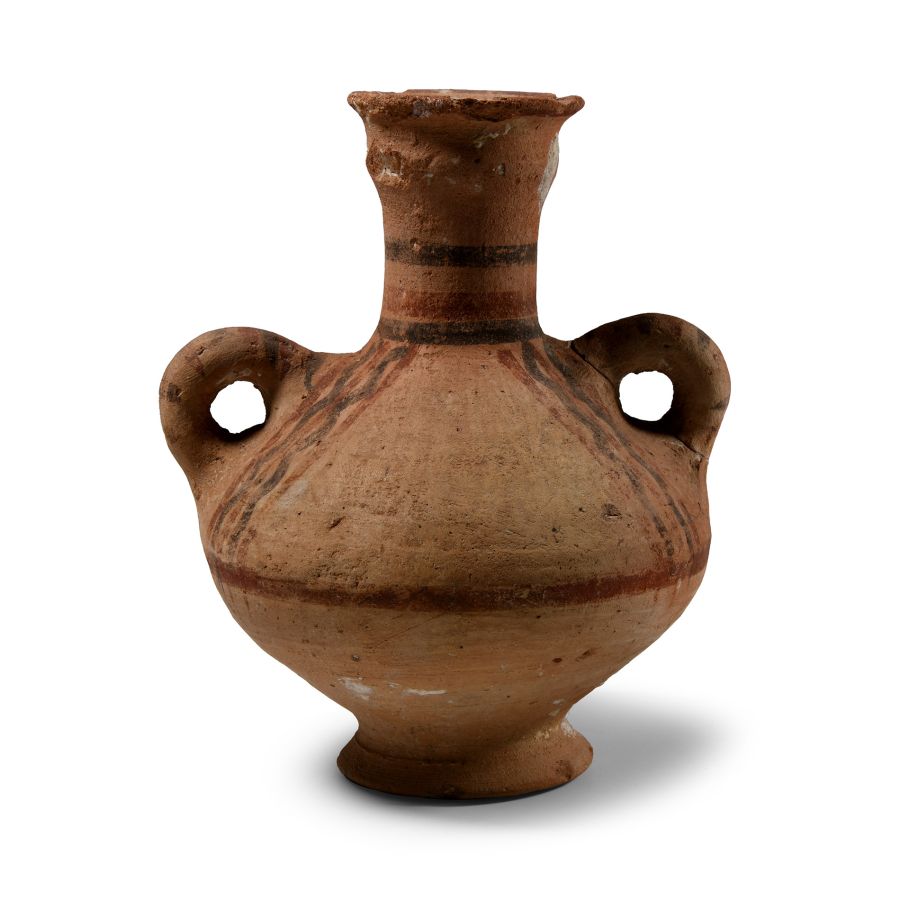
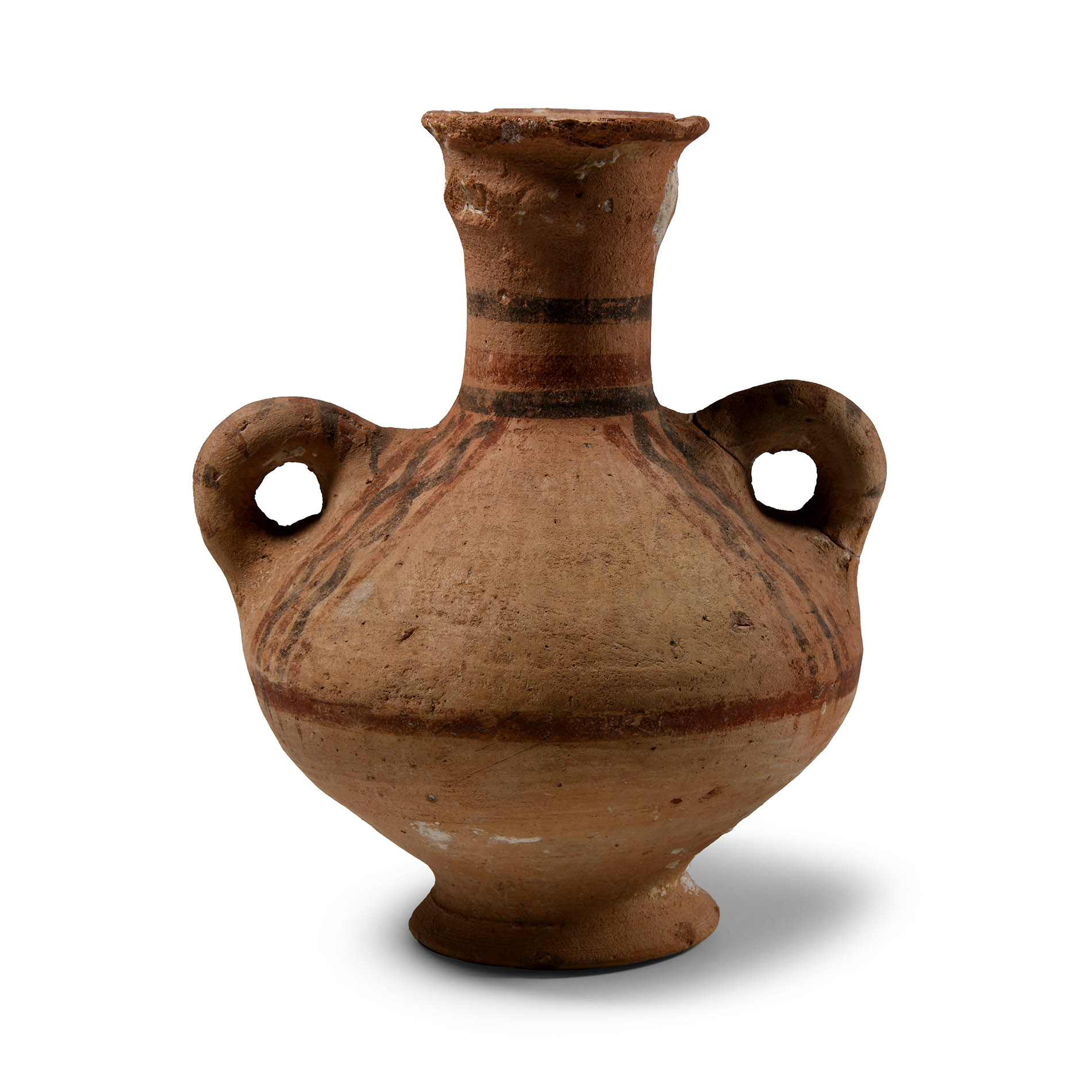
Cypriot Terracotta Double-Handled Flask
MIDDLE BRONZE AGE, 2000-1650 B.C.
6 in. (509 grams, 15.5 cm).
Biconvex in profile with small flared foot, trumpet-shaped mouth and two lateral loop handles to the shoulder; painted ring and geometric detailing; repaired. [No Reserve]
ProvenanceFrom a collection acquired on the UK art market from various auction houses and collections mostly before 2000.
From an important Cambridgeshire estate; thence by descent.
TimeLine Auctions follows a vetting process to ensure the authenticity and legality of all items, reinforcing our commitment to integrity and responsible trading. Each antiquity, antique, and coin lot undergoes thorough examination by a vetting committee of at least ten external specialists, professional trade association members, scientists, and archaeologists: Our Vetting Process
AUCTIONS:
TimeLine is a leading auction house specialising in antiquities, ancient art, collectables, natural history, coins, medals, and books. Our auctions offer museums, collectors, historians, and enthusiasts the opportunity to acquire unique and historically significant pieces.
-
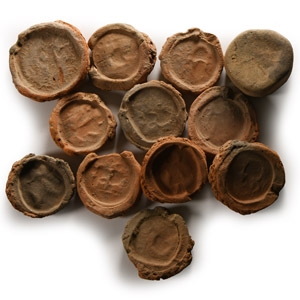
Indo-Greek Terracotta Forger's Mould Group
Circa 2nd-1st century B.C.Sold for (Inc. bp): £85
Group of discoid clay moulds for casting contemporary counterfeit coins. 57 grams total, 25-30 mm
Private collection formed in the 1990s. Acquired from a central London gallery. Property of an Essex, UK, gentleman. -
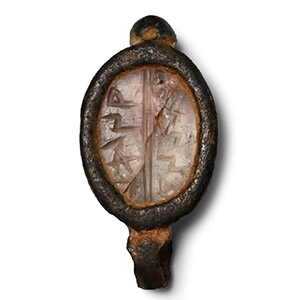
Phoenician Amethyst Gemstone with Aramaic Inscription
8th century B.C.Sold for (Inc. bp): £3,120
Rock crystal scaraboid in a bronze frame with suspension loop; reverse with two lines of Aramaic text; obverse cracked. 1.82 grams, 21 mm
From the collection of a gentleman, acquired on the London art market in the 1990s. This lot has been checked against the Interpol Database of stolen works of art and is accompanied by search certificate number no.12217-221658. -
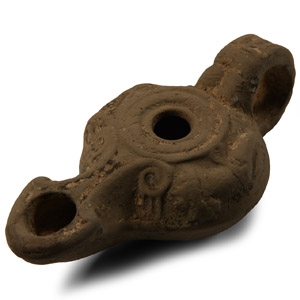
Hellenistic Terracotta Oil Lamp with Cornucopiae
2nd-1st century B.C.Estimate: £180 - 240 (+bp*)
Opening Bid: £90
With circular body and raised rim, round central filling-hole flanked by cornucopiae; long broad nozzle with rounded spout-like termination; handle with three ribs. 62 grams, 10.5 cm
Collected from 1970-1999. From the collection of the late Mr S.M., London, UK.
The principal parts of a Graeco-Roman lamp were: a) the body or reservoir which contained the oil (infundibulum); the flat circular top (discus) on which the design was placed, sometimes with an ornamental rim; the edge (margo); the nozzle (rostrum, nasus, myxus) with a hole for the insertion of the wick (ellychnium); and the handle (ansa, manubrium,).
