
Loading, please wait...
_900x900.jpg "Cypriot Terracotta Bull Rhyton")
_200x200.jpg "Cypriot Terracotta Bull Rhyton")
_900x900.jpg "Cypriot Terracotta Bull Rhyton")
_200x200.jpg "Cypriot Terracotta Bull Rhyton")
.jpg "Cypriot Terracotta Bull Rhyton")
.jpg "Cypriot Terracotta Bull Rhyton")
LOT 0087
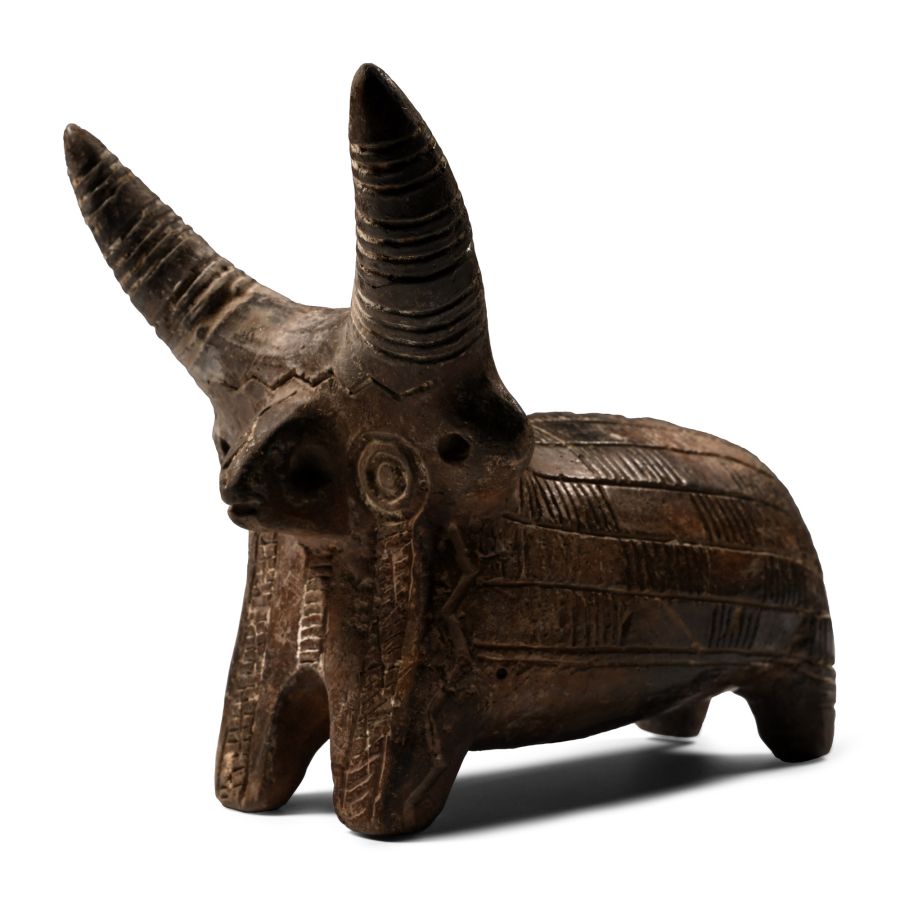
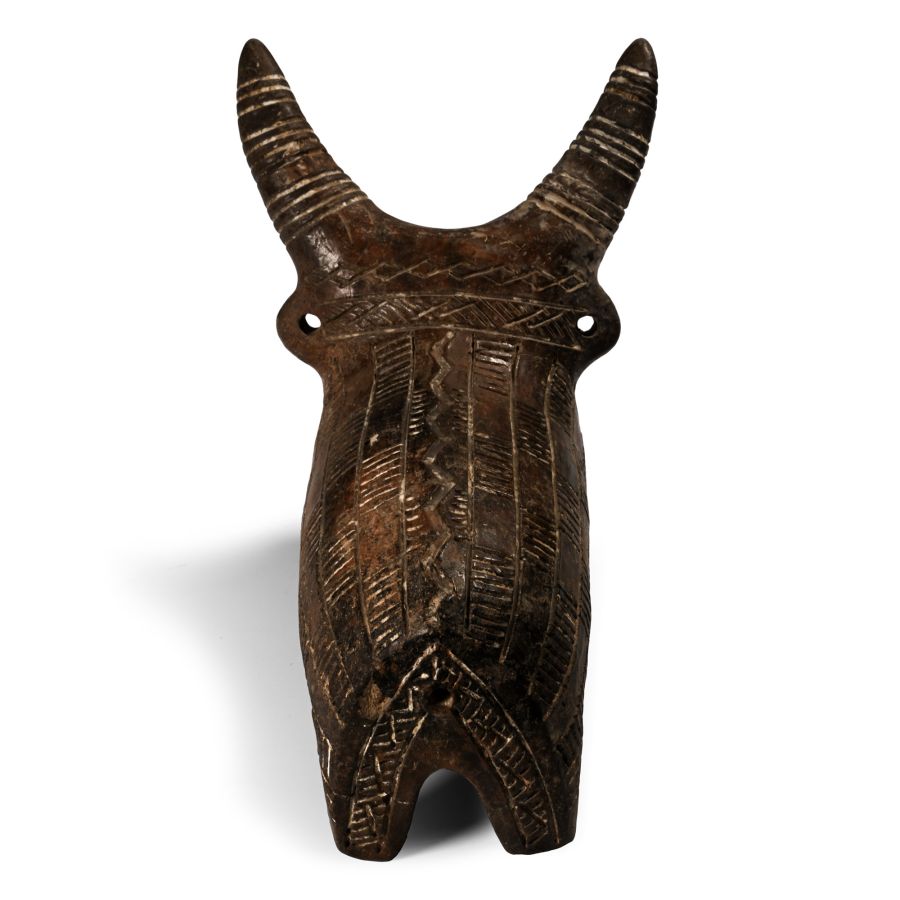
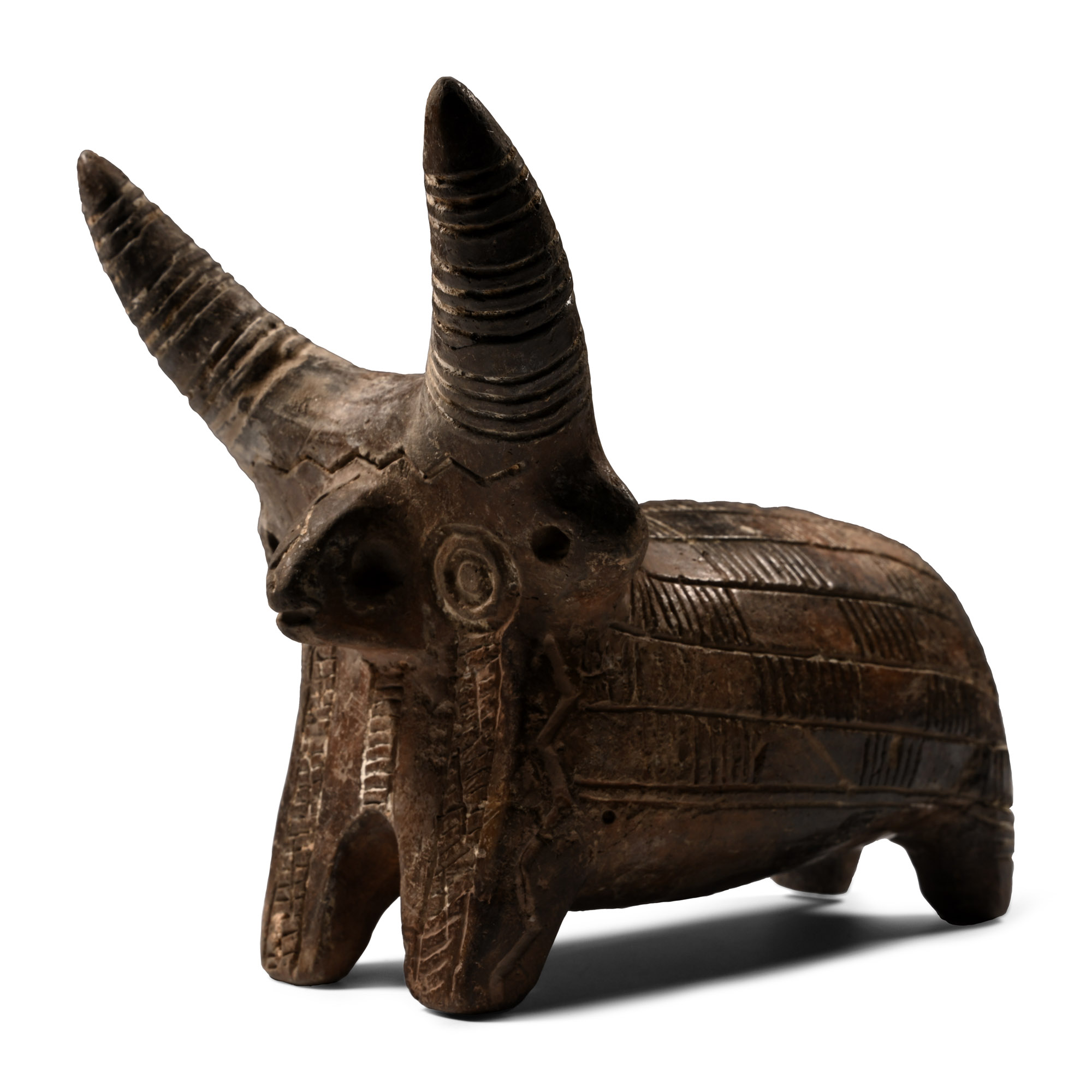
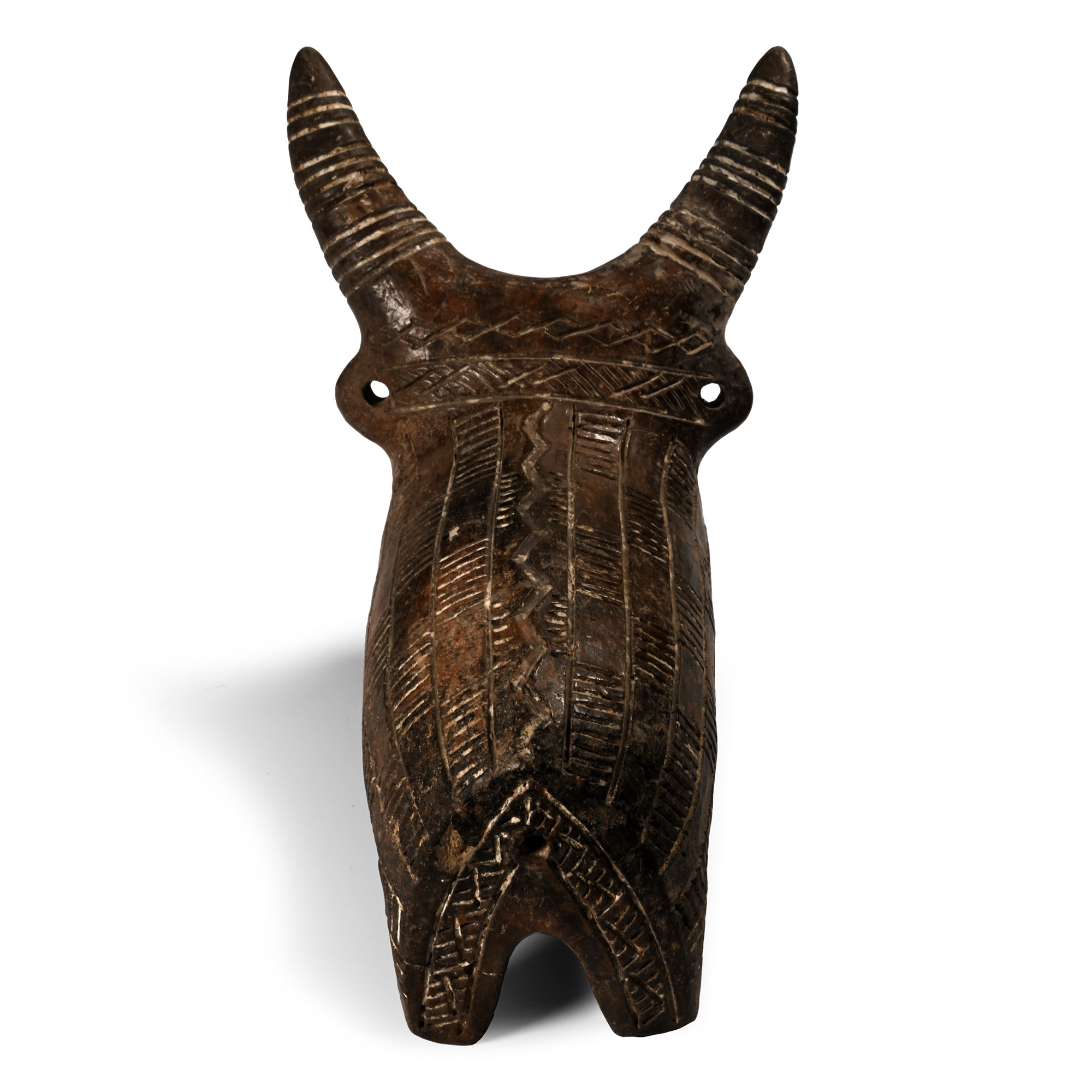
Cypriot Terracotta Bull Rhyton
8TH CENTURY B.C.
6 3/4 in. (501 grams, 17 cm long).
Modelled in the round with bands of hatched texture to the back, rump and horns, pierced lug muzzle, incised detailing.
ProvenanceUK private collection, 1994.
European private collection.
Accompanied by a thermoluminescence analysis report no.N125e38 from Oxford Authentication.
This lot has been checked against the Interpol Database of stolen works of art and is accompanied by a search certificate number no.12656-234662.
This lot has been cleared against the Art Loss Register database, and is accompanied by an illustrated lot declaration signed by the Head of the Antiquities Department, Dr Raffaele D'Amato.
Cf. Hornbostel, W. and Mitarbeiter, Kunst de Antique, Schatz aus Noddeutschem Privatbesitz, exhibition catalogue, Hamburg, 1977, no.188.
CONDITIONTimeLine Auctions follows a vetting process to ensure the authenticity and legality of all items, reinforcing our commitment to integrity and responsible trading. Each antiquity, antique, and coin lot undergoes thorough examination by a vetting committee of at least ten external specialists, professional trade association members, scientists, and archaeologists: Our Vetting Process
AUCTIONS:
TimeLine is a leading auction house specialising in antiquities, ancient art, collectables, natural history, coins, medals, and books. Our auctions offer museums, collectors, historians, and enthusiasts the opportunity to acquire unique and historically significant pieces.
-
.jpg)
Scythian Gold Repoussé Animal Mount
Early 1st millennium B.C.Estimate: £450 - 650 (+bp*)
Opening Bid: £240
Formed as an advancing lion, hatching to hips and shoulders; mounted on a custom-made stand. 29.63 grams total, 22 mm wide (62 mm high including stand)
From the Robin Symes Mayfair gallery before 1999, and part of a collection exhibited at the gallery. Ex London, UK, collection. This lot is accompanied by an illustrated lot declaration signed by the Head of the Antiquities Department, Dr Raffaele D'Amato. -
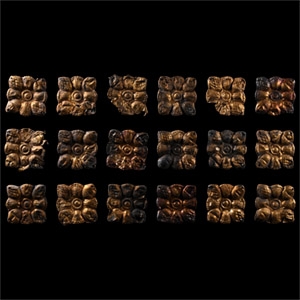
Greek Gold Applique Group
7th-5th century B.C.Estimate: £1,500 - 2,000 (‡+bp*)
Opening Bid: £750
Comprising eighteen repoussé plaques, each with a central boss and a flower bud to each side, the corners with alternating pinecones and acorns, pierced through the corners; mounted on a perspex backing. 91 grams total, 22 mm each
From the estate of Dr Jacob Hirsch. Acquired by Galerie Rhéa, Zurich, from the above in 1999. This lot has been cleared against the Art Loss Register database, and is accompanied by an illustrated lot declaration signed by the Head of the Antiquities Department, Dr Raffaele D'Amato. -
.jpg)
Greek Silver Ring for Skythos
Circa 5th century B.C.Sold for (Inc. bp): £3,120
Ellipsoid bezel with incuse figure of a running horse, Greek text 'ΣΚΥΘΟΑΓΑΘΗ' for 'the sake of Skythos'. 7.57 grams, 25.17 mm overall, 20.68 mm internal diameter (approximate size British R 1/2, USA 8 3/4, Europe 19.38, Japan 18)
Acquired in the mid 1980s-1990s. Private collection, Switzerland, thence by descent. Private collection, since the late 1990s. This lot has been cleared against the Art Loss Register database, and is accompanied by an illustrated lot declaration signed by the Head of the Antiquities Department, Dr Raffaele D'Amato.
