
Loading, please wait...
LOT 0626
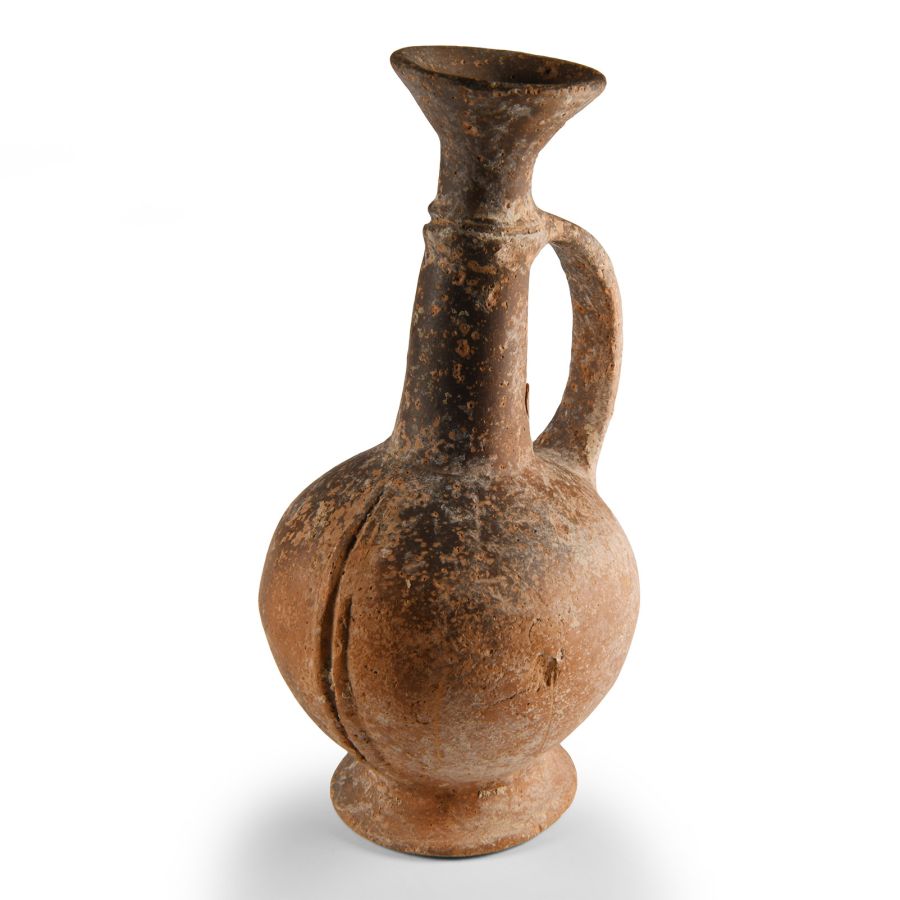
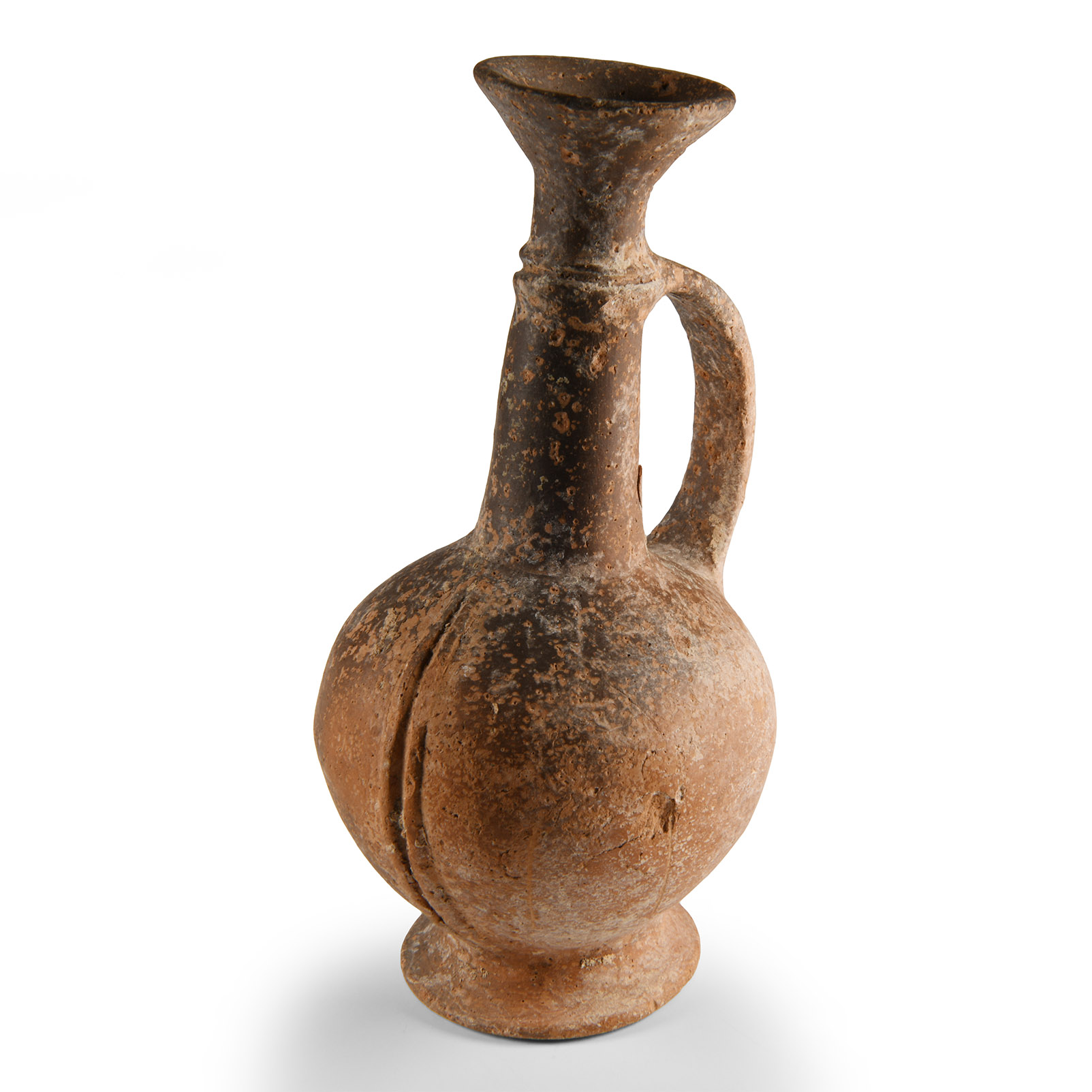
Cypriot Terracotta Base Ring Juglet
CIRCA 2ND MILLENNIUM B.C.
4 3/8 in. (55 grams, 11 cm).
With flared basal ring, bulbous poppy-head body, tubular neck with transverse rib developing to a strap handle, trumpet-shaped mouth.
ProvenanceEx North Yorkshire, UK, collection, 1990s.
LiteratureCf. similar item in the Metropolitan Museum of Art, New York, under accession no.12.181.263.
CONDITIONTimeLine Auctions follows a vetting process to ensure the authenticity and legality of all items, reinforcing our commitment to integrity and responsible trading. Each antiquity, antique, and coin lot undergoes thorough examination by a vetting committee of at least ten external specialists, professional trade association members, scientists, and archaeologists: Our Vetting Process
AUCTIONS:
TimeLine is a leading auction house specialising in antiquities, ancient art, collectables, natural history, coins, medals, and books. Our auctions offer museums, collectors, historians, and enthusiasts the opportunity to acquire unique and historically significant pieces.
-
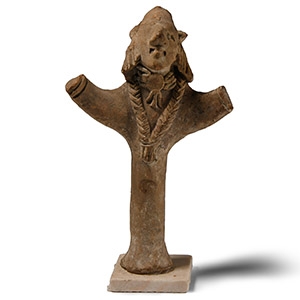
Archaic Greek Terracotta Standing Figure
7th-5th century B.C.Sold for (Inc. bp): £520
Modelled in the round figure standing with arms raised, head tilted upward with shoulder-length hair and horned cap, collar to the throat with large disc closure, pectral pendant on a stylised braided thong; mounted on a custom-made stand; possibly Cypriot workmanship. 277 grams total, 17 cm high including stand
Ex Ernest Ohly collection. Acquired from Woolley & Wallis, Wiltshire, UK, 20 May 2010, no.1010 (part). From an important Cambridgeshire estate; thence by descent. Accompanied by a copy of the Woolley & Wallis catalogue listing and the original lot tag. -
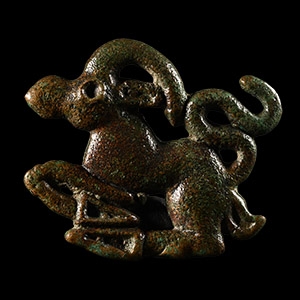
Scythian Bronze Antelope Mount
Circa 4th-3rd century B.C.Sold for (Inc. bp): £286
Openwork with mounting lug to the reverse; animal in active pose with S-curved tail. 50 grams, 60 mm
Acquired 1980-2015. Ex Abelita family collection. -
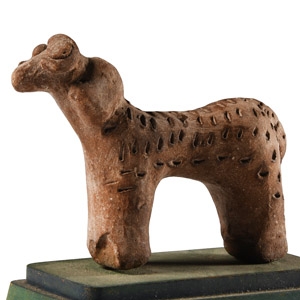
Cypriot Terracotta Ram
Early Bronze Age, circa 2500-2000 B.C.Sold for (Inc. bp): £247
Modelled in the round with fleece texture to the back and rump, applied eyes and horns; mounted on a display base with old collector's labels to the underside: 'Cyprus / Early bronze age, 250-2000 BC. / Ram, red clay, once attached to the rim of a vessel.' and '2517-14/3'. 204 grams total, 11 cm wide including stand
Ex Professor Karl Lunde collection (1931-2009). From a collection acquired on the UK art market from various auction houses and collections mostly before 2000. From an important Cambridgeshire estate; thence by descent. With old label to the base and accompanied by the remains of an old identification tag.
