
Loading, please wait...
LOT 0577
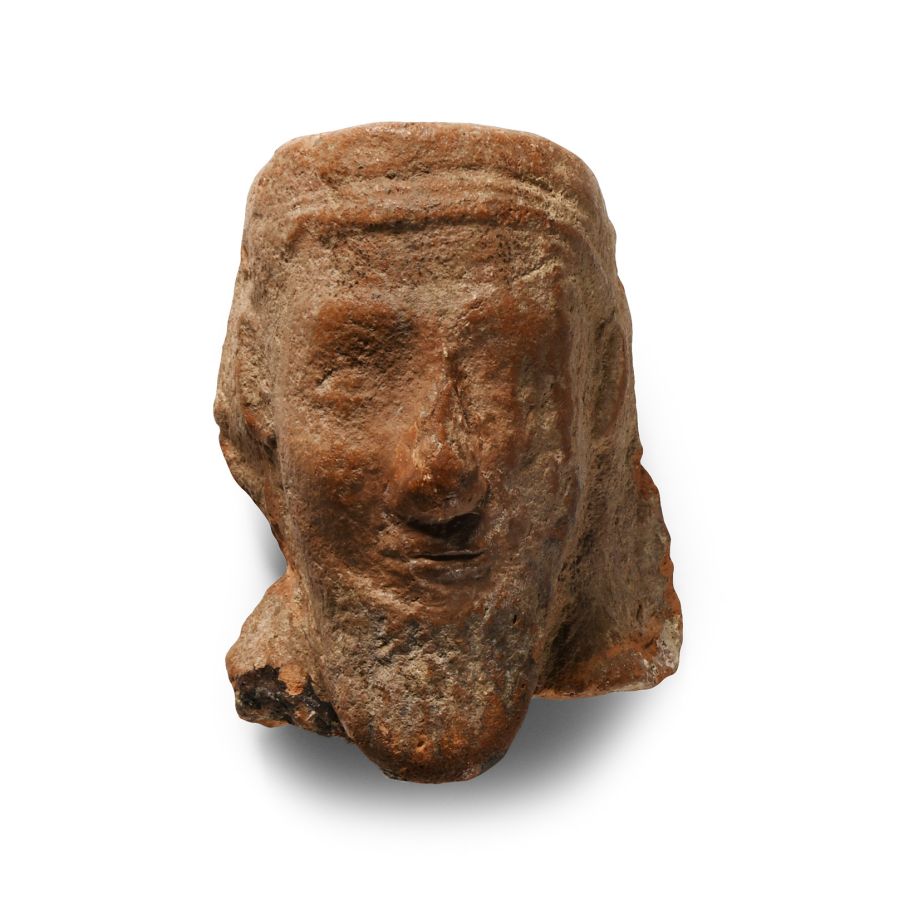
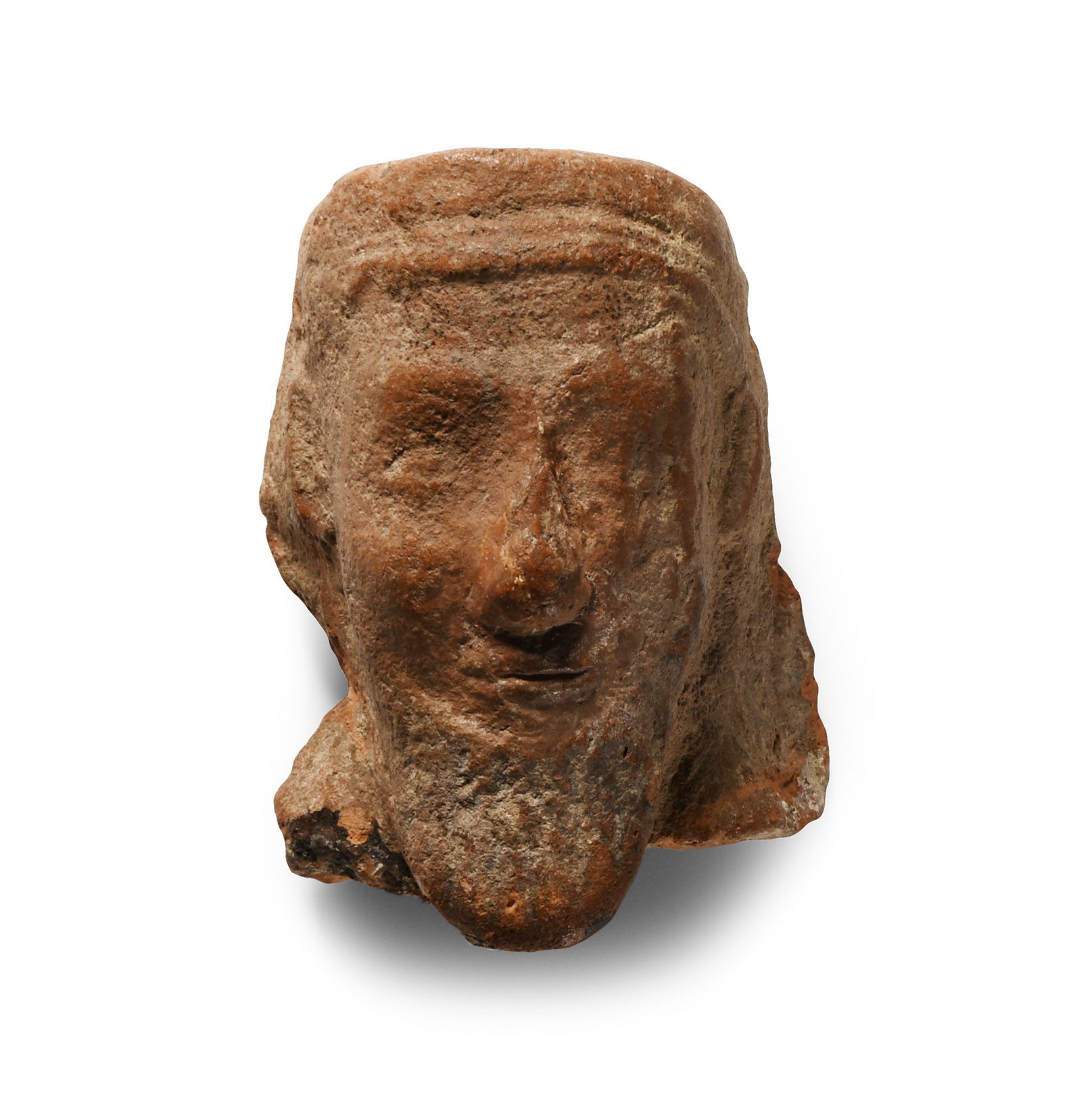
Cypriot Terracotta Archaic Male Head
CIRCA 7TH-6TH CENTURY B.C.
2 1/2 in. (96 grams, 63 mm).
Statue or frieze fragment, male head with flat-topped cap, long face with beard, remains of pigment.
ProvenanceEx Jacques Schotte collection (1928-2007) Belgium, 1950s onwards.
with Bonhams, London, 29th April 2009, lot 147 (part).
Property of a North London collector.
Accompanied by a letter from Pierre Verite of Galerie Carrefour, Paris, dated 25 March 1963, relating to a Greek terracotta head from Cyprus, circa 7th-6th century B.C., and copies of the relevant Bonhams catalogue pages.
TimeLine Auctions follows a vetting process to ensure the authenticity and legality of all items, reinforcing our commitment to integrity and responsible trading. Each antiquity, antique, and coin lot undergoes thorough examination by a vetting committee of at least ten external specialists, professional trade association members, scientists, and archaeologists: Our Vetting Process
AUCTIONS:
TimeLine is a leading auction house specialising in antiquities, ancient art, collectables, natural history, coins, medals, and books. Our auctions offer museums, collectors, historians, and enthusiasts the opportunity to acquire unique and historically significant pieces.
-
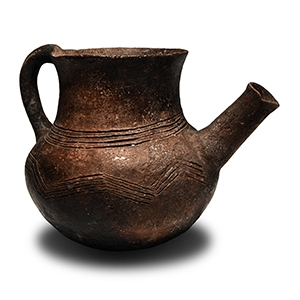
Cypriot Red Burnished Ware Round Bottomed Pouring Vessel
Bronze Age, 2300-1650 B.C.Sold for (Inc. bp): £338
With rounded bottom, broad body and neck, slightly flared rim, strap handle to the rear, spout with flared end, bands of incised lines and zigzags. 347 grams, 13.1 cm
From a collection acquired on the UK art market from various auction houses and collections mostly before 2000. From an important Cambridgeshire estate; thence by descent. -
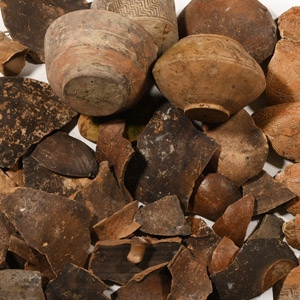
Greek and Other Pottery Fragment Group
Circa 1st millennium B.C.Sold for (Inc. bp): £98
Including squat and biconical bowls, amphora sherds and other types. 3.34 kg total, 4-19 cm
From a collection acquired on the UK art market from various auction houses and collections mostly before 2000. From an important Cambridgeshire estate; thence by descent. -
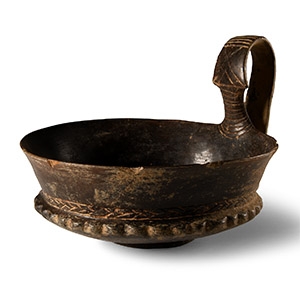
Villanovan Impasto Kyathos with Comb-Etched Decoration
7th century B.C.Sold for (Inc. bp): £338
Modelled with wide and squat body with carination and flared mouth; raised, biforal handle with transverse grooves and cross-hatch below; small projections emerging from the sides and an incised zigzag line around the body. 196 grams, 15.5 cm wide
From a Belgian collection formed in the 1970s and 1980s. Ex Haynault Ventes Publiques, Uccle, Belgium, 21 September 2021, lot 21. Property of a South Australian private collector, with collection reference 21.101. Accompanied by collector's catalogue page including description and photograph.
