
Loading, please wait...
LOT 0082
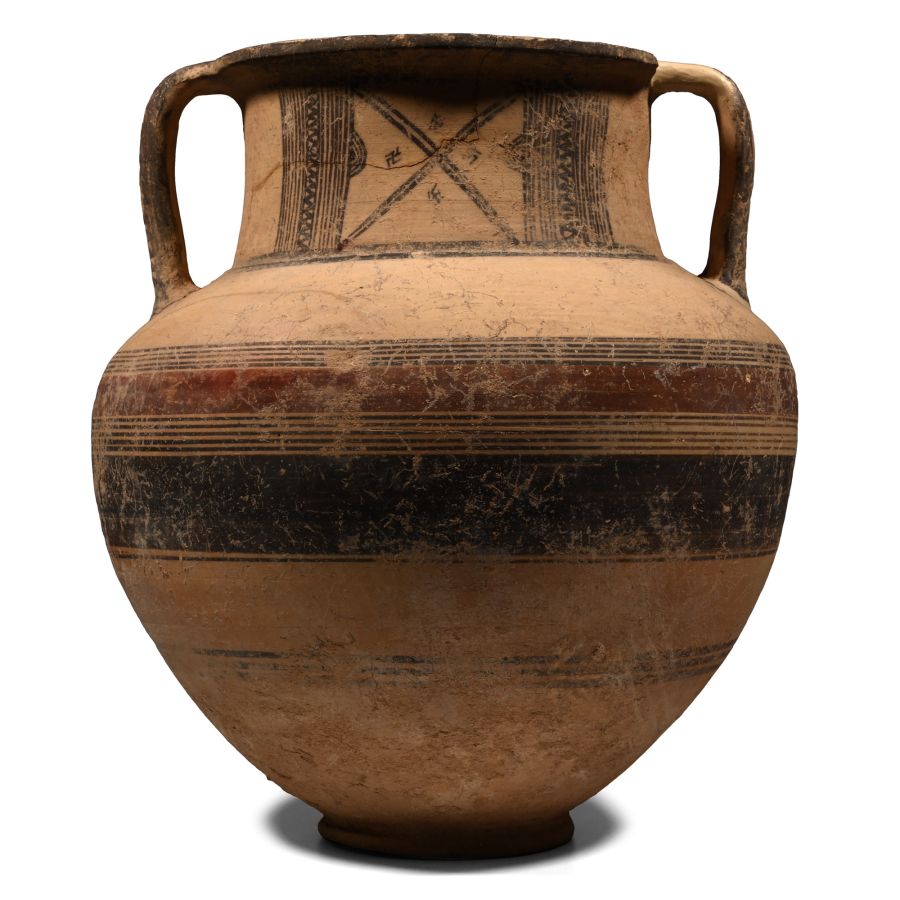
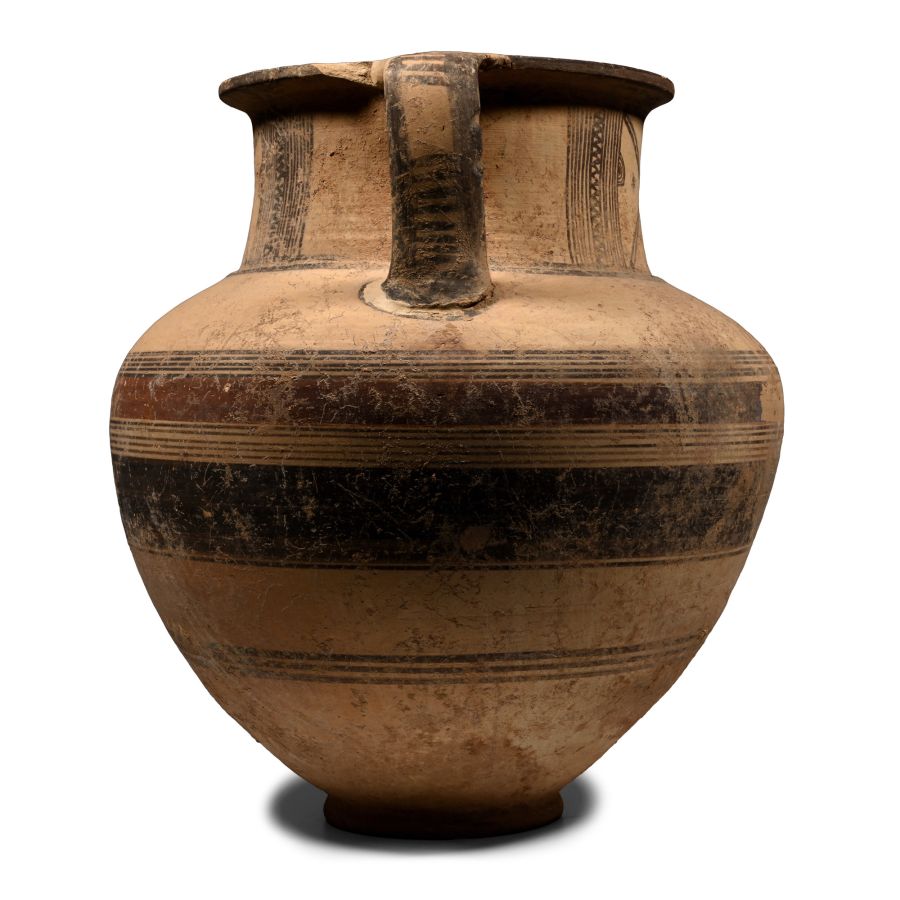
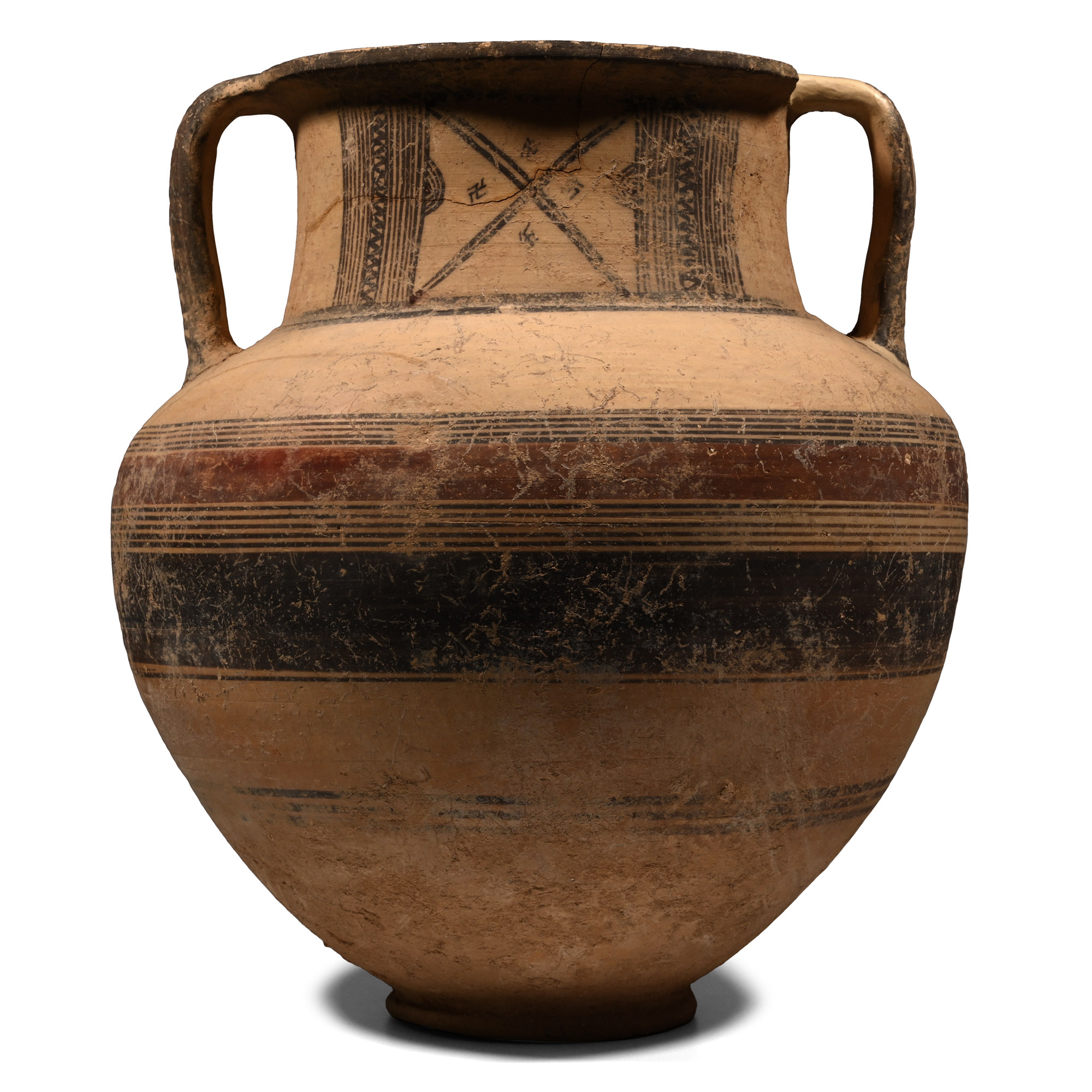
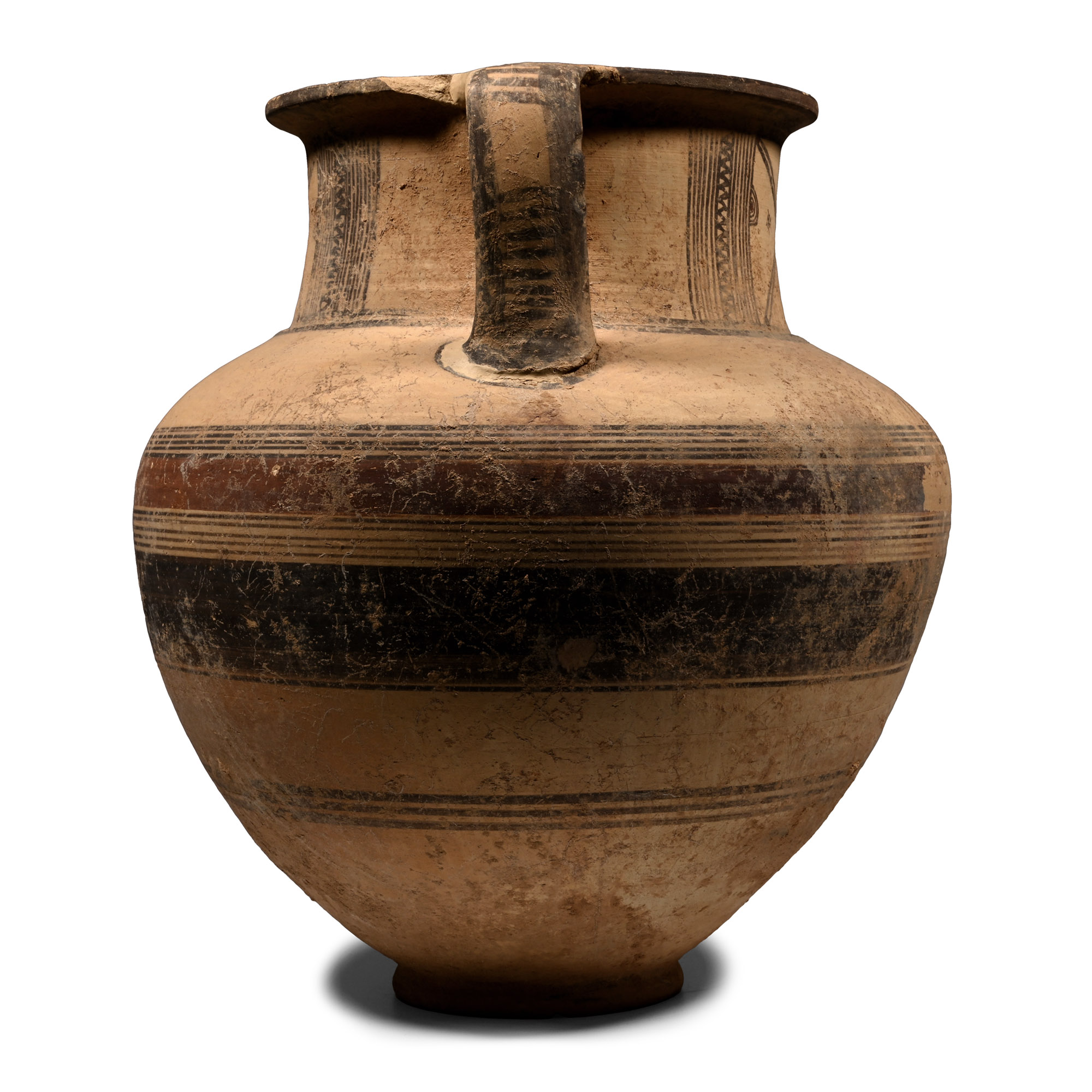
Cypriot Terracotta Amphora
8TH-7TH CENTURY B.C.
15 in. (4.4 kg, 38 cm high).
Buffware vessel with bands of painted decoration on the ovoid body and on the rim, panels of reeding, saltires, gammadions and other ornament to the neck, loop handles.
ProvenancePrivate collection, Lebanon, early 1970s.
Private collection, acquired in the late 1980s.
Thence by descent, family collection, since 1998.
Accompanied by an academic report by Dr Raffaele D'Amato.
This lot has been checked against the Interpol Database of stolen works of art and is accompanied by a search certificate number no.12653-234696.
This lot has been cleared against the Art Loss Register database, and is accompanied by an illustrated lot declaration signed by the Head of the Antiquities Department, Dr Raffaele D'Amato.
Cf. Karagheorghis, V., Ancient Art from Cyprus, The Cesnola Collection in the Metropolitan Museum of Art, New York, 2000, pp. 90-93, nos. 143, 145-148; Karagheorghis, V. et al., Cypriote Antiquities in the Royal Ontario Museum, Nicosia, 2003, pp. 37 ff., no. 59; Spiteris, T., The Art of Cyprus, New York, 1970, pp. 102-107, pp. 156-157; Yon, M., Manuel de céramique chypriote, I, Problèmes historiques, Vocabulaire, Méthode, Lyon, 1976, pp. 59-64.
CONDITIONTimeLine Auctions follows a vetting process to ensure the authenticity and legality of all items, reinforcing our commitment to integrity and responsible trading. Each antiquity, antique, and coin lot undergoes thorough examination by a vetting committee of at least ten external specialists, professional trade association members, scientists, and archaeologists: Our Vetting Process
AUCTIONS:
TimeLine is a leading auction house specialising in antiquities, ancient art, collectables, natural history, coins, medals, and books. Our auctions offer museums, collectors, historians, and enthusiasts the opportunity to acquire unique and historically significant pieces.
-
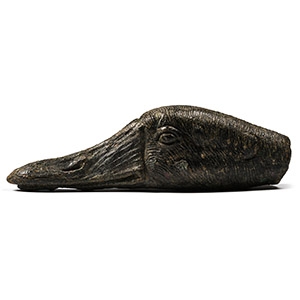
Greek Bronze Duck's Head
3rd-2nd century B.C.Estimate: £1,800 - 2,400 (‡+bp*)
Opening Bid: £810
Modelled in the round with realistic features, textured plumage, rounded beak. 236 grams, 10.1 cm
Acquired in the mid 1980s-1990s. Private collection, Switzerland, thence by descent. Private collection, since the late 1990s. This lot has been checked against the Interpol Database of stolen works of art and is accompanied by a search certificate number no.12378-226677. This lot has been cleared against the Art Loss Register database, and is accompanied by an illustrated lot declaration signed by the Head of the Antiquities Department, Dr Raffaele D'Amato. -
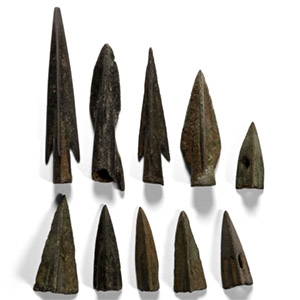
Greek Period High Quality Bronze Arrowhead Collection
5th-3rd century B.C.Sold for (Inc. bp): £98
Mostly triangular-section socketted types. 21 grams total, 17-46 mm
From an English collection formed before 2000. This lot is accompanied by an illustrated lot declaration signed by the Head of the Antiquities Department, Dr Raffaele D'Amato. -
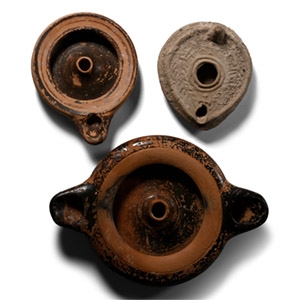
Greek and Byzantine Ceramic Oil Lamp Collection
5th century B.C.-6th century A.D.Estimate: £300 - 400 (‡+bp*)
Opening Bid: £150
Comprising: a squat oil lamp with wreath surrounding the large filler hole, radiating sun motif on the base; the two larger terracotta lamps with open reservoirs with a central cone open beneath, short nozzle. 473 grams total, 9.2-17.8 cm
Ex R.C. collection. Acquired by Galerie Rhéa, Zurich, from the above in 2010. This lot is accompanied by an illustrated lot declaration signed by the Head of the Antiquities Department, Dr Raffaele D'Amato.
