
Loading, please wait...
LOT 0600
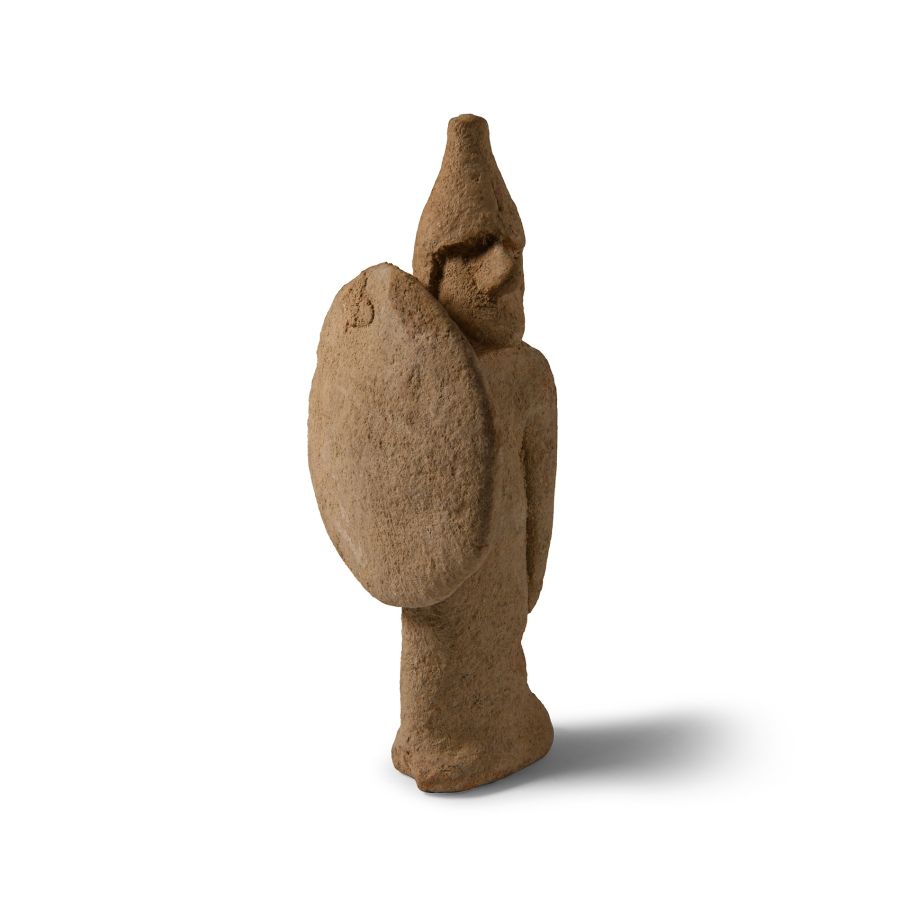
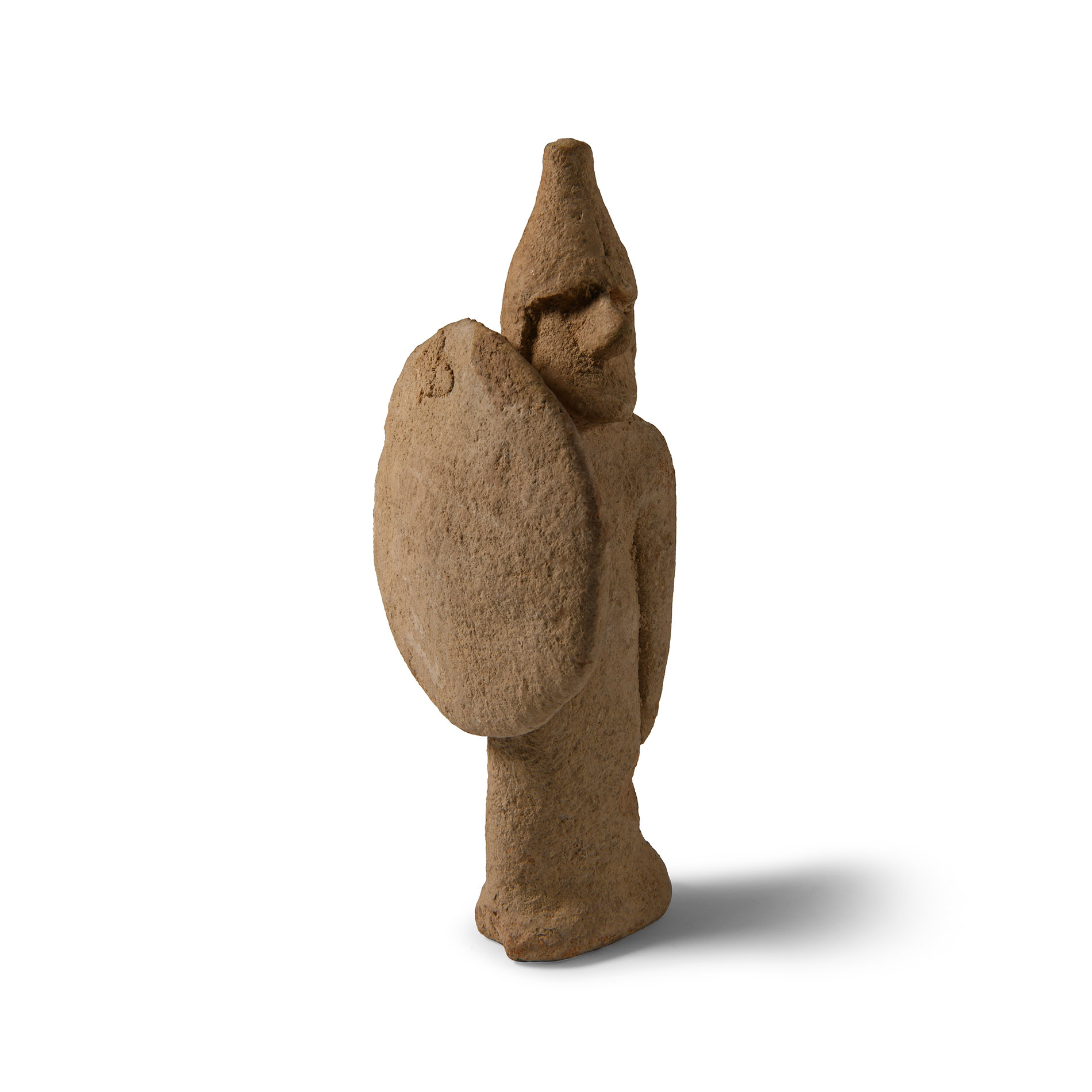
Cypriot Tall Terracotta Warrior Figure
7TH-5TH CENTURY B.C.
5 1/2 in. (166 grams, 14 cm).
Modelled wearing a floor-length garment and conival helmet; right arm supporting a large lenticular shield. [No Reserve]
ProvenanceFrom a collection acquired on the UK art market from various auction houses and collections mostly before 2000.
From an important Cambridgeshire estate; thence by descent.
TimeLine Auctions follows a vetting process to ensure the authenticity and legality of all items, reinforcing our commitment to integrity and responsible trading. Each antiquity, antique, and coin lot undergoes thorough examination by a vetting committee of at least ten external specialists, professional trade association members, scientists, and archaeologists: Our Vetting Process
AUCTIONS:
TimeLine is a leading auction house specialising in antiquities, ancient art, collectables, natural history, coins, medals, and books. Our auctions offer museums, collectors, historians, and enthusiasts the opportunity to acquire unique and historically significant pieces.
-
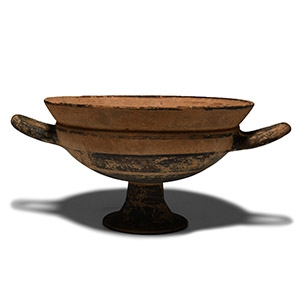
Greek Terracotta Kylix
6th century B.C.Estimate: £500 - 700 (‡+bp*)
Opening Bid: £250
With trumpet-shaped foot, broad bowl with carinated profile, flared rim, two lateral D-shaped handles; horizontal painted bands; repaired. 249 grams, 21 cm wide
Private collection of Mr S.A., Switzerland, 1990s, thence by descent. -
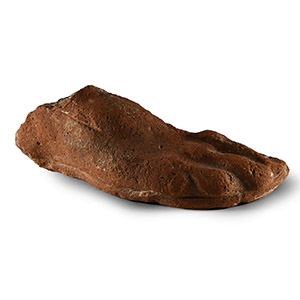
Etruscan Ceramic Votive Foot
4th-3rd century B.C.Sold for (Inc. bp): £91
Comprising the outer part of a right foot with elongated toes and anatomical detailing, base of a sandal visible on the outer edge. 351 grams, 19 cm
Acquired in Germany before 2000. English private collection.
This object belongs to impasto ceramics of red-brown typology, and it was probably an unfinished votive foot. It could have been part of a medium-size statuette, or an anatomical ex voto related to a temple deposit, linked with a health divinity. We have parallels in Veii, Vulci and in the whole of the Latial area. -
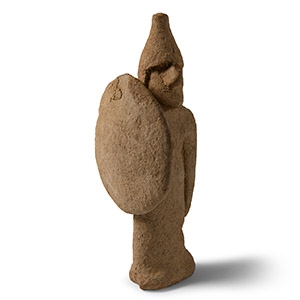
Cypriot Tall Terracotta Warrior Figure
7th-5th century B.C.Sold for (Inc. bp): £1,300
Modelled wearing a floor-length garment and conival helmet; right arm supporting a large lenticular shield. 166 grams, 14 cm
From a collection acquired on the UK art market from various auction houses and collections mostly before 2000. From an important Cambridgeshire estate; thence by descent.
