
Loading, please wait...
LOT 0038
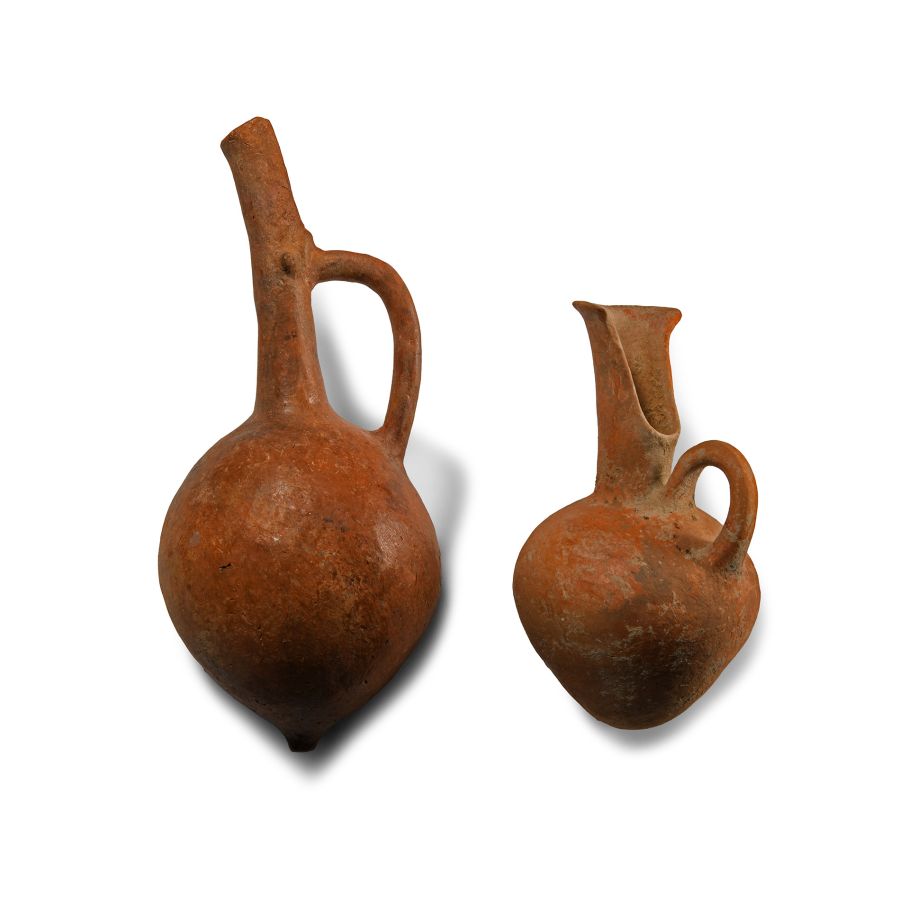
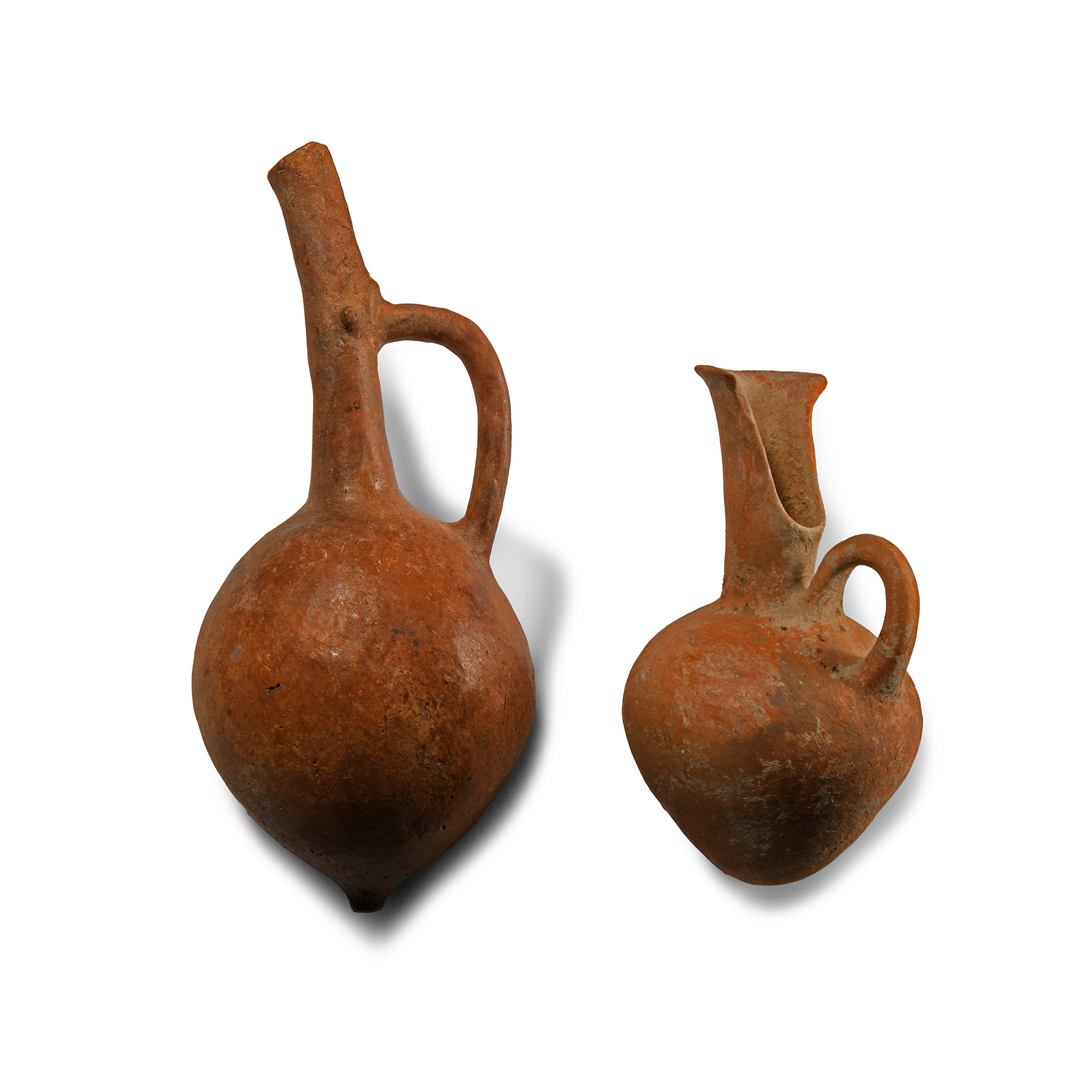
Cypriot Red Polished Ware Zoomorphic Jug Group
MIDDLE BRONZE AGE, CIRCA 2000-1800 B.C.
7 3/4 - 10 5/8 in. (780 grams total, 19.5-27 cm).
Each with burnished surface, globular body with conical underside, tall spout with open rear face, loop handle; one with lateral lugs to the spout forming 'eyes'. [2, No Reserve]
Provenancewith Christie's, London, 11 December 1974.
Formerly from the collection of Lord Dayton of Corran, formed between 1960-2000.
Acquired from Bonham's, New Bond Street, 27 April 2006, lot 313 (part).
The smaller vessel is from a collection acquired on the UK art market from various auction houses and collections mostly before 2000.
From an important Cambridgeshire estate; thence by descent.
Accompanied by a copy of the relevant Bonhams catalogue pages.
Cf. Morris, D., The Art of ancient Cyprus, Oxford, 1985, fig. p.18, pl.9, for similar.
FootnotesThe plain red polished ware was dominant in Cyprus in the early Bronze Age. It included jugs with nipple base, cutaway sprout, and paired, blunt projections near handle attachment points.
CONDITIONTimeLine Auctions follows a vetting process to ensure the authenticity and legality of all items, reinforcing our commitment to integrity and responsible trading. Each antiquity, antique, and coin lot undergoes thorough examination by a vetting committee of at least ten external specialists, professional trade association members, scientists, and archaeologists: Our Vetting Process
AUCTIONS:
TimeLine is a leading auction house specialising in antiquities, ancient art, collectables, natural history, coins, medals, and books. Our auctions offer museums, collectors, historians, and enthusiasts the opportunity to acquire unique and historically significant pieces.
-
.jpg)
Minoan Bronze Statuette of a Lady
Middle Period, circa 1700-1450 B.C.Sold for (Inc. bp): £1,560
With a small, stylised face with detailed eyes, nose and mouth; right hand raised to hold a child; wearing a flounced skirt with double belt; mounted on a custom-made display stand. 499 grams total, 16.5 cm high including stand
British private collection, acquired by 2000. From a collection acquired on the UK art market from various auction houses and collections mostly before 2000. From an important Cambridgeshire estate; thence by descent.
In the Dictean Cave in Greece, many votive statuettes of this type were found. The flounced skirt is characteristic of Minoan women's dress, and it was lavishly decorated in folds of different colours. It could be worn with or without a narrow corselet, but in both cases exposing the breast. The exposed breast was connected to the cult of the mother goddess, and fertility, an element here reinforced by the presence of the suckling child. -
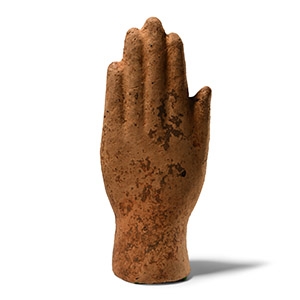
Etruscan Terracotta Votive Hand
Circa 4th century B.C.Sold for (Inc. bp): £390
Hollow-formed model hand with fingers held straight together. 430 grams, 20.5 cm
Old private collection, Jacksonville, Florida, USA. Acquired from Agora Auctions, Auction 60, no.417. Property of a South Australian private collector, with collection reference 16.03. Accompanied by detailed collector's catalogue pages including description and images.
Votives of an anatomical nature began in the Hellenistic or late Classical period, where they were associated with healing and with fertility.The red pigment on the votive suggests that it was provided by a male; female hands were white or pink. The votives were provided to visitors at the temple, and were disposed of over time. -
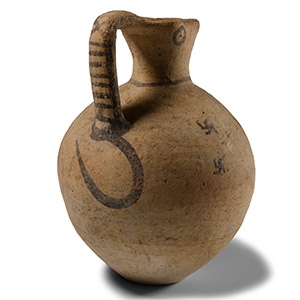
Cypriot 'Eyed' Trefoil Mouthed Pottery Jug with Swastikas
Iron Age, circa 800-600 B.C.Sold for (Inc. bp): £624
White ware globular jug with pinched trefoil mouth and strap handle to the rear; painted 'eye' detailing to mouth, serpent pattern to handle with curled finial, pairs of gammadion motifs to the body, 285 grams, 14.5 cm high
Peter Cran collection, Scotland, who worked as an engineer for the Cypriot public works department 1931-1946; thence by descent. Acquired from Bonhams, London, 23 May 2012, no.6 (part). From an important Cambridgeshire estate; thence by descent. Accompanied by copies of the relevant Bonhams catalogue pages and original lot tag.
