
Loading, please wait...
_900x900.jpg "Cypriot Red Polished Ware Jug Group")
_200x200.jpg "Cypriot Red Polished Ware Jug Group")
.jpg "Cypriot Red Polished Ware Jug Group")
LOT 0573
Cypriot Red Polished Ware Jug Group
EARLY-MIDDLE BRONZE AGE, CIRCA 2700-1900 B.C.
4 1/2 - 6 in. (750 grams total, 11.5-15.3 cm).
Group of three jugs each with spherical body and trumpet-shaped mouth, loop handle to one side. [3, No Reserve]
ProvenanceFrom a collection acquired on the UK art market from various auction houses and collections mostly before 2000.
From an important Cambridgeshire estate; thence by descent.
TimeLine Auctions follows a vetting process to ensure the authenticity and legality of all items, reinforcing our commitment to integrity and responsible trading. Each antiquity, antique, and coin lot undergoes thorough examination by a vetting committee of at least ten external specialists, professional trade association members, scientists, and archaeologists: Our Vetting Process
AUCTIONS:
TimeLine is a leading auction house specialising in antiquities, ancient art, collectables, natural history, coins, medals, and books. Our auctions offer museums, collectors, historians, and enthusiasts the opportunity to acquire unique and historically significant pieces.
-
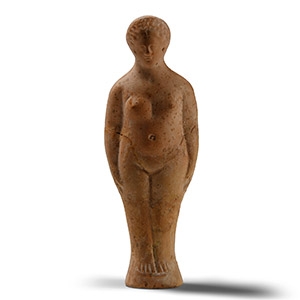
Graeco-Roman Terracotta Figure
2nd century B.C.-1st century A.D.Estimate: £600 - 800 (‡+bp*)
Opening Bid: £222
Tanagra-type hollow-formed figurine of a nude female with dressed hair; hole to the reverse and underside; repaired. 46 grams, 11.3 cm
Private collection of Mr S.A., Switzerland, 1990s, thence by descent. -
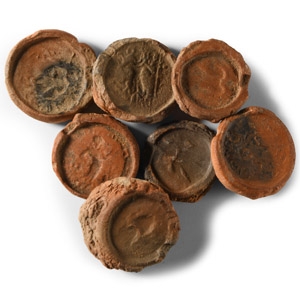
Indo-Greek Terracotta Forger's Mould Group
Circa 2nd-1st century B.C.Sold for (Inc. bp): £442
Group of discoid clay moulds for casting contemporary counterfeit coins. 43 grams total, 25-32 mm
Private collection formed in the 1990s. Acquired from a central London gallery. Property of an Essex gentleman. -
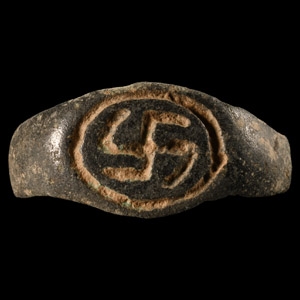
Greek Bronze Ring Bezel with Swastika
Circa 4th-3rd century B.C.Sold for (Inc. bp): £124
Ellipsoid bezel with incuse gammadion motif. 1.77 grams, 21 mm
Acquired 1980-2015. Ex Abelita family collection.
