Loading, please wait...

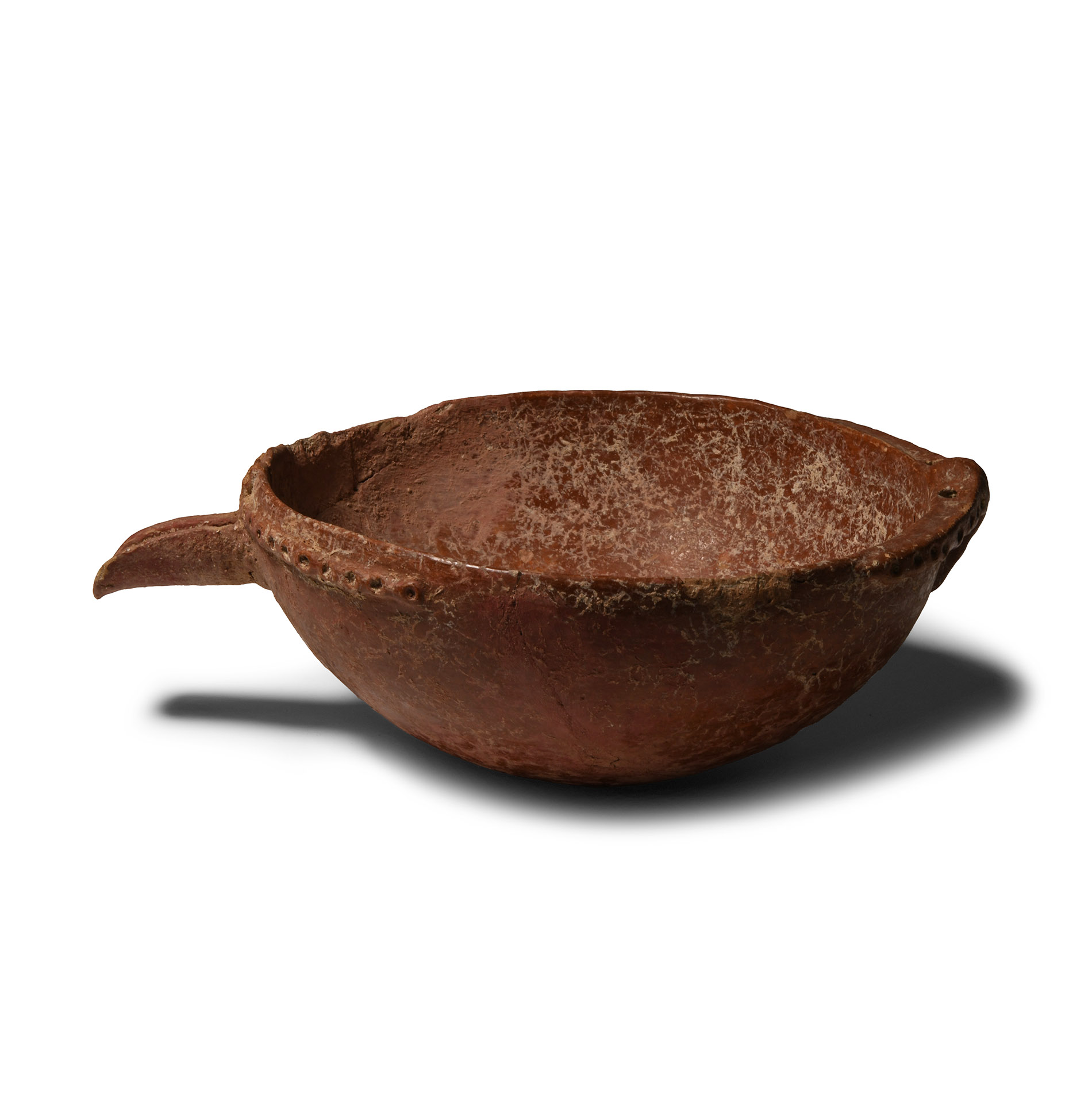
Cypriot Red Polished Ware Bowl with Spout Cypriot Red Polished Ware Bowl with Spout Cypriot Red Polished Ware Bowl with Spout Cypriot Red Polished Ware Bowl with Spout Cypriot Red Polished Ware Bowl with Spout Cypriot Red Polished Ware Bowl with Spout
Use mousewheel to zoom in and out, click to enlarge
Details

LOT 0552

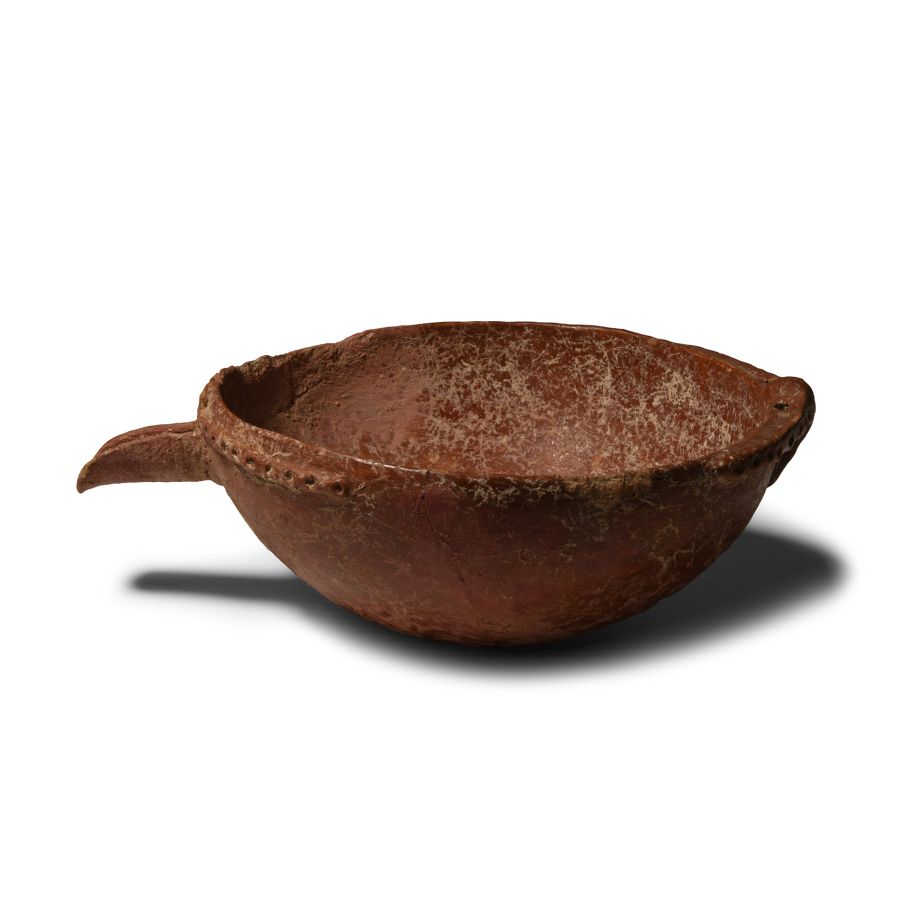
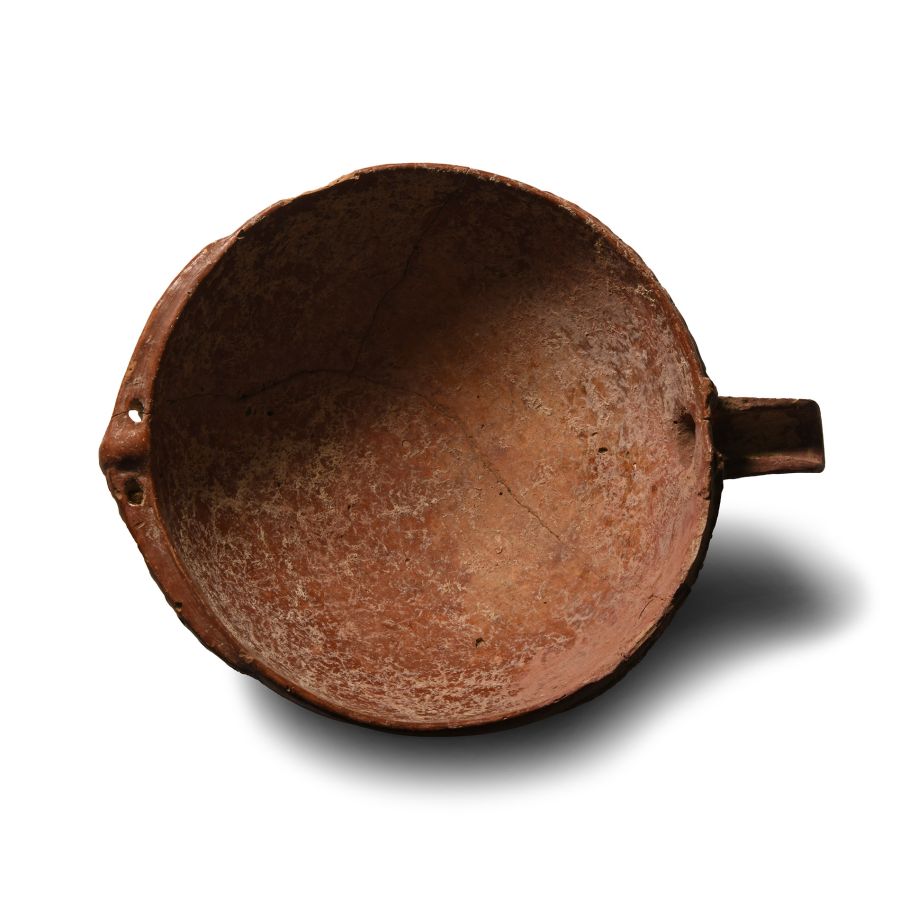
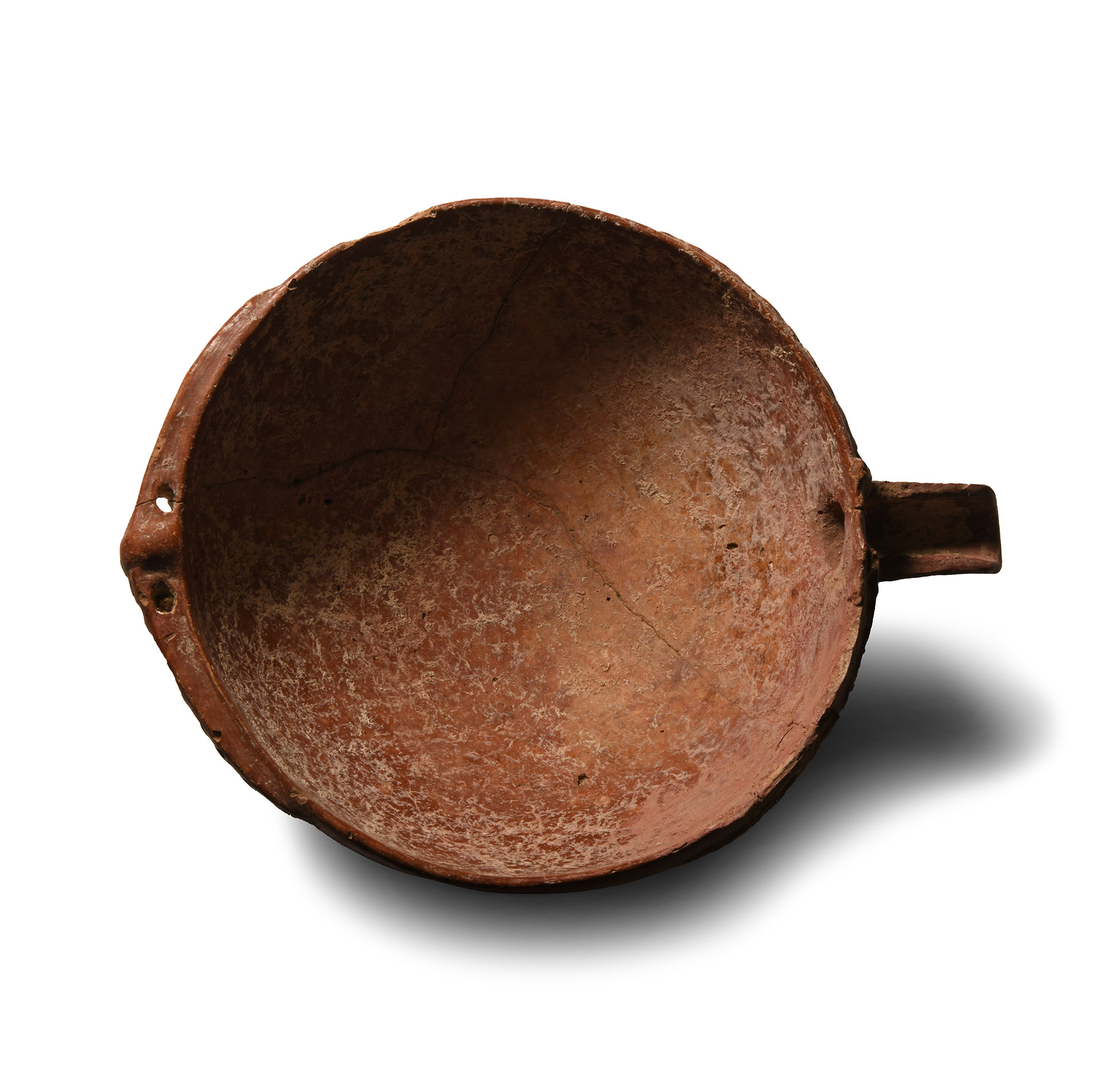
Cypriot Red Polished Ware Bowl with Spout

EARLY-MIDDLE BRONZE AGE, CIRCA 2700-1900 B.C.

8 5/8 in. (490 grams, 22 cm).

Hemispherical in profile with burnished surface, raised band below the rim with impressed holes to the outer face, pierced rim, short curved spout; repaired. [No Reserve]

Provenance

From a collection acquired on the UK art market from various auction houses and collections mostly before 2000.
From an important Cambridgeshire estate; thence by descent.

CONDITION
VETTING:

TimeLine Auctions follows a vetting process to ensure the authenticity and legality of all items, reinforcing our commitment to integrity and responsible trading. Each antiquity, antique, and coin lot undergoes thorough examination by a vetting committee of at least ten external specialists, professional trade association members, scientists, and archaeologists: Our Vetting Process


AUCTIONS:

TimeLine is a leading auction house specialising in antiquities, ancient art, collectables, natural history, coins, medals, and books. Our auctions offer museums, collectors, historians, and enthusiasts the opportunity to acquire unique and historically significant pieces.

LOT 0552

Cypriot Red Polished Ware Bowl with Spout

Sold for (Inc. bp): £143

Print page

RELATED LOTS
  • Greek Canosan Terracotta Oinochoe with Face
    Greek Canosan Terracotta Oinochoe with Face
    Circa 4th century B.C.

    Estimate: £800 - 1,000 (+bp*)

    Opening Bid: £425

    The body formed as a female bust with elaborately styled hair; discoid foot, tall stem with pinched rim giving a broad pouring lip, strap handle to the rear; some pigment remaining. 446 grams, 22.2 cm high


    Old French private collection. Swiss private collection, Basel-Landschaft. Private collection of M. Tritten, Binningen, Switzerland. Property of an East Sussex, UK, gentleman.

    The Canosan ceramic workshops produced several series of head vases, starting with a red-figure imitation of the Attic plastic oenochoe attributed by Beazley to Group N.21. The next product combined two ceramic techniques: a) the neck, mouth, and handle were executed in red-figure technique with superimposed white rays on the neck; b) the head was drawn from two moulds, mounted on a base rim, and decorated with white slip and polychrome after firing. It belongs to the initial phase of the polychrome ceramic production of Canosa, for which only this type of mould is known. It also illustrates the close collaboration which existed between potters and coroplasts. The same archetype was used in the next phase, producing entirely polychrome head vases, like this one, in which traces of polychrome are still visible on the mouth and near the left ear.

    Lot Details

  • Cypriot Ceramic Horse and Rider Statuette
    Cypriot Ceramic Horse and Rider Statuette
    8th-7th century B.C.

    Sold for (Inc. bp): £442

    Representing a warrior with conical helmet riding his mount, horse with long neck, short legs and traces of polychromy all along body, neck and ears. 251 grams, 17 cm high


    From a collection acquired on the UK art market from various auction houses and collections mostly before 2000. From an important Cambridgeshire estate; thence by descent.

    The most popular animals in Cypriot coroplasts of the 8th and 7th centuries B.C. were horses, with or without riders, with long necks and decorated along the whole body like contemporary ceramics. It is worth remembering that the horse in this period represented a status symbol for the military aristocracy and that bodies of sacrificed horses have been found in royal tombs.

    Lot Details

  • Cypriot Votive Limestone Head of a Young Man
    Cypriot Votive Limestone Head of a Young Man
    6th-4th century B.C.

    Sold for (Inc. bp): £2,600

    Modelled in the round with soft youthful features, short beard, small mouth and large lentoid eyes, tousled hair with a diadem above the brow; socket to the top of the head and remains of a spur to the reverse; mounted on a custom-made display stand. 3.86 kg total, 26.5 cm high including stand


    Joseph Klein collection, formed in New York 1941-1980, thence by descent. Acquired from Bonhams, London, 24 October 2012, no.2. From an important Cambridgeshire estate; thence by descent. Accompanied by a copy of the relevant Bonhams catalogue pages. Accompanied by an academic report by Dr Raffaele D’Amato. This lot has been checked against the Interpol Database of stolen works of art and is accompanied by search certificate number no.12002-212101.

    Votive sculptures were the commonest form of Cypriot sculptures of the period. They were erected within the precincts of temples or covered sanctuaries, around the altar at which the god was worshipped. Thus, on Cyprus, the statuary was conceived as an ex-voto, an image expressing the desire of the believer to enter into intimate communion with and reside under the eternal protection of the gods.

    Lot Details

Stay up-to-date with the latest from TimeLine Auctions by joining our mailing list