
Loading, please wait...
LOT 0625
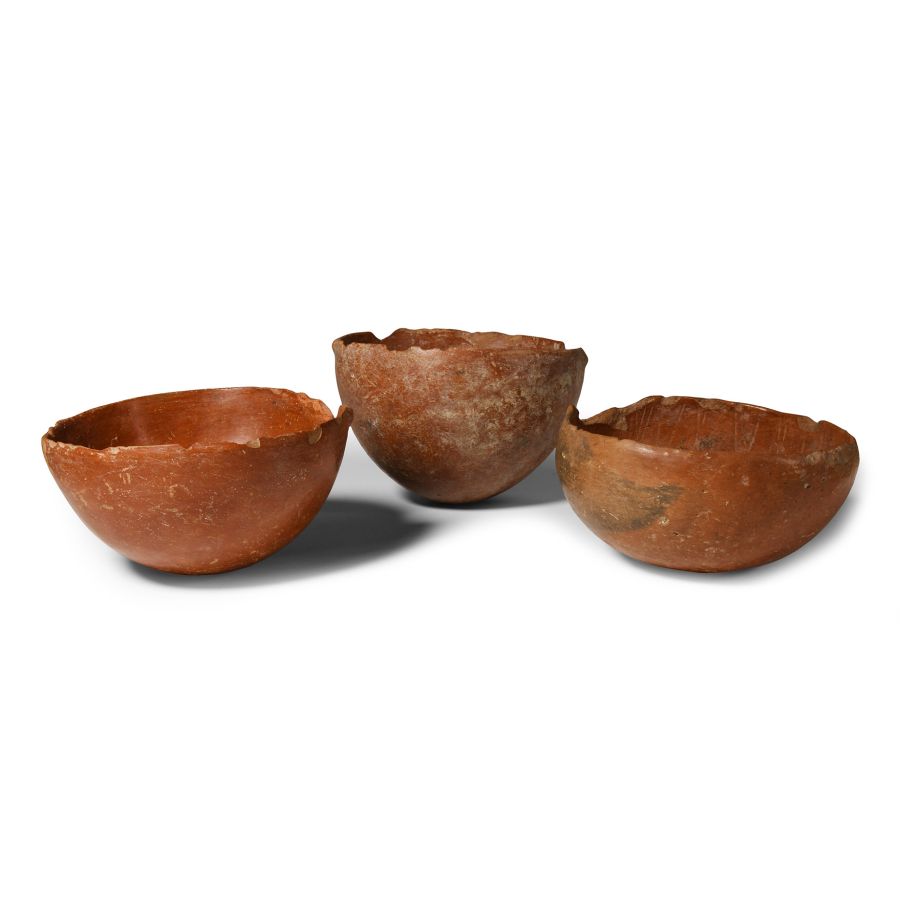
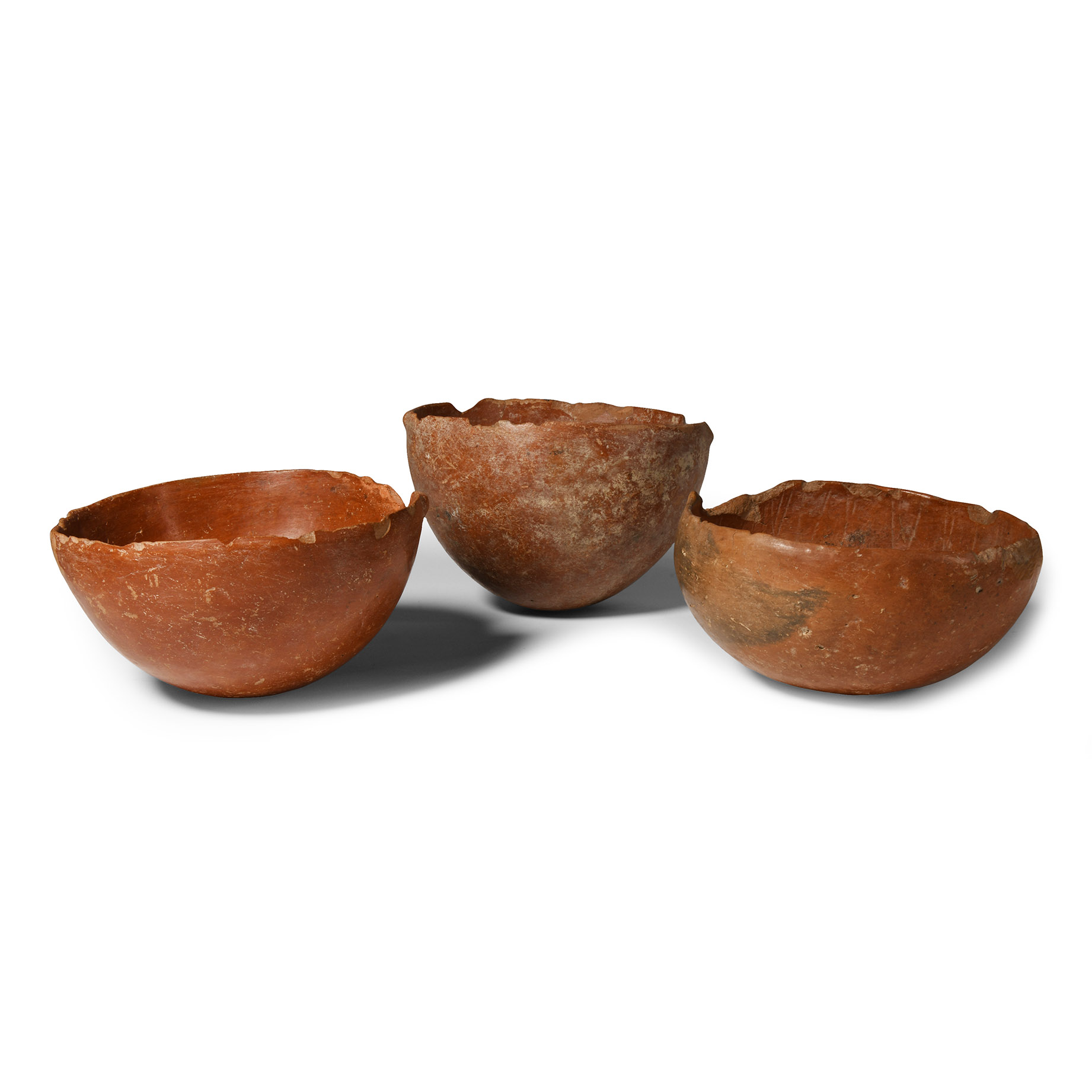
Cypriot Red Polished Ware Bowl Group
EARLY-MIDDLE BRONZE AGE, CIRCA 2700-1900 B.C.
5 1/2 - 5 7/8 in. (1.09 kg total, 14-15 cm).
Group of three hemispherical bowls with burnished surface, one with old collector's inked notation 'L.S./2.60'. [3, No Reserve]
ProvenanceFrom a collection acquired on the UK art market from various auction houses and collections mostly before 2000.
From an important Cambridgeshire estate; thence by descent.
TimeLine Auctions follows a vetting process to ensure the authenticity and legality of all items, reinforcing our commitment to integrity and responsible trading. Each antiquity, antique, and coin lot undergoes thorough examination by a vetting committee of at least ten external specialists, professional trade association members, scientists, and archaeologists: Our Vetting Process
AUCTIONS:
TimeLine is a leading auction house specialising in antiquities, ancient art, collectables, natural history, coins, medals, and books. Our auctions offer museums, collectors, historians, and enthusiasts the opportunity to acquire unique and historically significant pieces.
-
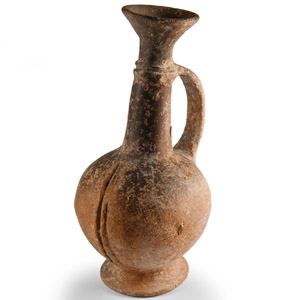
Cypriot Terracotta Base Ring Juglet
Circa 2nd millennium B.C.Sold for (Inc. bp): £299
With flared basal ring, bulbous poppy-head body, tubular neck with transverse rib developing to a strap handle, trumpet-shaped mouth. 55 grams, 11 cm
Ex North Yorkshire, UK, collection, 1990s. -
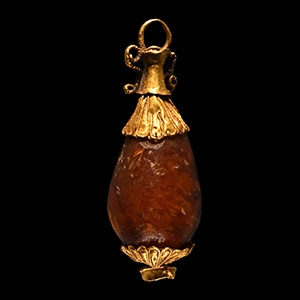
Hellenistic Gold Amphora-Shaped Pendant
3rd-1st century B.C.Estimate: £600 - 800 (‡+bp*)
Opening Bid: £300
Piriform carnelian centre with gold fittings, filigree loop handles. 3.64 grams, 30 mm
Acquired from the collection of Mrs L.G., an Italian noble woman. European private collection. -
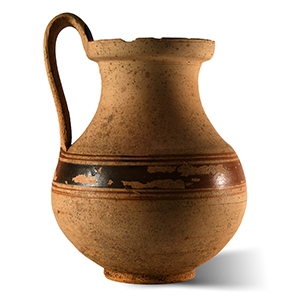
South Italian Terracotta Painted Jug
4th-2nd century B.C.Estimate: £400 - 600 (‡+bp*)
Opening Bid: £200
Piriform with convex rim, lentoid-section handle and discoid foot; polychrome painted bands and lines decorating the equator and inner mouth, dash to handle. 227 grams, 13.5 cm high
Acquired in Europe before 1994.
