
Loading, please wait...
LOT 0560
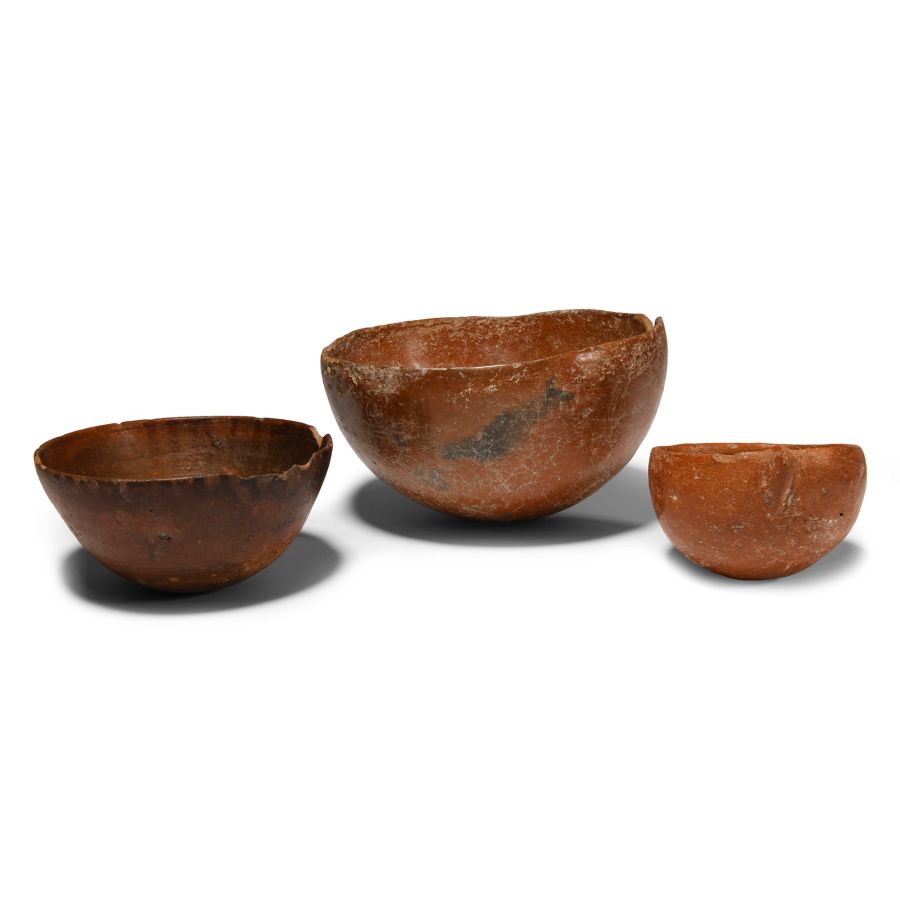
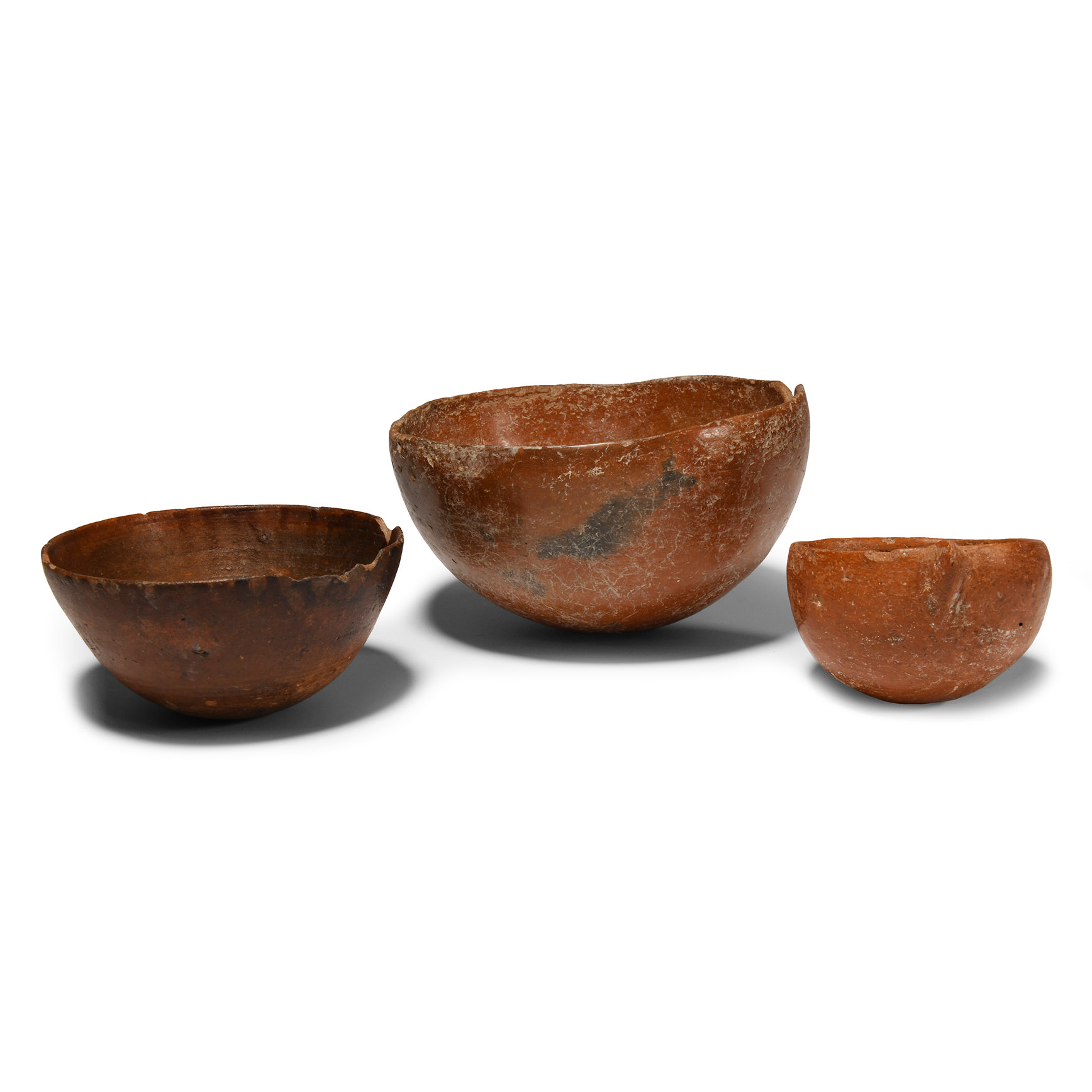
Cypriot Red Polished Ware Bowl Group
EARLY-MIDDLE BRONZE AGE, CIRCA 2700-1900 B.C.
3 3/4 - 6 1/2 in. (708 grams total, 9.7-16.5 cm).
Group of three hemispherical bowls with burnished surface, one with old collector's inked notation '1.5 / 28'. [3, No Reserve]
ProvenanceFrom a collection acquired on the UK art market from various auction houses and collections mostly before 2000.
From an important Cambridgeshire estate; thence by descent.
TimeLine Auctions follows a vetting process to ensure the authenticity and legality of all items, reinforcing our commitment to integrity and responsible trading. Each antiquity, antique, and coin lot undergoes thorough examination by a vetting committee of at least ten external specialists, professional trade association members, scientists, and archaeologists: Our Vetting Process
AUCTIONS:
TimeLine is a leading auction house specialising in antiquities, ancient art, collectables, natural history, coins, medals, and books. Our auctions offer museums, collectors, historians, and enthusiasts the opportunity to acquire unique and historically significant pieces.
-
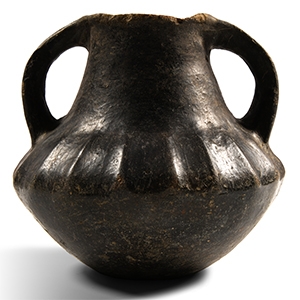
Etruscan Blackware Impasto Vase
8th-7th century B.C.Estimate: £800 - 1,000 (‡+bp*)
Opening Bid: £400
Biconical with a tapering cylindrical neck and two handles, raised ribbing around the shoulder. 550 grams, 15 cm wide
Ex private Mister X. (1931-2017) collection. Sold in the benefit of the 'Croix-Rouge of Monaco'. -
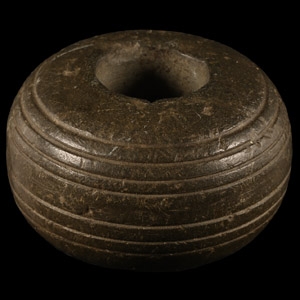
Etruscan Terracotta Spindle Whorl
Circa 6th-5th century B.C.Sold for (Inc. bp): £124
Barrel-shaped with seven incised rings to the body and shoulder. 21.7 grams, 29 mm
Private collection formed in the 1990s. Acquired from a central London gallery. Property of an Essex gentleman. -
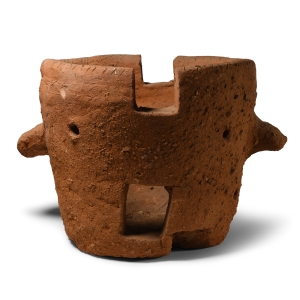
Heavy Cypriot Pottery Brazier
Circa 1st millennium B.C.Sold for (Inc. bp): £1,300
Tubular terracotta form with crenellated rim, four inward-facing lugs each with a hole beneath, inner ledge, lateral vents and square aperture at the base; hatched texture to the rim; two lateral ledge handles. 12.1 kg, 39.5 cm wide
Ex Stella Pitt Rivers collection, Dorset Museum, UK. Acquired from Sotheby's, London, 13 May 1980, no.160. with Bonhams, London, 15 October 2008, no.139. with Bonhams, London, 29 April 2009, no.340. From an important Cambridgeshire estate; thence by descent. Accompanied by copies of the relevant Bonhams catalogue pages and original lot ticket.
