
Loading, please wait...
LOT 0584
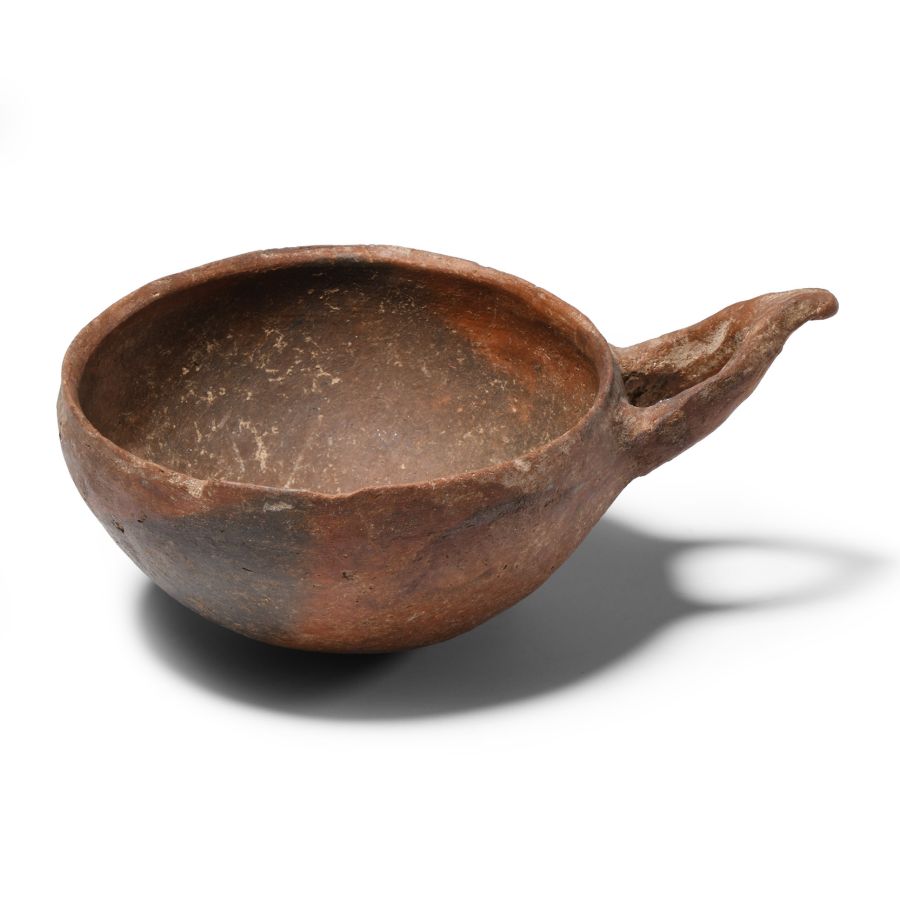
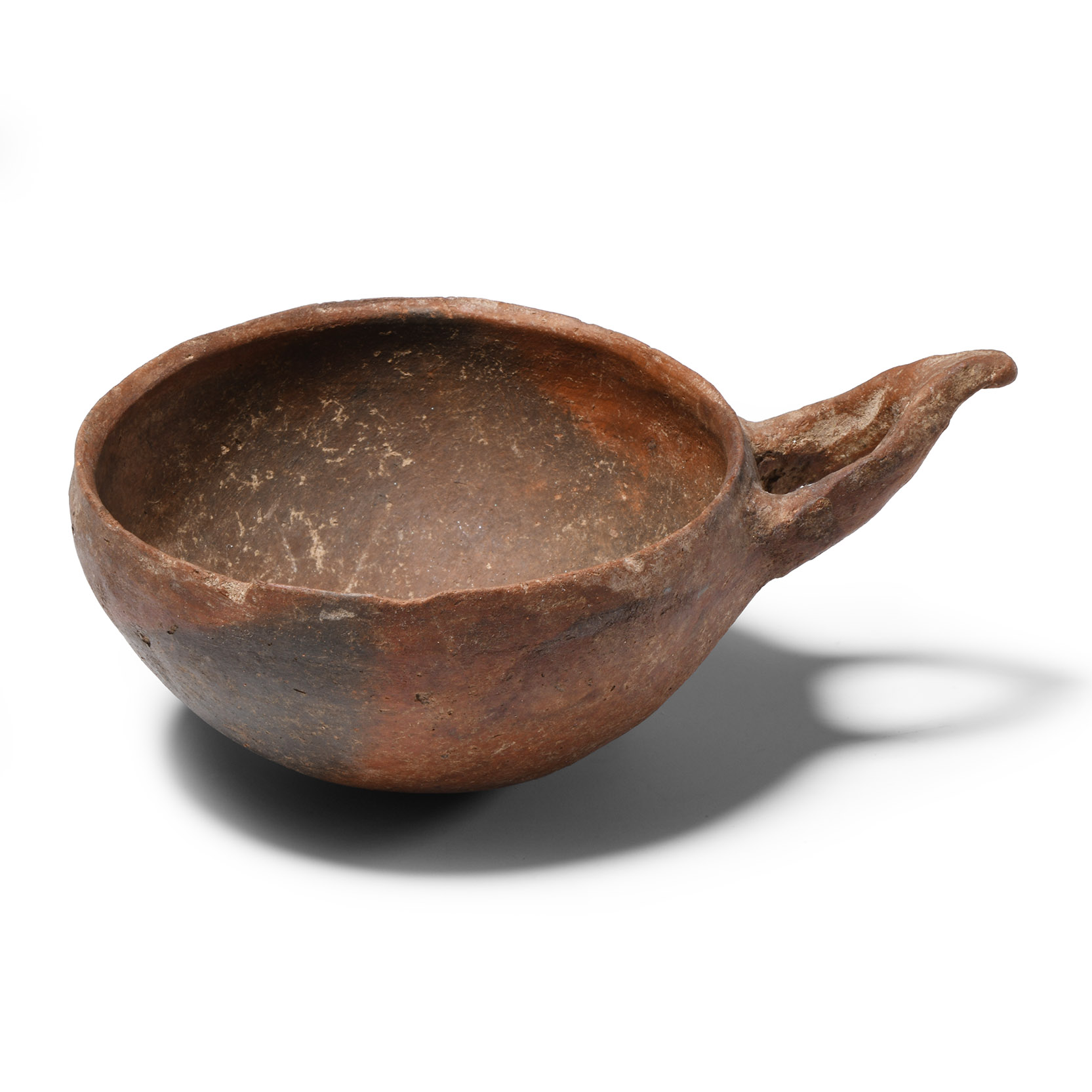
Cypriot Red Burnished Ware Dipper Cup
MIDDLE BRONZE AGE, CIRCA 1900-1650 B.C.
6 3/8 in. (199 grams, 16.2 cm wide).
A black and red slip-coated pottery dipper cup with a hemispherical body and a pointed conjoined handle. [No Reserve]
ProvenanceFrom a collection acquired on the UK art market from various auction houses and collections mostly before 2000.
From an important Cambridgeshire estate; thence by descent.
TimeLine Auctions follows a vetting process to ensure the authenticity and legality of all items, reinforcing our commitment to integrity and responsible trading. Each antiquity, antique, and coin lot undergoes thorough examination by a vetting committee of at least ten external specialists, professional trade association members, scientists, and archaeologists: Our Vetting Process
AUCTIONS:
TimeLine is a leading auction house specialising in antiquities, ancient art, collectables, natural history, coins, medals, and books. Our auctions offer museums, collectors, historians, and enthusiasts the opportunity to acquire unique and historically significant pieces.
-
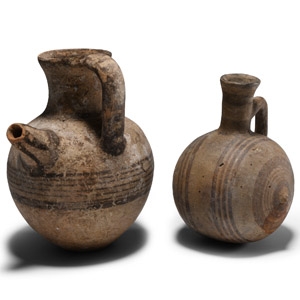
Cypriot Painted Geometric Vessel Group
Early Iron Age, circa 950-850 B.C.Sold for (Inc. bp): £260
Comprising: a spherical vessel with trumpet-shaped mouth and strap handle, painted concentric circles; similar, larger with lateral spout. 222 grams total, 9.5-11.2 cm
From a collection acquired on the UK art market from various auction houses and collections mostly before 2000. From an important Cambridgeshire estate; thence by descent. -
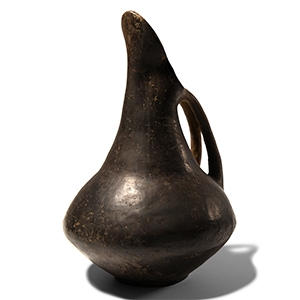
Villanovan Impasto Oinochoe with Graffiti
Circa 8th century B.C.Sold for (Inc. bp): £624
Three-lobed mouth with elongated beak, truncated-conical neck, shoulder with a convex profile, biconical body, low and flat foot, double rod handle set on the mouth and shoulder; small hole below equator. 592 grams, 21 cm high
Showplace Auction Centre, auction 308, lot 174. Property of a South Australian private collector, with collection reference 23.09. Accompanied by detailed collector's catalogue pages including description and photograph.
There is a similar vessel in Collection CA p18 n17 without decoration. The form is the same (height 25cm). Different varieties of it are known depending on the high or short neck, the flattened or globular or ovoid body, the flat or ring-shaped or splayed foot, the ribbon-like handle or the single or multiple rod. The known specimens come from different localities: Narce, Faleri, Bisenzio, Vetulonia, Tarquinia, Volsiniese countryside, upper Fiora valley. For parallel with ribs, see Antikenmuseum Basel + Sammlung Ludwig, p. 19, E 9, Schnabelkanne aus Impasto, first half seventh century, height 22.6cm. The shape of this handmade pot is particularly bold and simple. The few attached ribs, the bar handles brought together at the top, the high neck and the steep, cloverleaf-shaped mouth form ascending lines, but at the same time contribute to the balance of the shape due to their curve. These pots have primarily been found in Bisenzio, where they were probably made. -
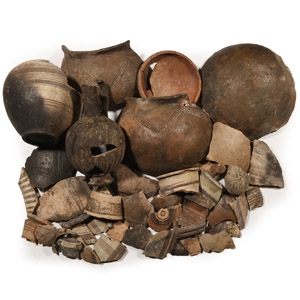
Greek and Other Pottery Fragment Group
Circa 1st millennium B.C.Sold for (Inc. bp): £98
Including amphora, bowl, cup and other vessel fragments, some painted. 5 kg total, 2-22.5 cm
From a collection acquired on the UK art market from various auction houses and collections mostly before 2000. From an important Cambridgeshire estate; thence by descent.
