
Loading, please wait...
LOT 0512
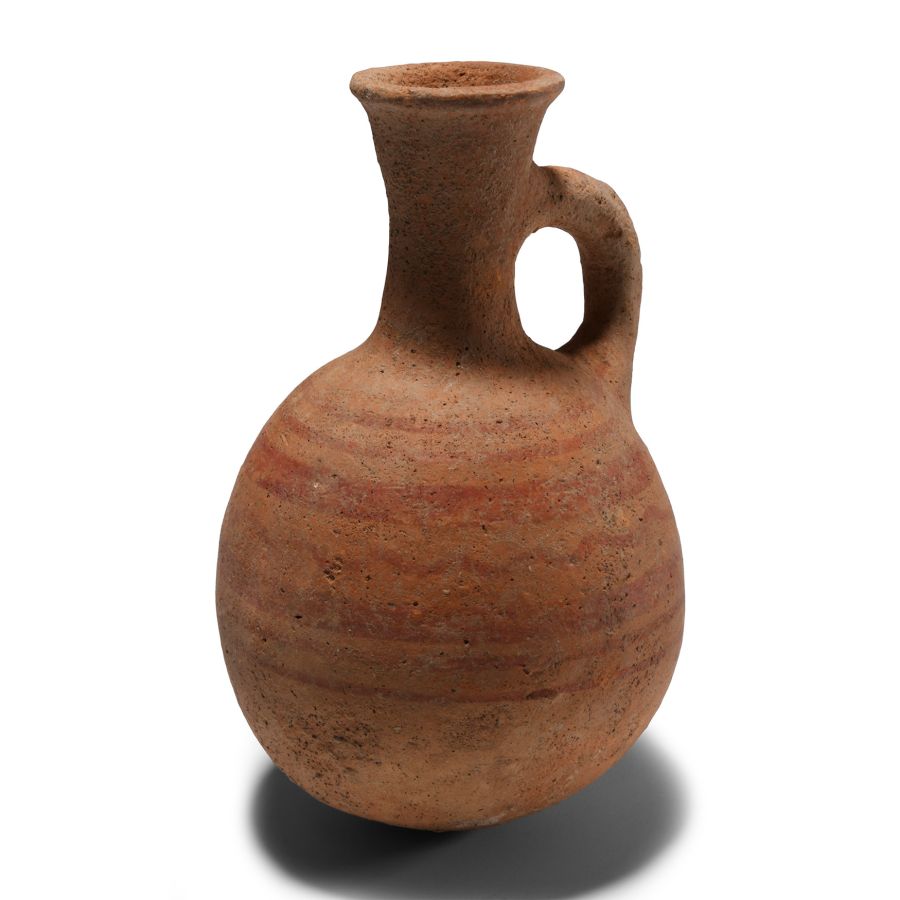
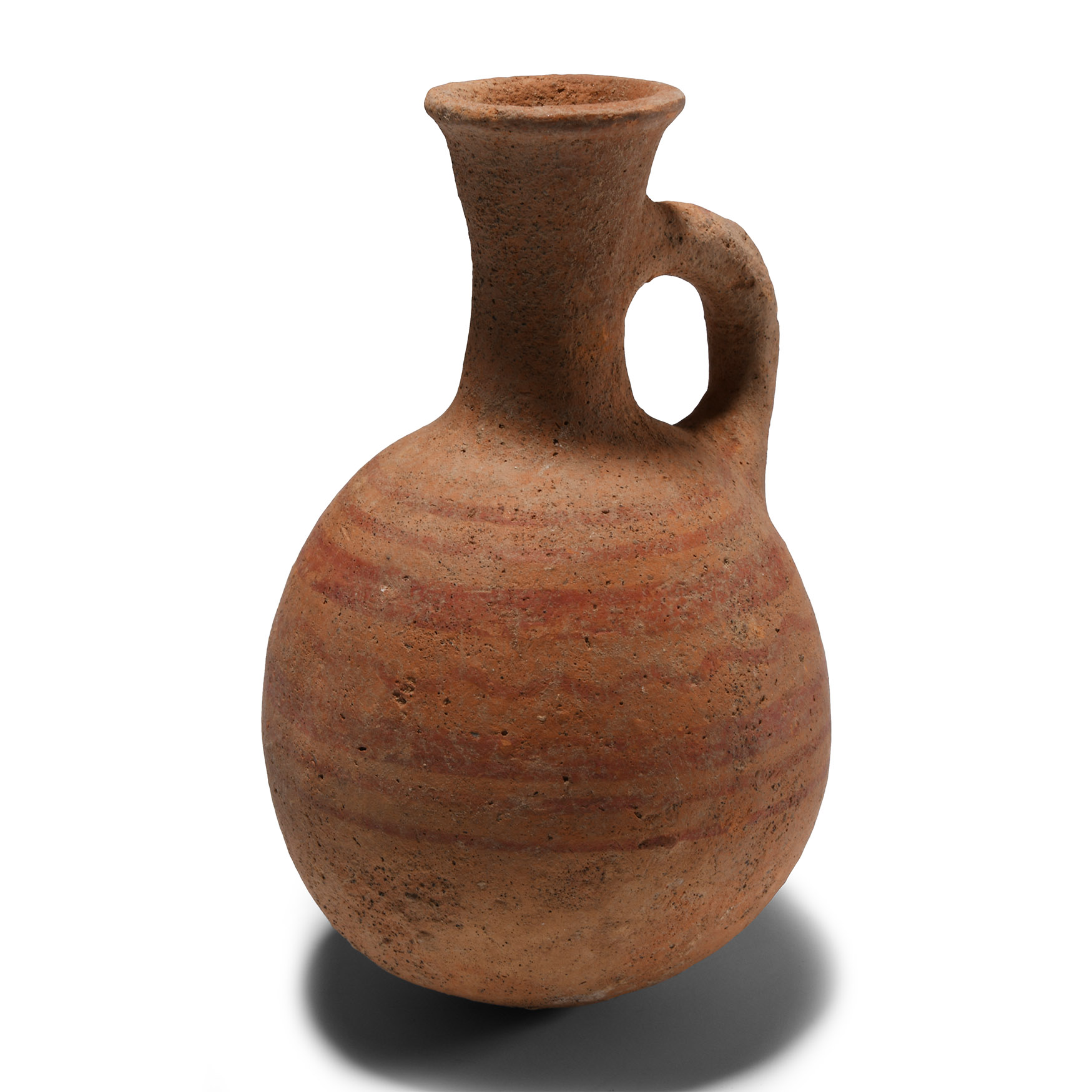
Cypriot Painted Terracotta Jug
1900-1600 B.C.
5 1/4 in. (213 grams, 13.5 cm).
Of bulbous profile with loop handle and trumpet-shaped mouth, circumferential bands of red pigment. [No Reserve]
ProvenanceFrom a collection acquired on the UK art market from various auction houses and collections mostly before 2000.
From an important Cambridgeshire estate; thence by descent.
Cf. Morris, D., The Art of ancient Cyprus, Oxford, 1985, pl.49b, p.51, for identical.
FootnotesThe jug is a rare example of red-on-red ware (variant of the red-on-black painted ware) of Middle Bronze Age. In this ware there is a polished slip of red-brown on pink, on which matt-finish lines have been painted in red-brown or purple.
CONDITIONTimeLine Auctions follows a vetting process to ensure the authenticity and legality of all items, reinforcing our commitment to integrity and responsible trading. Each antiquity, antique, and coin lot undergoes thorough examination by a vetting committee of at least ten external specialists, professional trade association members, scientists, and archaeologists: Our Vetting Process
AUCTIONS:
TimeLine is a leading auction house specialising in antiquities, ancient art, collectables, natural history, coins, medals, and books. Our auctions offer museums, collectors, historians, and enthusiasts the opportunity to acquire unique and historically significant pieces.
-
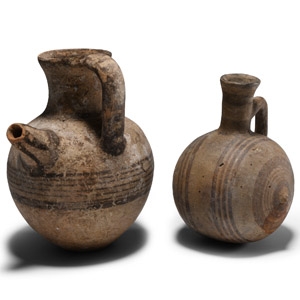
Cypriot Painted Geometric Vessel Group
Early Iron Age, circa 950-850 B.C.Sold for (Inc. bp): £260
Comprising: a spherical vessel with trumpet-shaped mouth and strap handle, painted concentric circles; similar, larger with lateral spout. 222 grams total, 9.5-11.2 cm
From a collection acquired on the UK art market from various auction houses and collections mostly before 2000. From an important Cambridgeshire estate; thence by descent. -
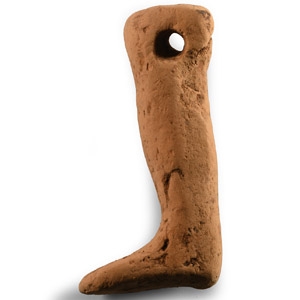
Etruscan Terracotta Votive Leg
Circa 5th-3rd century B.C.Sold for (Inc. bp): £72
With lateral piercing at the knee for attachment or suspension. 15.2 grams, 60 mm
From a collection acquired on the UK art market from various auction houses and collections mostly before 2000. From an important Cambridgeshire estate; thence by descent. -
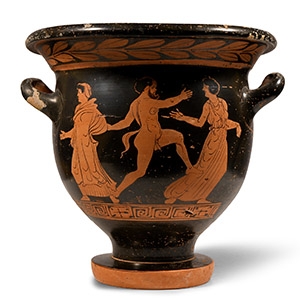
Greek Lucanian Red-Figure Bell-Krater
Circa 380-370 B.C.Estimate: £10,000 - 14,000 (‡+bp*)
Opening Bid: £5,000
Decorated with a meander with saltire squares below the figural scenes, and a laurel below the rim; Side A: a nude gesticulating satyr with short curly hair and long beard, running to the right with his left leg raised and his arms outstretched, characteristic pointed ears and pug nose, towards a maenad moving right and looking back at him, her hair short and curly, her body draped in a chiton, with another maenad standing behind him, facing left, draped in a himation over a chiton; Side B: three youths in draped cloaks with hoods thrown back; professionally restored. 2.1 kg, 29 cm wide
Fine condition, professionally restored.
Belgian private collection, 1950s. with Christie's, New York, 4 June 2008, no.190. Private central European collection. Accompanied by a copy of the relevant Christie's catalogue pages. Accompanied by an academic report by Dr Raffaele D’Amato. This lot has been checked against the Interpol Database of stolen works of art and is accompanied by a search certificate number no.12067-218141.
The style allows us to attribute this vase to an unknown artist of Lucanian origin: it is in ancient Lucania (a region which is located between present-day Calabria and Basilicata, in Southern Italy and between the Tyrrhenian Sea and the Ionian Sea, with Metaponto as a well-known city) that the first Italic style of red-figure painting developed.
