
Loading, please wait...
LOT 0574
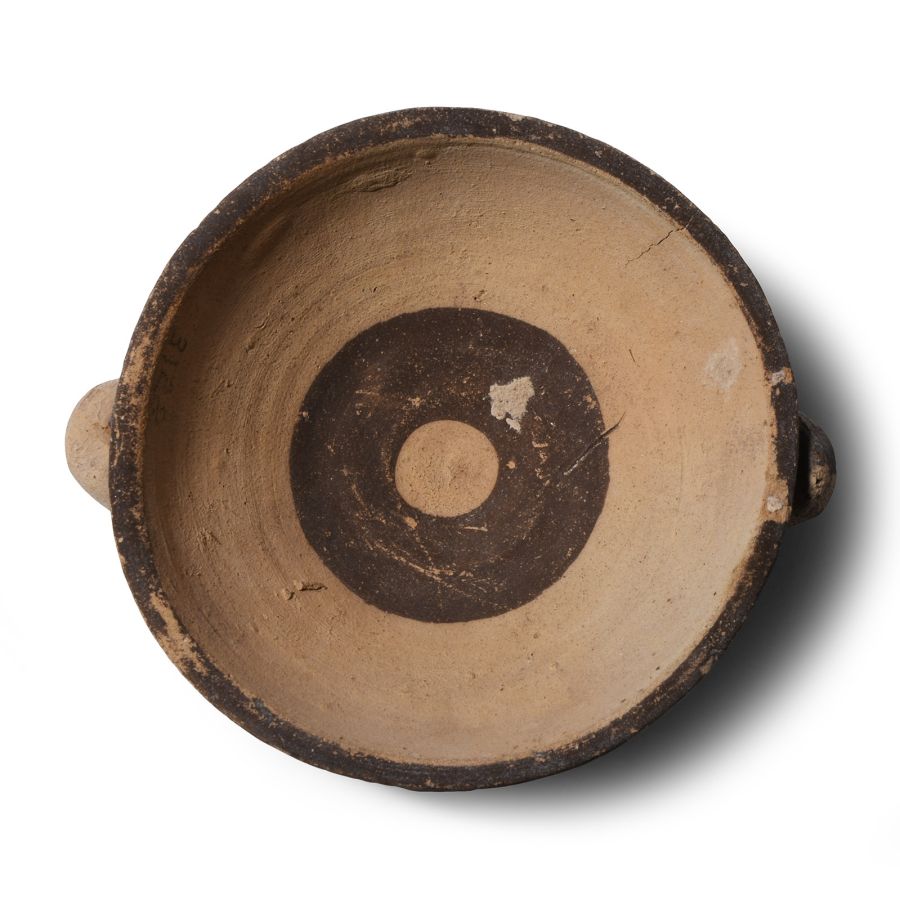
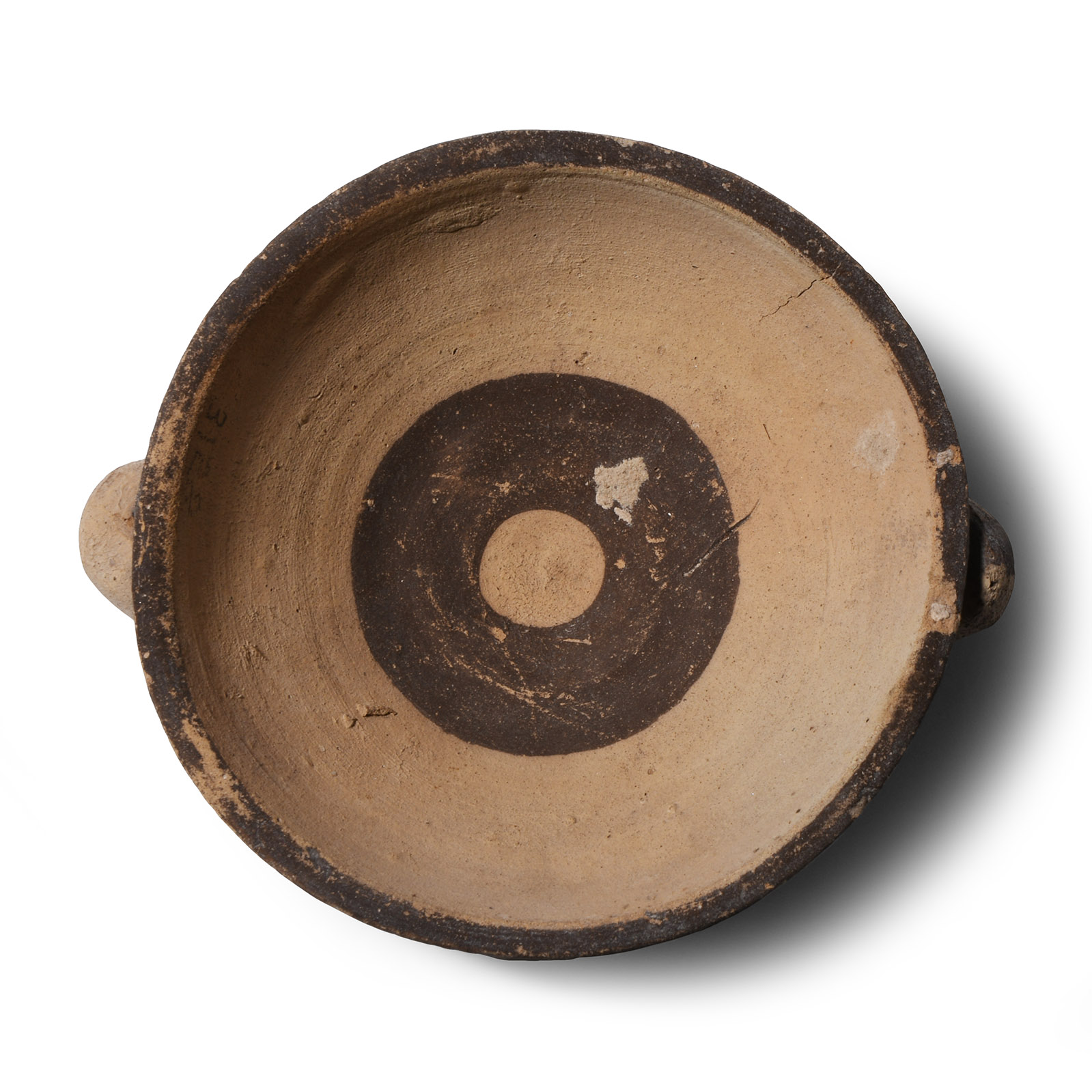
Cypriot Painted Terracotta Dish
EARLY IRON AGE, CIRCA 1050-600 B.C.
4 5/8 in. (81 grams, 11.8 cm).
Low ceramic dish with two loop handles to the underside, painted rim and tondo, concentric rings ro the underside and cruciform panel to the foot; pencilled collection number to the rim: '3128', inked collection number to the inside of one handle '[B]U 4139', and a red inked collection number: '634' on white painted panel to the base. [No Reserve]
ProvenanceThe red-ink inscription to the base suggesting it may have been deaccessioned from The Metropolitan Museum of Art.
From an important Cambridgeshire estate; thence by descent.
TimeLine Auctions follows a vetting process to ensure the authenticity and legality of all items, reinforcing our commitment to integrity and responsible trading. Each antiquity, antique, and coin lot undergoes thorough examination by a vetting committee of at least ten external specialists, professional trade association members, scientists, and archaeologists: Our Vetting Process
AUCTIONS:
TimeLine is a leading auction house specialising in antiquities, ancient art, collectables, natural history, coins, medals, and books. Our auctions offer museums, collectors, historians, and enthusiasts the opportunity to acquire unique and historically significant pieces.
-
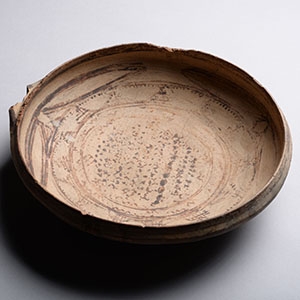
Cypriot Decorated Bowl with Stamped Characters to Reverse
Roman Period, 2nd century B.C.-2nd century A.D.Sold for (Inc. bp): £195
A wide bowl with carinated lip and lateral lug handle on a flat base; decorated on both sides with umber pigment on a white slip; to the outer face, a snake and band motif; to the inner face, multiple bands of crescentic, triangular net and zig-zag motifs; to the underside, low-relief inscription (partly legible). 535 grams, 23.5 cm
Tackey Crist, Cyprus Museum collection, NC, USA. Ex Leland Little auctions. with Cyprus Museum of Jacksonville, North Carolina, USA.
The piece is reminiscent of earlier white-painted wares of the middle-late Cypriot period. Although wheel-made white-painted ware is known from as far back as the Late Cypriot period (1300-1200 B.C.), the present piece must date to the Roman occupation of the island (from approximately the 2nd century B.C. onwards) because of the reserved (not impressed) Latin characters extant on the underside. The characters appear to have been applied to the clay whilst the vessel was wet. The inscription is impossible to decipher fully but contains the characters ... IN... ..AN.... ...DE M..... The use of 'D rather than Greek delta 'Δ' implies a Latin text. -
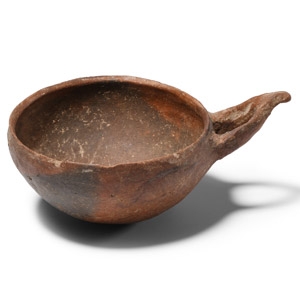
Cypriot Red Burnished Ware Dipper Cup
Middle Bronze Age, circa 1900-1650 B.C.Sold for (Inc. bp): £169
A black and red slip-coated pottery dipper cup with a hemispherical body and a pointed conjoined handle. 199 grams, 16.2 cm wide
From a collection acquired on the UK art market from various auction houses and collections mostly before 2000. From an important Cambridgeshire estate; thence by descent. -
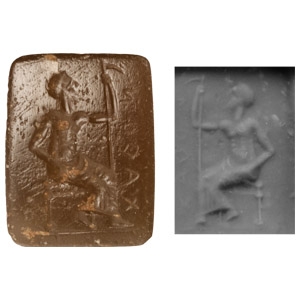
Greek Pyramid Seal with Inscription
Circa 5th century B.C.Sold for (Inc. bp): £208
With incuse Zeus seated on a stool, holding the shaft of a sceptre topped by an eagle, legend to the side 'XAΡOΝ'; supplied with a museum-quality impression. 5.02 grams, 20 mm
From the property of late Mr SM, London, UK, 1969-1999.
The seal bears a classical representation of seated Zeus with his eagle-headed sceptre. The inscribed name (Charon) is probably the one of the owner, according to the interpretation of Boardman. The parallel of the image on this seal can be seen on a blue chalcedony scaraboid, type A.L.17 preserved in the Getty Museum (inventory 84.AN.I.12).
