
Loading, please wait...
LOT 0046
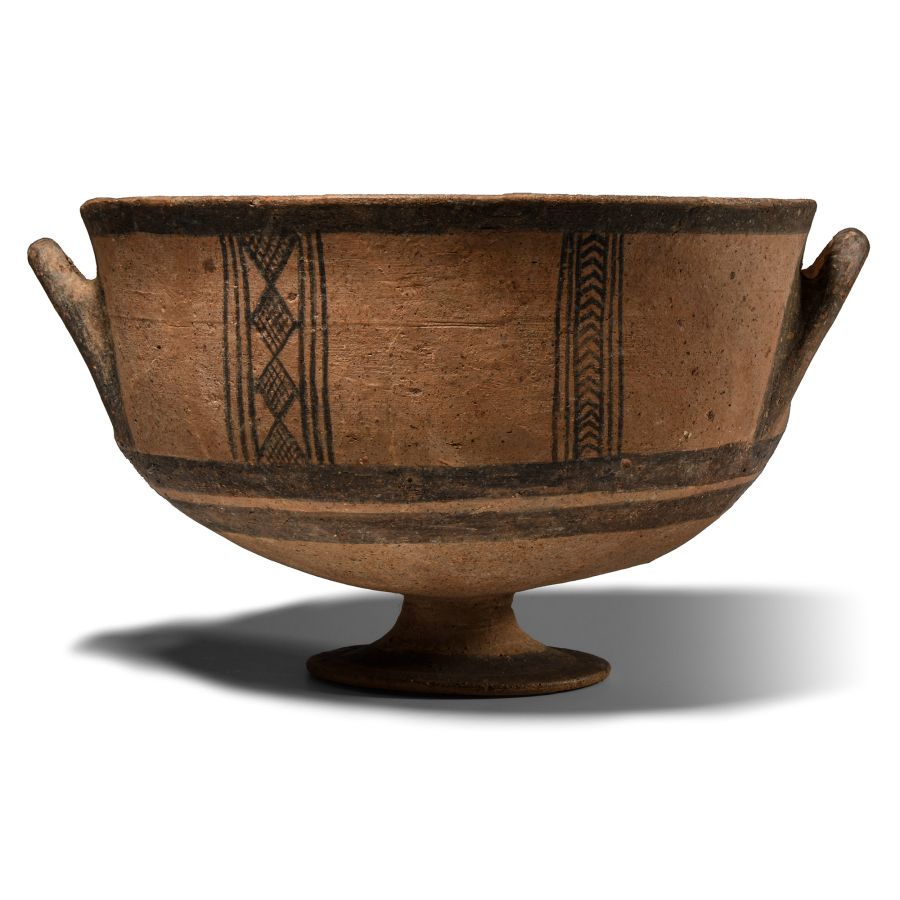
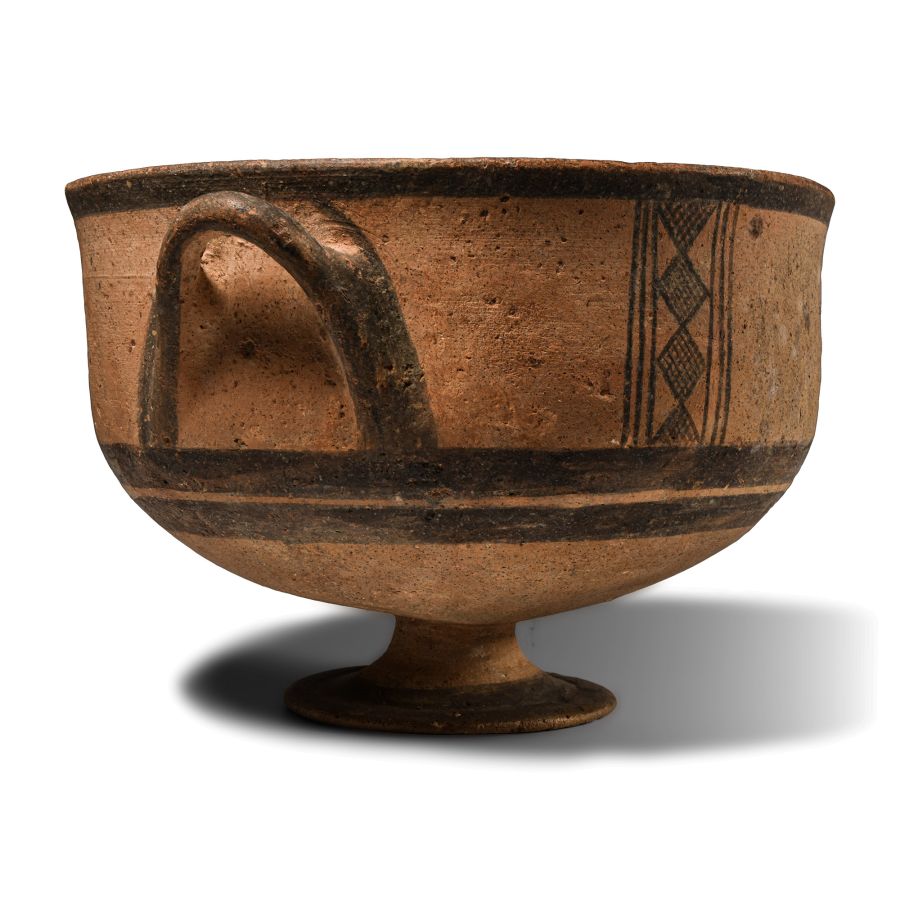
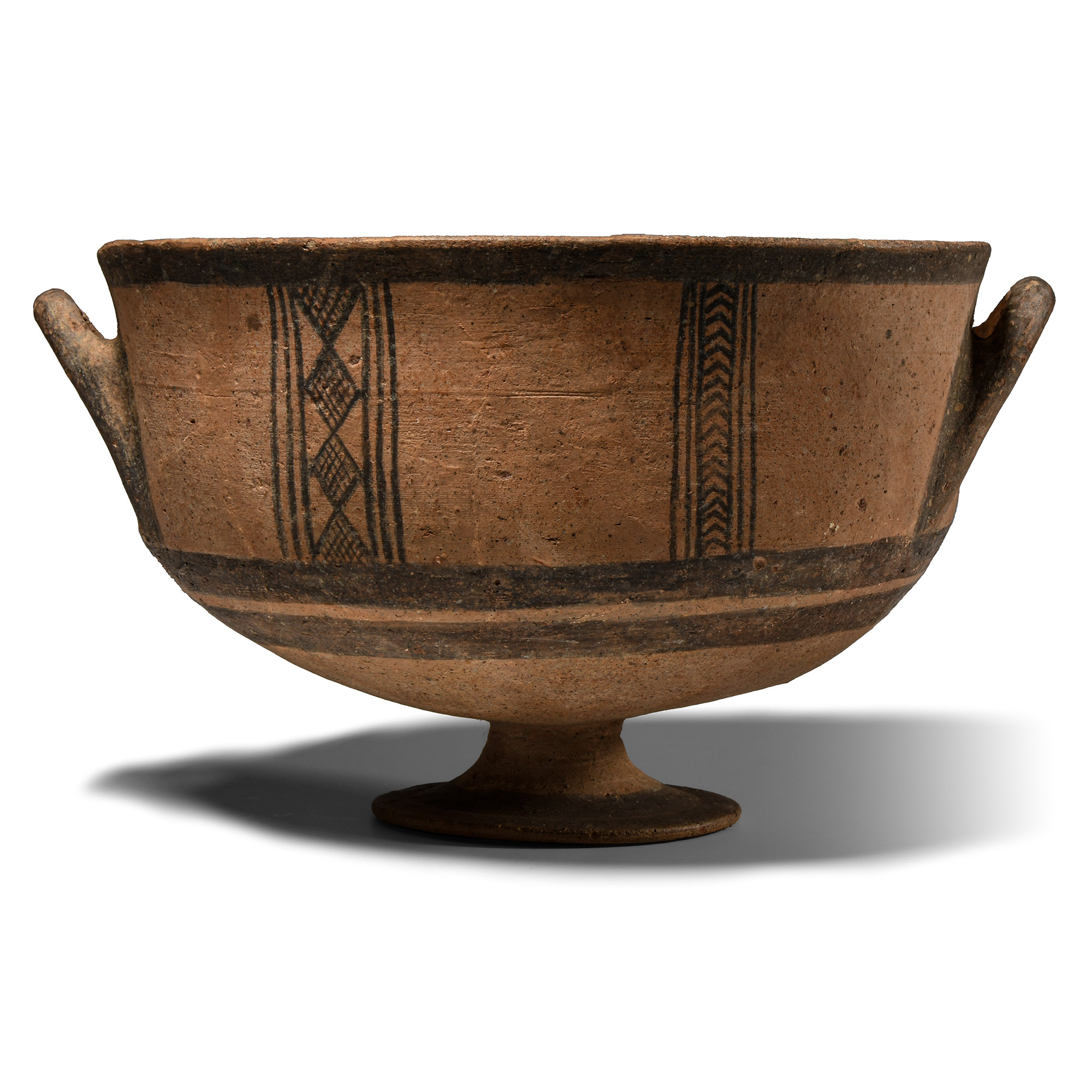
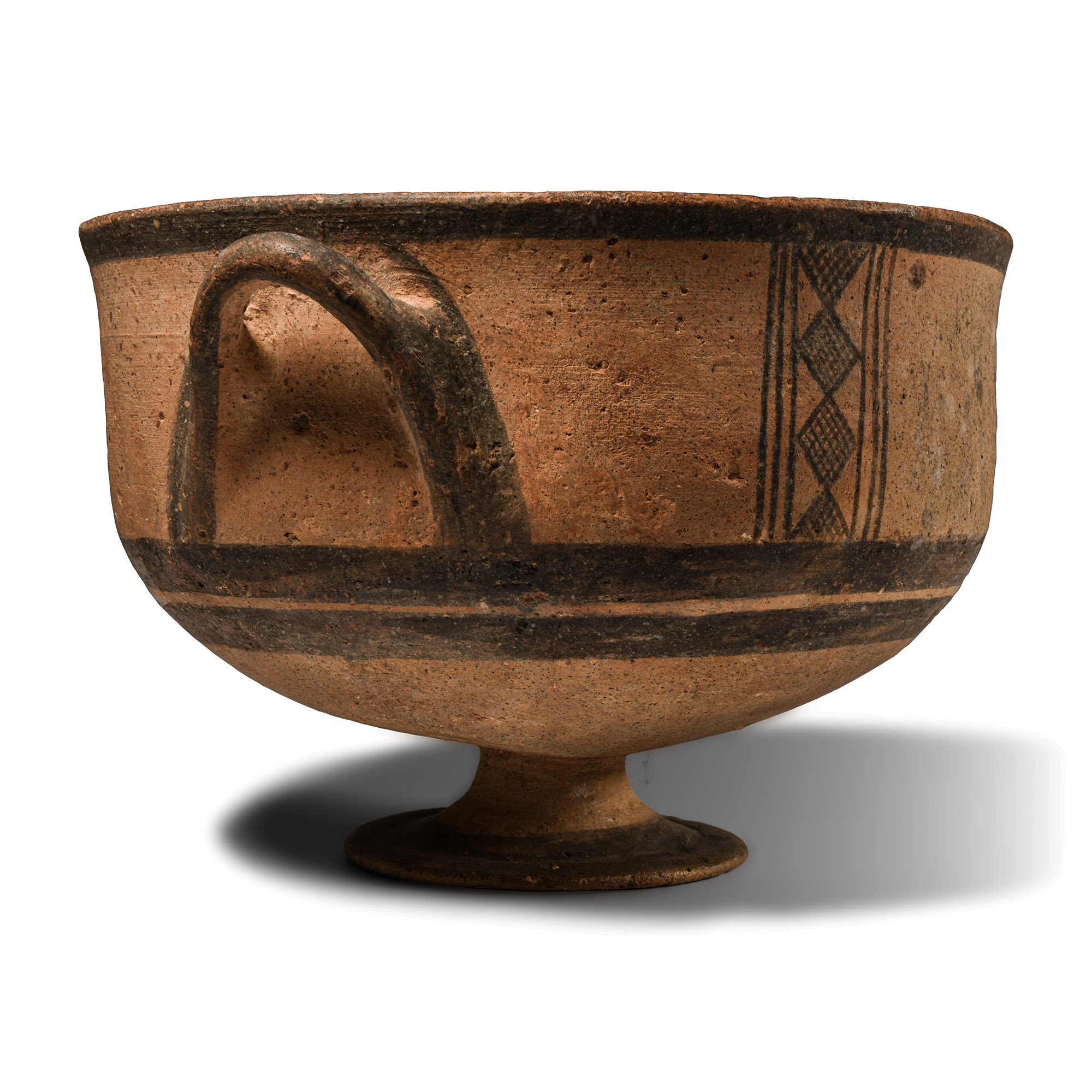
Cypriot Painted Terracotta Chalice
IRON AGE, CIRCA 700-600 B.C.
10 7/8 in. (891 grams, 27.5 cm wide).
Broad drum-shaped body with small foot, slightly everted rim, two lateral strap handles; painted bands to the lower body, handles and rim, vertical hatched and herringbone bands to the sidewall. [No Reserve]
ProvenanceEx John Rilling collection, California, acquired prior to 1970.
Acquired from Bonhams, London, 23 October 2012, no.1.
From an important Cambridgeshire estate; thence by descent.
Accompanied by copies of the relevant Bonhams catalogue pages.
Cf. Morris, D., The Art of ancient Cyprus, Oxford, 1985, fig. p.43, pl.36, for the type.
CONDITIONTimeLine Auctions follows a vetting process to ensure the authenticity and legality of all items, reinforcing our commitment to integrity and responsible trading. Each antiquity, antique, and coin lot undergoes thorough examination by a vetting committee of at least ten external specialists, professional trade association members, scientists, and archaeologists: Our Vetting Process
AUCTIONS:
TimeLine is a leading auction house specialising in antiquities, ancient art, collectables, natural history, coins, medals, and books. Our auctions offer museums, collectors, historians, and enthusiasts the opportunity to acquire unique and historically significant pieces.
-
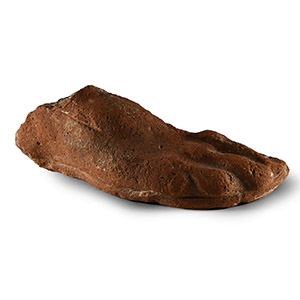
Etruscan Ceramic Votive Foot
4th-3rd century B.C.Sold for (Inc. bp): £91
Comprising the outer part of a right foot with elongated toes and anatomical detailing, base of a sandal visible on the outer edge. 351 grams, 19 cm
Acquired in Germany before 2000. English private collection.
This object belongs to impasto ceramics of red-brown typology, and it was probably an unfinished votive foot. It could have been part of a medium-size statuette, or an anatomical ex voto related to a temple deposit, linked with a health divinity. We have parallels in Veii, Vulci and in the whole of the Latial area. -
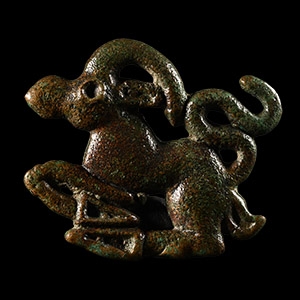
Scythian Bronze Antelope Mount
Circa 4th-3rd century B.C.Sold for (Inc. bp): £286
Openwork with mounting lug to the reverse; animal in active pose with S-curved tail. 50 grams, 60 mm
Acquired 1980-2015. Ex Abelita family collection. -
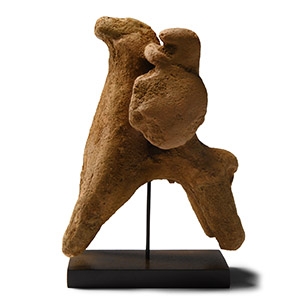
Archaic Greek Terracotta Figure of Mounted Warrior with Shield
7th-5th century B.C.Sold for (Inc. bp): £338
The figure comprising a stylised horse with elongated neck, mounted by a bearded rider figure holding a shield, restored; mounted on a custom-made display stand. 323 grams total, 13 cm including stand
Acquired before 1990. From an old German collection.
