
Loading, please wait...

LOT 0585
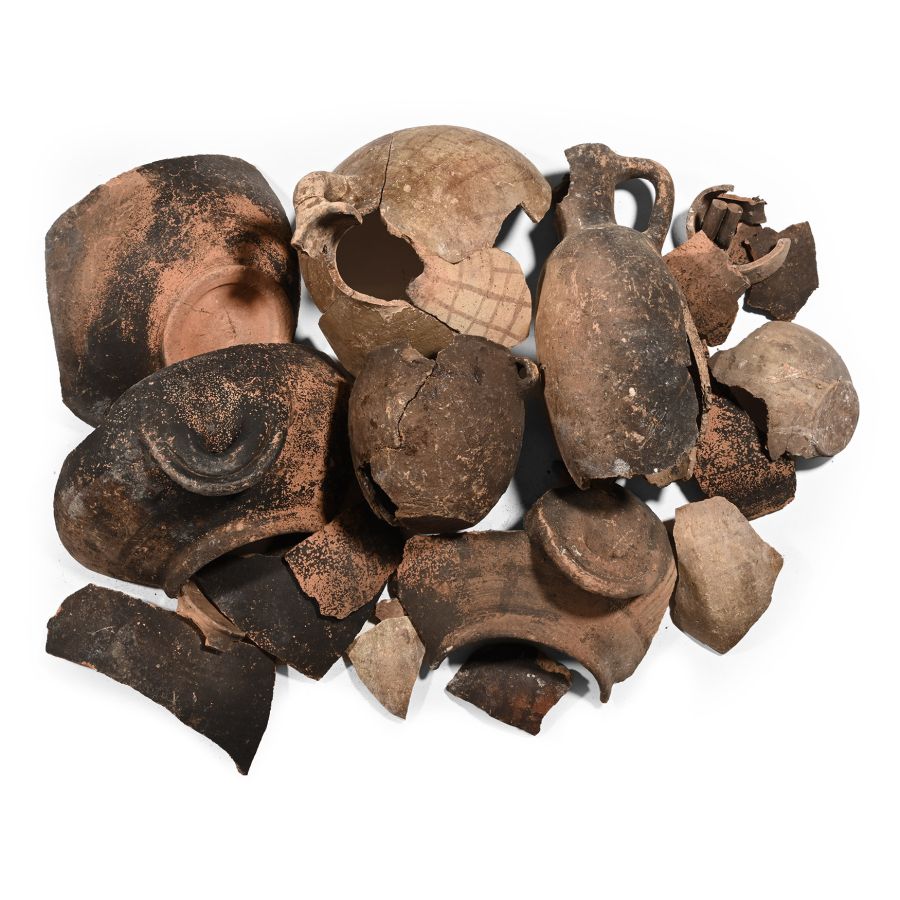
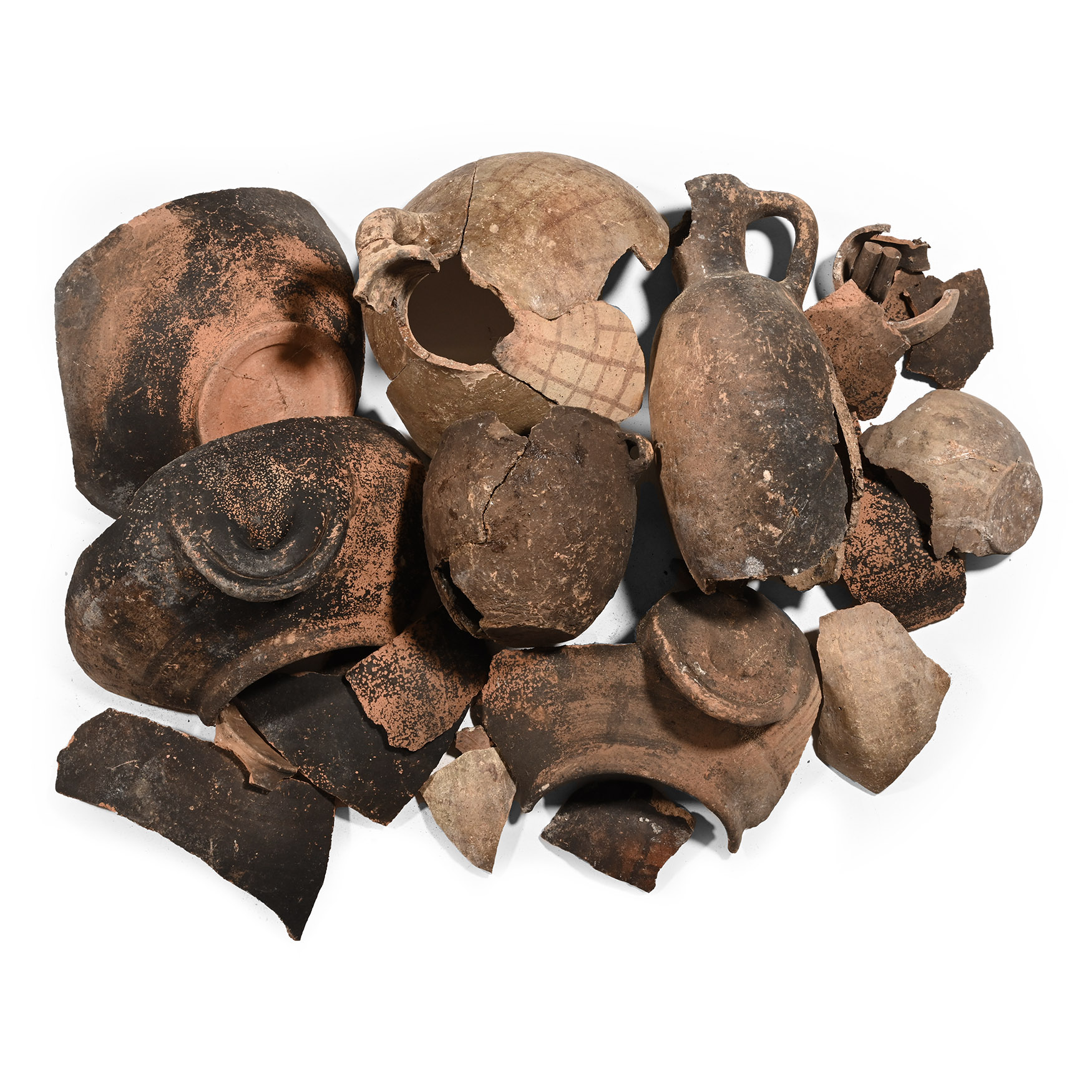
Cypriot Mixed Terracotta Vessel Fragments
3RD-1ST MILLENNIUM B.C.
1 - 10 1/4 in. (4.55 kg total, 2.6-26 cm).
Including fragments of storage vessel, jar, bowl and other items, some with handle and spout elements. [29, No Reserve]
ProvenanceFrom a collection acquired on the UK art market from various auction houses and collections mostly before 2000.
From an important Cambridgeshire estate; thence by descent.
TimeLine Auctions follows a vetting process to ensure the authenticity and legality of all items, reinforcing our commitment to integrity and responsible trading. Each antiquity, antique, and coin lot undergoes thorough examination by a vetting committee of at least ten external specialists, professional trade association members, scientists, and archaeologists: Our Vetting Process
AUCTIONS:
TimeLine is a leading auction house specialising in antiquities, ancient art, collectables, natural history, coins, medals, and books. Our auctions offer museums, collectors, historians, and enthusiasts the opportunity to acquire unique and historically significant pieces.
-

Apulian Red-Figure Askos with Panthers
4th century B.C.Estimate: £2,500 - 3,500 (‡+bp*)
Opening Bid: £1,250
With an arching strap handle and a wide spout; either side of the body painted with a crouching panther, one playing with a ball and the other depicted facing; repaired. 149 grams, 12 cm
Acquired from Gallery Gryphos, Munich, 1992. European private collection. Accompanied by an academic report by Dr Raffaele D’Amato. This lot has been checked against the Interpol Database of stolen works of art and is accompanied by a search certificate number no.12001-211879.
Painted askoi in different forms were produced and been in use in Athens since the middle and second quarter of the 5th century B.C., but they were also made in southern Italy. The askoi painted with a pair of animal figures were realised in Magna Graecia after the Attic continental production of similar models, with the representation of griffins, sphinxes and laconic hounds. The function of the askos as a vessel was clearly linked to wine, and therefore it is not anomalous to see it decorated with panther motifs, an animal connected with Dionysus, the god of wine and drinking. -
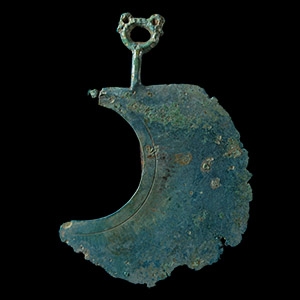
Villanovan Bronze Lunate Razor
9th-8th century B.C.Sold for (Inc. bp): £338
Comprising a broad crescentic plate with incised border and radiating hatched triangles respecting the concave curve of the blade; knop below the inner edge, short handle with stem and ring formed as addorsed birds; Grotta Gramicella Type A. 22 grams, 10.7 cm
Acquired on the European art market, 1990s. English private collection. with Bertolami Fine Arts Ltd, Auction 43, no.71. -
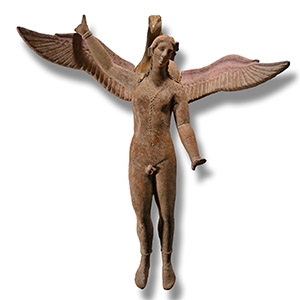
Greek Terracotta Figure of Ganymede
3rd century B.C.Sold for (Inc. bp): £3,120
Modelled in the round as a nude male figure with hanks of hair to the shoulders and necklace of beads; joined directly to his back, an eagle with its textured head arched over that of Ganymede; separate lower left leg and upper arm to the human figure, separate wings for the eagle; repaired. 1.74 kg, 44.5 cm
Acquired in the mid 1980s-1990s. Private collection, Switzerland, thence by descent. Private collection, since the late 1990s. Accompanied by an academic report by Dr Raffaele D'Amato. This lot has been checked against the Interpol Database of stolen works of art and is accompanied by search certificate number no.12211-222353.
In Greek mythology, Ganymede was a divine hero whose handsome looks attracted the attention of Zeus, who had him transported to Olympus by a huge eagle, where he was to serve as a cup-bearer to the gods.
