
Loading, please wait...


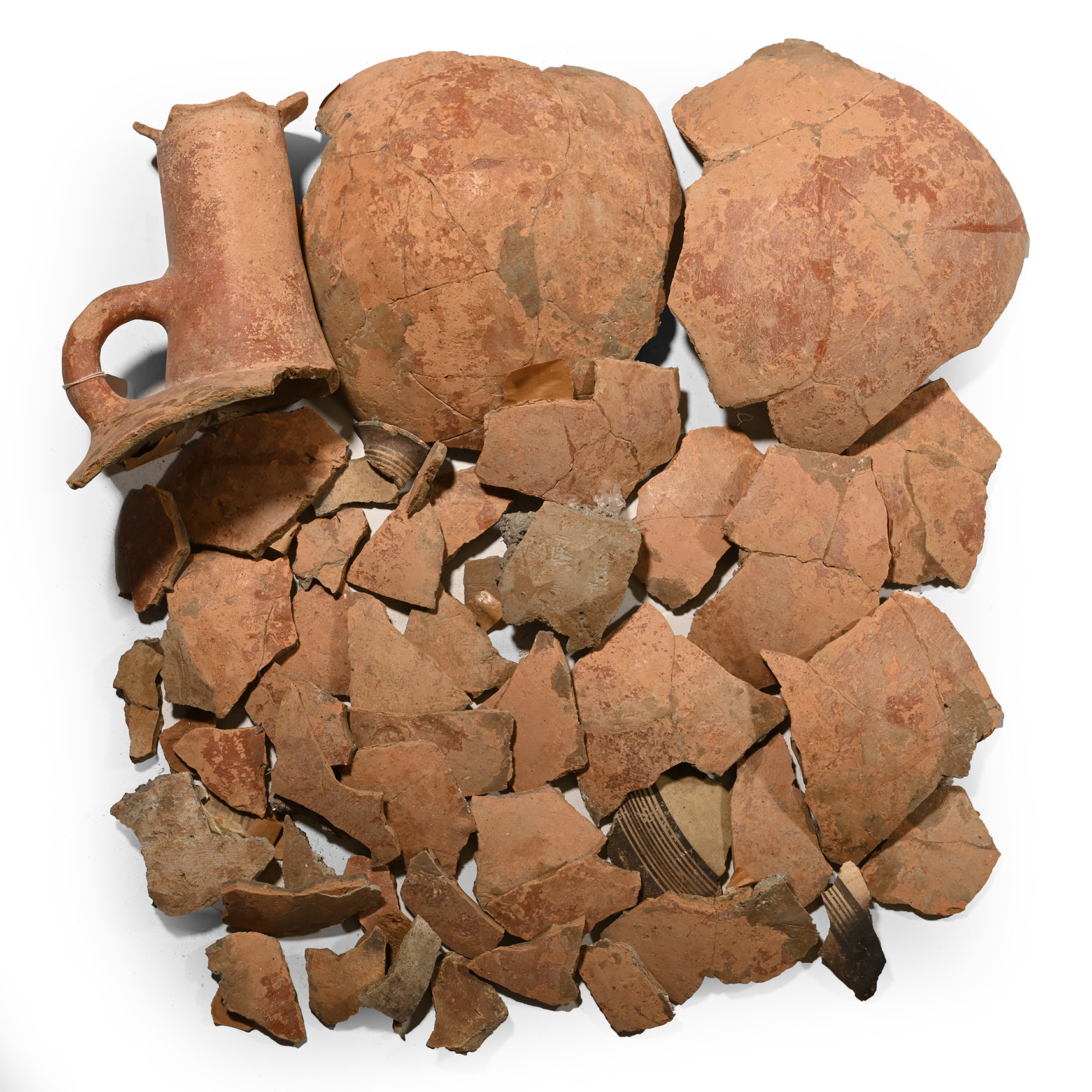
LOT 0604
Cypriot Mixed Terracotta Vessel Fragments
3RD-1ST MILLENNIUM B.C.
1/2 - 10 5/8 in. (5.35 kg total, 1.4-27 cm).
Including fragments of storage vessel, bowl and other items, some with handle and rim elements. [62, No Reserve]
ProvenanceFrom a collection acquired on the UK art market from various auction houses and collections mostly before 2000.
From an important Cambridgeshire estate; thence by descent.
TimeLine Auctions follows a vetting process to ensure the authenticity and legality of all items, reinforcing our commitment to integrity and responsible trading. Each antiquity, antique, and coin lot undergoes thorough examination by a vetting committee of at least ten external specialists, professional trade association members, scientists, and archaeologists: Our Vetting Process
AUCTIONS:
TimeLine is a leading auction house specialising in antiquities, ancient art, collectables, natural history, coins, medals, and books. Our auctions offer museums, collectors, historians, and enthusiasts the opportunity to acquire unique and historically significant pieces.
-
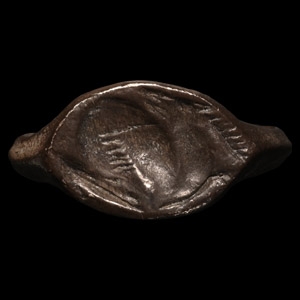
Greek Silver Ring with Animal
Circa 4th-3rd century B.C.Sold for (Inc. bp): £117
With keeled hoop, almond-shaped bezel with crouching ibex facing back. 3.72 grams, 20.89 mm overall, 16.35 mm internal diameter (approximate size British L 1/2, USA 6, Europe 11.87, Japan 11)
Acquired 1980-2015. Ex Abelita family collection. -
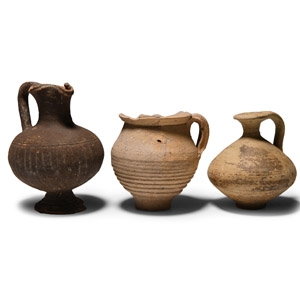
Greek and Roman Terracotta Juglet Group
6th century B.C.-5th century A.D.Sold for (Inc. bp): £124
Comprising: a biconvex juglet with inched rim; one similar with chamfered rim; bulbous juglet with corrugations to the lower body. 305 grams total, 7.8-10.5 cm
From a collection acquired on the UK art market from various auction houses and collections mostly before 2000. From an important Cambridgeshire estate; thence by descent. -
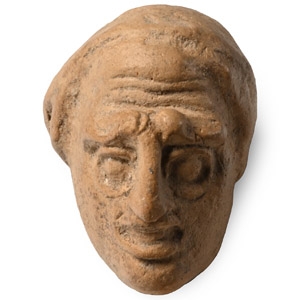
Greek Terracotta Head of an Actor
Tarentine, 3rd-1st century B.C.Sold for (Inc. bp): £234
Modelled in the round with wrinkled brow, sloping eyebrows, thick nose and pellet eyes with discoid surrounds, small pouting mouth. 44 grams, 45 mm
Acquired in the mid 1980s-1990s. Private collection, Switzerland, thence by descent. Private collection, since the late 1990s.
