
Loading, please wait...
LOT 0054
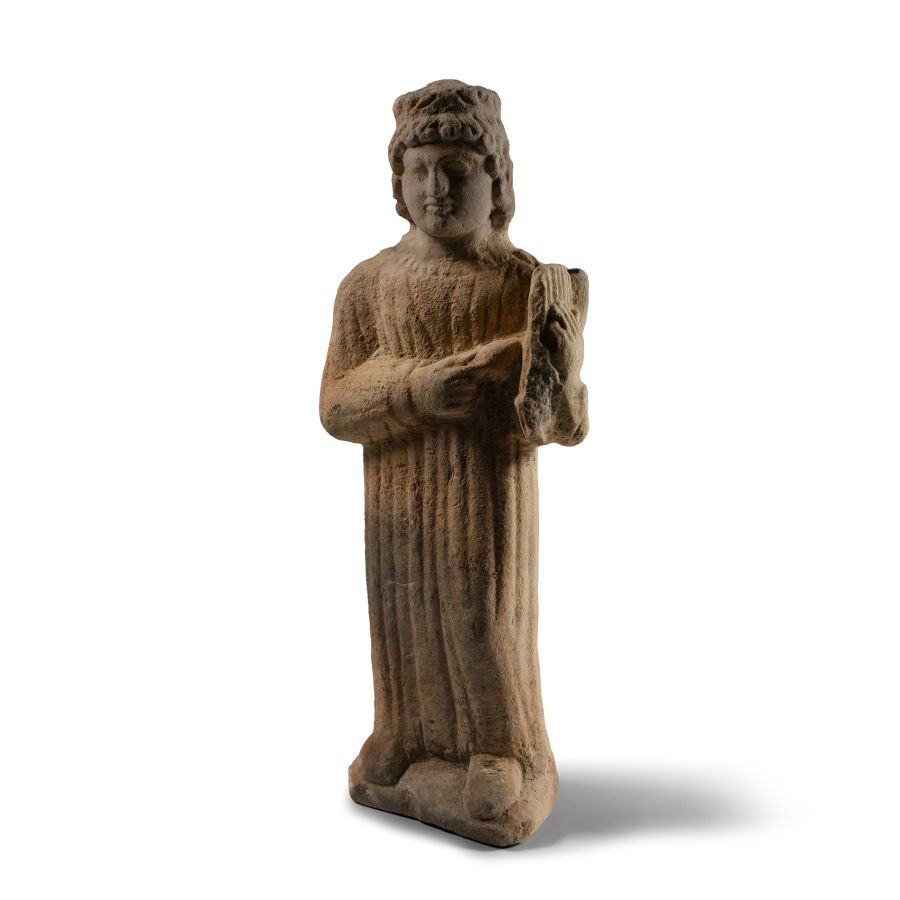
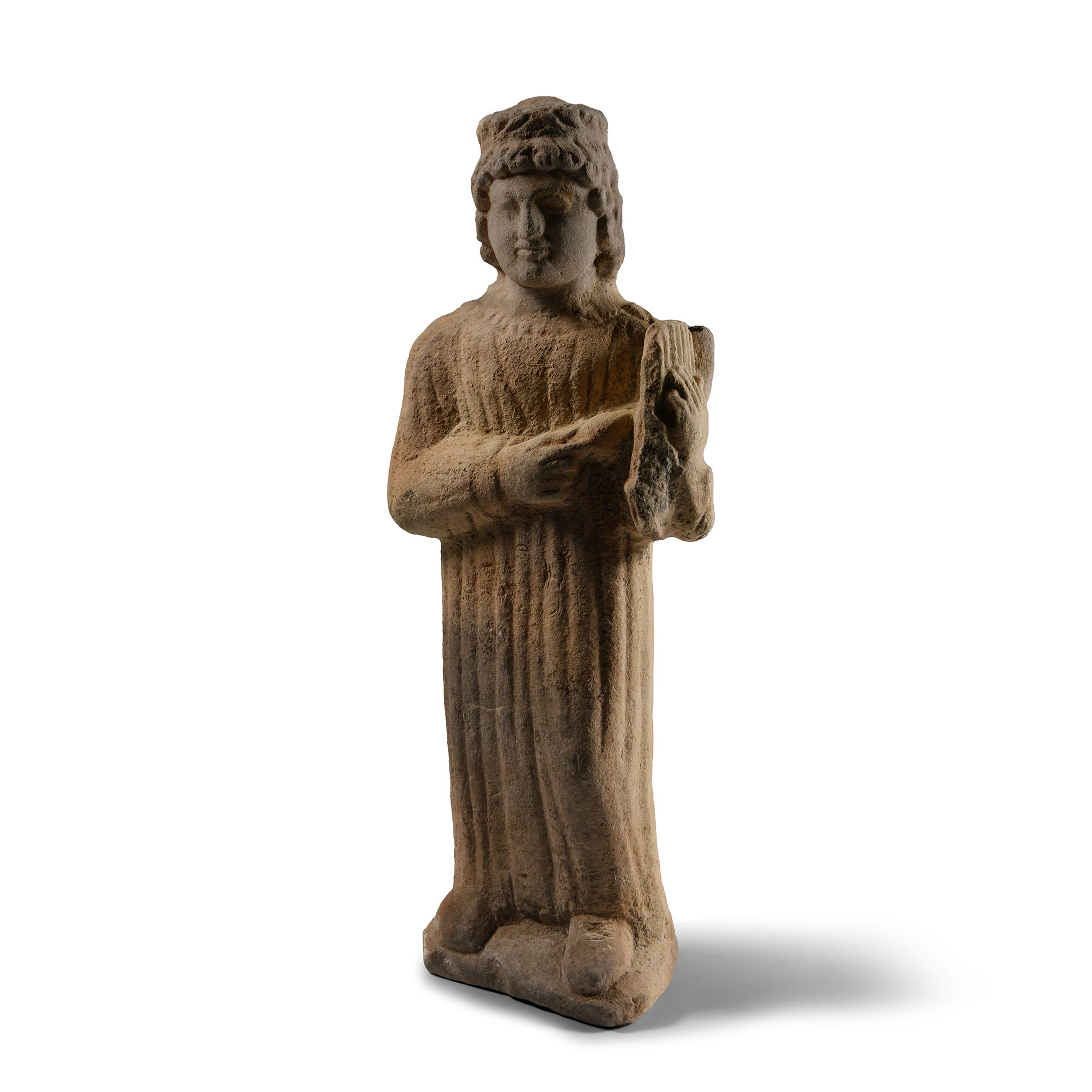
Cypriot Limestone Standing Musician
CIRCA 5TH-4TH CENTURY B.C.
11 7/8 in. (1.3 kg, 30 cm).
Carved in the round, a figure wearing a floor-length robe and holding a stringed instrument in the crook of his left arm and playing it with his right hand; cascading curls of hair frame the face with a diadem to the brow; underside drilled for insertion of a mounting rod. [No Reserve]
Provenancewith Bonhams, 26 November 1997, no.276.
From an important Cambridgeshire estate; thence by descent.
TimeLine Auctions follows a vetting process to ensure the authenticity and legality of all items, reinforcing our commitment to integrity and responsible trading. Each antiquity, antique, and coin lot undergoes thorough examination by a vetting committee of at least ten external specialists, professional trade association members, scientists, and archaeologists: Our Vetting Process
AUCTIONS:
TimeLine is a leading auction house specialising in antiquities, ancient art, collectables, natural history, coins, medals, and books. Our auctions offer museums, collectors, historians, and enthusiasts the opportunity to acquire unique and historically significant pieces.
-
.jpg)
Graeco-Parthian Bronze Mirror with Animals
2nd-1st century B.C.Sold for (Inc. bp): £585
Discoid flat mirror with piriform attachment bracket developing to an addorsed pair of animal heads, equine but with a single curved plume or horn between the ears; mounted on a custom-made stand. 516 grams total, 16.6 cm
UK private collection before 2000. UK art market. Property of a London gentleman. -
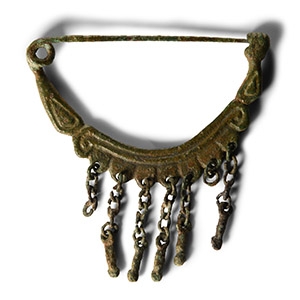
Etruscan Bronze Bow Brooch with Phallic Pendants
Circa 7th century B.C.Sold for (Inc. bp): £143
With integral spring and pin, catched formed as a hand, segmented bow with low-relief detailing, five (of seven) short chains with phallic dangles. 21 grams, 71 mm
From a collection acquired on the UK art market from various auction houses and collections mostly before 2000. From an important Cambridgeshire estate; thence by descent. -
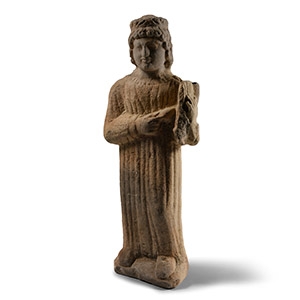
Cypriot Limestone Standing Musician
Circa 5th-4th century B.C.Sold for (Inc. bp): £2,600
Carved in the round, a figure wearing a floor-length robe and holding a stringed instrument in the crook of his left arm and playing it with his right hand; cascading curls of hair frame the face with a diadem to the brow; underside drilled for insertion of a mounting rod. 1.3 kg, 30 cm
with Bonhams, 26 November 1997, no.276. From an important Cambridgeshire estate; thence by descent.
