
Loading, please wait...
LOT 0610
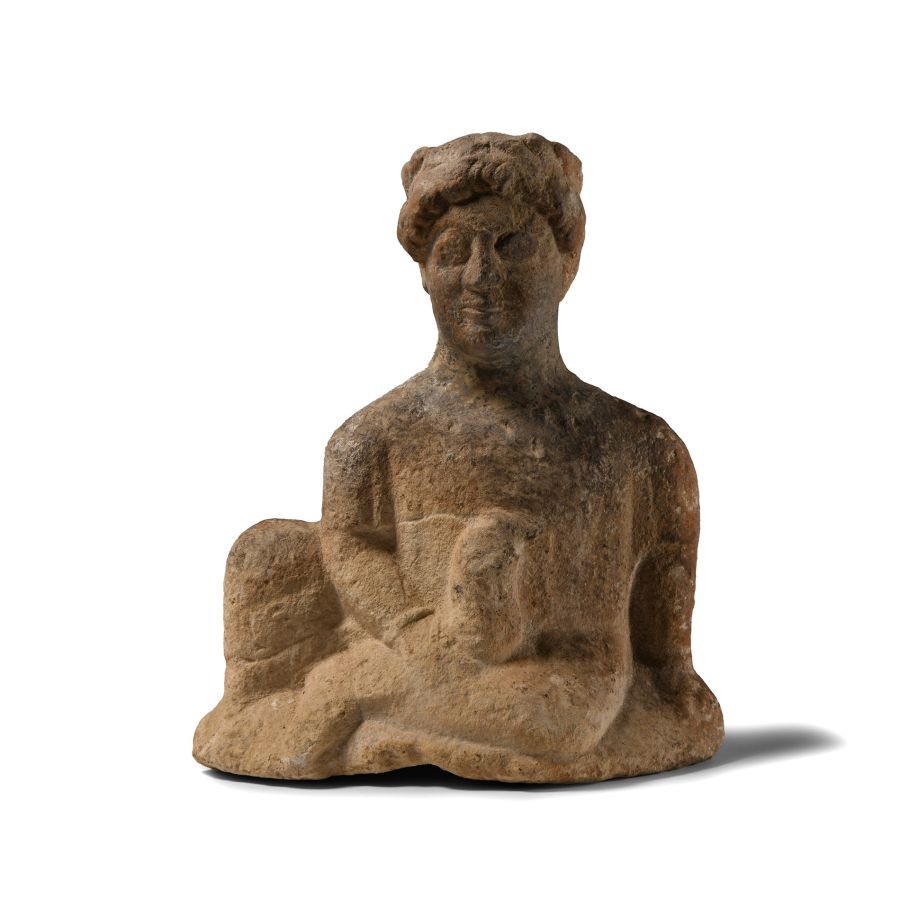
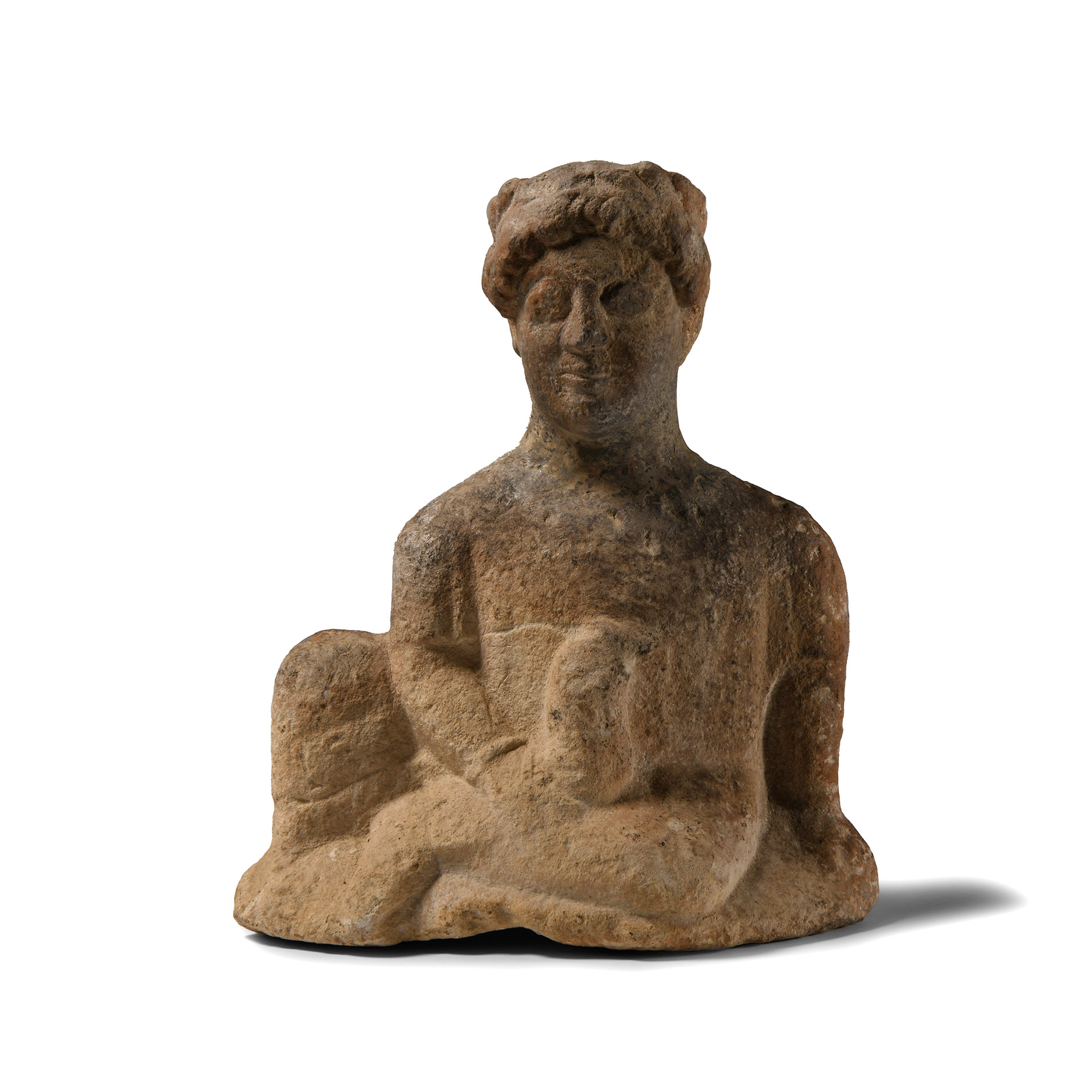
Cypriot Limestone Seated Apollo Figure
CIRCA 4TH-3RD CENTURY B.C.
7 3/4 in. (978 grams, 19.5 cm).
Carved figure of Apollo squatting with wreath to the hair, holding a goose in his lap against his chest, right leg folded and left leg bent beneath him; applied discs to the eyes. [No Reserve]
Provenancewith Bonham's, New Bond Street, 22 April, 1999, lot 80.
From an important Cambridgeshire estate; thence by descent.
The swan or goose was the favoured bird of Apollo.
CONDITIONTimeLine Auctions follows a vetting process to ensure the authenticity and legality of all items, reinforcing our commitment to integrity and responsible trading. Each antiquity, antique, and coin lot undergoes thorough examination by a vetting committee of at least ten external specialists, professional trade association members, scientists, and archaeologists: Our Vetting Process
AUCTIONS:
TimeLine is a leading auction house specialising in antiquities, ancient art, collectables, natural history, coins, medals, and books. Our auctions offer museums, collectors, historians, and enthusiasts the opportunity to acquire unique and historically significant pieces.
-
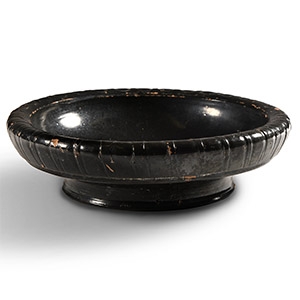
Greek Black-Glazed Plate
5th-4th century B.C.Estimate: £300 - 400 (‡+bp*)
Opening Bid: £150
Shallow-bodied with broad foot; incised fluting around the exterior body and rim. 192 grams, 12.7 cm wide
Acquired in the 1960s-1970s. Ex European private collection. -
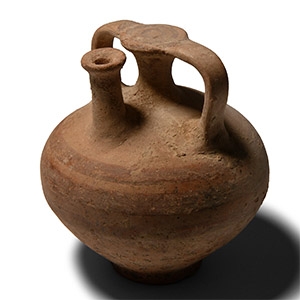
Cypro-Mycenaean Bichrome Stirrup Vessel
Late Bronze Age, circa 1200-1000 B.C.Sold for (Inc. bp): £260
Squat biconvex body with narrow base, strap handles attached to the disc above the central post on the upper face, with offset tubular spout; painted with bands of red pigment to the shoulder and disc. 270 grams, 11.5 cm high
Ex Peter Cran ciollection, Scotland, who worked as an engineer for the Cypriot public works department 1931-1946; thence by descent. Acquired from Bonhams, London, 23 May 2012, no.6 (part). From an important Cambridgeshire estate; thence by descent. Accompanied by copies of the relevant Bonhams catalogue pages and the original Bonhams lot tag. -
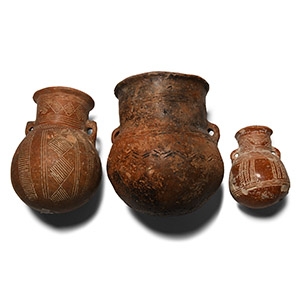
Cypriot Red Polished Ware Jar Group
Middle Bronze Age, circa 2000-1600 B.C.Sold for (Inc. bp): £1,040
Comprising: two with globular body, broad neck and flared rim, pierced lugs to the shoulders, bands of incised hatching; one with rounded underside, broad neck and everted rim, pierced lugs to the shoulder, horizontal broken lines and zigzags. 1.27 kg total, 9.7-15 cm
From a collection acquired on the UK art market from various auction houses and collections mostly before 2000. From an important Cambridgeshire estate; thence by descent.
In the Early Bronze Age, the most common form of Cypriot jars was the round-based, two-handled variety, with the handles attached on the vertical plane.
