
Loading, please wait...
LOT 0055
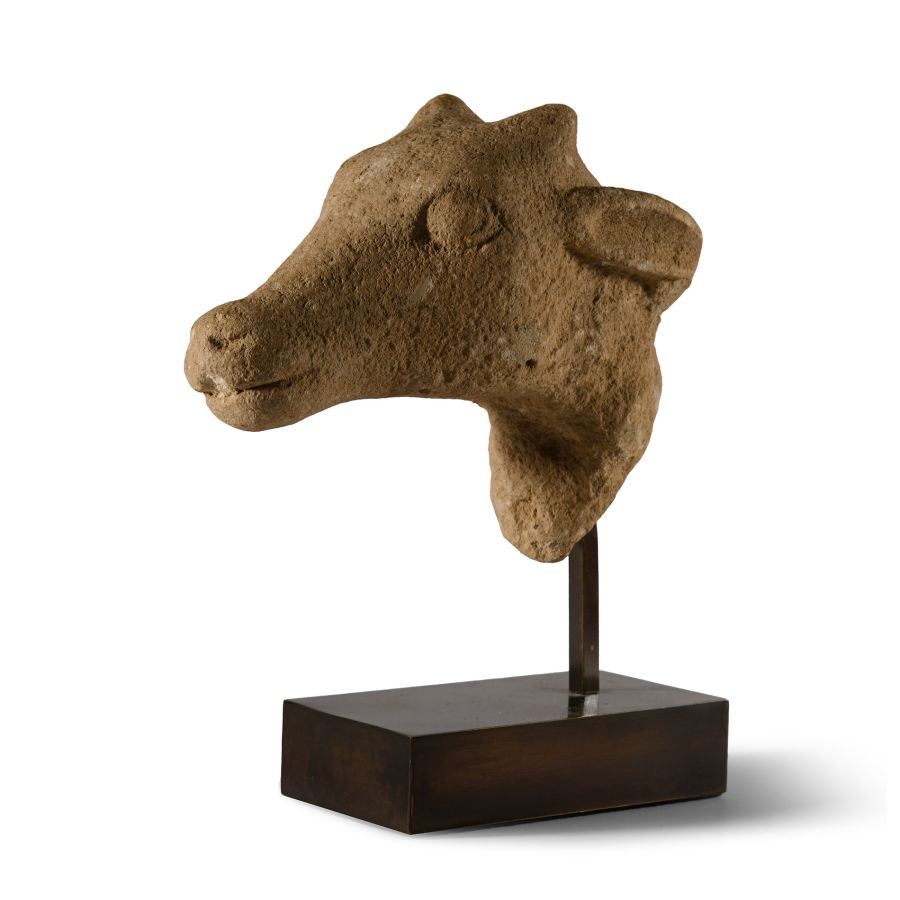
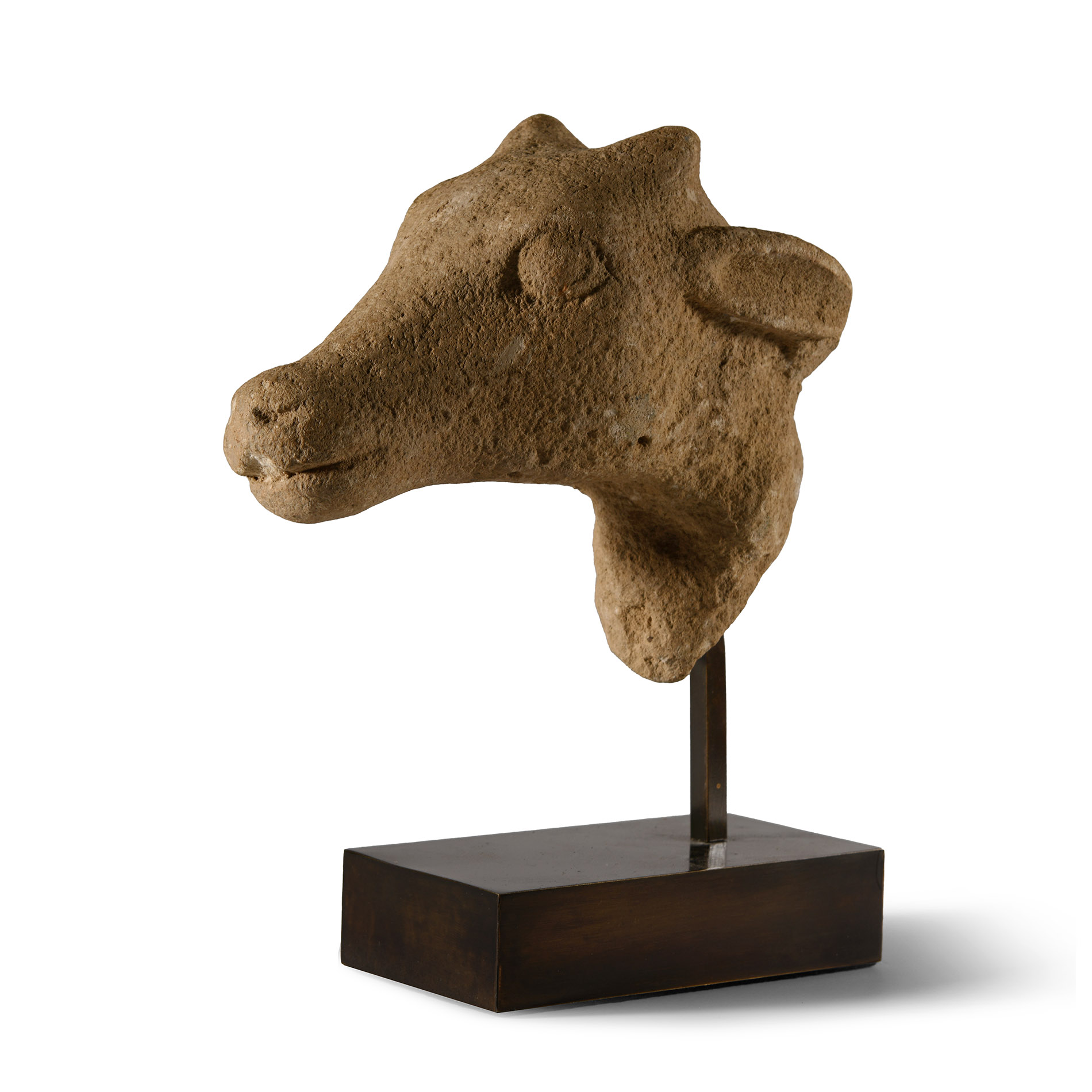
Cypriot Limestone Head of a Deer
IRON AGE, CIRCA LATE 6TH-EARLY 5TH CENTURY B.C.
7 3/4 in. (982 grams total, 19.7 cm including stand).
Carved in the round with stub antlers to the brow; mounted on a custom-made display stand.
ProvenanceAcquired before 1947.
Ex Wood family collection, UK; thence by descent 1970.
Cf. Karageorghis, V., Cipro, Crocevia del Mondo Mediterraneo orientale 1600-500 a.C., Milano, 2002, fig.405, for a bull in similar style; cf. nearly identical head of a deer of the same period in the Metropolitan Museum of Art, accession no.74.57.25.
FootnotesThe deer head probably came from a larger votive terracotta sculpture, which depicted a standing doe, perhaps being led to be sacrificed. The presence of the deer could connect the original terracotta to a sanctuary of Diana, whose sacred animal was the deer.
CONDITIONTimeLine Auctions follows a vetting process to ensure the authenticity and legality of all items, reinforcing our commitment to integrity and responsible trading. Each antiquity, antique, and coin lot undergoes thorough examination by a vetting committee of at least ten external specialists, professional trade association members, scientists, and archaeologists: Our Vetting Process
AUCTIONS:
TimeLine is a leading auction house specialising in antiquities, ancient art, collectables, natural history, coins, medals, and books. Our auctions offer museums, collectors, historians, and enthusiasts the opportunity to acquire unique and historically significant pieces.
-
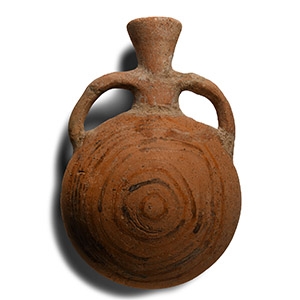
Cypro-Archaic Buff Pottery Pilgrim's Flask
Levant, circa 1050-700 B.C.Sold for (Inc. bp): £104
Biconvex body with trumpet-shaped mouth and two lateral loop handles; painted concentric circles to the body. 330 grams, 15.3 cm
From an old Lebanese family collection moved to Germany in the middle of the 1970s. Acquired from Bonhams, London, 20 October 2005, no.424 (part). From an important Cambridgeshire estate; thence by descent. Accompanied by copies of the relevant Bonhams catalogue pages and the original Bonhams lot tag. -
.jpg)
Etruscan Terracotta Votive Mask
Circa 4th-2nd century B.C.Sold for (Inc. bp): £910
Modelled in the half-round as a mask of a youthful female with large ovoid eyes and small mouth; mounted on a custom-made stand. 1.44 kg total, 20.5 cm high (27 cm high including stand)
Ex PA collection of Greek art, Hertfordshire, UK, 1990s. -
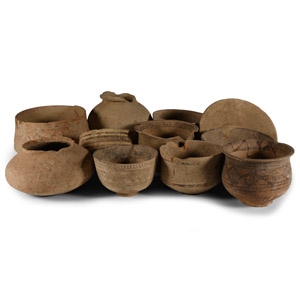
Greek and Other Terracotta Pottery Group
1st millennium B.C. and earlierSold for (Inc. bp): £208
Fragments including carinated bowl with painted frieze to the shoulder, squat jar, cup with everted rim and other types. 2.1 kg total, 9-14 cm
Acquired 1980-2015. Ex Abelita family collection.
