
Loading, please wait...
LOT 0015
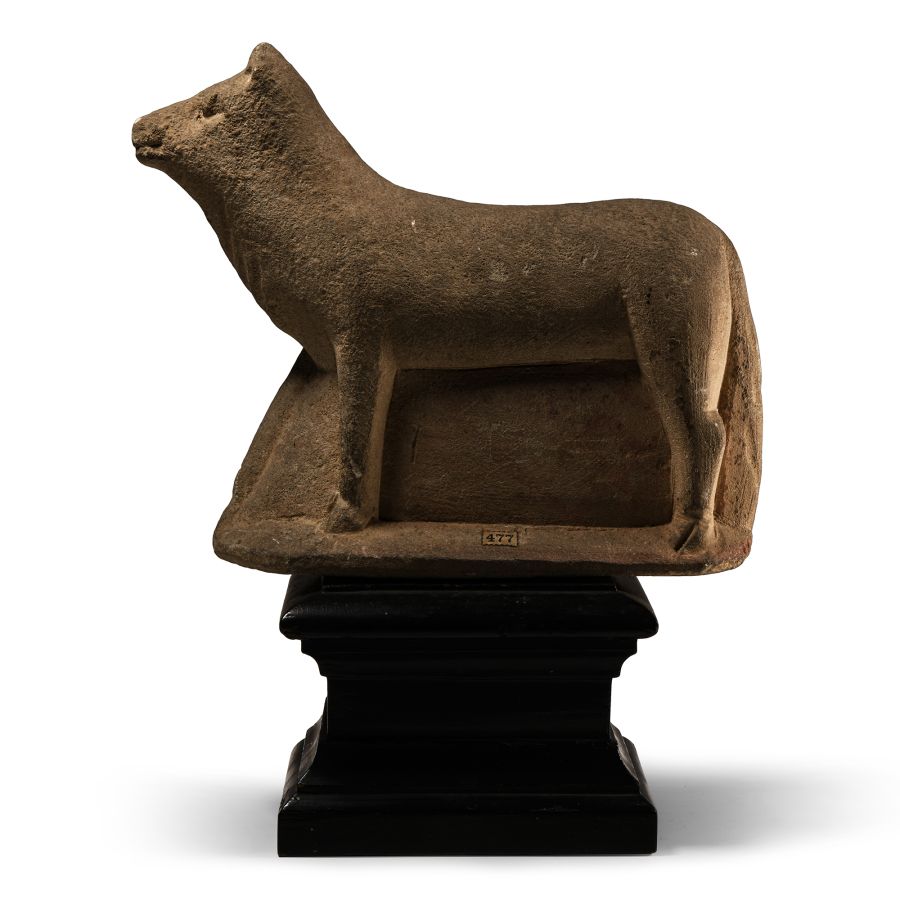
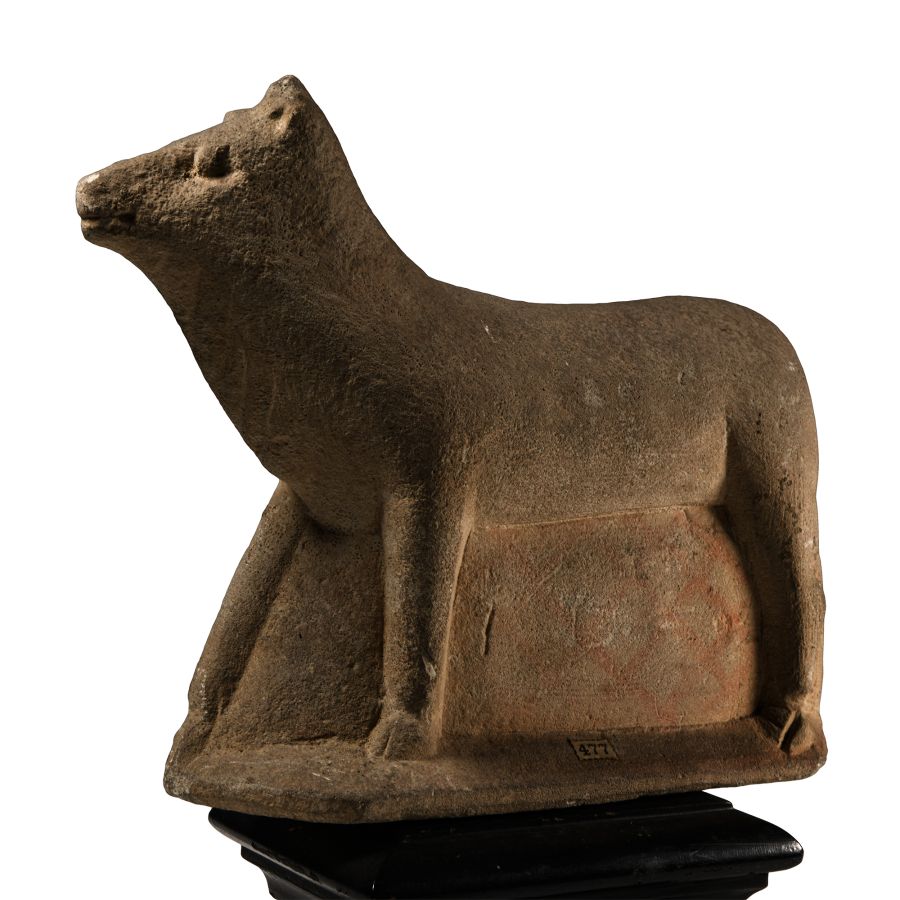
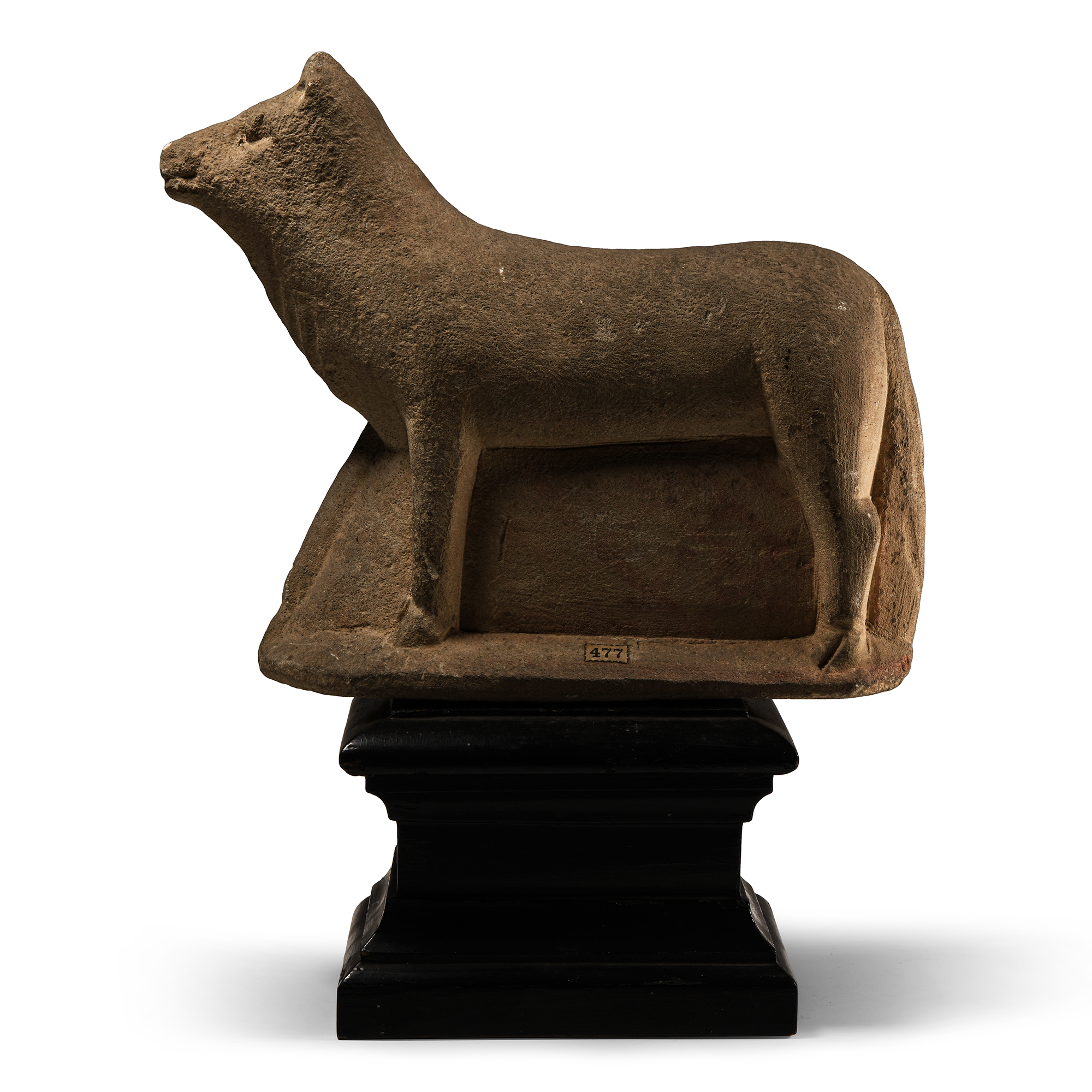
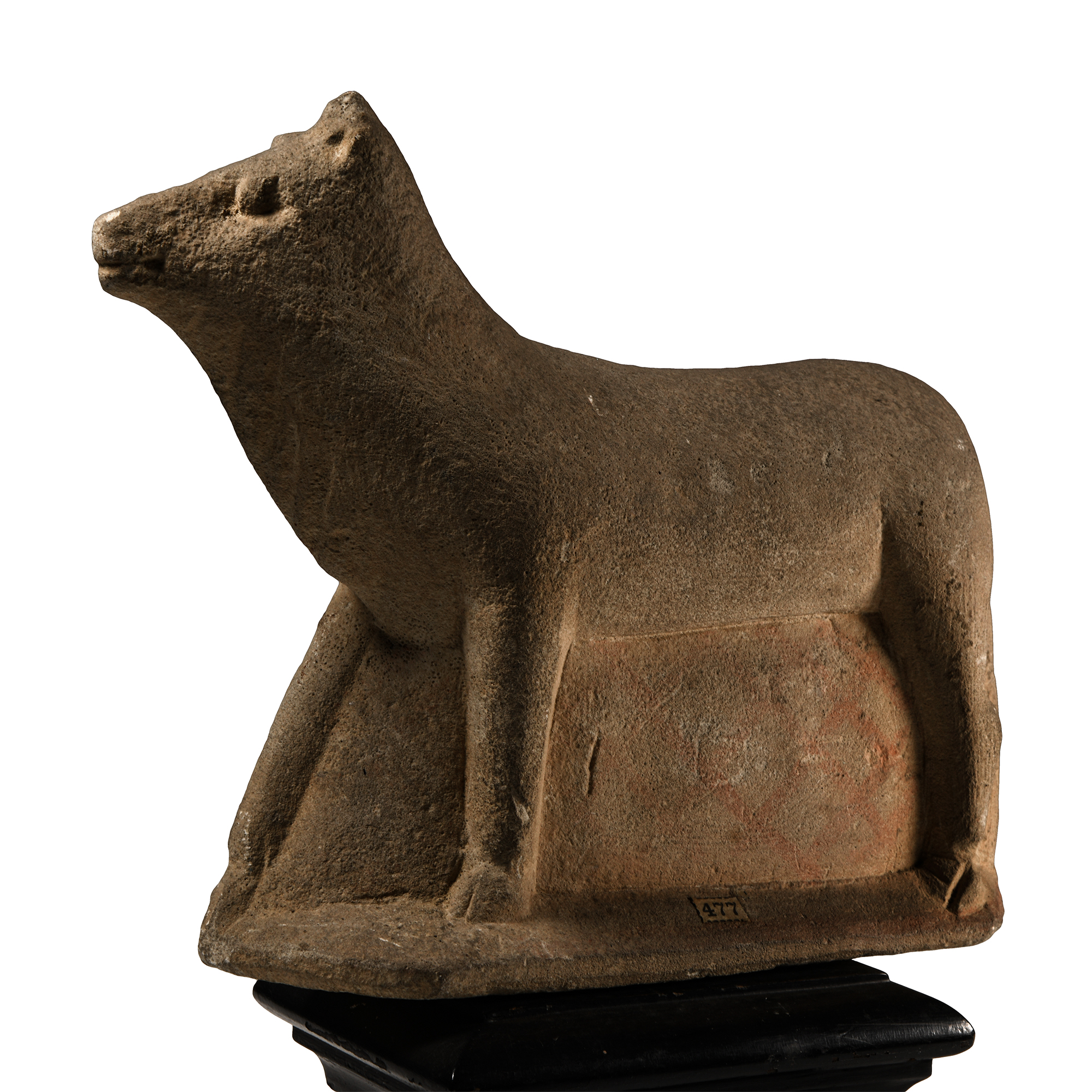
Cypriot Limestone Bull Statue
CYPRO-ARCHAIC I, 750-600 B.C.
9 1/2 in. (1.29 kg total, 24 cm including stand).
Carved in the round as an advancing bull with its tail placed between the hindlegs, thick fur to the throat; the fill between the legs with traces of cross-hatching in red pigment; old collector's label '477' to flange base; mounted on an old wooden collector's stand with painted numeral '193' to one face. [No Reserve]
ProvenanceBase and collection numbers suggesting it may have been deaccessioned from The Metropolitan Museum of Art.
Joseph Klein collection, formed in New York between 1941-1980, thence by descent.
with Bonhams, London, 24 October 2012, no.3.
From an important Cambridgeshire estate; thence by descent.
L.P. di Cesnola, A Descriptive Atlas of the Cesnola Collection of Cypriote Antiquities in the Metropolitan Museum of Art, New York, vol. I, Boston, 1885, pl. 98.
LiteratureCf. Hastings, E.A., The Sculpture from the Sacred Animal Necropolis at North Saqqâra 1964-76, London, 1997, pl. LV, for a bull or bull calf statue associated with the Apis cult.
FootnotesThis possibly represents a bull or bull calf associated with the Apis cult.
CONDITIONTimeLine Auctions follows a vetting process to ensure the authenticity and legality of all items, reinforcing our commitment to integrity and responsible trading. Each antiquity, antique, and coin lot undergoes thorough examination by a vetting committee of at least ten external specialists, professional trade association members, scientists, and archaeologists: Our Vetting Process
AUCTIONS:
TimeLine is a leading auction house specialising in antiquities, ancient art, collectables, natural history, coins, medals, and books. Our auctions offer museums, collectors, historians, and enthusiasts the opportunity to acquire unique and historically significant pieces.
-
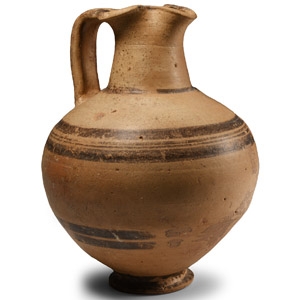
Cypriot Painted Ceramic Oinochoe
Iron Age, circa 700-475 B.C.Sold for (Inc. bp): £247
With trefoil folded rim to the mouth, painted bands to the strap handle, shoulder and lower body. 732 grams, 20 cm
Private estate Cheshire, UK, 1990s. Property of a Bristol, UK, gentleman. -
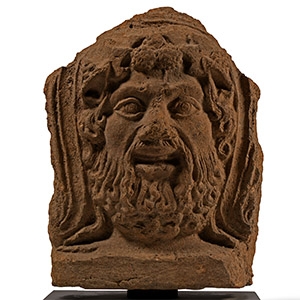
Etruscan Terracotta Satyr Antefix
4th century B.C.Estimate: £3,000 - 4,000 (+bp*)
Opening Bid: £1,500
D-shaped in profile with high-relief mask of a satyr within a looped frame; hanks of curling hair to the brow and temples with berries to the fillet, lentoid eyes, broad nose, curling moustache and beard; ledge below and arched ridge to the reverse; mounted on a custom-made stand. 6.77 kg total, 30 cm including stand
Acquired from Faustus Ancient Art Ltd, London, 1990. Private American collection. with Christie’s, London, 27 October 2009, no 9. Accompanied by copies of the relevant Christie's catalogue pages. Accompanied by an academic report by Dr Raffaele D’Amato. This lot has been checked against the Interpol Database of stolen works of art and is accompanied by a search certificate number no.12062-217441.
The antefix belongs to the typical decorative scheme of alternating maenad and satyr head antefixes that were mainly produced in Cerveteri. Heads were often placed in temples and displayed identifying features such as wavy hair and large, almond-shaped lidded eyes, and were lavishly painted. These typologies of antefixes generally look quite similar and appear to have identical colour schemes with dark red skin, and with darker shade of red applied to the hair below the ears and on top of the head and inside the ears. -
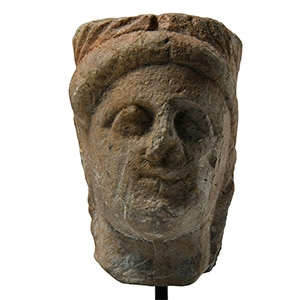
Greek Stone Head of a Caryatid
4th-2nd century B.C.Sold for (Inc. bp): £221
Modelled in the half-round with D-shaped face and short neck, transverse band of hair above the brow and ribbed panel above, flat-topped; slot to lower rear for attachment; mounted on a custom-made display stand. 426 grams total, 14.2 cm including stand
From a collection acquired on the UK art market from various auction houses and collections mostly before 2000. From an important Cambridgeshire estate; thence by descent.
