
Loading, please wait...
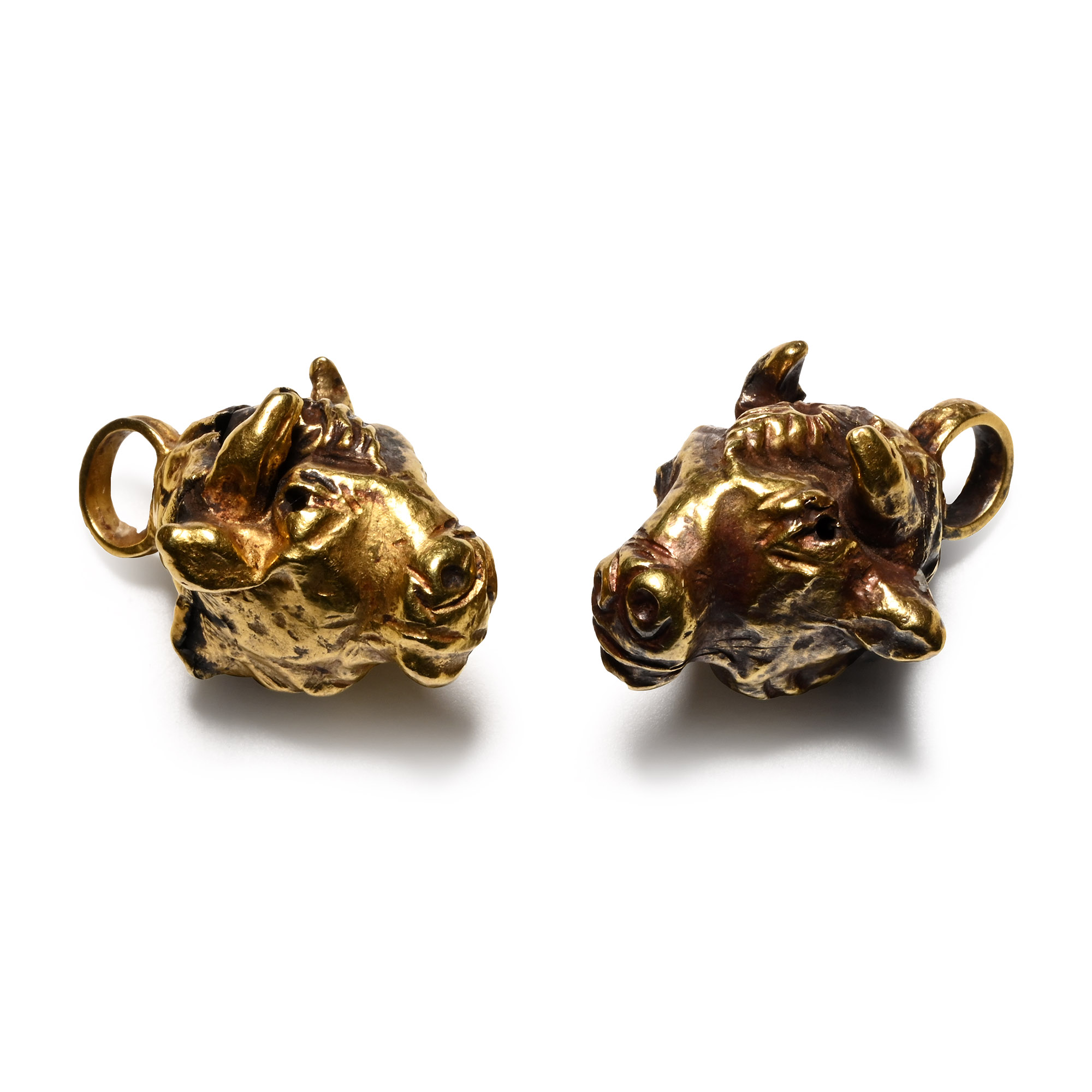
LOT 0116
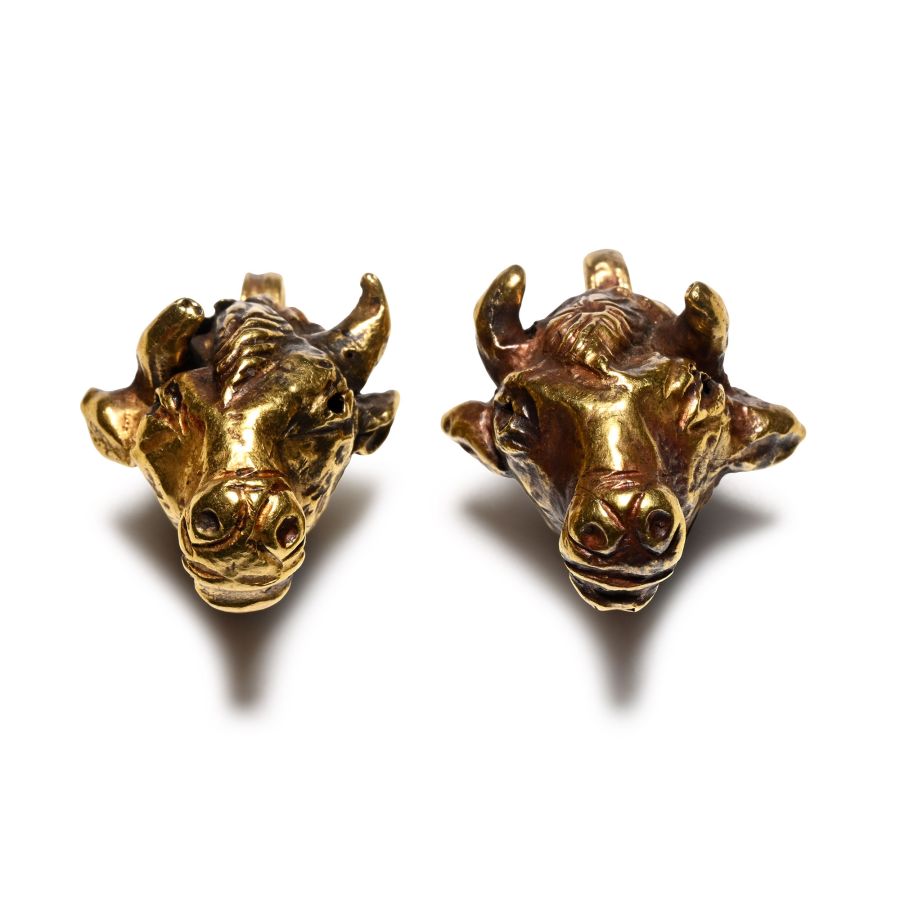
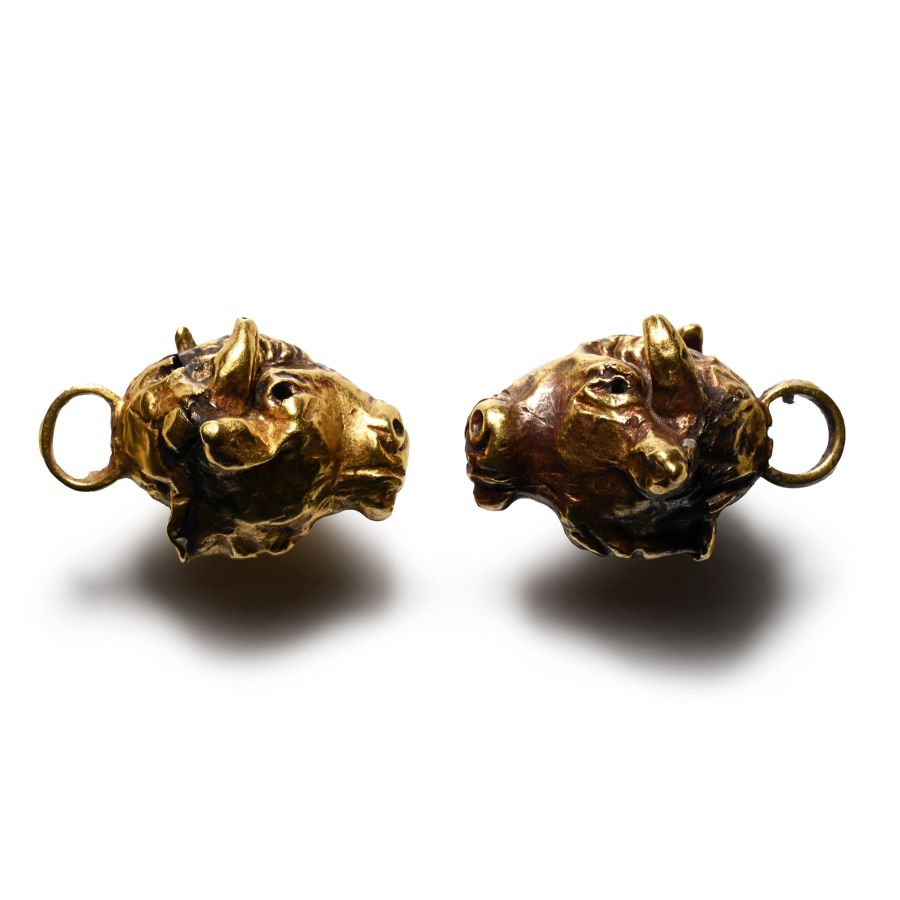
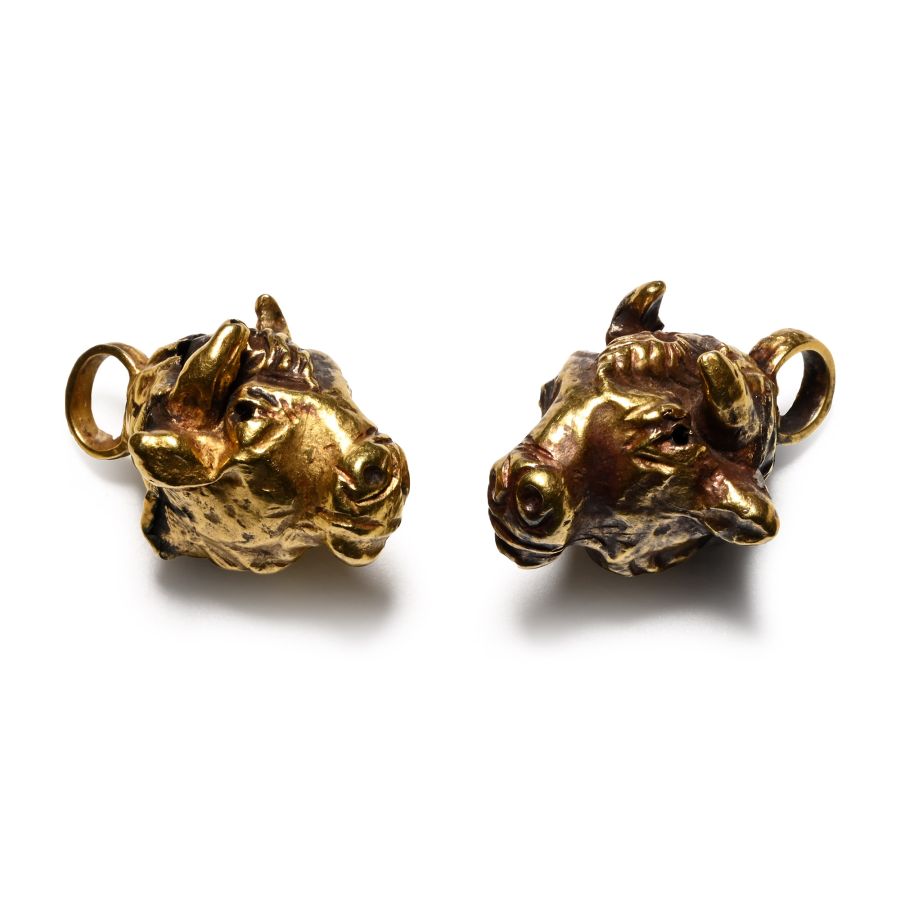
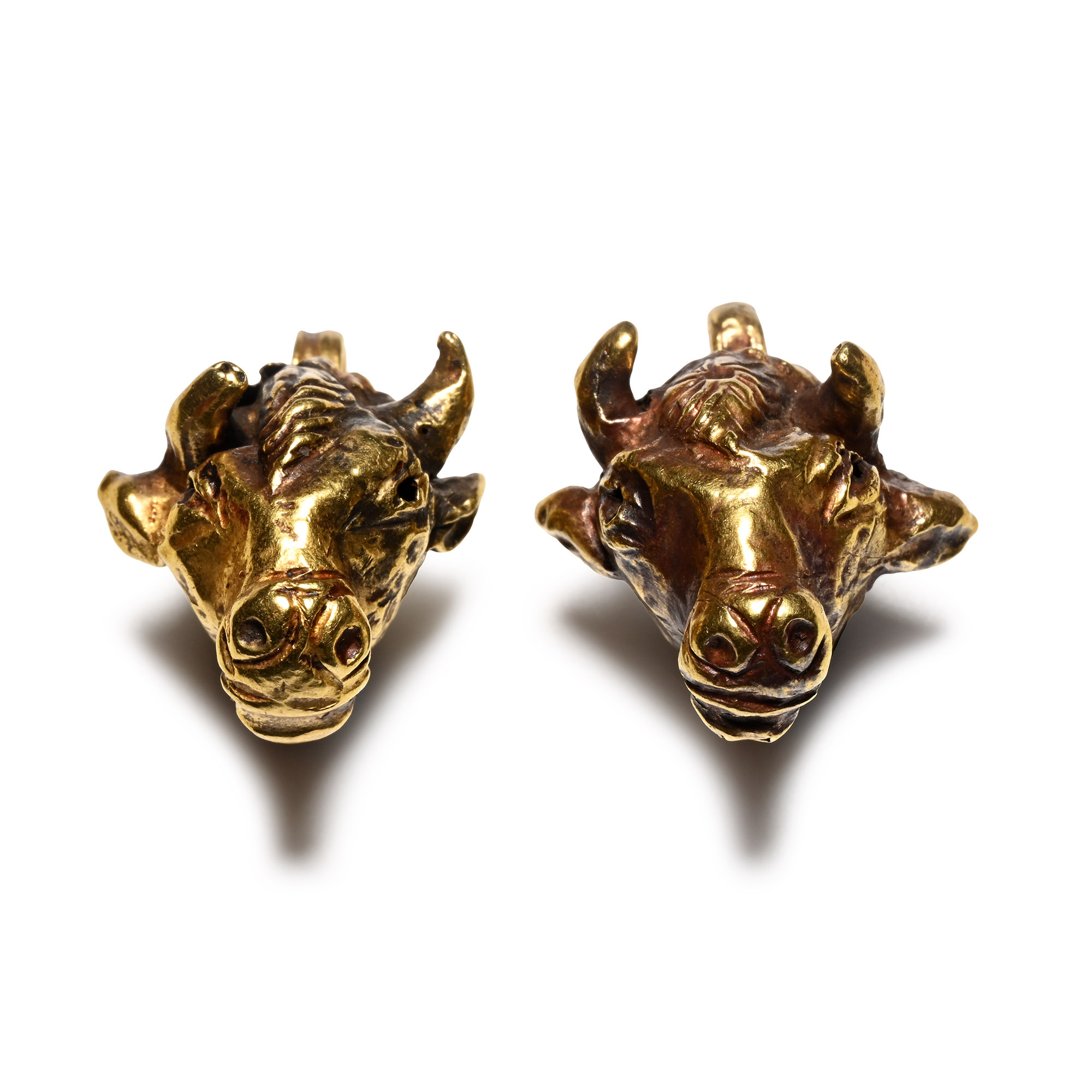
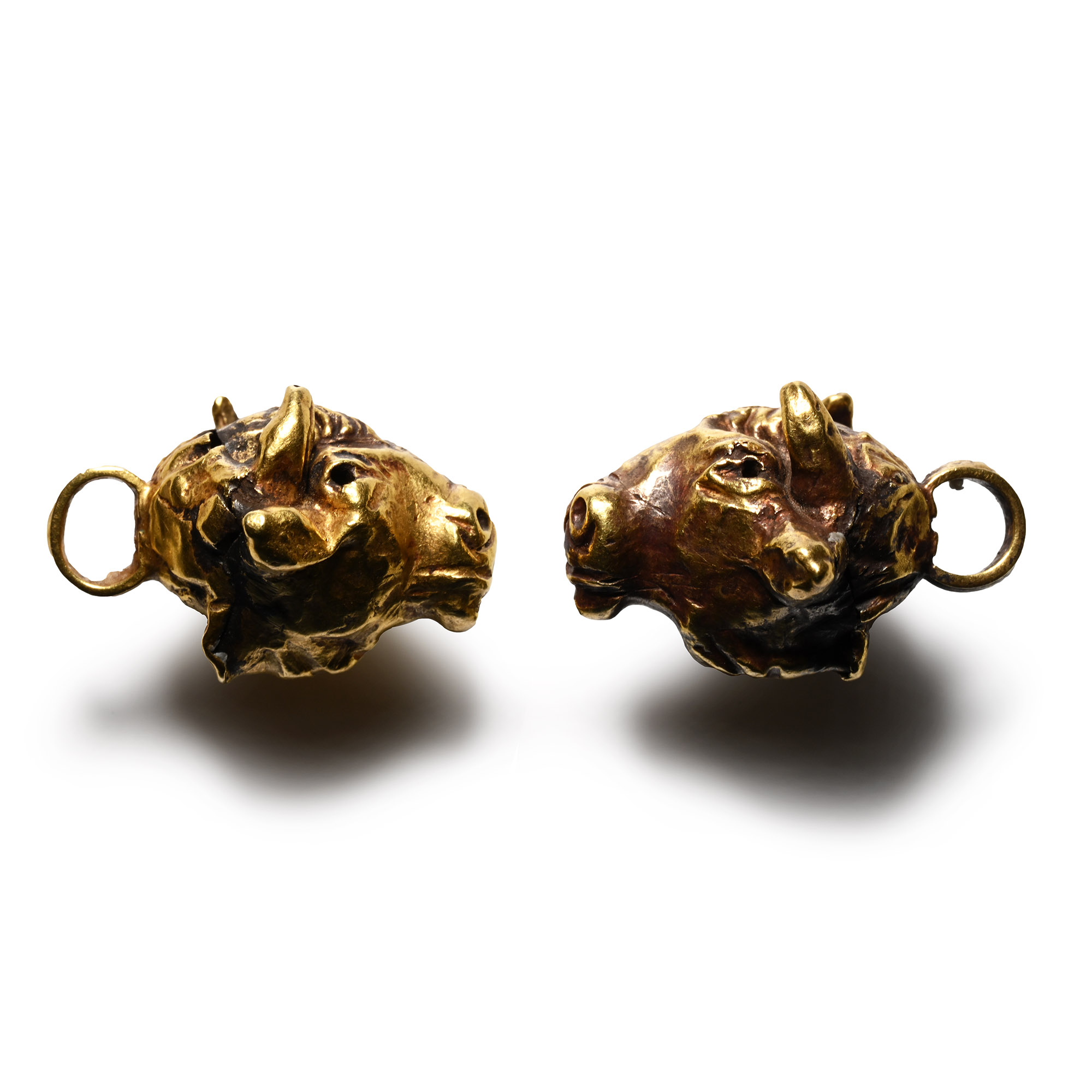
Cypriot Gold Bull-Headed Pendant Pair
7TH CENTURY B.C.
7/8 in. (5.39 grams total, 23-24 mm).
Matched pair of hollow-formed pendants, each a bull's head modelled in the round with a rosette to the rear beneath the loop. [2]
ProvenanceAcquired in 1986.
with Taisei Gallery, Gold & Silver Auction, Part II, Ancient to Renaissance, 5 November 1992, The Conrad Salon, The Waldorf-Astoria, New York, no.165.
This lot has been checked against the Interpol Database of stolen works of art and is accompanied by search certificate no.11969-210472.
This lot has been cleared against the Art Loss Register database, and is accompanied by an illustrated lot declaration signed by the Head of the Antiquities Department, Dr Raffaele D'Amato.
Cf. Torn Broers, P., ‘A Late Bronze Age Gold Bull Head Pendant from Tel Dor’ in Davidovich, U., Yahalom-Mack, Matskevich, S., Agypten und Altes Testament, 110, Material, Method and Meaning, Papers in Eastern Mediterranean Archaeology in Honor of Ilan Sharon, Münster, 2022, pl.10.1, for a similar bull head.
FootnotesIn Cyprus, the cult of the bull developed from the 3rd millennium B.C. until the 6th century B.C. The bull was a 'frequently invoked manifestation of divinity', and its cult was widespread since the Minoan Age. The appearance of gold bull-head pendants in tombs had an aesthetic and social value, but at the same time it also had a deeper symbolic and religious meaning.
CONDITIONTimeLine Auctions follows a vetting process to ensure the authenticity and legality of all items, reinforcing our commitment to integrity and responsible trading. Each antiquity, antique, and coin lot undergoes thorough examination by a vetting committee of at least ten external specialists, professional trade association members, scientists, and archaeologists: Our Vetting Process
AUCTIONS:
TimeLine is a leading auction house specialising in antiquities, ancient art, collectables, natural history, coins, medals, and books. Our auctions offer museums, collectors, historians, and enthusiasts the opportunity to acquire unique and historically significant pieces.
-
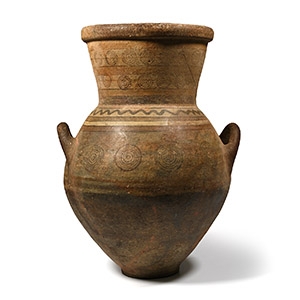
Cypriot Painted Terracotta Amphora
Cypro-Archaic I, circa 750-600 B.C.Sold for (Inc. bp): £975
Tall unglazed ceramic comprising a biconical body and low basal ring, rounded shoulder and broad funicular neck with rolled rim, two strap handles to the equator; painted with bands of ring-and-dot motifs to neck and shoulder, interstitial horizontal bands; repaired. 3.8 kg, 43.5 cm
Property of a Cambridgeshire collector. From his private collection since the 1970s; thence by descent circa 2000. Ex private collection of a Bedfordshire gentleman. This lot is accompanied by an illustrated lot declaration signed by the Head of the Antiquities Department, Dr Raffaele D'Amato. -
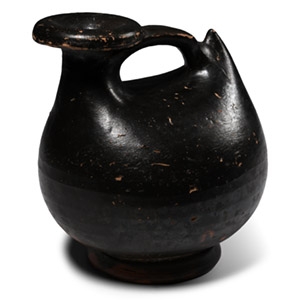
Greek Black Glazed Terracotta Askos
4th century B.C.Estimate: £400 - 600 (‡+bp*)
Opening Bid: £200
A pouring vessel with bulbous body and funicular spout, central strap handle. 160 grams, 97 mm high
Ex C.R., Ticino, before 1970. with Galerie Rhéa, Zurich, Switzerland. This lot is accompanied by an illustrated lot declaration signed by the Head of the Antiquities Department, Dr Raffaele D'Amato. -
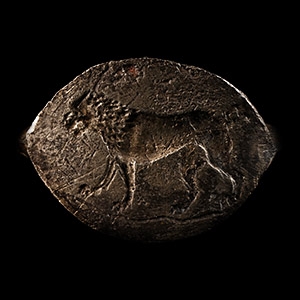
Large Greek Silver Ring with Advancing Lion
5th century B.C.Sold for (Inc. bp): £4,680
With round-section hoop and scaphoid plaque, incuse advancing lion in profile on a baseline. 16.12 grams, 30.64 mm overall, 19.55 x 22.66 mm internal diameter (approximate size British V 1/2, USA 10 3/4, Europe 24.4, Japan 23)
with Artemis Gallery, Munich, 1990s. Acquired from Artemis Gallery, 8 February 2006. European private collection. This lot has been checked against the Interpol Database of stolen works of art and is accompanied by a search certificate number no.12659-234646. This lot has been cleared against the Art Loss Register database, and is accompanied by an illustrated lot declaration signed by the Head of the Antiquities Department, Dr Raffaele D'Amato.
