
Loading, please wait...
LOT 0572
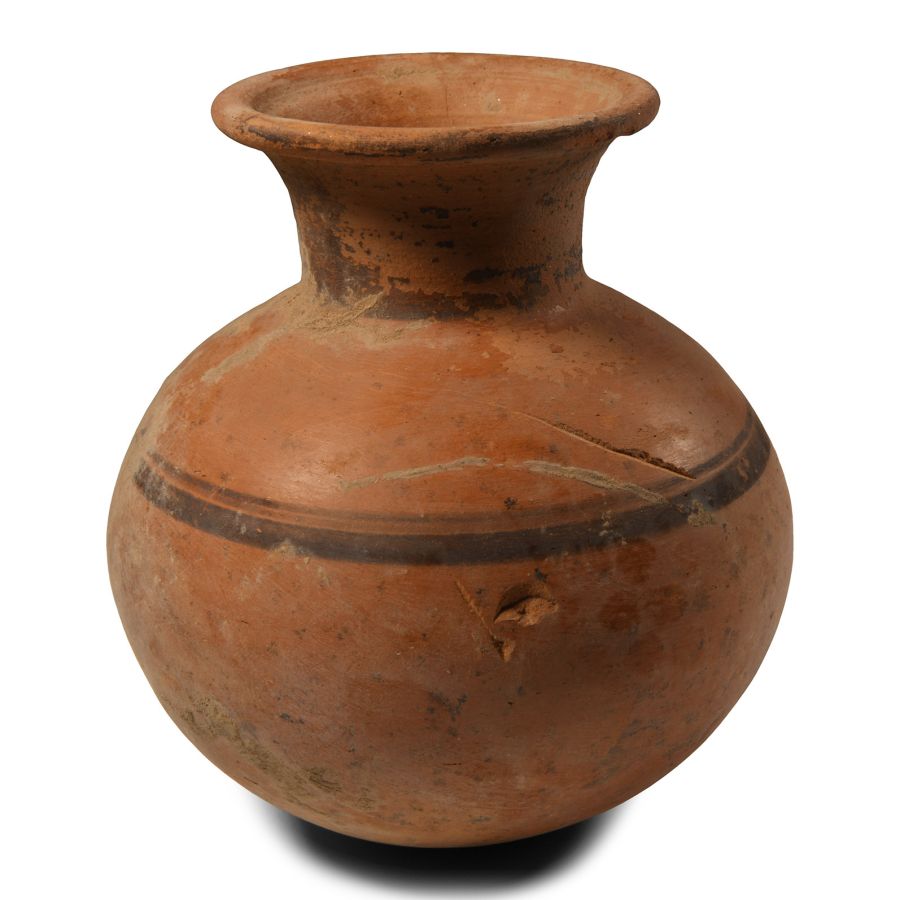
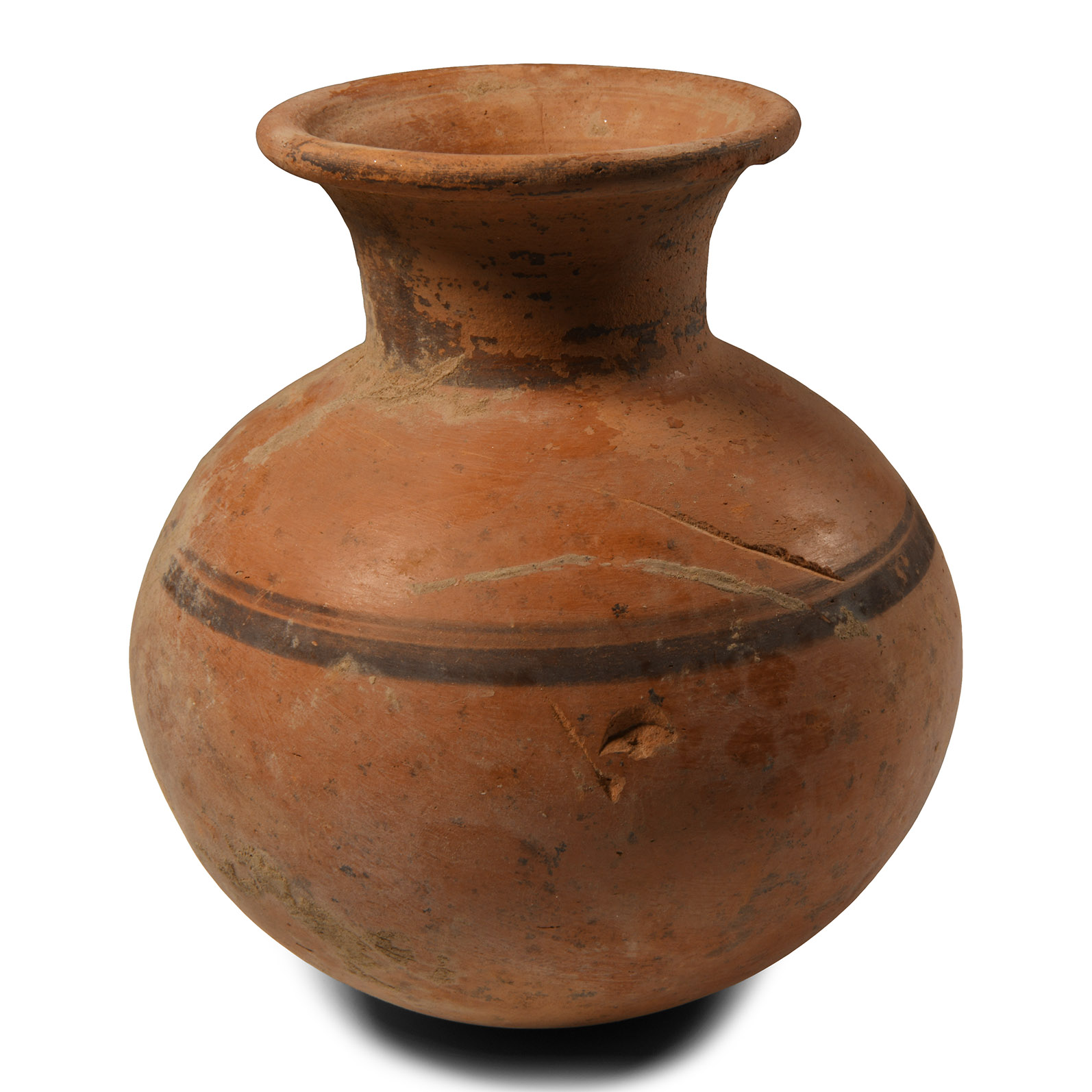
Cypriot Geometric Terracotta Jar
9TH-8TH CENTURY B.C.
6 1/2 in. (612 grams, 16.5 cm high).
Globular in form with trumpet-shaped mouth, painted band to shoulder. [No Reserve]
ProvenanceAcquired 1980-2015.
Ex Abelita family collection.
TimeLine Auctions follows a vetting process to ensure the authenticity and legality of all items, reinforcing our commitment to integrity and responsible trading. Each antiquity, antique, and coin lot undergoes thorough examination by a vetting committee of at least ten external specialists, professional trade association members, scientists, and archaeologists: Our Vetting Process
AUCTIONS:
TimeLine is a leading auction house specialising in antiquities, ancient art, collectables, natural history, coins, medals, and books. Our auctions offer museums, collectors, historians, and enthusiasts the opportunity to acquire unique and historically significant pieces.
-
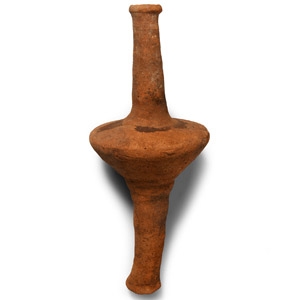
Greek Tall Terracotta Vessel
5th-4th century B.C.Sold for (Inc. bp): £26
With tall tubular neck and flared rim, broad shoulder, conical body, narrow columnar foot; traces of pigment to shoulder. 323 grams, 20.5 cm
From a collection acquired on the UK art market from various auction houses and collections mostly before 2000. From an important Cambridgeshire estate; thence by descent. -
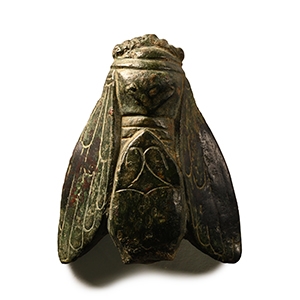
Greek Bronze Snake Biting a Cicada Mount Fragment
Circa 5th century B.C.Sold for (Inc. bp): £520
D-section insect body with lateral splayed wings, merging with the head of a serpent with scale detailing. 46.15 grams, 43 mm
From the collection of an London antiquarian, 1980s. -
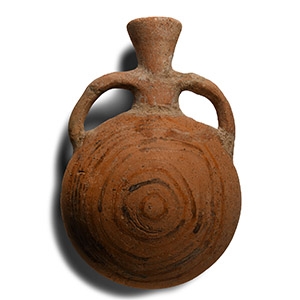
Cypro-Archaic Buff Pottery Pilgrim's Flask
Levant, circa 1050-700 B.C.Sold for (Inc. bp): £104
Biconvex body with trumpet-shaped mouth and two lateral loop handles; painted concentric circles to the body. 330 grams, 15.3 cm
From an old Lebanese family collection moved to Germany in the middle of the 1970s. Acquired from Bonhams, London, 20 October 2005, no.424 (part). From an important Cambridgeshire estate; thence by descent. Accompanied by copies of the relevant Bonhams catalogue pages and the original Bonhams lot tag.
