
Loading, please wait...
LOT 0627
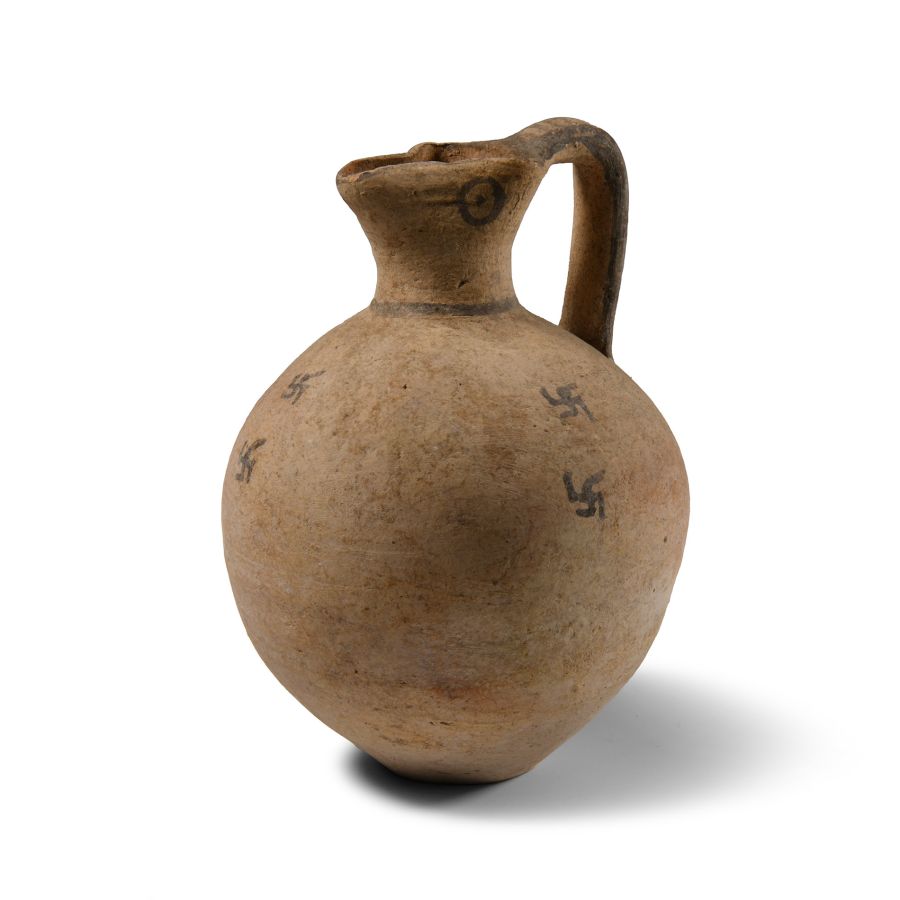
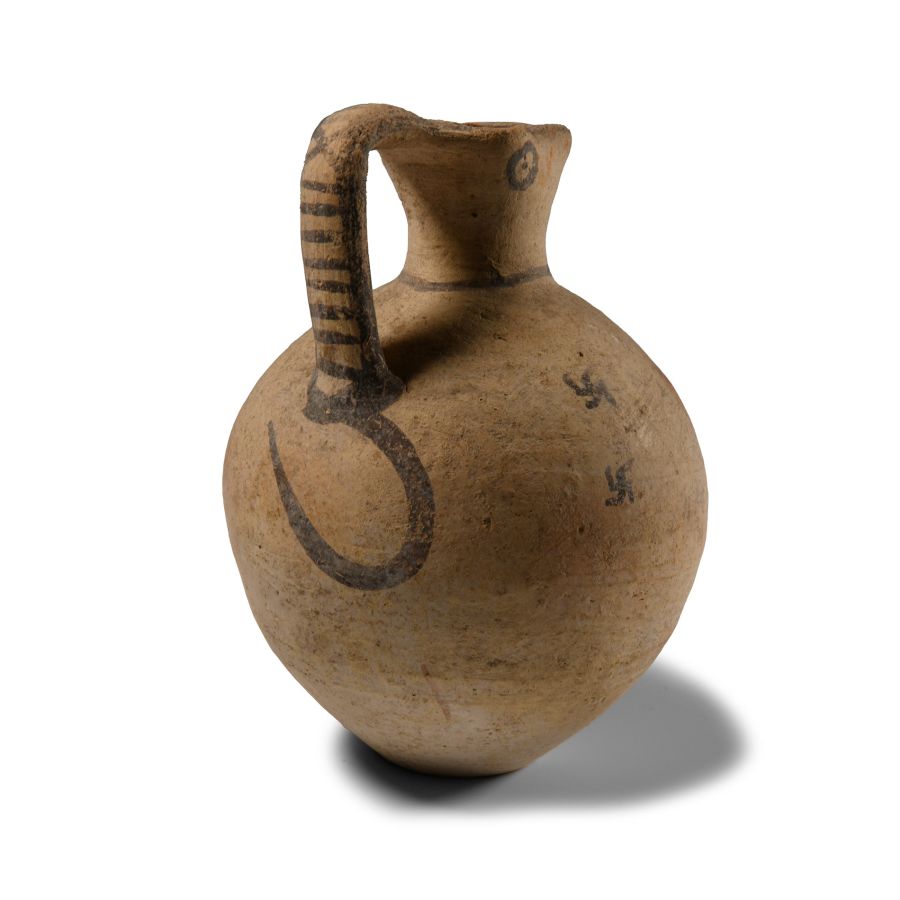
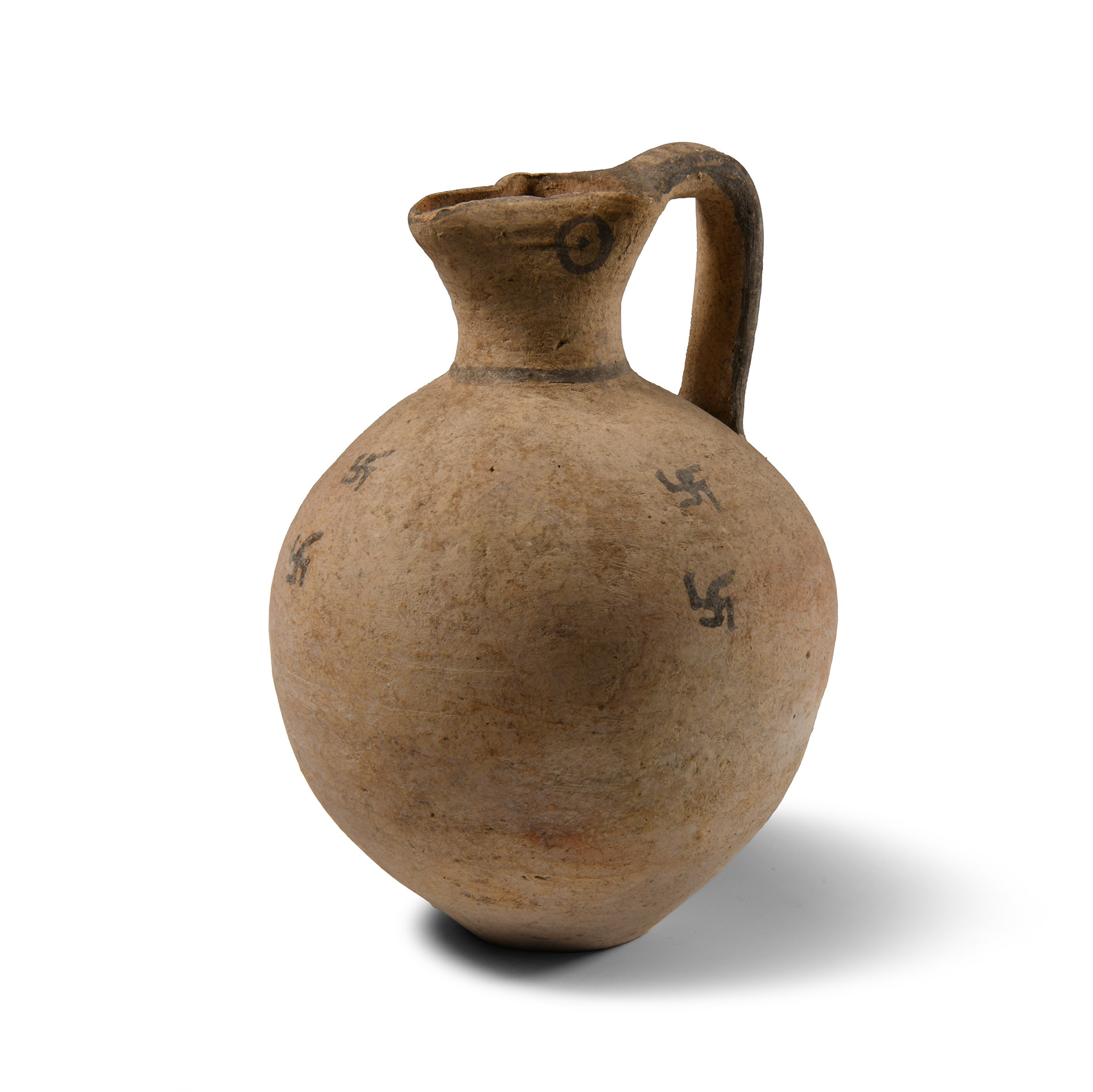
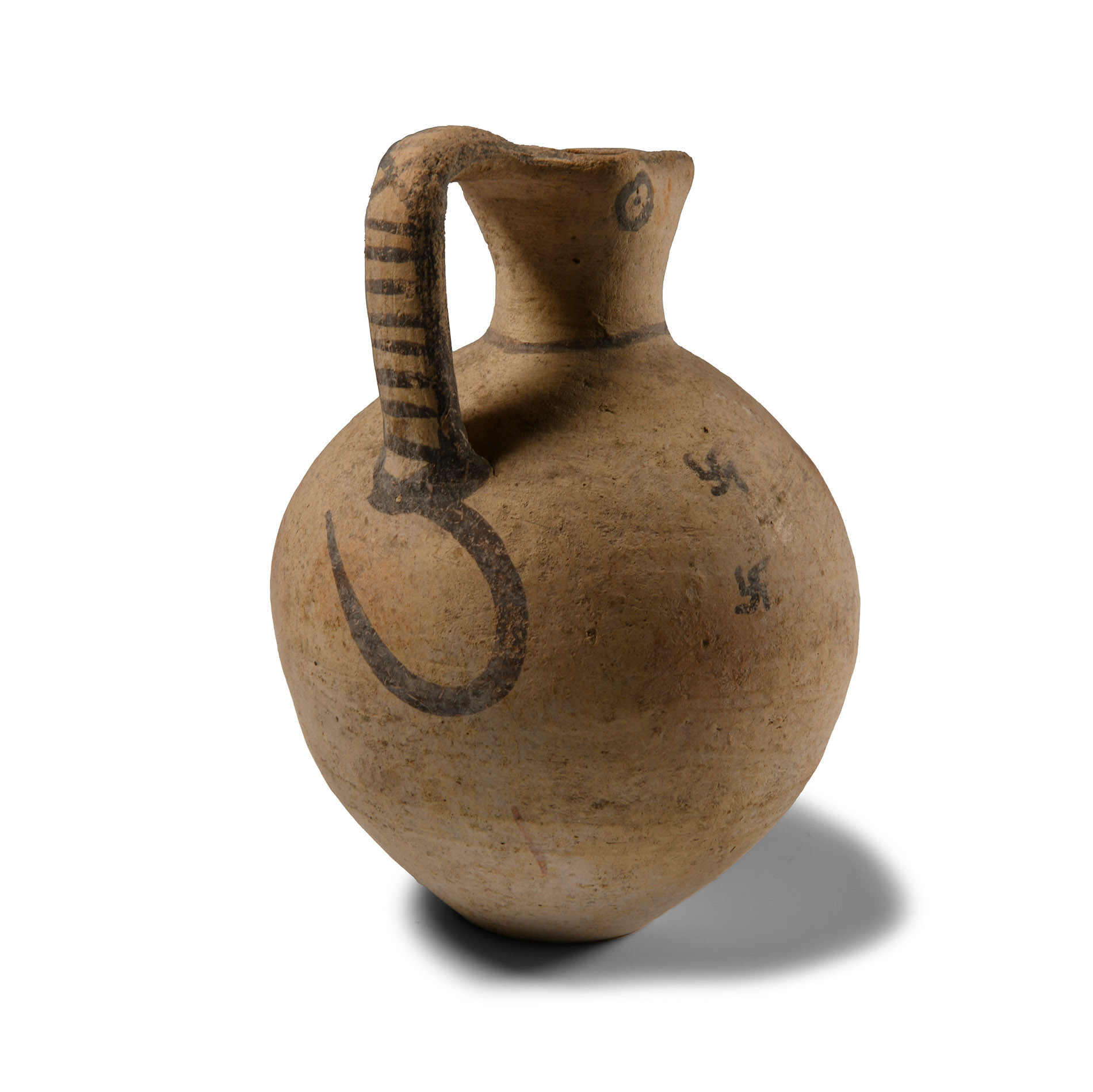
Cypriot 'Eyed' Trefoil Mouthed Pottery Jug with Swastikas
IRON AGE, CIRCA 800-600 B.C.
5 3/4 in. (285 grams, 14.5 cm high).
White ware globular jug with pinched trefoil mouth and strap handle to the rear; painted 'eye' detailing to mouth, serpent pattern to handle with curled finial, pairs of gammadion motifs to the body, [No Reserve]
ProvenancePeter Cran collection, Scotland, who worked as an engineer for the Cypriot public works department 1931-1946; thence by descent.
Acquired from Bonhams, London, 23 May 2012, no.6 (part).
From an important Cambridgeshire estate; thence by descent.
Accompanied by copies of the relevant Bonhams catalogue pages and original lot tag.
TimeLine Auctions follows a vetting process to ensure the authenticity and legality of all items, reinforcing our commitment to integrity and responsible trading. Each antiquity, antique, and coin lot undergoes thorough examination by a vetting committee of at least ten external specialists, professional trade association members, scientists, and archaeologists: Our Vetting Process
AUCTIONS:
TimeLine is a leading auction house specialising in antiquities, ancient art, collectables, natural history, coins, medals, and books. Our auctions offer museums, collectors, historians, and enthusiasts the opportunity to acquire unique and historically significant pieces.
LOT 0627
Cypriot 'Eyed' Trefoil Mouthed Pottery Jug with Swastikas
Sold for (Inc. bp): £624
-
Greek Red-Figure Lekythos
5th century B.C.Estimate: £1,200 - 1,700 (‡+bp*)
Opening Bid: £600
Of ovoid form with trumpet-shaped spout and strap handle, reserved image of a lady wearing a large himation, on a baseline with scrolled foliage. 106 grams, 11 cm
Ex German collection, 1970. with Galerie Chenel, Paris, 22 July 2008.
The word lekythos had a wide meaning in ancient Greece, probably generally meaning all oil jugs, including the athletes' oil bottle (now called aryballos) as well as the types now given this name by archaeologists. Certain lekythoi resemble certain oenochoe superficially, at a first glance. Oenochoes, however, were wine-pitchers and in most cases were larger than the lekythoi, which were small jugs for oil, perfumes, etc. -
Cypriot Terracotta Votive Horn
2100-1850 B.C.Sold for (Inc. bp): £286
Tapering round-section votive with reserved zigzag bands of dense linear hatching; remains of an old base including label. 70 grams total, 14 cm high including stand
From the celebrated personal collection of art formed by the famous anthropologist, artist, and television presenter Desmond Morris. with Christie’s, South Kensington, 14 May 2002, no.19 (part). From a collection acquired on the UK art market from various auction houses and collections mostly before 2000. From an important Cambridgeshire estate; thence by descent. Accompanied by copies of the relevant Christie's catalogue pages. -
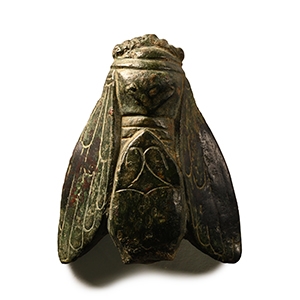
Greek Bronze Snake Biting a Cicada Mount Fragment
Circa 5th century B.C.Sold for (Inc. bp): £520
D-section insect body with lateral splayed wings, merging with the head of a serpent with scale detailing. 46.15 grams, 43 mm
From the collection of an London antiquarian, 1980s.
