
Loading, please wait...
LOT 0524
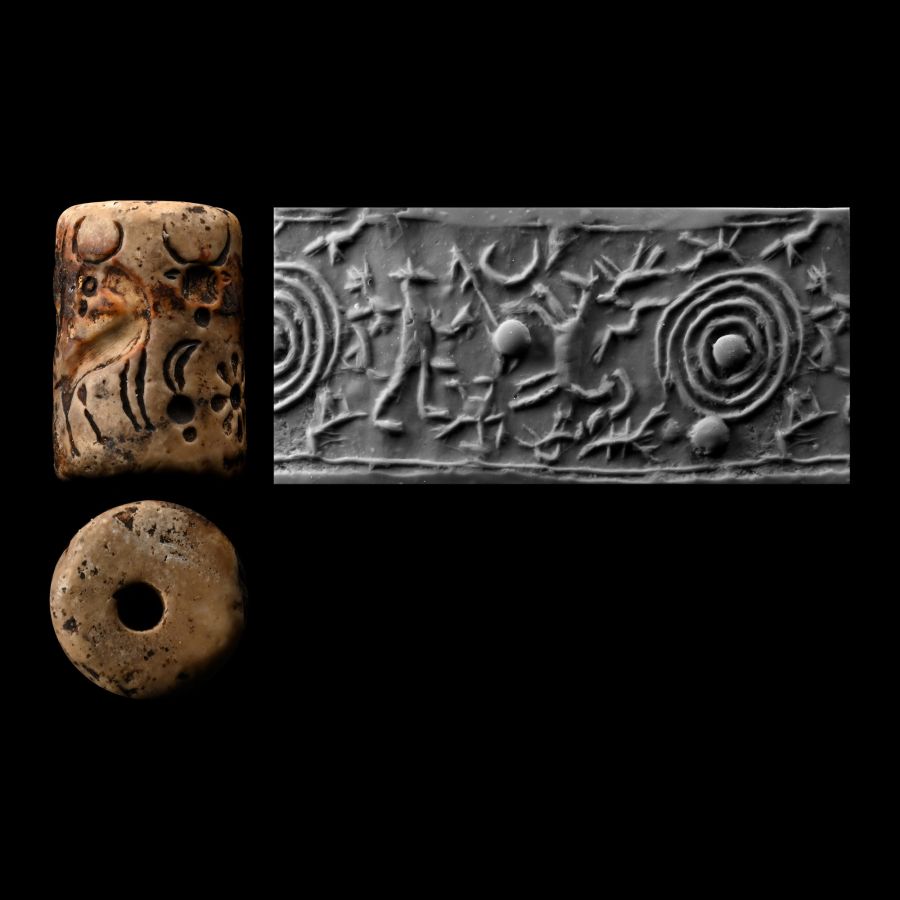
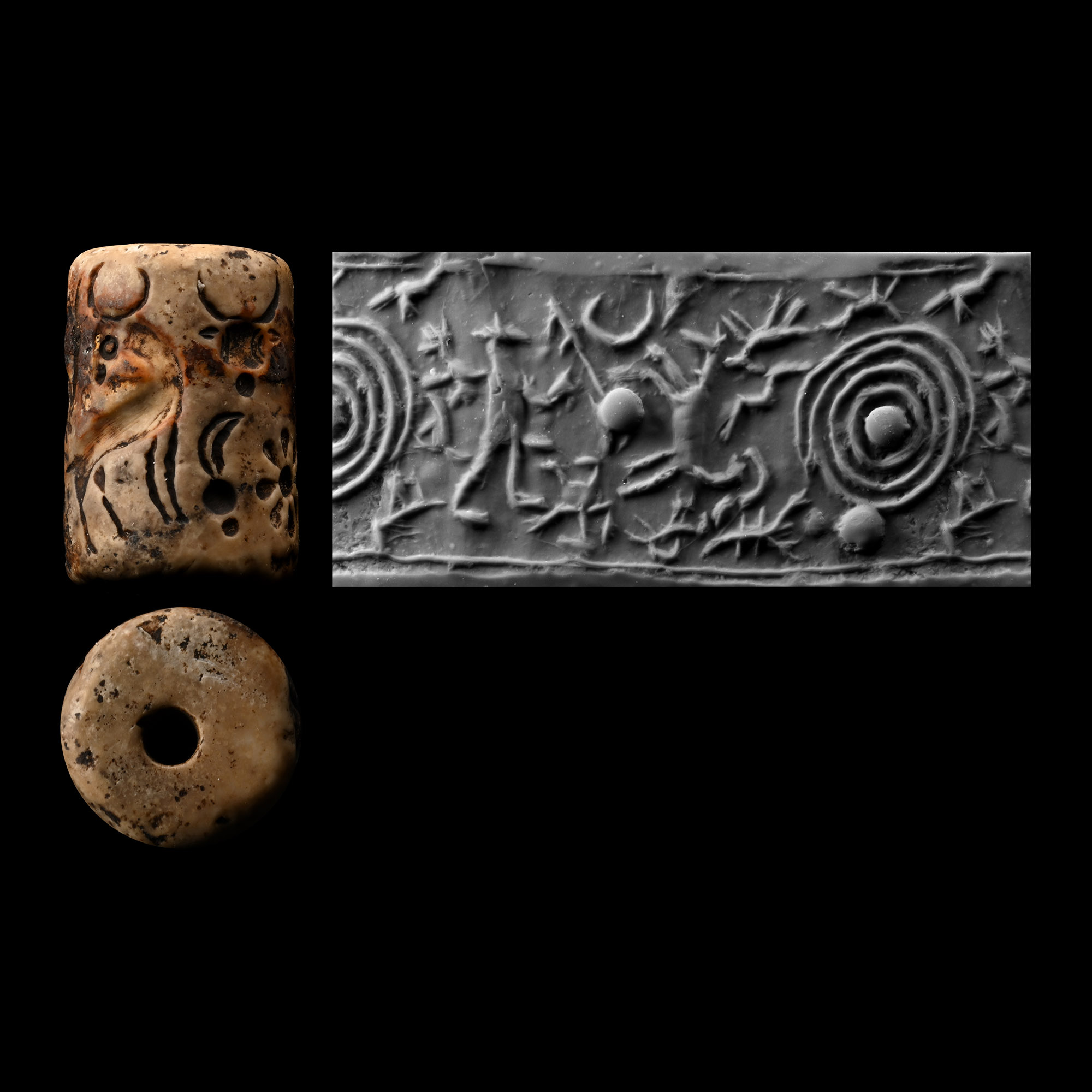
Cypriot Cylinder Seal of White Stone with Standing Figure
CIRCA 1500-1300 B.C.
1 1/8 in. (26.3 grams, 30 mm).
Cylinder with cord and bead handles; accompanied by a copy of an old scholarly note, typed and signed by W.G. Lambert, late Professor of Assyriology, University of Birmingham, 1970-1993, which states: 'Cylinder Seal of White Stone (surface blackened in places) 30.5 x 21 mm. The main scene consists of a standing figure with a big shock of hair, wearing a long skirt from the waist down, marked by horizontal lines, holding up snakes in each hand. On each side of this figure is a horned animal, bovine on the left, of uncertain species on the right, each in lively pose, the one on the right sideways. There is one filler in the main scene, the head of a horned animal. The secondary scene consists of five items: a star, a bull's head shown from the front, a tree, a rosette and the head of an unidentified horned animal. This is a seal in a local Cypriot style, from Cyprus, and dating to c.1500-1300 B.C. It is an important specimen of good quality, though knowledge of ancient Cypriot mythology does not yet allow us to identify the figure holding the snakes.'; supplied with a museum-quality impression. [No Reserve]
ProvenanceUK private collection, acquired 1980-1983.
Accompanied by a copy of a scholarly note, typed and signed by Professor Wilfrid George Lambert in February 1992.
This lot is accompanied by an illustrated lot declaration signed by the Head of the Antiquities Department, Dr Raffaele D'Amato.
TimeLine Auctions follows a vetting process to ensure the authenticity and legality of all items, reinforcing our commitment to integrity and responsible trading. Each antiquity, antique, and coin lot undergoes thorough examination by a vetting committee of at least ten external specialists, professional trade association members, scientists, and archaeologists: Our Vetting Process
AUCTIONS:
TimeLine is a leading auction house specialising in antiquities, ancient art, collectables, natural history, coins, medals, and books. Our auctions offer museums, collectors, historians, and enthusiasts the opportunity to acquire unique and historically significant pieces.
LOT 0524
Cypriot Cylinder Seal of White Stone with Standing Figure
Sold for (Inc. bp): £780
-
Greek Terracotta Oil Lamp with Silenus
4th century B.C.Estimate: £400 - 600 (+bp*)
Opening Bid: £200
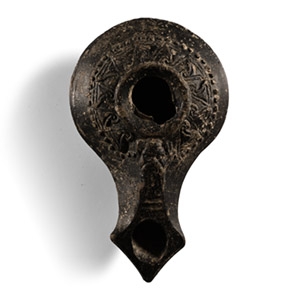
With circular body and raised rim, round central filling-hole with wave-pattern to the discus; long nozzle with lozengiform finial; mask of Silenus to the neck. 31.8 grams, 99 mm
Acquired on the German art market, 1989-1995. with The Museum Gallery, 19 Bury Place, London, WC1, UK, 1998-2003. Property of a London based academic, 2003 to present. This lot is accompanied by an illustrated lot declaration signed by the Head of the Antiquities Department, Dr Raffaele D'Amato. -
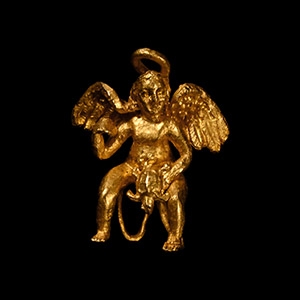
Greek Gold Eros Holding a Turtle Pendant
4th century B.C.Sold for (Inc. bp): £4,420
A delicately crafted pendant depicting a seated Eros with spread wings, holding a small turtle with his left hand and his right hand raised, feather detailing to wings and carefully modelled face with a smiling expression; a double suspension loop underneath and a single loop above; likely from an earring. 1.41 grams, 13 mm
Solothurn exhibition catalogue 1967, no.421. Notable Swiss private scholarly collection. with Galerie Rhéa, Zurich, Switzerland. This lot has been checked against the Interpol Database of stolen works of art and is accompanied by a search certificate number no.12671-236392. This lot has been cleared against the Art Loss Register database, and is accompanied by an illustrated lot declaration signed by the Head of the Antiquities Department, Dr Raffaele D'Amato. -
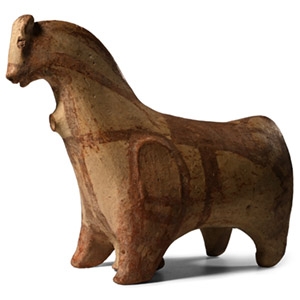
Parthian Ceramic Horse Rhyton
2nd century B.C.-2nd century A.D.Sold for (Inc. bp): £2,470
Hollow-formed horse figure with spout to the chest and filler hole beneath the chest; painted saddle and bridle detailing. 1.61 kg, 27 cm
Ex Zackary, Los Angeles, USA, 1960s. with Christie's, 13 October 2008, no.156. Accompanied by a copy of a thermoluminescence analysis report and photograph by Oxford Authentication with sample no.108u46. Accompanied by copies of the relevant Christie's catalogue pages. This lot has been checked against the Interpol Database of stolen works of art and is accompanied by a search certificate number no.12655-235194. This lot has been cleared against the Art Loss Register database, and is accompanied by an illustrated lot declaration signed by the Head of the Antiquities Department, Dr Raffaele D'Amato.
