
Loading, please wait...
LOT 0536
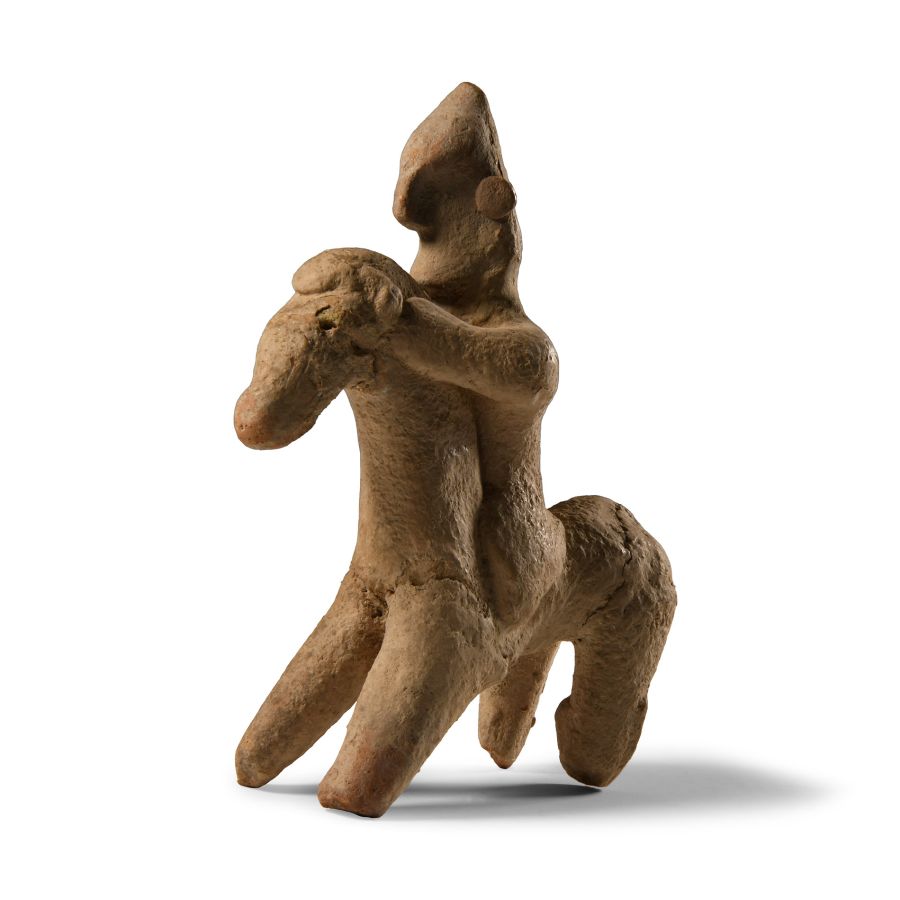
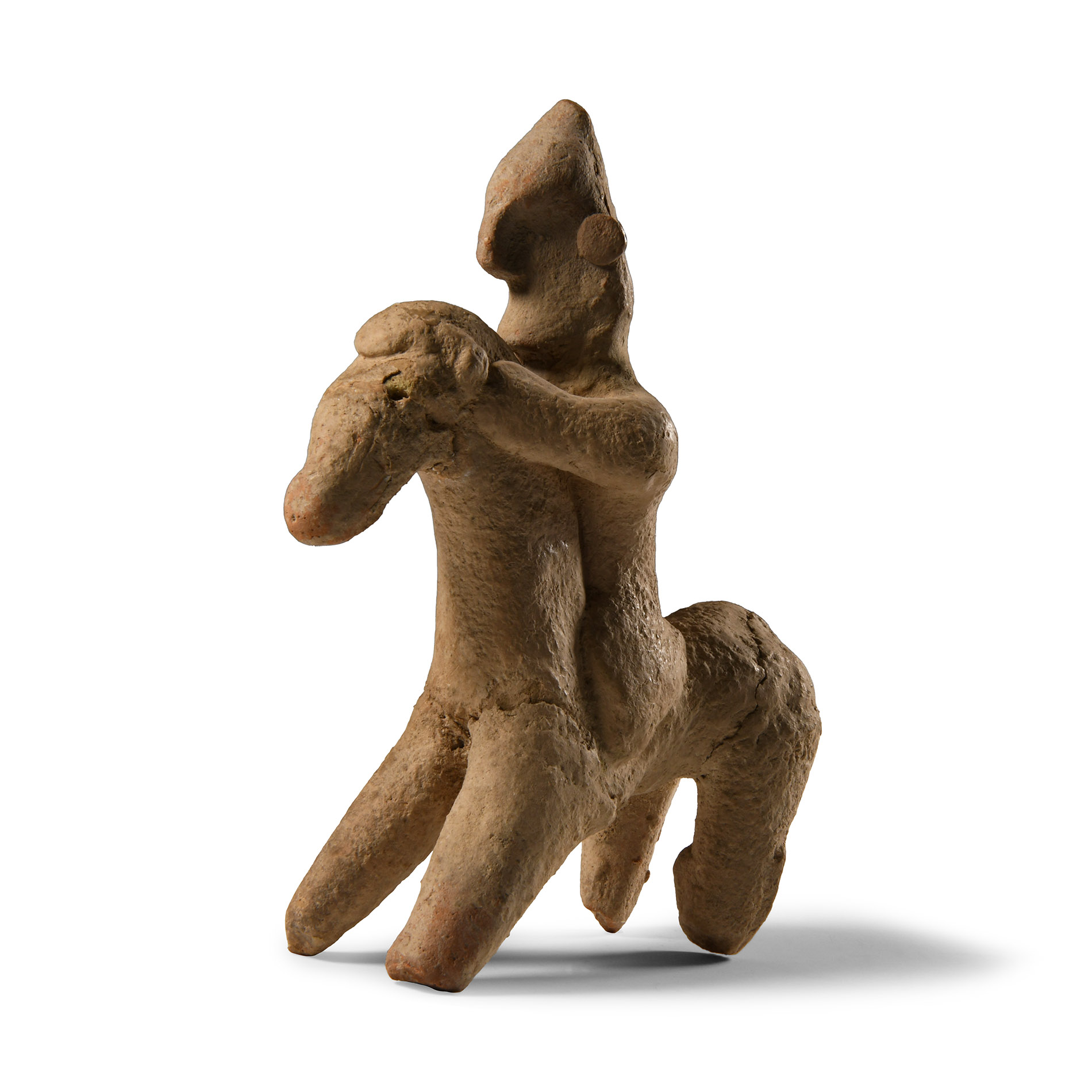
Cypriot Ceramic Horse and Rider Statuette
8TH-7TH CENTURY B.C.
5 1/2 in. (209 grams, 14 cm high).
Representing a warrior with conical helmet riding his mount, round earrings. [No Reserve]
ProvenanceFrom a collection acquired on the UK art market from various auction houses and collections mostly before 2000.
From an important Cambridgeshire estate; thence by descent.
Cf. Karageorghis, V., Cipro, Crocevia del Mondo Mediterraneo orientale 1600-500 a.C., Milano, 2002, figs.377,383.
FootnotesThe most popular animals in Cypriot coroplasts of the 8th and 7th centuries B.C. were horses, with or without riders, with long necks and decorated along the whole body like contemporary ceramics. It is worth remembering that the horse, in this period represented a status symbol for the military aristocracy and that bodies of sacrificed horses have been found in royal tombs.
CONDITIONTimeLine Auctions follows a vetting process to ensure the authenticity and legality of all items, reinforcing our commitment to integrity and responsible trading. Each antiquity, antique, and coin lot undergoes thorough examination by a vetting committee of at least ten external specialists, professional trade association members, scientists, and archaeologists: Our Vetting Process
AUCTIONS:
TimeLine is a leading auction house specialising in antiquities, ancient art, collectables, natural history, coins, medals, and books. Our auctions offer museums, collectors, historians, and enthusiasts the opportunity to acquire unique and historically significant pieces.
-
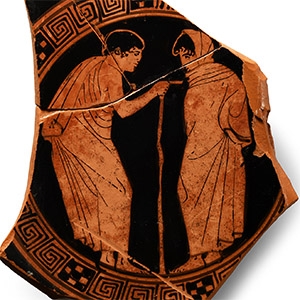
Greek Red-Figure Fragment with Draped Figures
5th century B.C.Sold for (Inc. bp): £1,755
Depicting a young man dressed in a long cloak, the right hand resting on a staff, facing a young woman wrapped in a long himation, covering her head and leaving the face uncovered; the scene enclosed within a medallion decorated with meanders and chequered squares; remains of the stem to the reverse with painted figures on the edge; repaired. 91 grams, 13 cm
Acquired before 2005. Private collection, Europe. This lot has been checked against the Interpol Database of stolen works of art and is accompanied by search certificate number no.11796-206819.
This red-figure scene once possibly formed part of a kylix, a cup made for drinking. The decoration of the tondo surrounding the figures allows a comparison with some works of the painter Onesimos and the potter Euphronios. In particular the meanders on the medallion, and the working of the figures, seems to recall the work of Onesimos, who preferred to decorate cups, many of them thrown by the famous Euphronios. -
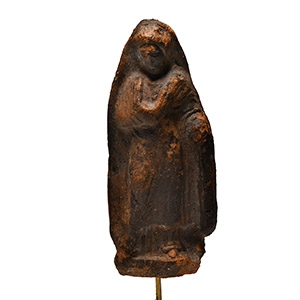
Hellenistic Terracotta Goddess Figure
Circa 2nd century B.C.-1st century A.D.Sold for (Inc. bp): £85
Modelled in the half-round on a tongue-shaped plaque, with right hand in the folds of the robe and left hand holding the hem; mounted on a custom-made stand. 155 grams total, 13.7 cm including stand
From a collection acquired on the UK art market from various auction houses and collections mostly before 2000. From an important Cambridgeshire estate; thence by descent. -
.jpg)
Cypriot Limestone Head of a Goddess
Circa 2nd-3rd century B.C.Sold for (Inc. bp): £3,120
Carved in the round, head of a female wearing her gown over the top of her head; sombre facial features and elongated neck, the hair dressed in radiating segments; mounted on a custom-made stand. 1.11 kg total, 21 cm high including stand
with Bonham's, 22 April 1999, no.97. From a collection acquired on the UK art market from various auction houses and collections mostly before 2000. From an important Cambridgeshire estate; thence by descent. Accompanied by copies of the relevant Bonham's catalogue pages.
