
Loading, please wait...
LOT 0606
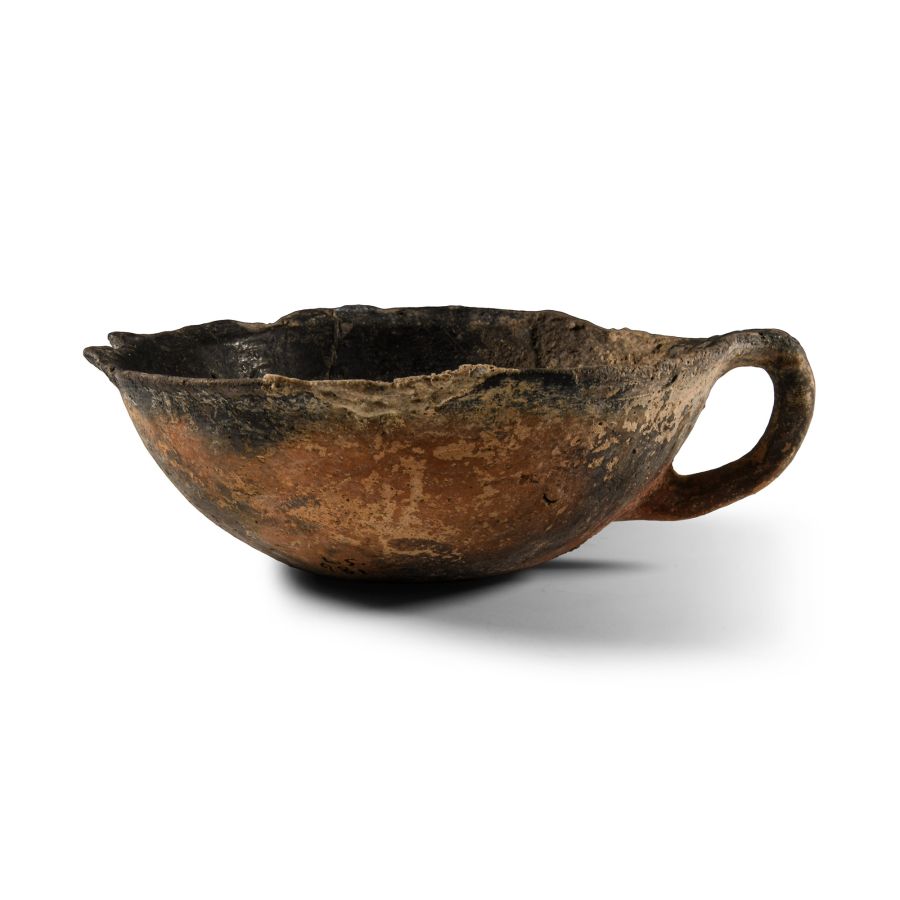
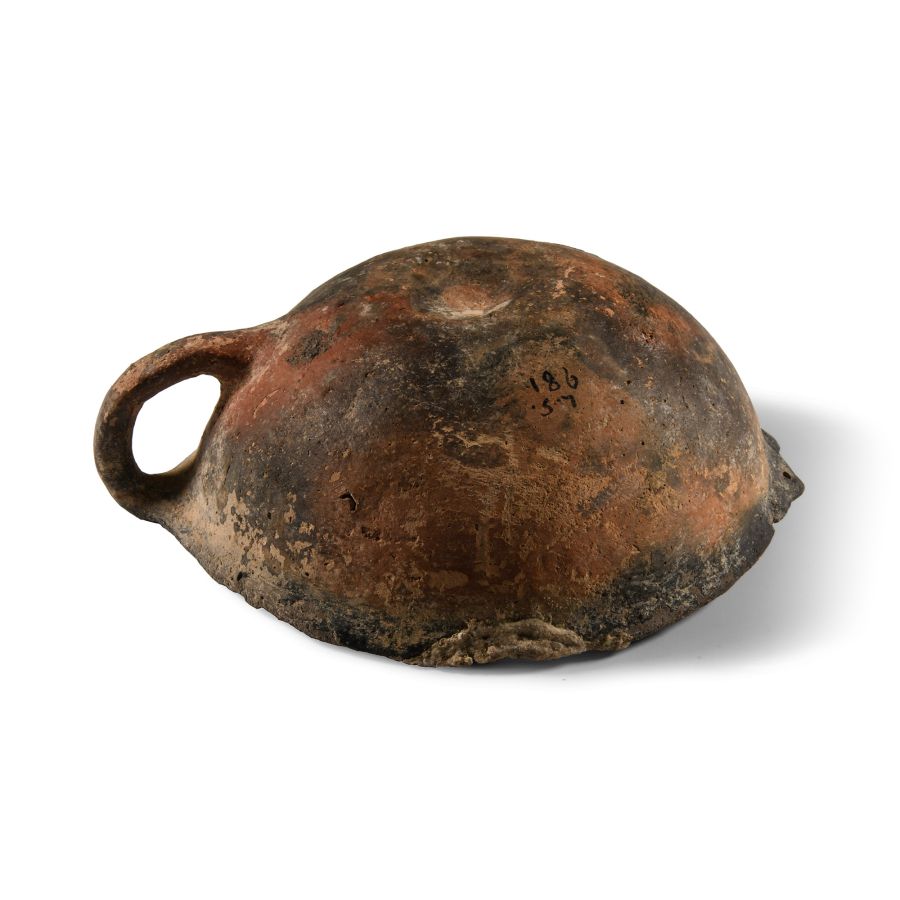
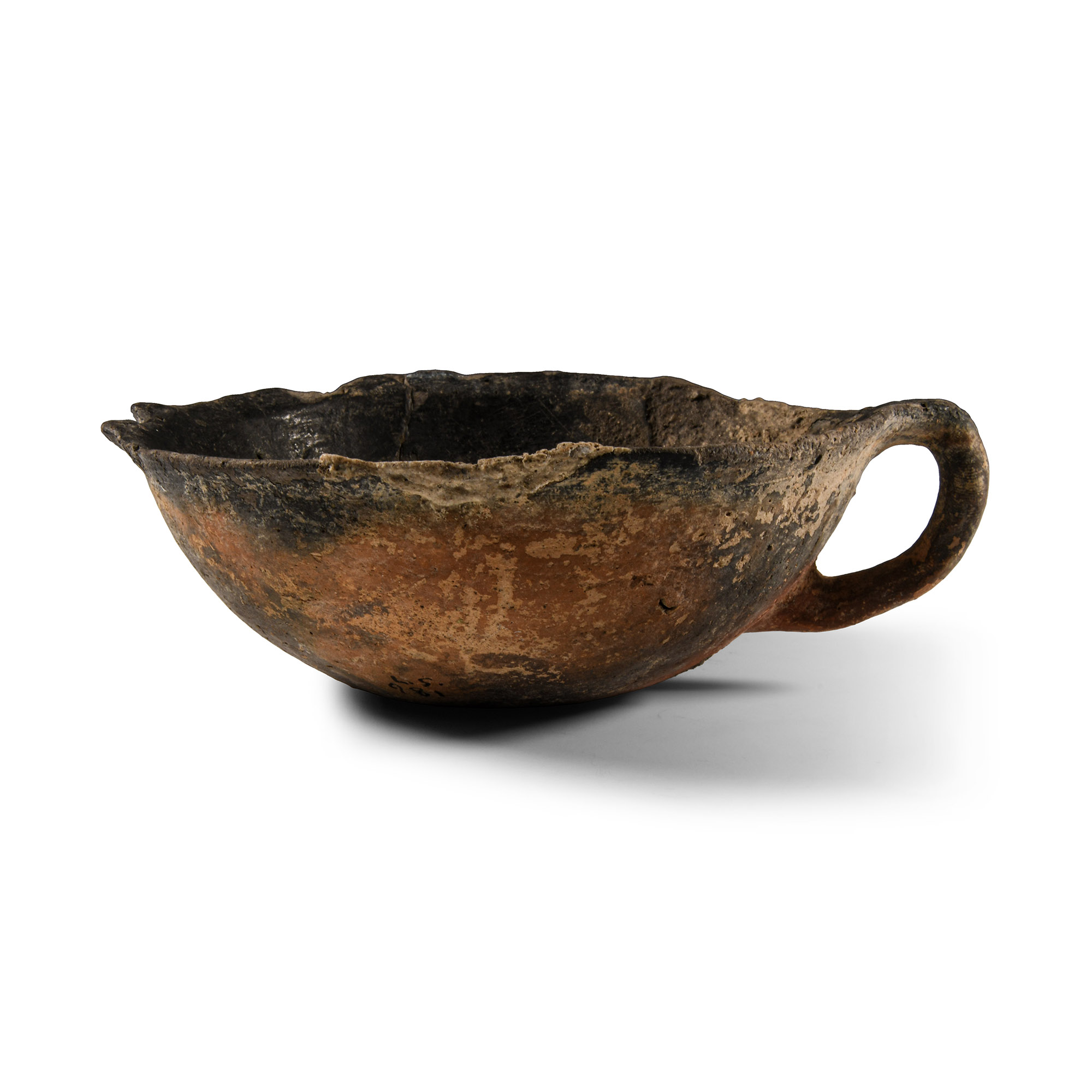
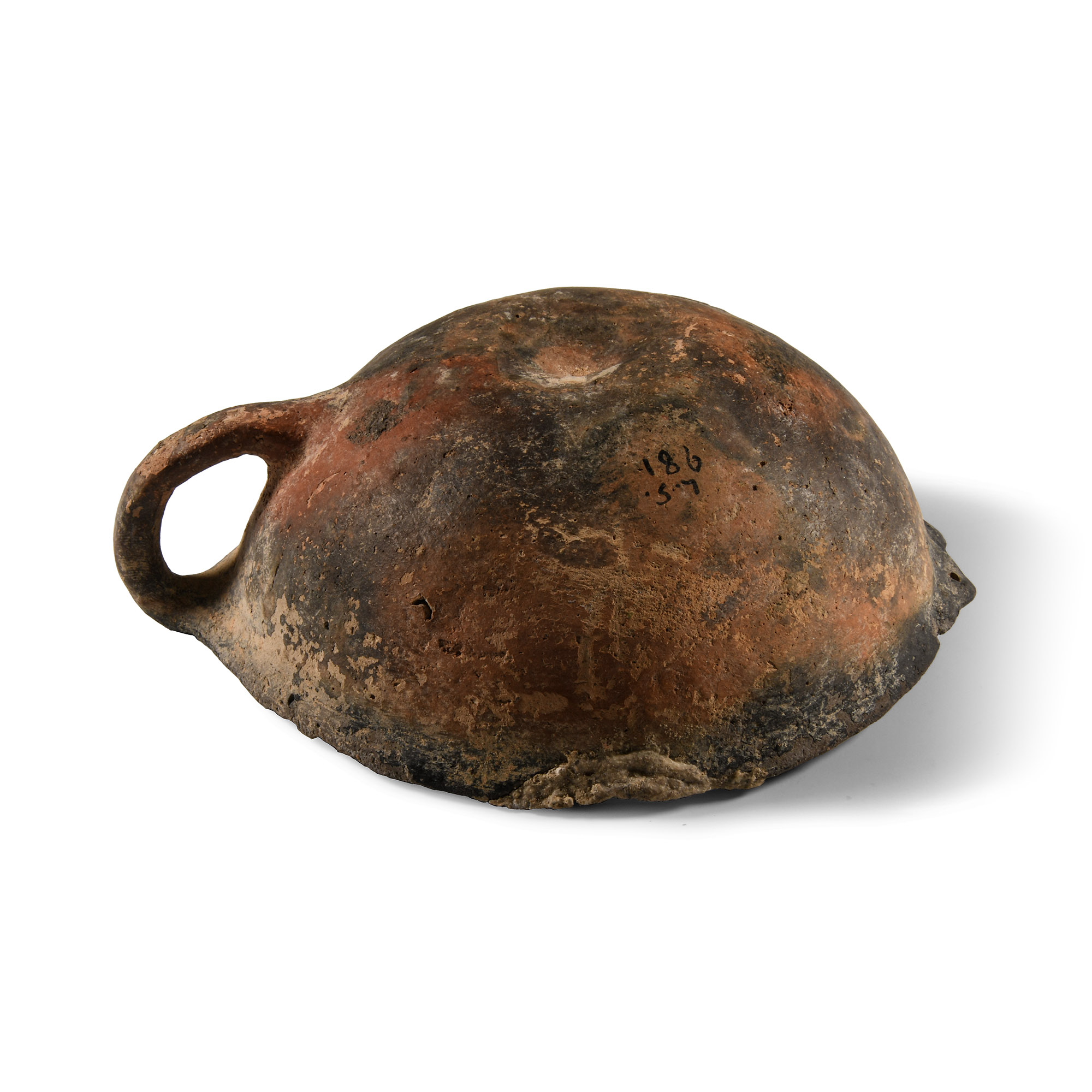
Cypriot Ceramic Drinking Bowl
MIDDLE BRONZE AGE, CIRCA 2000-1650 B.C.
5 7/8 in. (173 grams, 14.9 cm wide).
Of reserved slip ware, comprising a shallow bowl with indented base, single loop handle; black glaze inside, red-brown colour outside; some restoration. [No Reserve]
ProvenanceEx Peter Negus collection (1920-2012).
Acquired from Bonhams, London, 26 October 2007, no.354 (part).
From an important Cambridgeshire estate; thence by descent.
Accompanied by the original Bonhams lot tag and a much older tag with description and collection number DAA41.
Cf. Morris, D., The Art of Ancient Cyprus, Oxford, 1985, pl.18, for similar ware.
FootnotesThe vessel belongs to a rare form of polished ware which originally was intended to achieve a two-tone effect. In the reserved slip ware, parts of the red slip was wiped away while it was still wet, revealing patches of the pale under surface. After this the whole surface was polished and the final result was a 'trick' decoration in which the negative patches appear to be positive pattern on the dark red surface.
CONDITIONTimeLine Auctions follows a vetting process to ensure the authenticity and legality of all items, reinforcing our commitment to integrity and responsible trading. Each antiquity, antique, and coin lot undergoes thorough examination by a vetting committee of at least ten external specialists, professional trade association members, scientists, and archaeologists: Our Vetting Process
AUCTIONS:
TimeLine is a leading auction house specialising in antiquities, ancient art, collectables, natural history, coins, medals, and books. Our auctions offer museums, collectors, historians, and enthusiasts the opportunity to acquire unique and historically significant pieces.
-

Archaic Greek Bronze Bird Statuette
Circa 7th century B.C.Sold for (Inc. bp): £312
One a trapezoidal panel with tail integral to the rear and two openwork legs to the forward edge, small triangular wings and erect head with hooked beak; old collector's label to base 'Bronze Age Idol 700 B.C. / Ex Sylvester Ekaterura / Netherlands'. 79 grams total, 52 mm including stand
Ex Sylvester Ekaterura, Netherlands. From a collection acquired on the UK art market from various auction houses and collections mostly before 2000. From an important Cambridgeshire estate; thence by descent. -
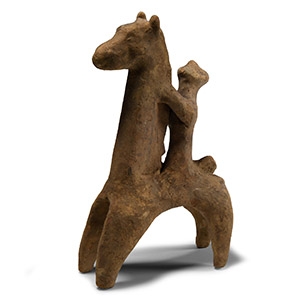
Cypriot Ceramic Horse and Rider Statuette
8th-7th century B.C.Sold for (Inc. bp): £442
Representing a warrior with conical helmet riding his mount, horse with long neck, short legs and traces of polychromy all along body, neck and ears. 251 grams, 17 cm high
From a collection acquired on the UK art market from various auction houses and collections mostly before 2000. From an important Cambridgeshire estate; thence by descent.
The most popular animals in Cypriot coroplasts of the 8th and 7th centuries B.C. were horses, with or without riders, with long necks and decorated along the whole body like contemporary ceramics. It is worth remembering that the horse in this period represented a status symbol for the military aristocracy and that bodies of sacrificed horses have been found in royal tombs. -
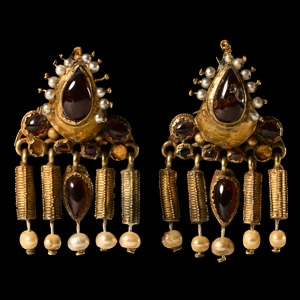
Hellenistic Gold Earring Pair
1st century B.C.-1st century A.D.Sold for (Inc. bp): £5,980
Each with a hollow-form crescentic body with a large teardrop-shaped garnet set within a cell with radiating pearl studs; a pendant panel below with garnet cabochons, five pendant drops with pearl finials and a central teardrop-shaped garnet; accompanied by a custom-made display stand. 22.40 grams total, 47-49 mm (107 grams total, 92 mm high including stand)
From a private collection. Acquired from Mr D.S., 7 February 2008. Private UK collection. This lot has been checked against the Interpol Database of stolen works of art and is accompanied by search certificate no.12119-214174.
The material culture of the Hellenistic east followed the eastern Mediterranean polychromy. Many beautiful jewels were produced in Alexandria or in the Syrian cities and the majority of their precious decorations was imitated by jewellers of more remote provinces, like those of the Greek Pontic cities.
