
Loading, please wait...
LOT 0570
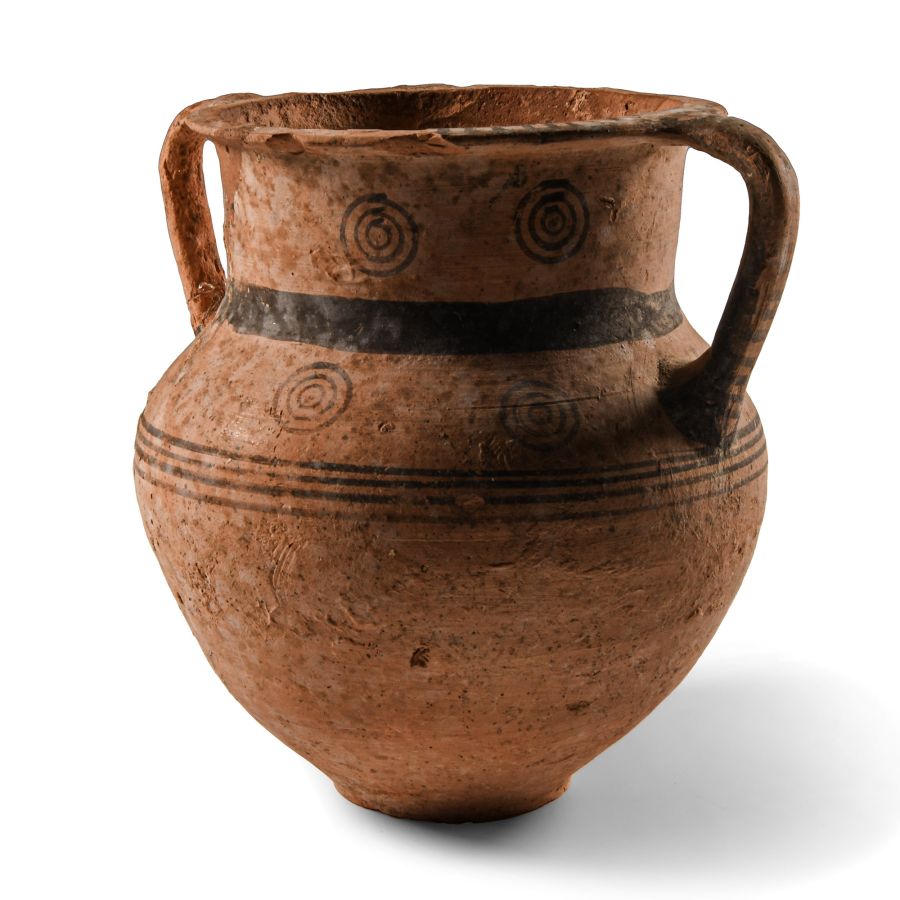
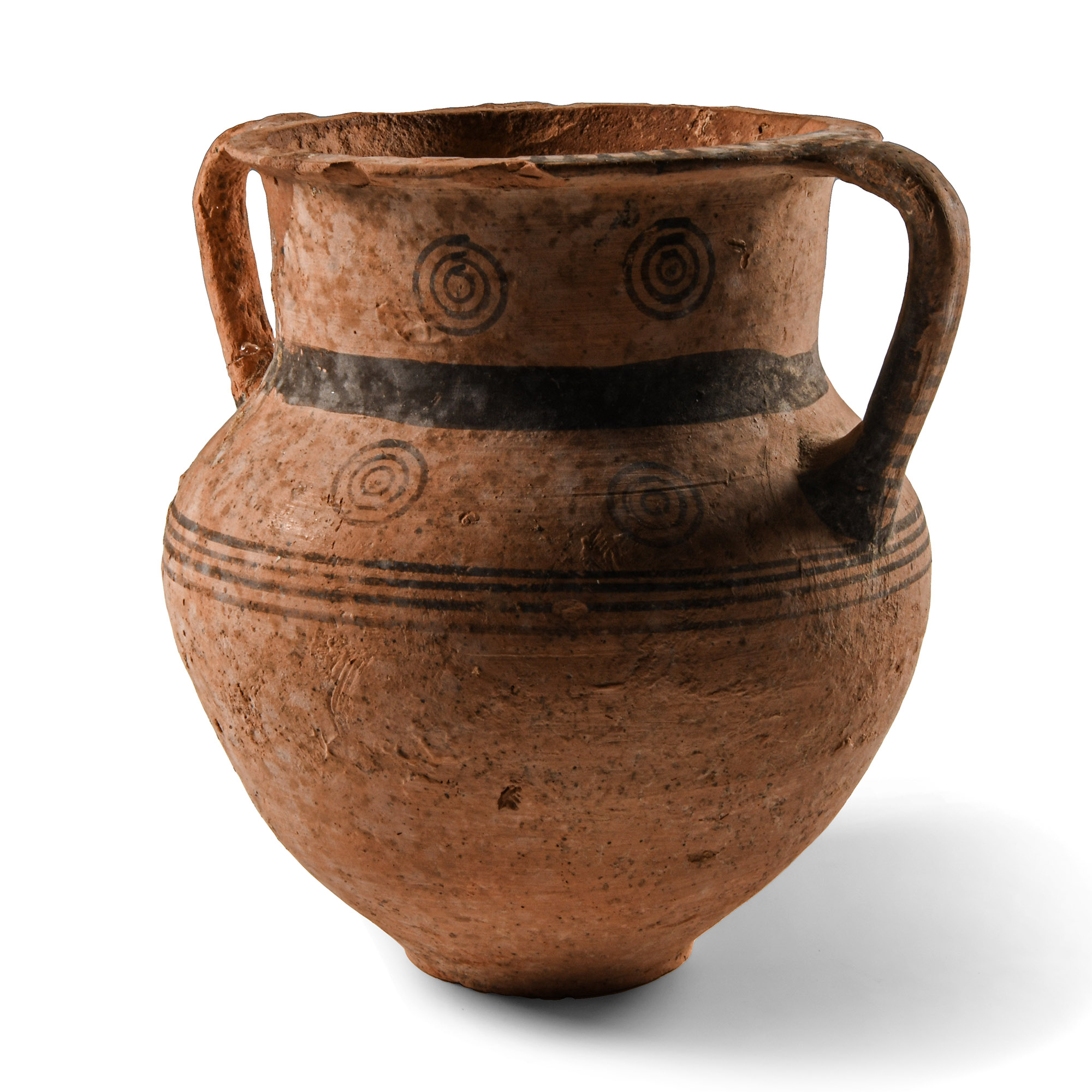
Cypriot Buff Pottery Neck Amphora
LATE BRONZE AGE, CIRCA 850-600 B.C.
5 1/2 in. (341 grams, 14 cm wide).
Squat unglazed vessel with conical body, narrow shoulder, broad tubular neck and everted rim, two strap handles; painted with radiating segments to rim, ring-and-dot motifs to neck and shoulder, horizontal bands. [No Reserve]
ProvenancePrivate American collection.
Acquired from Bonhams, London, 29 April 2009, no.341 (part).
From an important Cambridgeshire estate; thence by descent.
Accompanied by copies of the relevant Bonhams catalogue pages and original lot tag.
TimeLine Auctions follows a vetting process to ensure the authenticity and legality of all items, reinforcing our commitment to integrity and responsible trading. Each antiquity, antique, and coin lot undergoes thorough examination by a vetting committee of at least ten external specialists, professional trade association members, scientists, and archaeologists: Our Vetting Process
AUCTIONS:
TimeLine is a leading auction house specialising in antiquities, ancient art, collectables, natural history, coins, medals, and books. Our auctions offer museums, collectors, historians, and enthusiasts the opportunity to acquire unique and historically significant pieces.
-
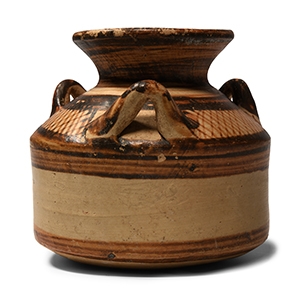
Mycenaean Painted Pottery Alabastron
13th-11th century B.C.Estimate: £1,500 - 2,000 (‡+bp*)
Opening Bid: £750
Drum-shaped with a sloping shoulder, short neck, trumpet-style neck and mouth and a gently rounded base; three loop handles at regular intervals around the shoulder; reddish-brown painted geometric bands and cross-hatching against a cream slip. 190 grams, 93 mm wide
Ex private collection, Holland. Acquired from Royal Athena Gallery, 2003. This lot has been checked against the Interpol Database of stolen works of art and is accompanied by search certificate number no.11852-206835. -
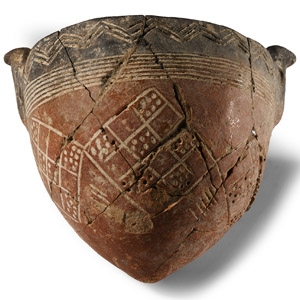
Red Polished Black Top Ware 'Tulip' Bowl with Animals
Early Cypriot I-II Period, 2300-2100 B.C.Sold for (Inc. bp): £416
Mammiform bowl with deep body and pointed base; two vertical concave lugs, one of which is pierced; fired black above and in the interior, and red below, all decorated with white lime-filled zigzags and circles on the body, with semicircles at the rim; repaired. 426 grams, 17 cm wide
From a collection acquired on the UK art market from various auction houses and collections mostly before 2000. From an important Cambridgeshire estate; thence by descent. -
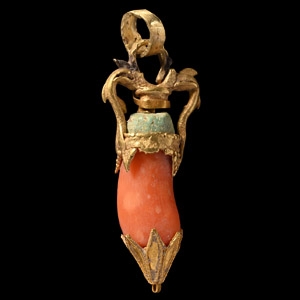
Hellenistic Gold and Coral Pendant with Dolphins
2nd-1st century B.C.Sold for (Inc. bp): £468
Formed as a coral pillar with gold rosette finial, collar supporting two rearing dolphins flanking a blue glass bead; loop and suspension ring above. 2.98 grams, 33 mm
From a late Japanese specialist collector, 1970-2000s.
