
Loading, please wait...
LOT 0629
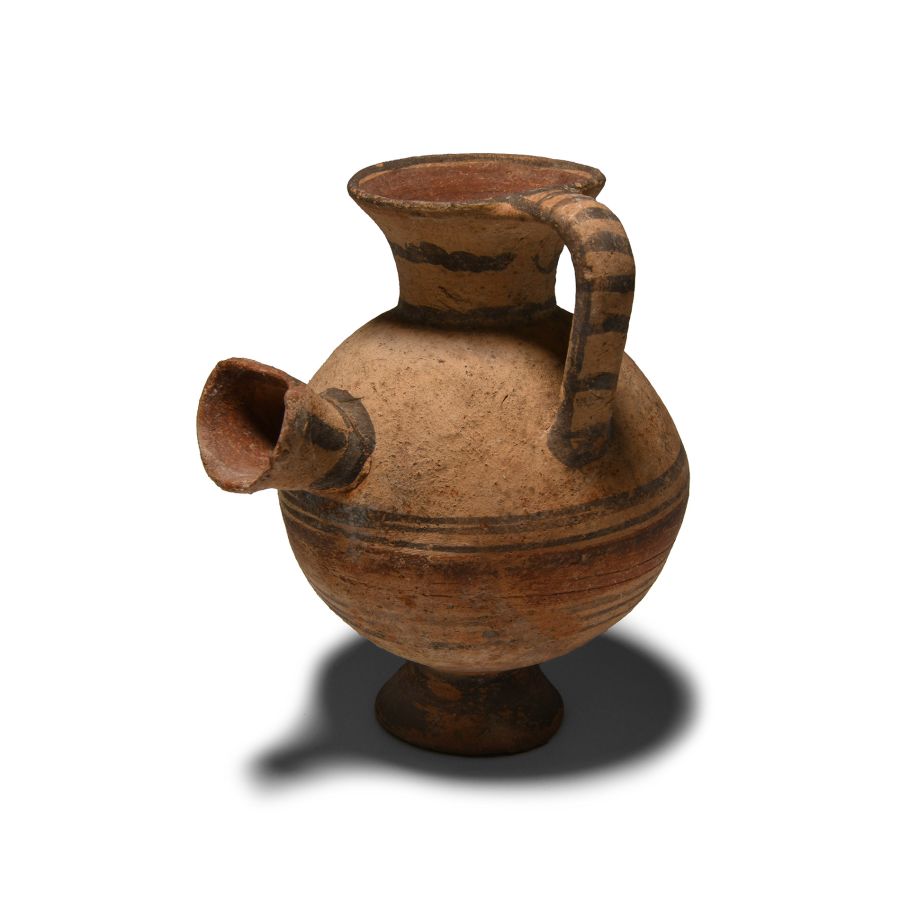
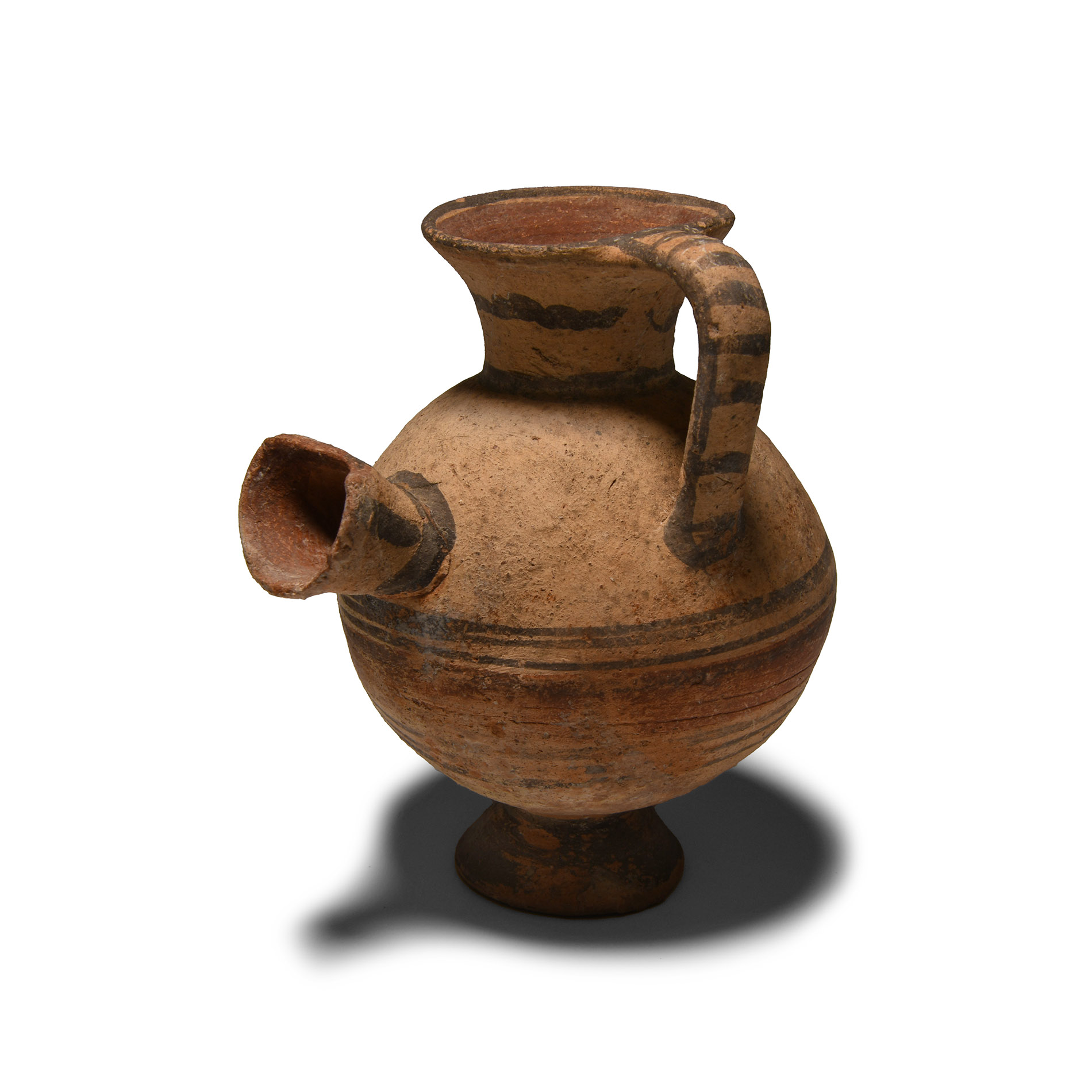
Cypriot Bichrome Ware Pottery Feeder Flask
IRON AGE, CIRCA 950-850 B.C.
(148 grams, 11.2 cm high).
Spherical body with flared foot, trumpet-shaped mouth with strap handle, flared spout to the shoulder with strainer; painted circles to the mouth, rim and body, transverse stripes to the handle. [No Reserve]
ProvenanceAcquired from Bonhams, London, 20 October 2005, no.406 (part).
From an important Cambridgeshire estate; thence by descent.
Accompanied by copies of the relevant Bonhams catalogue pages and the original Bonhams lot tag.
TimeLine Auctions follows a vetting process to ensure the authenticity and legality of all items, reinforcing our commitment to integrity and responsible trading. Each antiquity, antique, and coin lot undergoes thorough examination by a vetting committee of at least ten external specialists, professional trade association members, scientists, and archaeologists: Our Vetting Process
AUCTIONS:
TimeLine is a leading auction house specialising in antiquities, ancient art, collectables, natural history, coins, medals, and books. Our auctions offer museums, collectors, historians, and enthusiasts the opportunity to acquire unique and historically significant pieces.
-
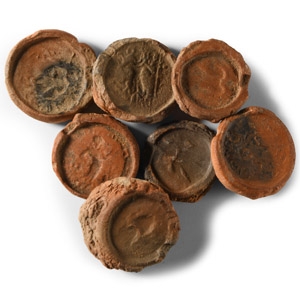
Indo-Greek Terracotta Forger's Mould Group
Circa 2nd-1st century B.C.Sold for (Inc. bp): £442
Group of discoid clay moulds for casting contemporary counterfeit coins. 43 grams total, 25-32 mm
Private collection formed in the 1990s. Acquired from a central London gallery. Property of an Essex gentleman. -
.jpg)
Phoenician Limestone Herakles Melqart Wearing Lionskin
Circa 6th-5th century B.C.Sold for (Inc. bp): £845
Modelled in the round, standing with lionskin mantle tied around the shoulders at the chest, with girdle to the waist and knee-length tunic; left hand resting on the handle of a club; mounted on a custom-made display stand. 1.85 kg total, 36.5 cm including stand
From a collection acquired on the UK art market from various auction houses and collections mostly before 2000. From an important Cambridgeshire estate; thence by descent.
Melqart was the Phoenician tutelary deity whose name means 'king of the city'; in the Roman interpretation, he was identified with Hercules. -
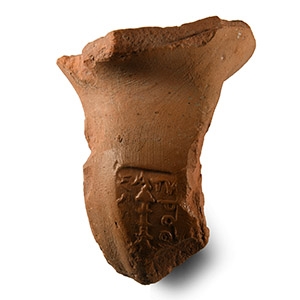
Greek Terracotta Amphora Handle Fragment with Stamp by Manufacturer Satyros for the Magistrate Thrasonos
Circa 3rd-2nd century B.C.Sold for (Inc. bp): £72
With rectangular stamp possibly bearing the names 'ΣΑΤΥΡΟ (SATYROS) Θ[ράσωνος] (Thrasonos)', and short handled trident to left. 130 grams, 80 mm
Acquired 1960s-1990s. From the late Alison Barker collection, a retired London barrister.
The legend of the stamp usually comprises three elements, in full or abbreviated form: a) the name of a magistrate whose purpose was to date the amphora. In our case possibly Θράσωνος b) the name of the “fabricant” (manufacturer), who played a part in the production of the amphora (here SATYROS), c) ethnic element indicating the production’s place (maybe, here, associated with the the Θ of Θράσωνος, Knidos).
