
Loading, please wait...
_900x900.jpg "Cypriot Archaic Stone Statue of a Votary")
_200x200.jpg "Cypriot Archaic Stone Statue of a Votary")
_900x900.jpg "Cypriot Archaic Stone Statue of a Votary")
_200x200.jpg "Cypriot Archaic Stone Statue of a Votary")
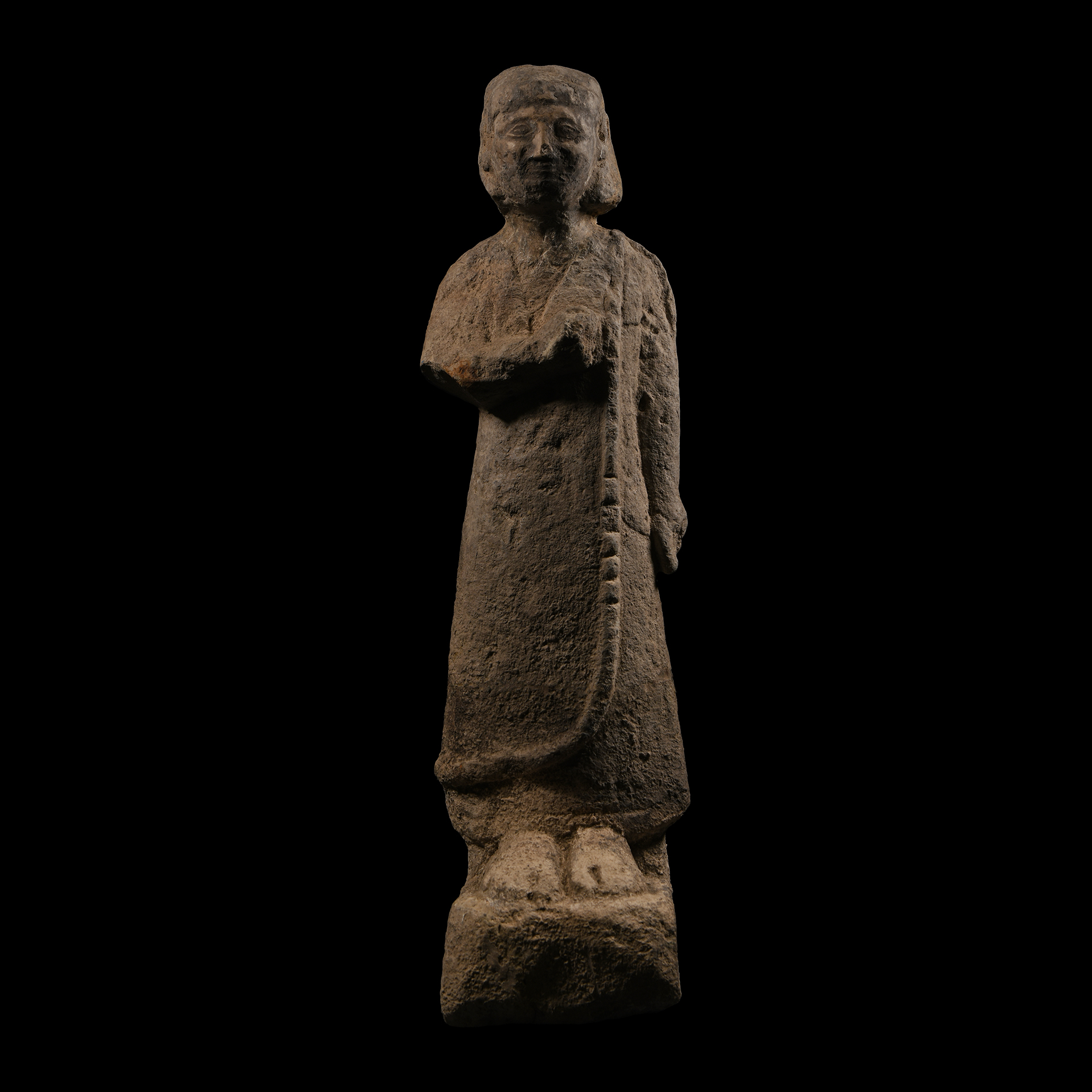
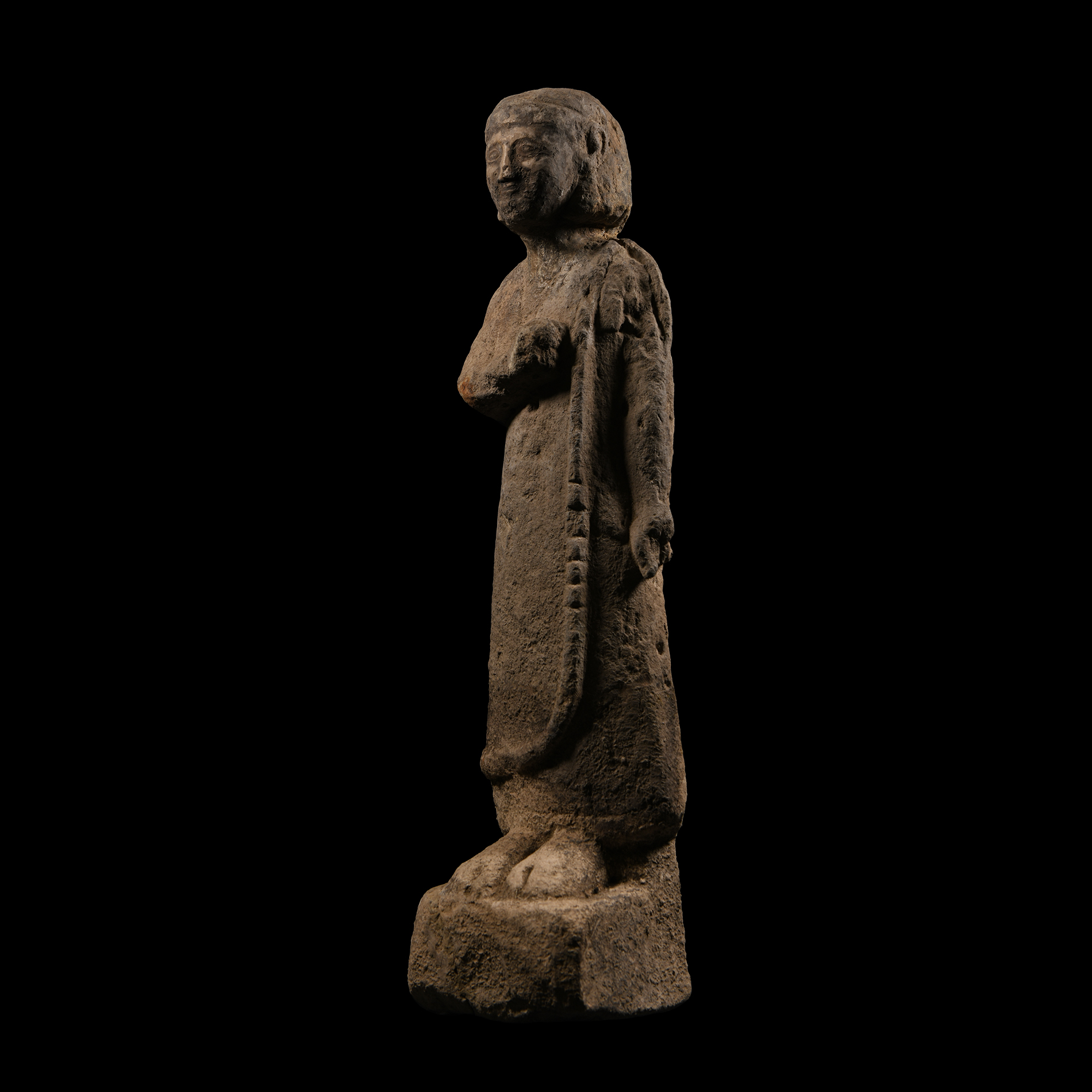
.jpg "Cypriot Archaic Stone Statue of a Votary")
.jpg "Cypriot Archaic Stone Statue of a Votary")
LOT 0067
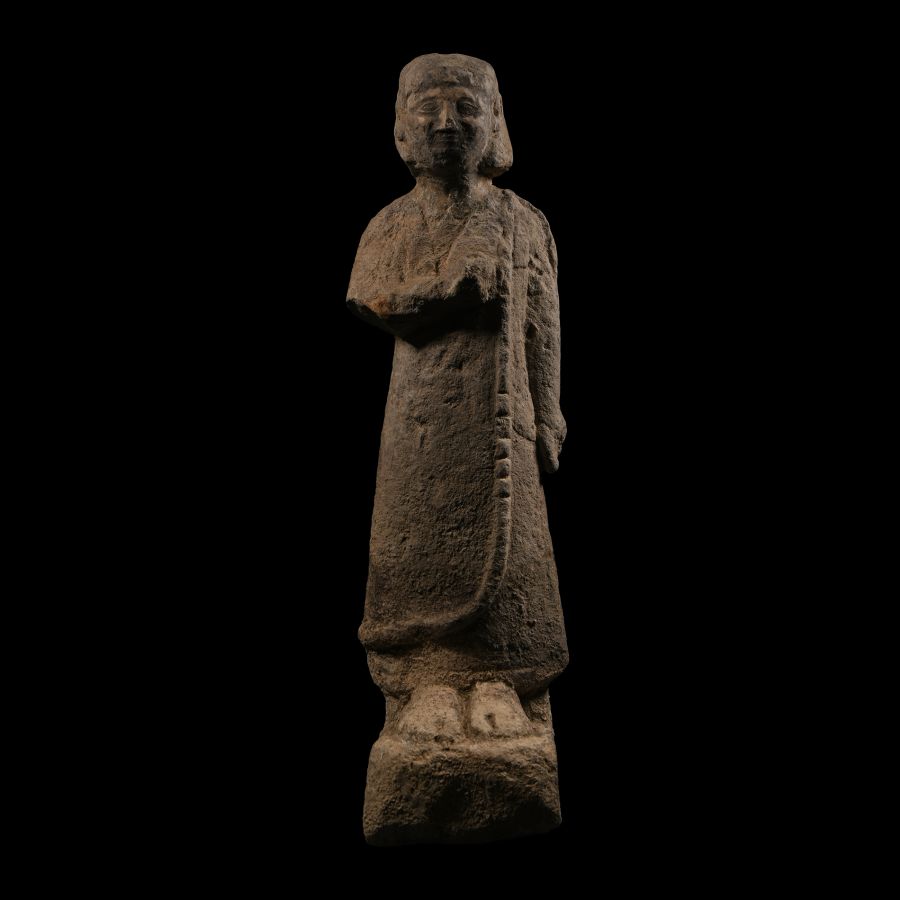
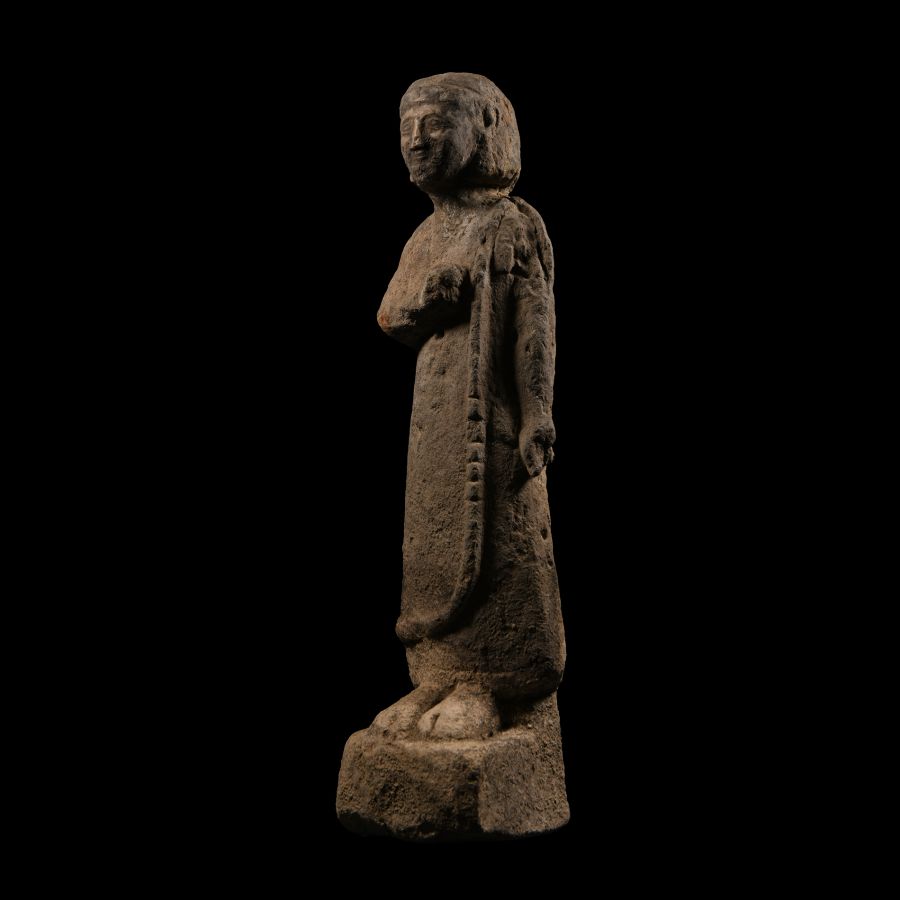
Cypriot Archaic Stone Statue of a Votary
IRON AGE, 6TH CENTURY B.C.
22 in. (7.3 kg, 55.5 cm including stand).
Standing erect on a square base wearing an ankle-length robe with mantle with segmented edge draped from the left shoulder, left arm straight at his side right arm bent and fist clenched at the breast; hair cut in a bobbed style with frontal band, collected in a Near-Eastern head-cloth falling down his back; bare feet with toes emphasised; mounted on a custom-made stand. [No Reserve]
ProvenanceFrom a collection acquired on the UK art market from various auction houses and collections mostly before 2000.
From an important Cambridgeshire estate; thence by descent.
Accompanied by an academic report by Dr Raffaele D’Amato.
This lot has been checked against the Interpol Database of stolen works of art and is accompanied by a search certificate number no.12046-217199.
Cf. Museum of Fine Art Boston, Art of ancient Cyprus, Boston, 1972, figs.35, 37,43; Spiteris, T., The art of Cyprus, London, 1970, fig.p.169; Morris, D., The Art of Ancient Cyprus, Oxford,1985; Karageorghis,V., Early Cyprus, Crossroads of Mediterranean, Los Angeles/Milano, 2002.
FootnotesThe sculpture is a good example of the mixed Near Eastern and Attic Ionian styles reflected in Cypriot sculpture. Cypriot art was often influenced by both Greek and Near Eastern styles, although in phase H of the archaic period (680-400 B.C.) the Greek influence became stronger, perhaps as a result of intensified trade and political contacts between the continent, Ionia and the Aegean islands.
CONDITIONTimeLine Auctions follows a vetting process to ensure the authenticity and legality of all items, reinforcing our commitment to integrity and responsible trading. Each antiquity, antique, and coin lot undergoes thorough examination by a vetting committee of at least ten external specialists, professional trade association members, scientists, and archaeologists: Our Vetting Process
AUCTIONS:
TimeLine is a leading auction house specialising in antiquities, ancient art, collectables, natural history, coins, medals, and books. Our auctions offer museums, collectors, historians, and enthusiasts the opportunity to acquire unique and historically significant pieces.
-
Greek Bronze Male Figural Attachment
3rd-2nd century B.C.Sold for (Inc. bp): £111
Head and torso of a young male with emphasised pectoral muscles and bowl-cut hairstyle; tapering body; attachment loop to rear and socket to the neck; mounted on a custom-made display stand. 121 grams total, 86 mm including stand
From a collection acquired on the UK art market from various auction houses and collections mostly before 2000. From an important Cambridgeshire estate; thence by descent. -
Villanovan Impasto Oinochoe with Graffiti
Circa 8th century B.C.Sold for (Inc. bp): £624
Three-lobed mouth with elongated beak, truncated-conical neck, shoulder with a convex profile, biconical body, low and flat foot, double rod handle set on the mouth and shoulder; small hole below equator. 592 grams, 21 cm high
Showplace Auction Centre, auction 308, lot 174. Property of a South Australian private collector, with collection reference 23.09. Accompanied by detailed collector's catalogue pages including description and photograph.
There is a similar vessel in Collection CA p18 n17 without decoration. The form is the same (height 25cm). Different varieties of it are known depending on the high or short neck, the flattened or globular or ovoid body, the flat or ring-shaped or splayed foot, the ribbon-like handle or the single or multiple rod. The known specimens come from different localities: Narce, Faleri, Bisenzio, Vetulonia, Tarquinia, Volsiniese countryside, upper Fiora valley. For parallel with ribs, see Antikenmuseum Basel + Sammlung Ludwig, p. 19, E 9, Schnabelkanne aus Impasto, first half seventh century, height 22.6cm. The shape of this handmade pot is particularly bold and simple. The few attached ribs, the bar handles brought together at the top, the high neck and the steep, cloverleaf-shaped mouth form ascending lines, but at the same time contribute to the balance of the shape due to their curve. These pots have primarily been found in Bisenzio, where they were probably made. -
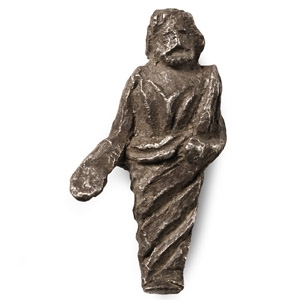
Hellenistic Silver Standing Figure
2nd-1st century B.C.Sold for (Inc. bp): £78
Bearded male wearing a himation held with his left hand, right hand open flat to support a patera (absent). 4.65 grams, 24 mm
Acquired 1960s-1990s. From the late Alison Barker collection, a retired London barrister.
