
Loading, please wait...
LOT 0272
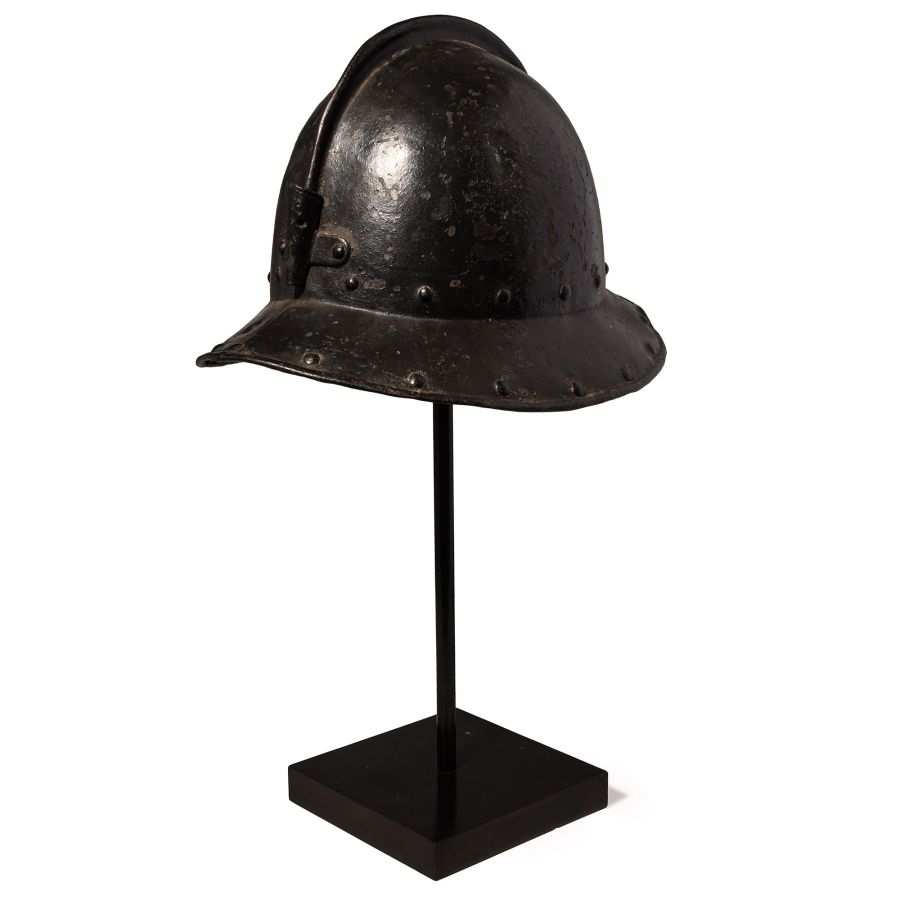
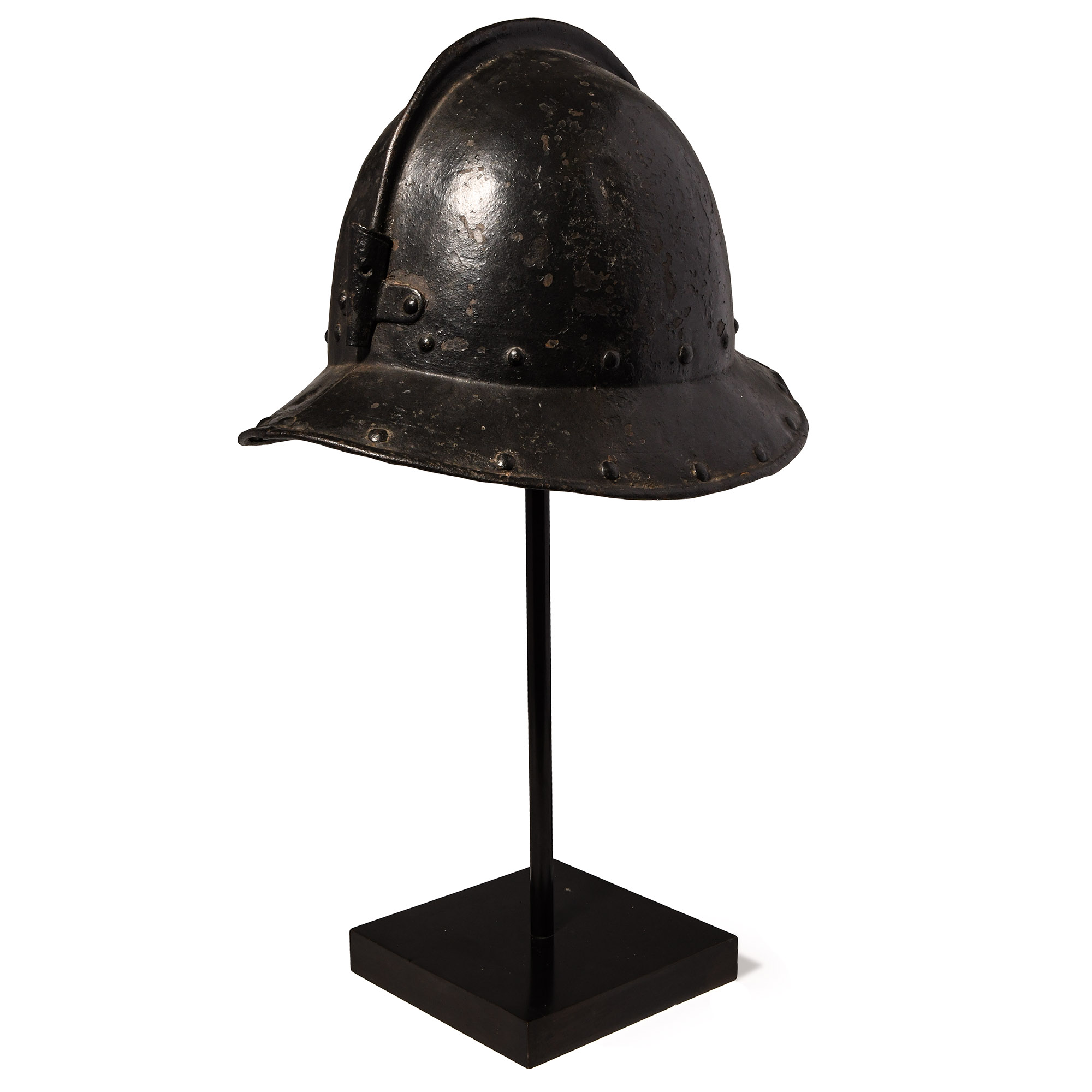
Cromwellian Pikeman's Pot Helmet
1642-1651 A.D.
13 3/4 in. (1.16 kg, 35 cm).
Of Morion Cabasset Type, the iron bowl composed of two rivetted parts with a crest; plume holder to the rear; wide sloping brim with smooth border and rivets; repaired.
ProvenanceEx Michael D Long Ltd, UK.
The Kusmirek Collection, UK.
Accompanied by an academic report by Dr Raffaele D'Amato.
This lot has been checked against the Interpol Database of stolen works of art and is accompanied by search certificate number no.11769-204122.
Cf. Dufton, A.R., European Armour in the tower of London, London, 1968, plate LXV, left.
FootnotesA complete set of pikeman's armour consisted of a gorget, back and breast plates, and tassets. With the outbreak of the Civil War, obsolete equipment which had been stored in the Tower of London or in private armouries was brought into service together with more modern equipment. Helmets of this type were often furnished of cheek-pieces made of horizontal rows of blades.
CONDITIONTimeLine Auctions follows a vetting process to ensure the authenticity and legality of all items, reinforcing our commitment to integrity and responsible trading. Each antiquity, antique, and coin lot undergoes thorough examination by a vetting committee of at least ten external specialists, professional trade association members, scientists, and archaeologists: Our Vetting Process
AUCTIONS:
TimeLine is a leading auction house specialising in antiquities, ancient art, collectables, natural history, coins, medals, and books. Our auctions offer museums, collectors, historians, and enthusiasts the opportunity to acquire unique and historically significant pieces.
-
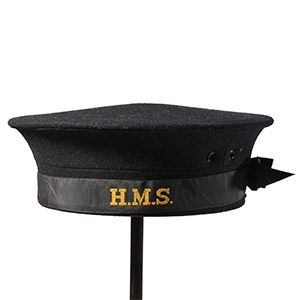
Royal Navy Rating's Cap
Dated 1942 A.D.Sold for (Inc. bp): £20
Standard British naval issue dark blue rating's cap with Toronto maker's ink stamp and date inside, fitted with black fabric 'H.M.S.' ribbon and chin-strap. 196 grams, 25 cm
Acquired from The Historic Flying Clothing Company, 2014. The Kusmirek Collection, UK. Accompanied by a copy of a previous invoice. -
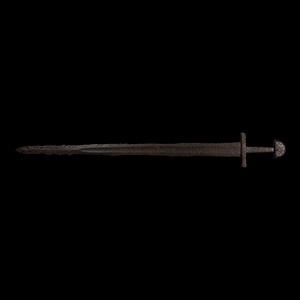
Viking Age Iron Sword of Petersen Type X
10th-11th century A.D.Sold for (Inc. bp): £3,380
Comprising a fine double-edged tapering blade, shallow fullers and defined cutting edges showing traces of employment; short, rectangular-section lower guard and tapering tang, tea-cosy pommel of early type; some restoration. 1.2 kg, 92.5 cm
Acquired 1990s-early 2000s. East Anglian private collection. Accompanied by an academic report by Dr Raffaele D'Amato.
The sword is Petersen type X (Petersen, 1919, pp.158ff) and Oakeshott type XI (1991, pp.53ff.), finding good parallels in various similar Viking and Norman age specimens (Peirce, 2002, pp.115 ff.). The overall proportions of our specimen are eye-catching and it is strikingly similar to a pattern-welded sword found with a large number of other objects, at Camp de Péran, Côtes-d'Armor, France, in a 10th century context, probably linked with the early Norman settlers in Normandy or Norman raids in Brittany (Roesdhal, Wilson, 1992, p.321, cat. n.359; Renaud, 2000, p.100). -
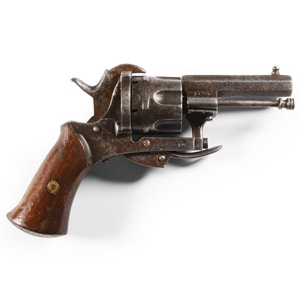
Belgian Pinfire Pocket Revolver
1877-1900 A.D.Sold for (Inc. bp): £143
Six-shot 7mm calibre double action Belgian proofed revolver with 55mm (2¼") barrel with hinged loading gate, extractor mounted at right side, folding trigger and fitted with plain wood butt scales; action stiff. 245 grams, 14 cm
Acquired from ROA Antique Arms Ltd. The Kusmirek Collection, UK. Accompanied by copy of the ROA listing.
Sold as an exempt item under Section 58 (2) of the Firearms Act, 1968, to be held as a curiosity or ornament. No license required but buyer must be over 18 years of age. Overseas bidders should note that, due to UK regulations governing export of all firearms, overseas buyers will need to make arrangements for shipping this lot out of the UK directly, by air freight, with a specialist company or agent.
