
Loading, please wait...
LOT 0061
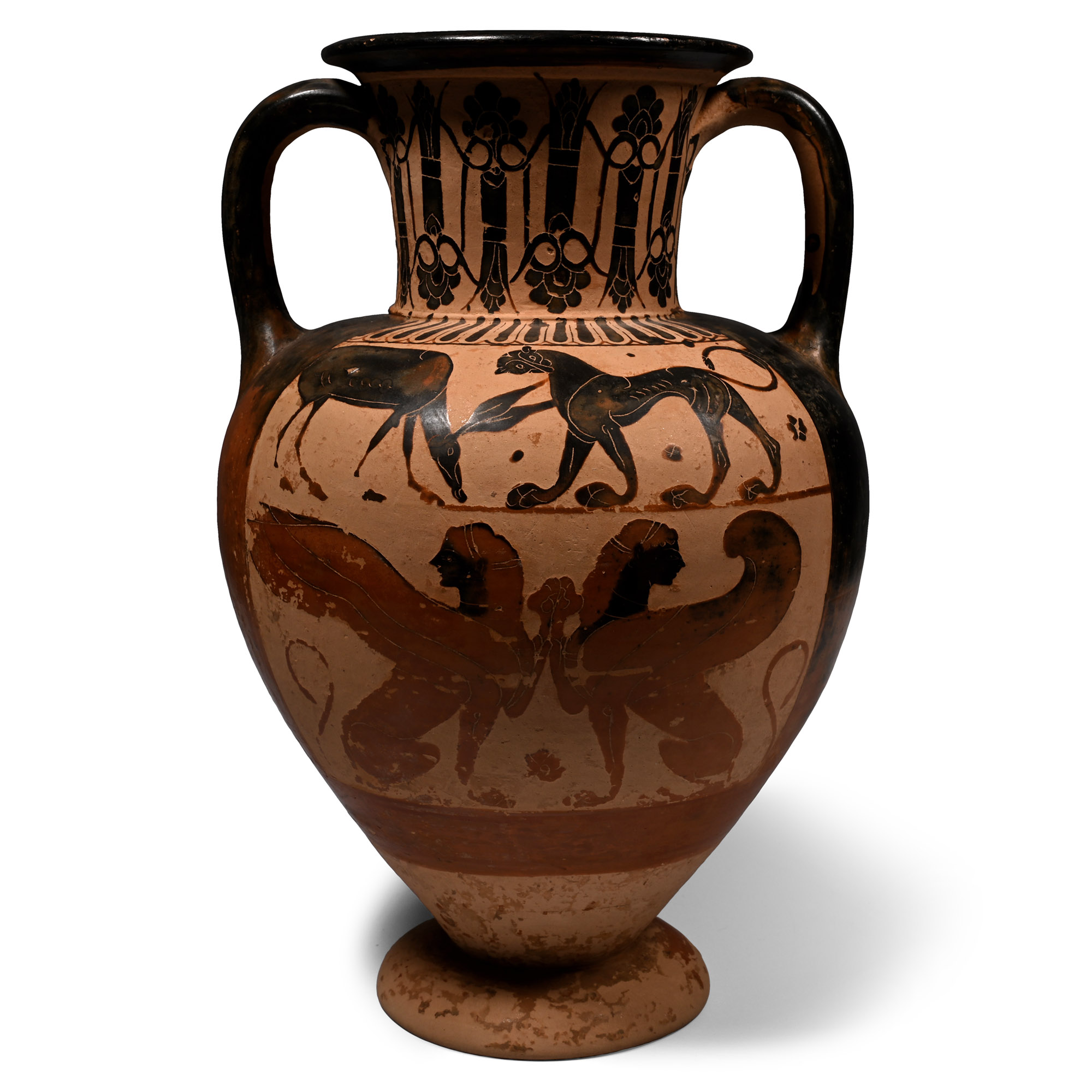
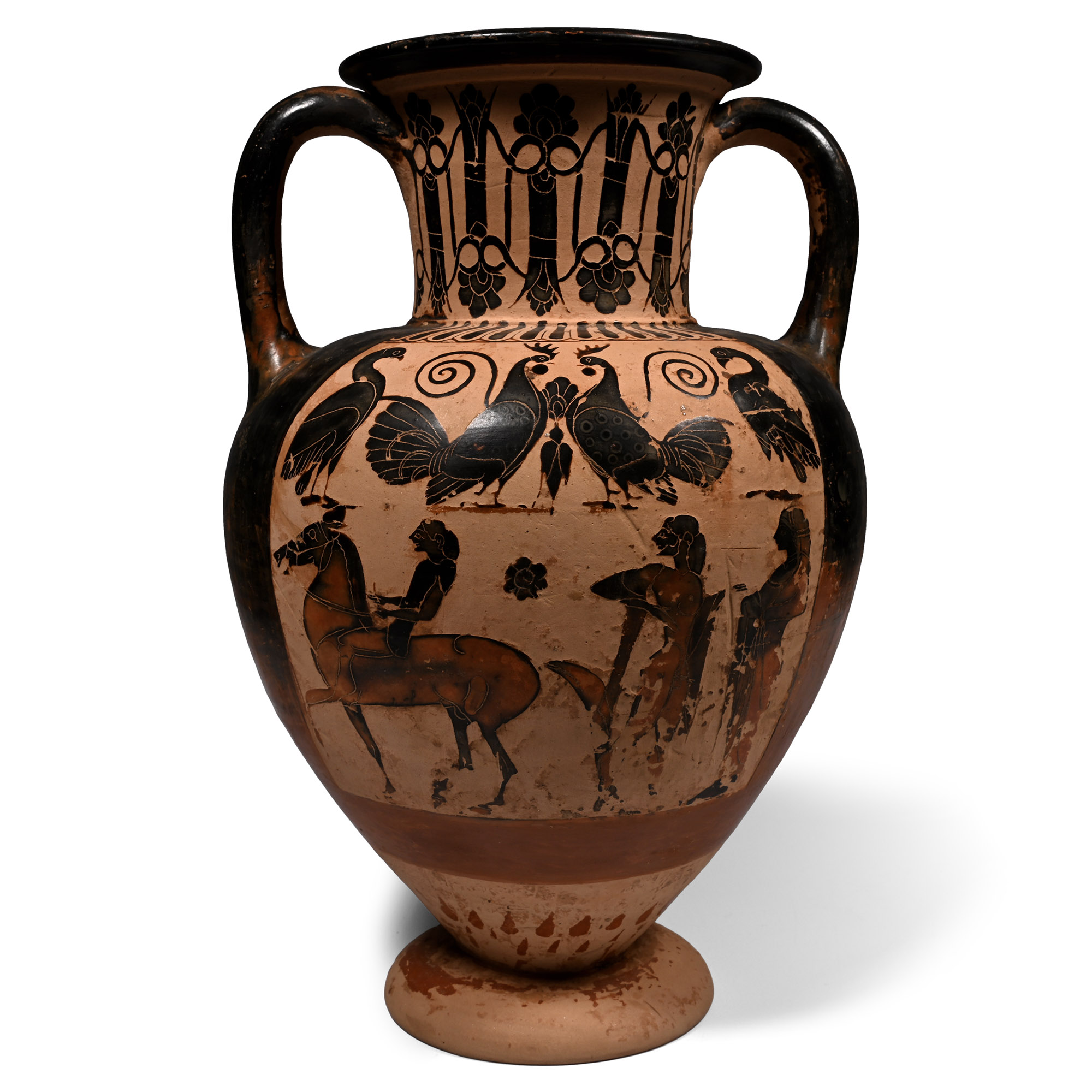
Corinthian Terracotta Amphora Attributed to the Phineus Painter
525 B.C.
11 in. (1.06 kg, 28 cm).
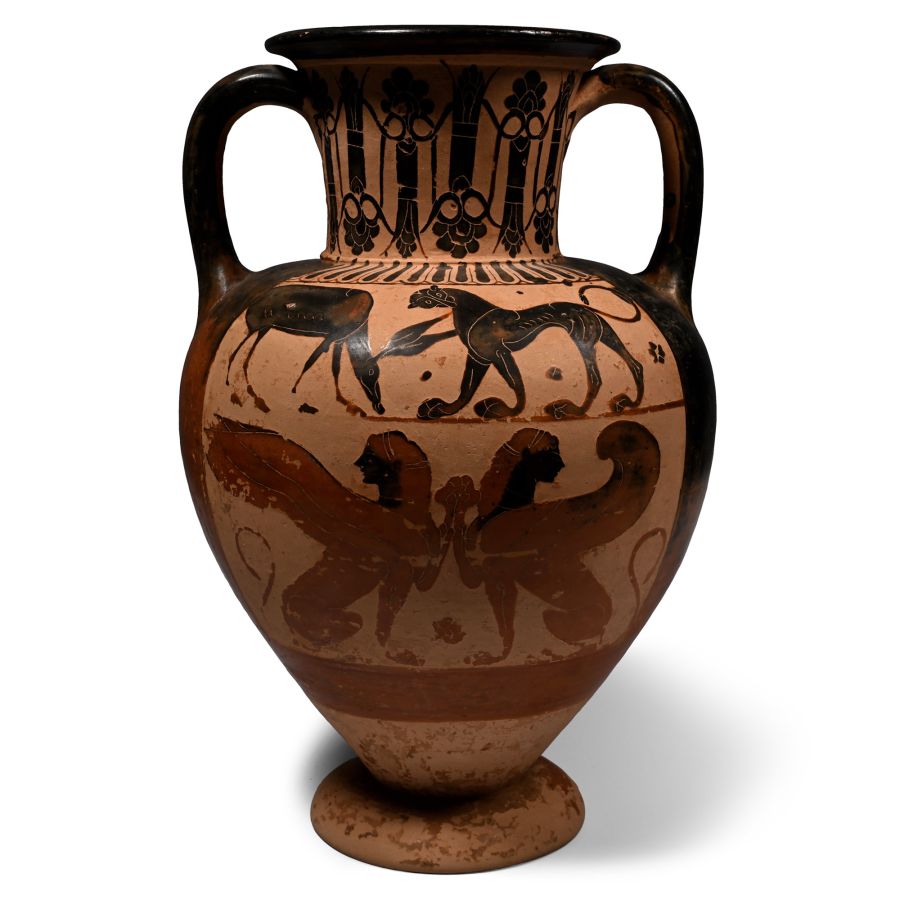
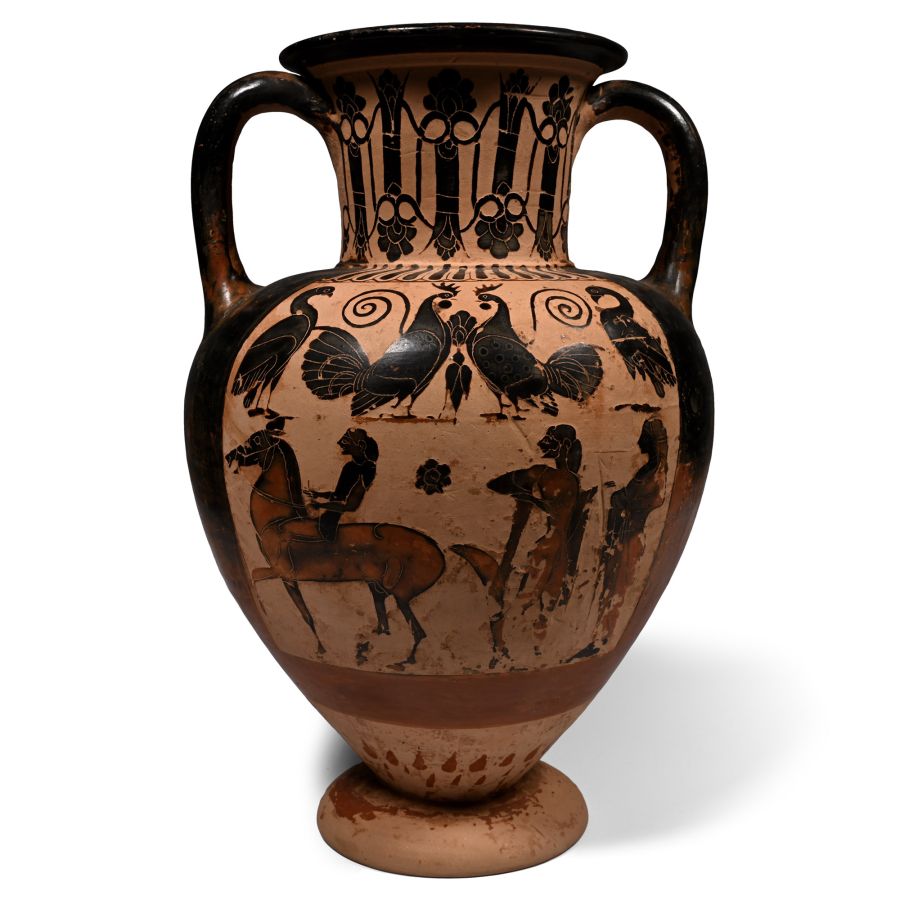
Piriform body with splayed foot and narrow handles; the neck with slender lotus blossoms and palmettes, Side A) two opposing roosters with a lotus blossom in between, two standing swans flanking, below a youth on horseback holding the reins of a trotting horse, a man and a woman behind the horse; Side B) a grazing deer before an advancing panther looking back, two opposing sphinxes below with their heads turned back and front paws raised.
ProvenanceEx Münzen und Medaillen A.G., H. Cahn, Basel, 13 April 1985.
Private collection, Bern, Switzerland.
This lot has been checked against the Interpol Database of stolen works of art and is accompanied by a search certificate number no.12643-236366.
This lot has been cleared against the Art Loss Register database, and is accompanied by an illustrated lot declaration signed by the Head of the Antiquities Department, Dr Raffaele D'Amato.
Cf. The Metropolitan Museum of Art, accession no.49.113, for a neck-amphora attributed to the Phineus Painter and showing a youth on horseback.
CONDITIONTimeLine Auctions follows a vetting process to ensure the authenticity and legality of all items, reinforcing our commitment to integrity and responsible trading. Each antiquity, antique, and coin lot undergoes thorough examination by a vetting committee of at least ten external specialists, professional trade association members, scientists, and archaeologists: Our Vetting Process
AUCTIONS:
TimeLine is a leading auction house specialising in antiquities, ancient art, collectables, natural history, coins, medals, and books. Our auctions offer museums, collectors, historians, and enthusiasts the opportunity to acquire unique and historically significant pieces.
LOT 0061
Corinthian Terracotta Amphora Attributed to the Phineus Painter
Estimate £6,000 - 8,000€6,960 - 9,280 (for guidance only)$8,100 - 10,800 (for guidance only)
-
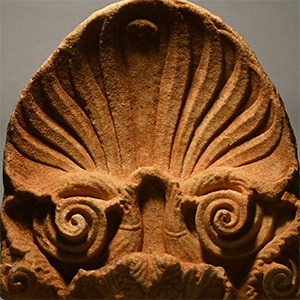
'The Stanford Place Collection' Attic Marble Stele Anthemion Finial
4th century B.C.Sold for (Inc. bp): £31,200
Carved in the form of an elaborate palmette with stems in the form of spiral tendrils rising from acanthus leaves, a small rosette at the top between the converging fronds; holes on the reverse for attachment to shaft; mounted on a custom-made display stand. 57 kg total, 47 cm (53.5 cm including stand)
Acquired on the New York, USA, art market, 1994. with Christie's, London, The Stanford Place Collection of Antiquities, 26 April 2006, no.30. Private collection, UK. Accompanied by an academic report by Dr Raffaele D’Amato. Accompanied by copies of the relevant Christie's 'Stanford Place Collection' catalogue pages. This lot has been checked against the Interpol Database of stolen works of art and is accompanied by search certificate number no.12614-235145. This lot has been cleared against the Art Loss Register database, and is accompanied by an illustrated lot declaration signed by the Head of the Antiquities Department, Dr Raffaele D'Amato.
This iconography was adapted from the Egyptian and Asiatic honeysuckle, also known as lotus palmette. First depicted on Attic white-ground lekythoi; in the 5th century B.C., then as architectural decoration, carved marble examples of this type of funerary monument were erected in the 5th-4th century B.C. It was not unusual for the anthemion to be of higher quality than the figures sculpted and painted beneath it. One splendid example is the stele of Paramythion (cf. Brinkmann-Wünsche, 2004, pp.148ff.). These memorials, originally painted, were venerated by families, anointed with oil, decorated with ribbons, and graced with offerings of food. -
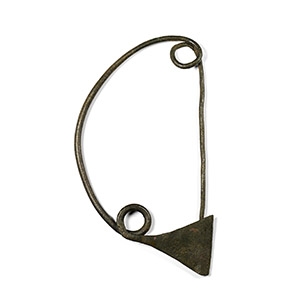
Large Greek Bronze Fibula
Iron Age, 8th century B.C.Estimate: £100 - 140 (+bp*)
Opening Bid: £50
Single-piece fibula comprising a curved bow with integral coiled spring to one end developing to a sturdy pin; to the other end, a flared catchplate on a single-coil spring. 15.7 grams, 10 cm
Ex important German collection of brooches, 1980s. This lot is accompanied by an illustrated lot declaration signed by the Head of the Antiquities Department, Dr Raffaele D'Amato. -
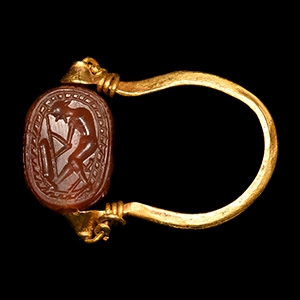
Etruscan Engraved Scarab in Gold Swivel Ring
Circa 3rd century B.C. and laterSold for (Inc. bp): £1,820
Carnelian scarab with flat underside, segmented border around a figure bent over his tools, set into a later swivel-mount with carinated hoop, wires wound round the shank at each shoulder. 10.23 grams, 35.18 mm overall, 17.75 x 23.05 mm internal diameter (approximate size British P 1/2, USA 7 3/4, Europe 16.86, Japan 16)
Acquired from a London dealer in the 1980s. From the collection of a London antiquarian, formed since the 1980s. This lot has been checked against the Interpol Database of stolen works of art and is accompanied by a search certificate number no.12745-234210. This lot has been cleared against the Art Loss Register database, and is accompanied by an illustrated lot declaration signed by the Head of the Antiquities Department, Dr Raffaele D'Amato.
