
Loading, please wait...
LOT 0058
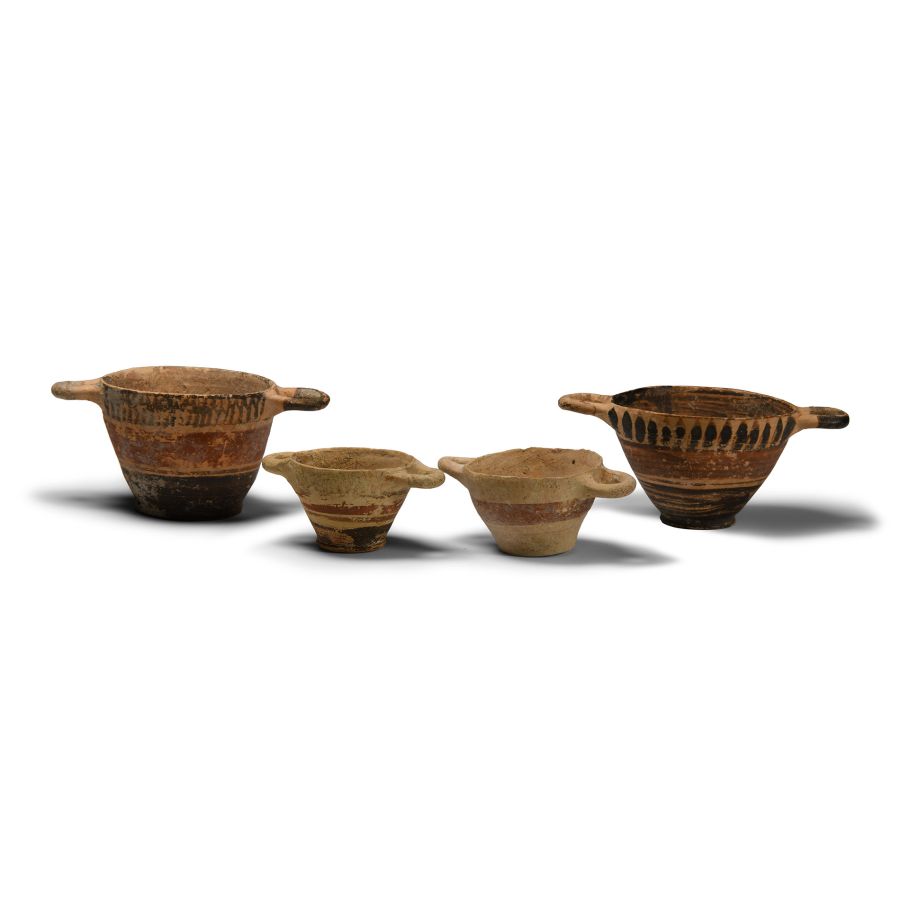
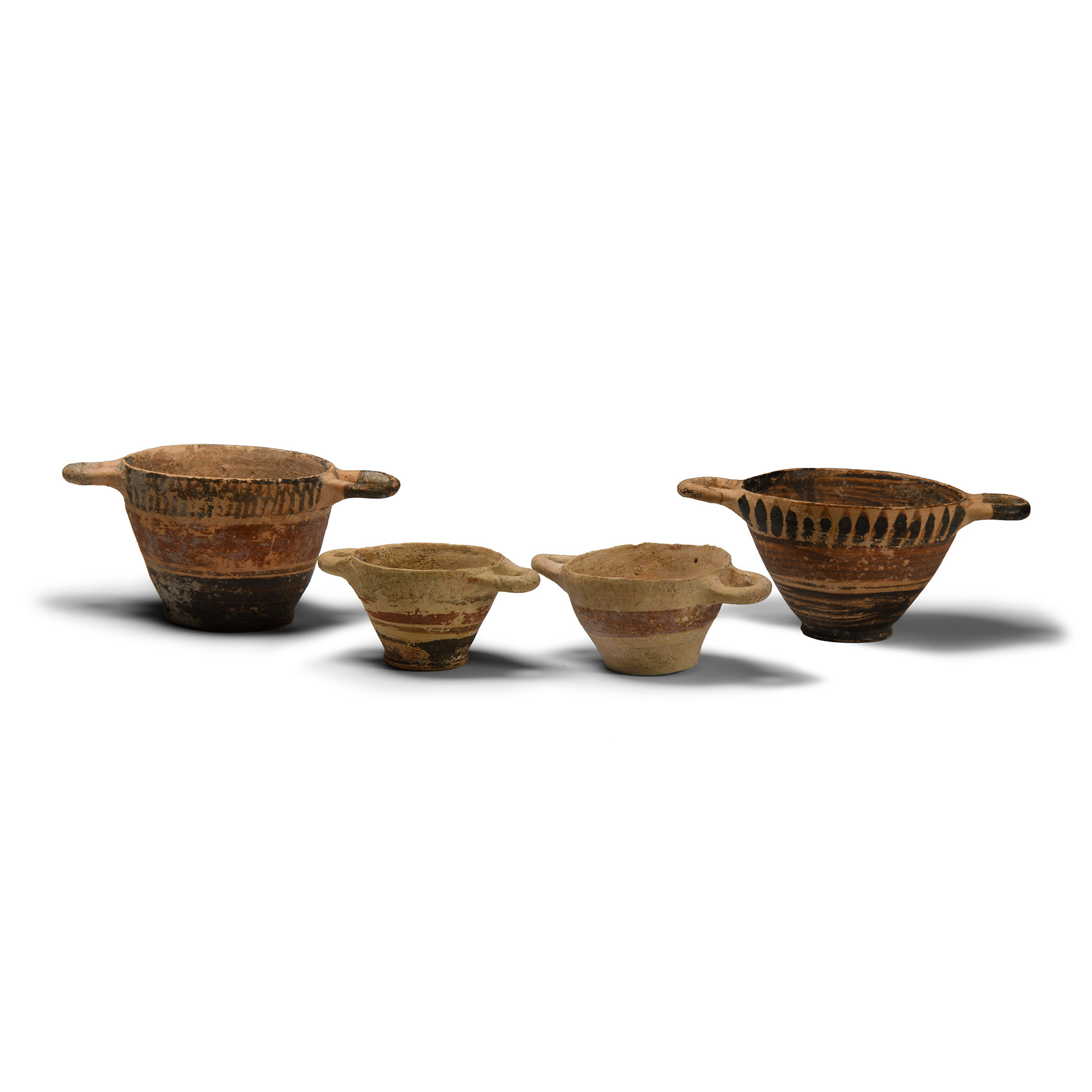
Corinthian Miniature Terracotta Skyphos Collection
6TH CENTURY B.C.
2 1/2 - 4 in. (103 grams total, 6.5-10.1 cm).
Group of four graduated ceramic cups, each with two loop handles to the rim and painted detailing to the outer face. [4]
ProvenanceAcquired from Gallery Gryphos, Munich, early 2000s.
European private collection.
TimeLine Auctions follows a vetting process to ensure the authenticity and legality of all items, reinforcing our commitment to integrity and responsible trading. Each antiquity, antique, and coin lot undergoes thorough examination by a vetting committee of at least ten external specialists, professional trade association members, scientists, and archaeologists: Our Vetting Process
AUCTIONS:
TimeLine is a leading auction house specialising in antiquities, ancient art, collectables, natural history, coins, medals, and books. Our auctions offer museums, collectors, historians, and enthusiasts the opportunity to acquire unique and historically significant pieces.
LOT 0058
Corinthian Miniature Terracotta Skyphos Collection
Estimate £500 - 700€580 - 810 (for guidance only)$680 - 950 (for guidance only)
-
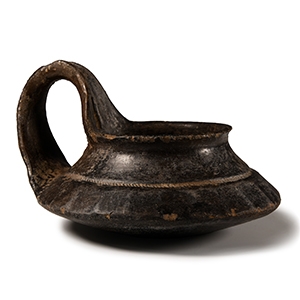
Villanovan Terracotta Impasto Kyathos
8th-7th century B.C.Sold for (Inc. bp): £338
Blackware vessel with carination to the squat body, deep shoulder and rolled rim, low foot, single upstanding strap handle to the rear with split at the junction with the mouth. 286 grams, 14 cm wide
Ex Haynault Ventes Publiques Auction, Uccle, Belgium, 21 September, 2021, no.30. Property of a South Australian private collector, with collection reference 21.102. Accompanied by a collector's catalogue page including description and image.
Villanovan culture is often regarded as the earliest phase of Etruscan civilisation in the Iron Age. -
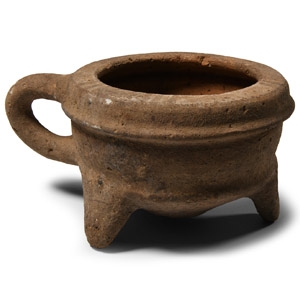
Greek Tripod Vessel with Handle
Circa 8th-6th century B.C.Sold for (Inc. bp): £124
Squat in profile with three stub legs, raised rib below the in-turned rim, loop handle. 255 grams, 14.4 cm
From a collection acquired on the UK art market from various auction houses and collections mostly before 2000. From an important Cambridgeshire estate; thence by descent. -
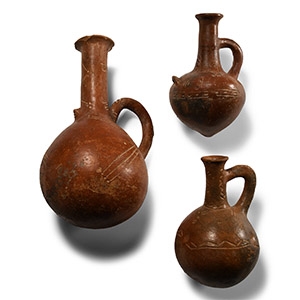
Cypriot Red Polished Ware Jug Group
Early-Middle Bronze Age, circa 2700-1900 B.C.Sold for (Inc. bp): £1,040
Group of three burnished redware jugs, two smaller examples with loop handle to the neck, larger with handle to the shoulder; all with incised linear ornament. 1.06 kg total, 14-21 cm
From a collection acquired on the UK art market from various auction houses and collections mostly before 2000. From an important Cambridgeshire estate; thence by descent.
