
Loading, please wait...
LOT 0075
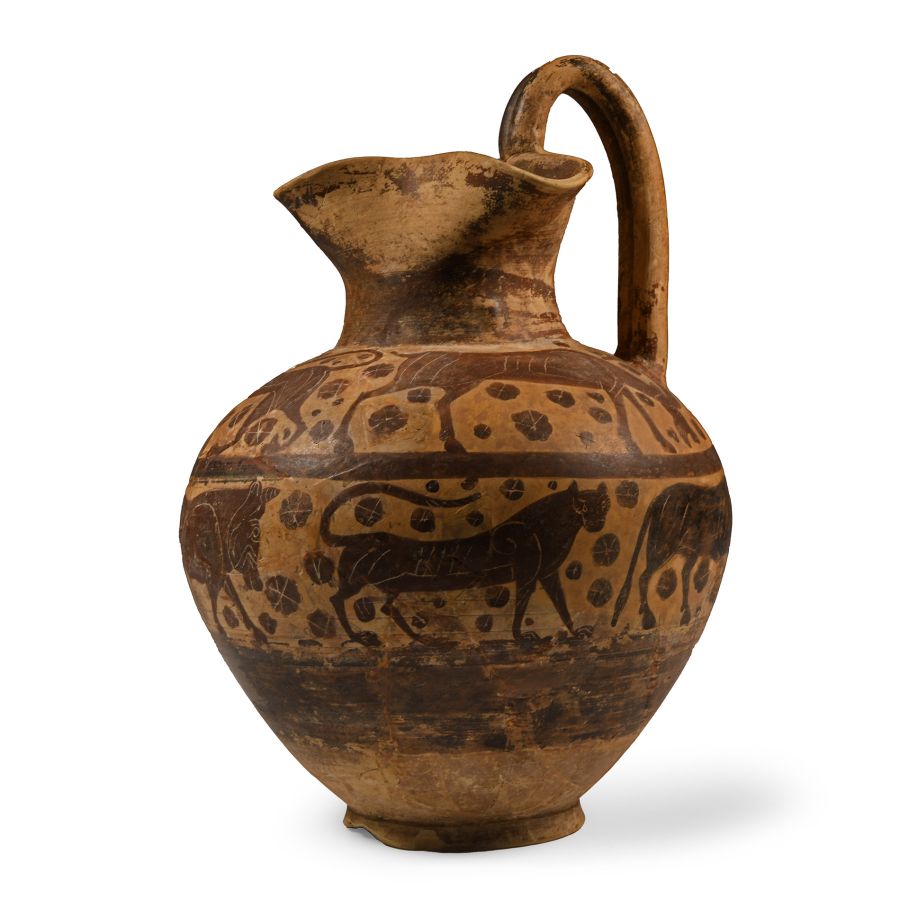
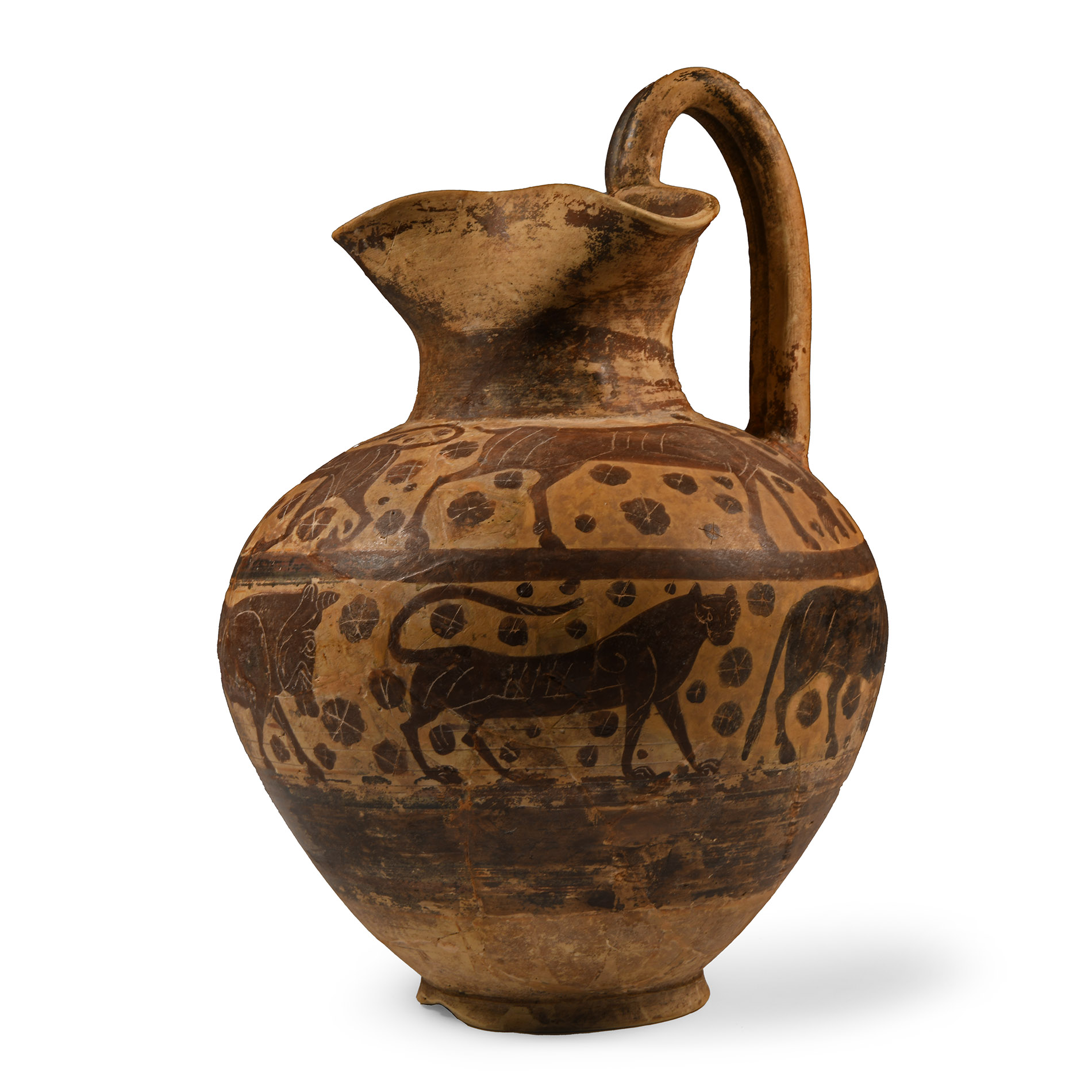
Corinthian Black-Figure Oinochoe
6TH CENTURY B.C.
10 1/2 in. (675 grams, 26.5 cm).
Decorated with two superimposed friezes of animals including panthers, bulls and grazing ibexes; flowers and rosettes in the field; restored.
ProvenancePrivate collection, Old City of Jaffa, Israel.
with Archeological Center, Tel Aviv, Israel.
Accompanied by a thermoluminescence analysis report no.N124d54 from Oxford Authentication.
TimeLine Auctions follows a vetting process to ensure the authenticity and legality of all items, reinforcing our commitment to integrity and responsible trading. Each antiquity, antique, and coin lot undergoes thorough examination by a vetting committee of at least ten external specialists, professional trade association members, scientists, and archaeologists: Our Vetting Process
AUCTIONS:
TimeLine is a leading auction house specialising in antiquities, ancient art, collectables, natural history, coins, medals, and books. Our auctions offer museums, collectors, historians, and enthusiasts the opportunity to acquire unique and historically significant pieces.
LOT 0075
Corinthian Black-Figure Oinochoe
Estimate £4,000 - 6,000€4,640 - 6,960 (for guidance only)$5,400 - 8,100 (for guidance only)
-
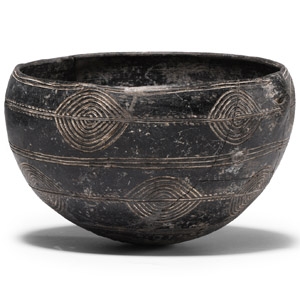
Cypriot Black Polished Ware Cup
Early III- Middle Bronze Age I, 2100-1850 B.C.Sold for (Inc. bp): £546
Hemispherical profile with three concentric bands to the outer face of vesica-shaped panels with median line and pointillé detailing; single pierced lug handle below the rim. 180 grams, 11.8 cm wide
From a collection acquired on the UK art market from various auction houses and collections mostly before 2000. From an important Cambridgeshire estate; thence by descent. -
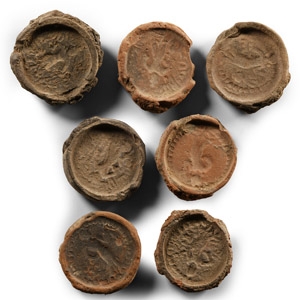
Indo-Greek Terracotta Forger's Mould Group
Circa 2nd-1st century B.C.Sold for (Inc. bp): £390
Group of discoid clay moulds for casting contemporary counterfeit coins. 40.1 grams total, 29-31 mm
Private collection formed in the 1990s. Acquired from a central London gallery. Property of an Essex, UK, gentleman. -
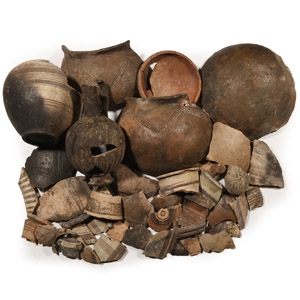
Greek and Other Pottery Fragment Group
Circa 1st millennium B.C.Sold for (Inc. bp): £98
Including amphora, bowl, cup and other vessel fragments, some painted. 5 kg total, 2-22.5 cm
From a collection acquired on the UK art market from various auction houses and collections mostly before 2000. From an important Cambridgeshire estate; thence by descent.
