
Loading, please wait...
LOT 0534
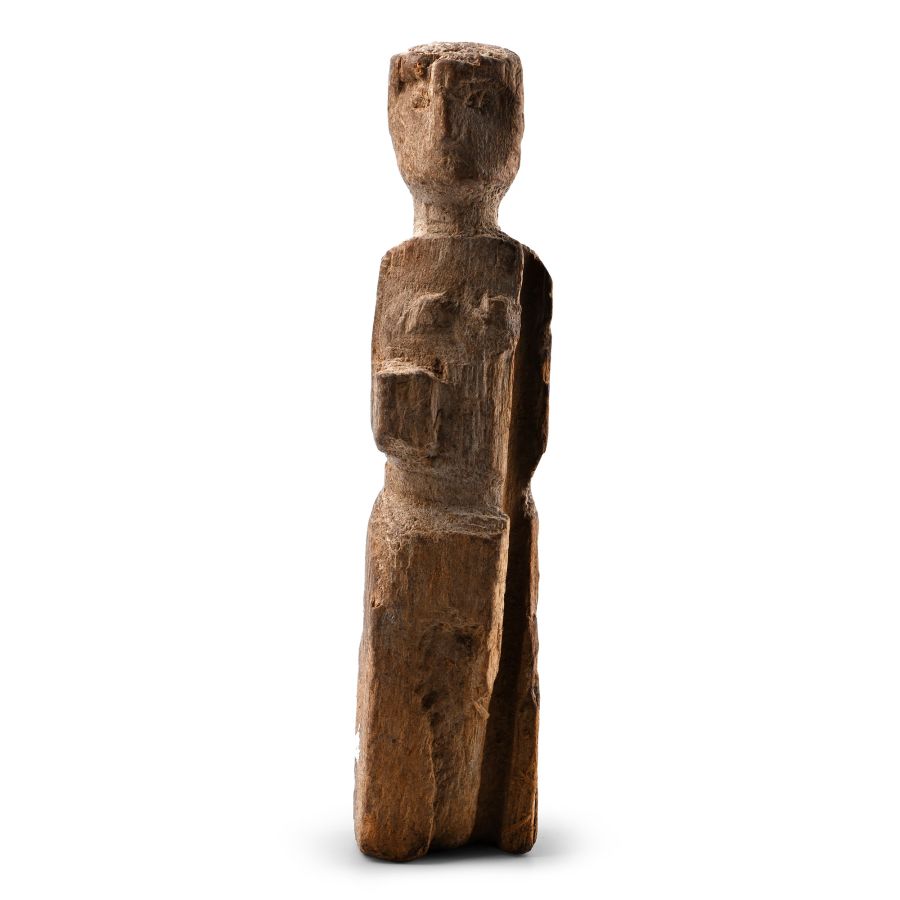
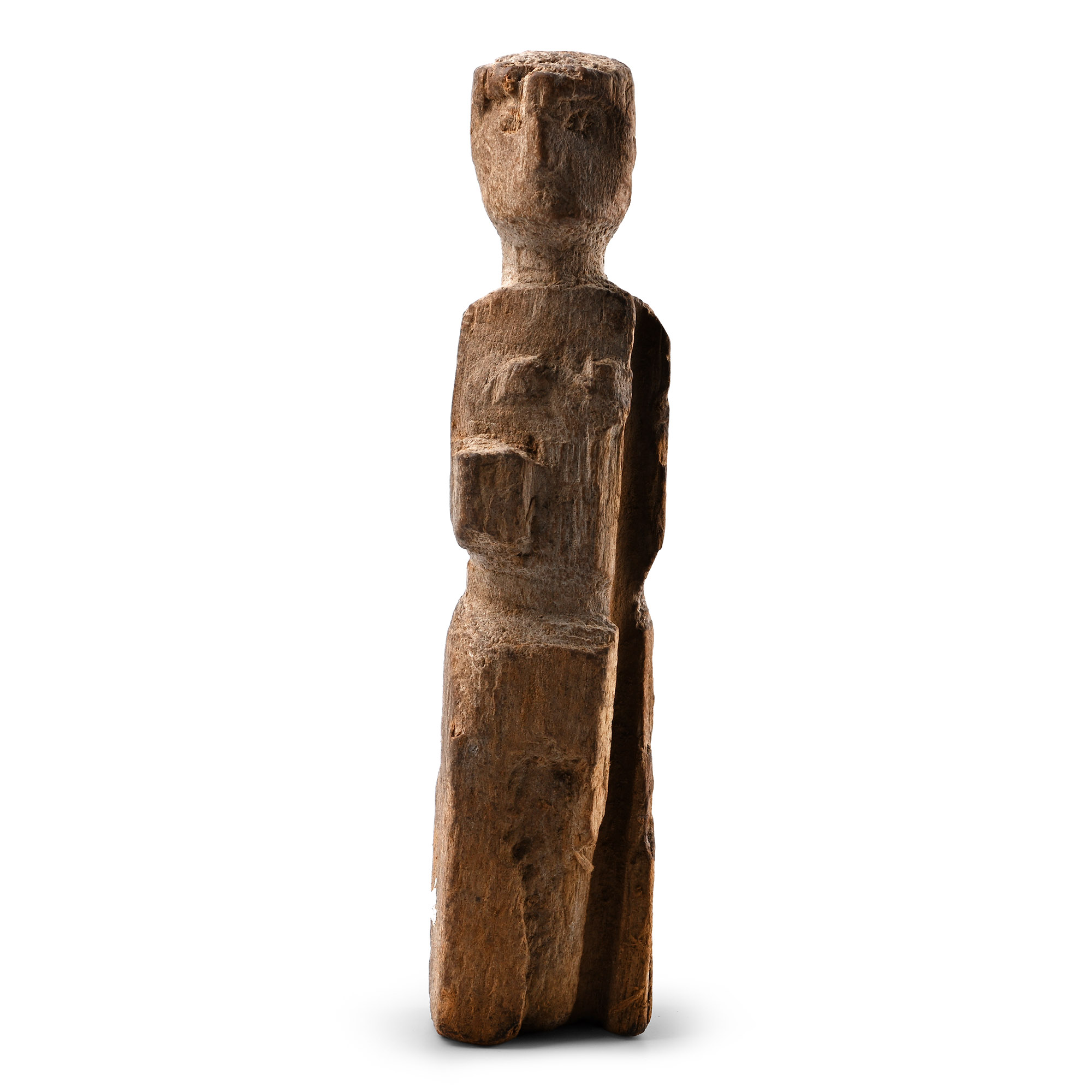
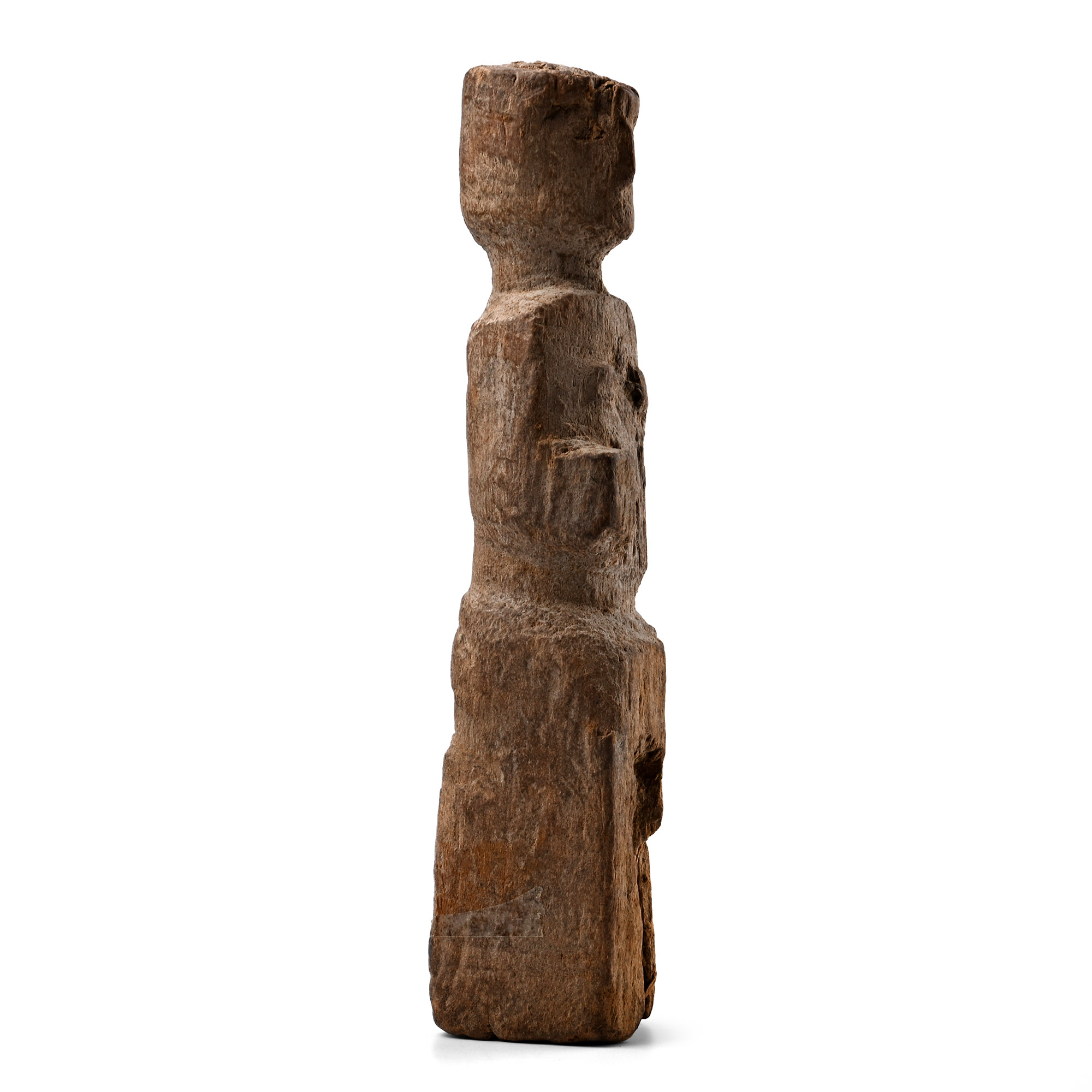
Coptic Wooden Standing Figure
CIRCA 4TH-5TH CENTURY A.D.
9 3/4 in. (214 grams, 25cm).
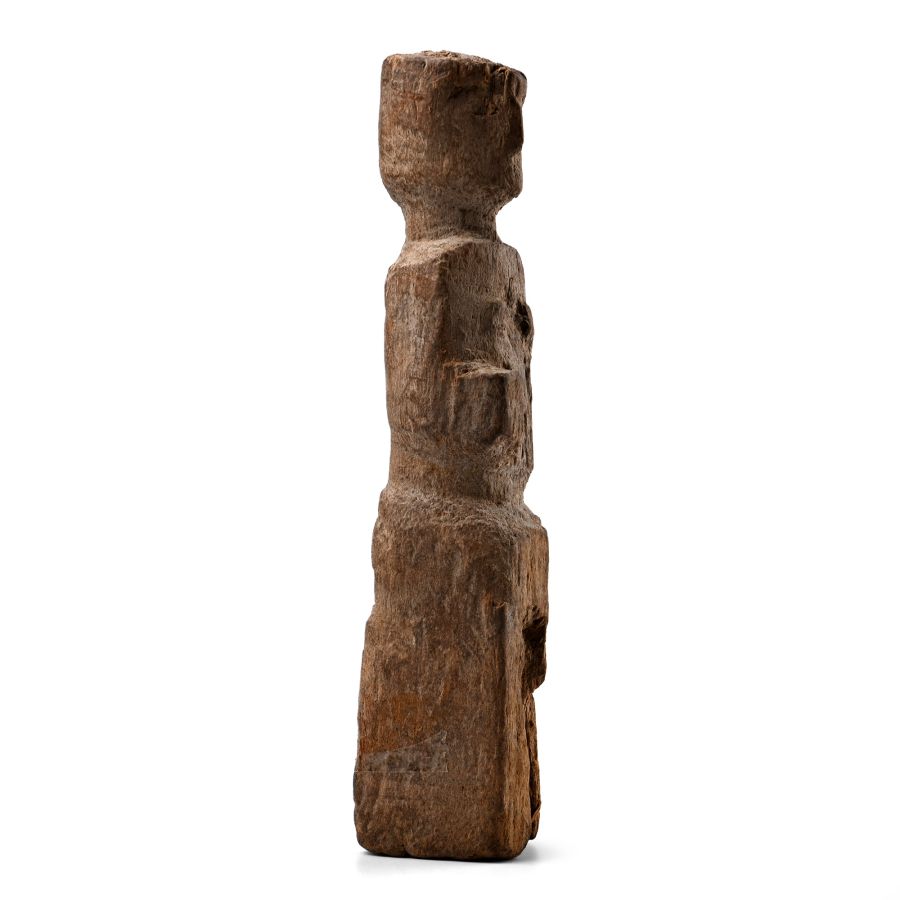
With drum-shaped head and incised eyes, slender neck, reserved breasts, right arm bent with hand extended, trim waist, full hips, seated on a rectangular throne(?); deep vertical slot to the left side. [No Reserve]
ProvenanceFrom an important central London collection formed since the mid 1960s; thence by descent.
From the private collection of John Meredith, acquired since the 1990s; thence by descent.
TimeLine Auctions follows a vetting process to ensure the authenticity and legality of all items, reinforcing our commitment to integrity and responsible trading. Each antiquity, antique, and coin lot undergoes thorough examination by a vetting committee of at least ten external specialists, professional trade association members, scientists, and archaeologists: Our Vetting Process
AUCTIONS:
TimeLine is a leading auction house specialising in antiquities, ancient art, collectables, natural history, coins, medals, and books. Our auctions offer museums, collectors, historians, and enthusiasts the opportunity to acquire unique and historically significant pieces.
-
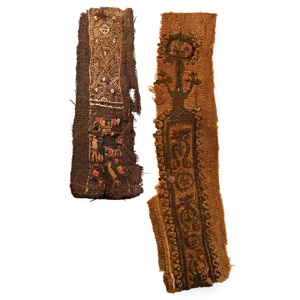
Egyptian Coptic Textile Fragment Group
Circa 5th-6th century A.D.Sold for (Inc. bp): £130
Comprising: a decorative tunic stripe (clavus) in purple wool over coarse linen, S-twist tapestry, embroidered with floral medallions and stylised plants, borders decorated with meanders; fragment of a segmentum, in yellow, red green and brown wool, S-twist tapestry, divided in two sections, embroidered with a stylised human figure and geometric interlacing. 41 grams total including package, 15.5-22 cm
Acquired 1970s-1996. Property of a North American collector. London collection, 2016. -
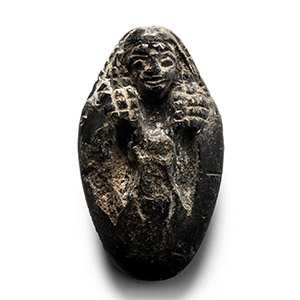
Egyptian Black Stone Heart Amulet
New Kingdom, circa 1500-1200 B.C.Sold for (Inc. bp): £312
Carved in the half-round, lentoid in plan, with a human head wearing a hatched wig, remains of a scarab beetle in the centre, pierced to reverse for suspension. 13.3 grams, 41.6 mm
with Archaeologia, Switzerland, before 1983. Ex private North American collection. London private collection, 2016. -
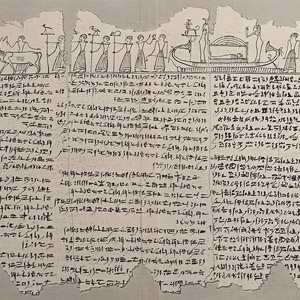
Very Large Egyptian Expedition Lithograph of the Hypogees Papyrus Manuscript from Thebes
Early 19th century A.D.Estimate: £100 - 140 (+bp*)
Opening Bid: £50
Proof etching on laid paper of plate 61 from Vol.II of Description de l'Égypte : ou, Recueil des observations et des recherches qui ont été faites en Égypte pendant l'expédition de l'armée française. entitled Thèbes. Hypogées. Manuscrit sur papyrus. 1ere partie. 207 grams,103 x 68 cm
From the collection of a North American priest. Acquired between 1981-1996. Property of a North American collector.
Produced between February 1802 and 1830 on the orders of Napoleon Bonaparte; published between 1809 and 1828. Just 1,000 copies were distributed to various institutions, printed on laid paper with an 'Égypte ancienne et moderne' watermark. The book is subtitled Recueil des observations et des recherches qui ont été faites en Égypte pendant l’expédition de l’Armée française, publié par les ordres de Sa Majesté l’Empereur Napoléon le Grand (Gathering of observations and discoveries which were made in Egypt during the expedition of the French army, published on the orders of His Majesty the Emperor Napoleon the Great). It was the world's first encyclopedia devoted exclusively to the remains of ancient Egypt. The plates of this book are the first to present the archaeological sites of Thebes (Luxor). The papyrus manuscript was recovered from an underground tomb chamber (hypogeum). The text is written in hieratic, a cursive form of hieroglyphic script often used for religious papyrus documents. The scene in the upper register depicts the funerary procession with lamenting men and women on the right, following the deceased's funerary assemblage, including his mummy on a bark.
