
Loading, please wait...
LOT 0482
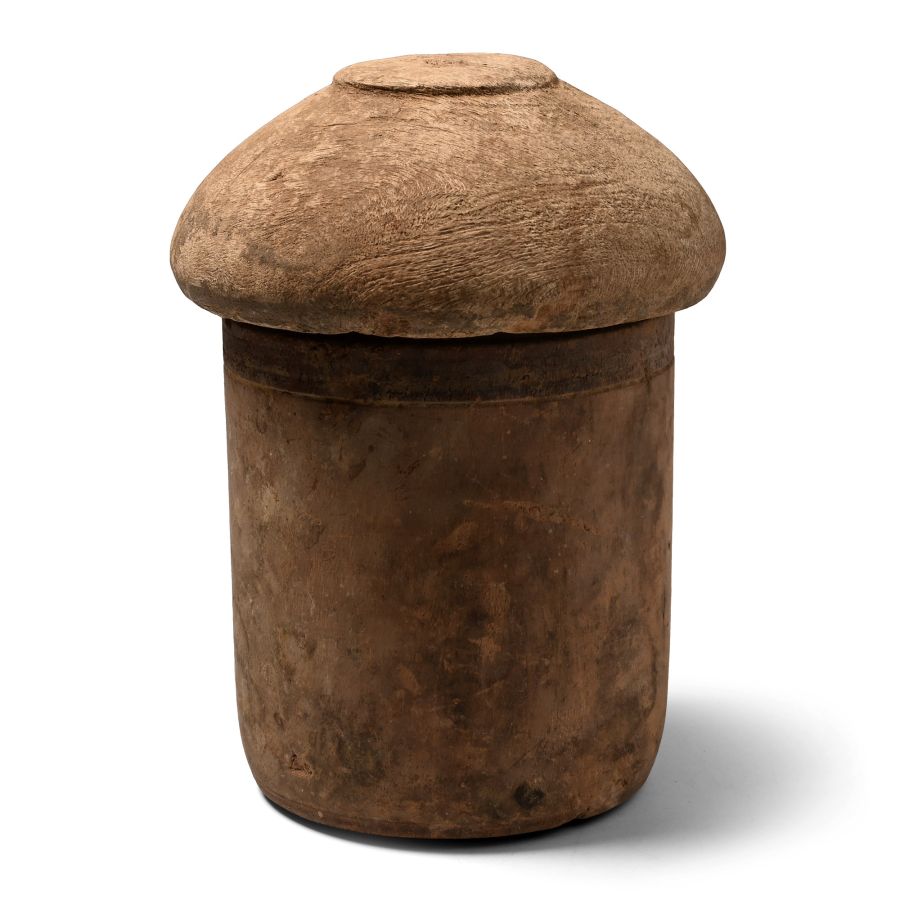
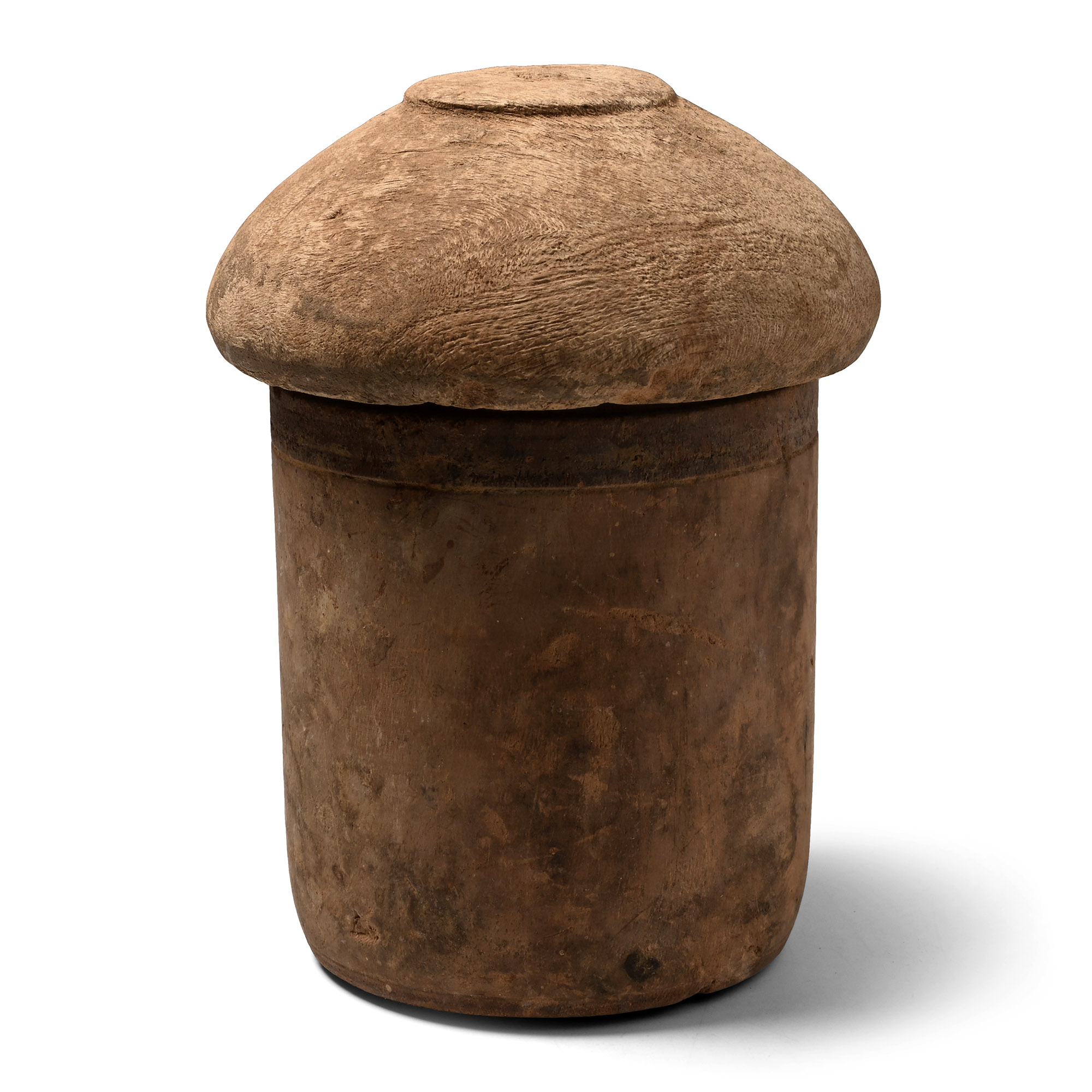
Coptic Wooden Jar with Lid
4TH-6TH CENTURY A.D.
4 1/2 in. (147 grams total, 11.5 cm high).
Columnar in profile, turned wooden vessel with stepped rim and dark-red painted band below the lip; domed lid with inner locating ring to underside; flat panel to the apex. [No Reserve]
ProvenanceLondon, UK, art market, 1990s.
From the collection of G.M.R.H., London, UK.
TimeLine Auctions follows a vetting process to ensure the authenticity and legality of all items, reinforcing our commitment to integrity and responsible trading. Each antiquity, antique, and coin lot undergoes thorough examination by a vetting committee of at least ten external specialists, professional trade association members, scientists, and archaeologists: Our Vetting Process
AUCTIONS:
TimeLine is a leading auction house specialising in antiquities, ancient art, collectables, natural history, coins, medals, and books. Our auctions offer museums, collectors, historians, and enthusiasts the opportunity to acquire unique and historically significant pieces.
-
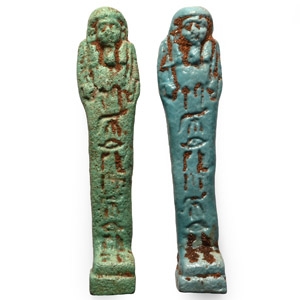
Egyptian Faience Shabti Group for Ha-bener-Re
Late-Ptolemaic Period, 664-30 B.C.Sold for (Inc. bp): £234
Two mummiform shabtis from the same mould, wearing a lappet wig and false beard, and holding a pick, hoe, and miniscule seed bag; inscribed with a column of hieroglyphic text on the front repeating the opening dedication "The illuminated one, the Osiris" ( sḥḏ wsỉr), and another on the dorsal pillar giving the name of the deceased, possibly to be read as Ha-bener-Re (ḥꜢ-bnr-rꜤ), a Ka-priest (ḥm-kꜢ). 16.4 grams total, 72 mm each
From the collection of a gentleman, acquired on the London art market in the 1990s. -
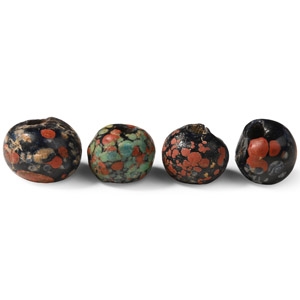
Phoenician Glass Bead Collection
Circa 600-400 B.C. or laterSold for (Inc. bp): £65
Four beads with a core of dark blue glass embedded with dispersed canes fused into the matrix, creating varied patterns in red, blue, white, and green, possibly Hebron. 19.6 grams total, 14-19 mm
Prince collection, 1990s-2014. Ex private collection 1970s-1990s. -
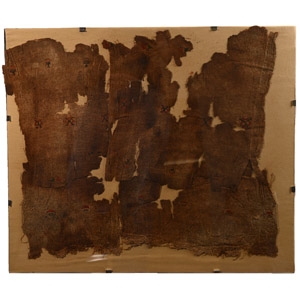
Large Mounted Egyptian Coptic Textile
Circa 6th-7th century A.D.Sold for (Inc. bp): £234
Possible fragment of tapestry or a cloak, light fabric, S-twist tapestry, ornamented with wool and linen flowers in red, green and yellow colour. 1.8 kg total, mount: 78 x 70 cm
Acquired 1970s-1996. Property of a North American collector. London collection, 2016.
Most of the linen or wool garments found by A. Gayet in the Antinoe necropolis were woven in a specific pattern, in a single piece, on a horizontal warp. Another relatively common pattern for linen garments consisted of assembling three pieces woven on a single warp and forming the upper part of the garment, with the collar and sleeves.
