
LOT 3198
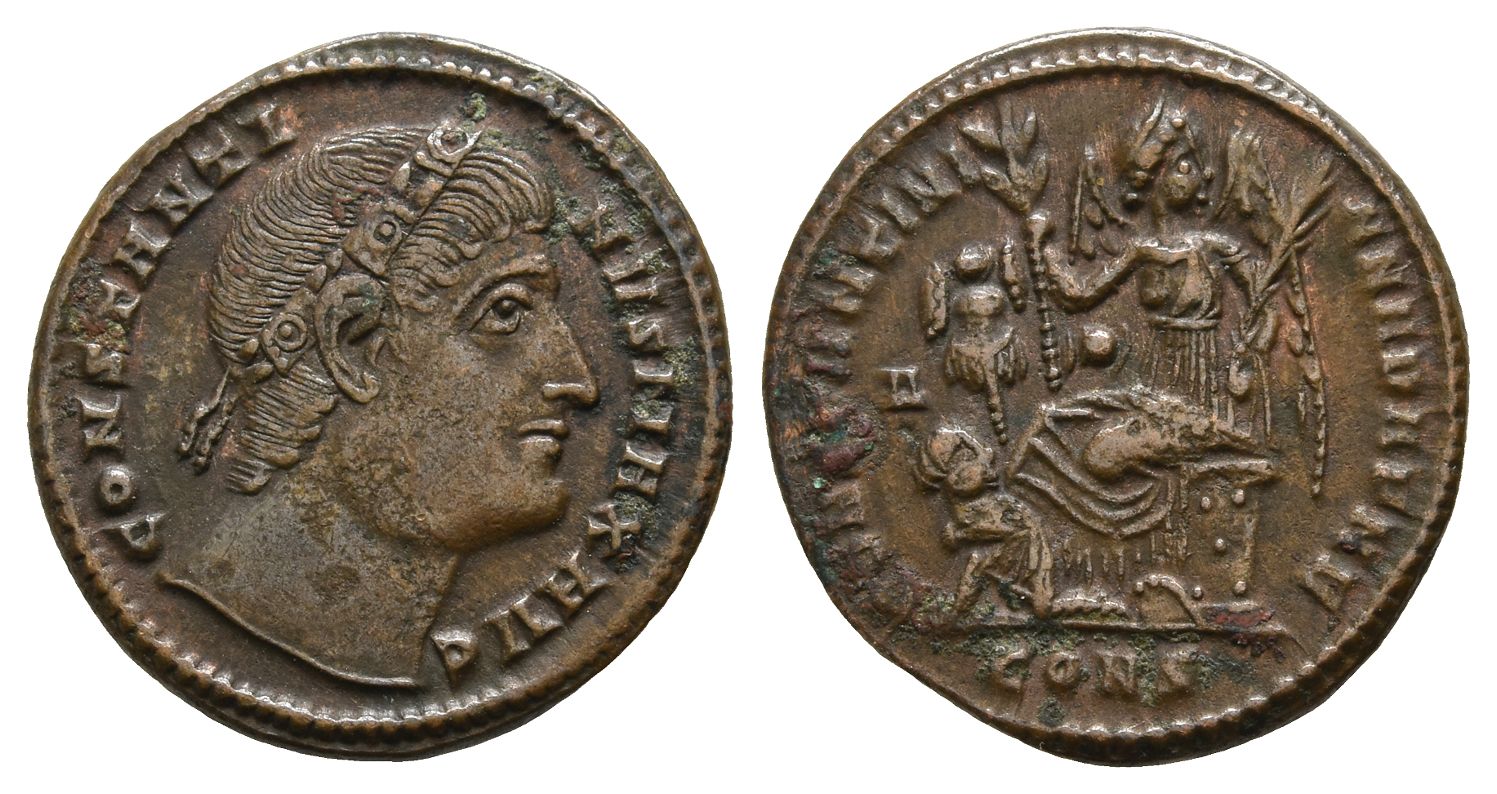
Constantine I BI Nummus. AD 307/310-337.
Constantinople mint; struck circa late AD 327. 4th officina. Dafne Coinage. CONSTANTI-NVS MAX AVG, laurel and rosette-diademed head to right, with eyes to God / CONSTANTINI-ANA DAFNE, Victory seated to left on cippus, head to right, holding palm frond with each hand; to left, bound captive seated to left, head to right, at base of trophy; Δ in left field, CONS in exergue. RIC VII 32. Good Very Fine.(3.27gr, 19mm, 6h.).
ProvenanceFrom the collection of a gentleman, acquired on the London art market in the 1990s.
FootnotesAccording to Eckhel (viii. 81), the most probable interpretation of the legend CONSTANTINIANA DAFNE is to be understood the castle or camp Dafne, constructed by Constantine I on the bank of the Danube.
TimeLine Auctions follows a vetting process to ensure the authenticity and legality of all items, reinforcing our commitment to integrity and responsible trading. Each antiquity, antique, and coin lot undergoes thorough examination by a vetting committee of at least ten external specialists, professional trade association members, scientists, and archaeologists: Our Vetting Process
AUCTIONS:
TimeLine is a leading auction house specialising in antiquities, ancient art, collectables, natural history, coins, medals, and books. Our auctions offer museums, collectors, historians, and enthusiasts the opportunity to acquire unique and historically significant pieces.
-
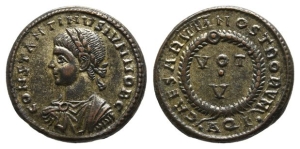
Constantine II, as Caesar BI Nummus. AD 316-337.
Sold for (Inc. bp): £52
Aquileia mint; struck AD 321. 3rd officina. CONSTANTINVS IVN NOB C, laureate, draped and cuirassed bust to left / CAESARVM NOSTRORVM, VOT • V in two lines within wreath; •AQT• below. RIC VII 95 corr. (obv. legend); Bikic-Do hoard, Sirmium VIII Aquileia 401-409; Sear 17170. 3.94gr, 18mm, 12h.
Extremely Fine. Much original silvering remaining. A splendid example of a very rare type.
Property of a North London, UK, gentleman. -
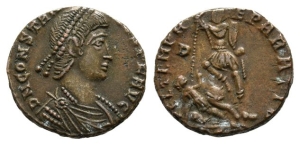
Romano-British Imitation of Constantius II BI Centenionalis. AD 337-361.
Sold for (Inc. bp): £33
Following uncertain mint. D N CONSTANTIVS P F AVG, pearl-diademed, draped and cuirassed bust to right / FEL TEMP REPARATIO, soldier standing to left, spearing fallen horseman, D in left field; uncertain mintmark in exergue. SCBC 750; see also Carson and J.P.C. Kent, 'A Hoard of Roman Fourth-Century Bronze Coins from Heslington, Yorkshire' in NC Vol. 11 (1971), p. 217 (Arles). 2.57gr, 16mm, 12h.
Good Very Fine.
Found Yorkshire, UK. From the private collection of Robin Sykes, Yorkshire, UK, formed since the late 1990s.
During the 4th century, the urban life in Britain was in serious decline and the supplies of currency from the Empire temporarily disrupted, so the local imitations of Constantius II and the usurper Magnentius became necessary to cover the deficit. -
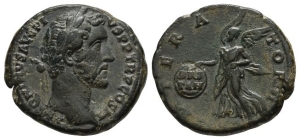
Antoninus Pius AE As. AD 138-161.
Sold for (Inc. bp): £416
Rome mint; struck AD 140-144. ANTONINVS AVG PIVS P P TR P COS III, laureate head to right / IMPERA-TOR II, Victory advancing to left, holding shield inscribed BRI-TAN; S C across lower fields. RIC III 732; Cohen 442. 11.49gr, 28mm, 12h.
Very Fine. Beautiful dark cypress-green patina.
From a private, UK, collection in the 1980s. Property of a London, UK, antiquarian.
Antoninus Pius received his second imperial acclamation, as recorded in this coin's reverse legend (IMPERATOR II), for the victory by his governor in Britannia, Q. Lollius Urbicus, over the Brigantes. It was Urbicus who also constructed the Antonine Wall in Scotland between the Firth of Forth and the Firth of Clyde, which was to be the northernmost frontier barrier of the Roman Empire.
